19 Dec
2024
Energeks
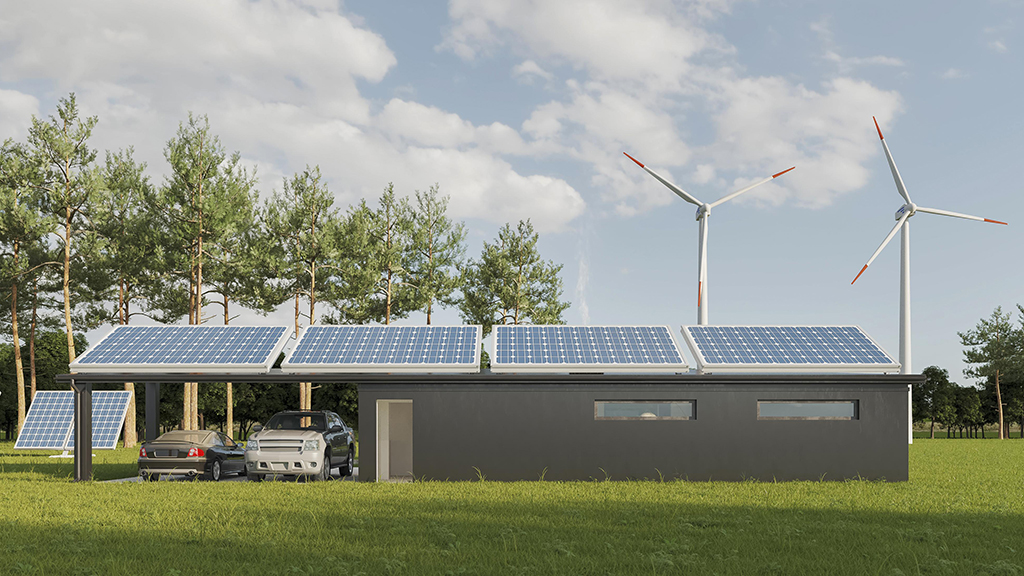
Did you know that the difference between an inverter and a transformer is not just a matter of technology but also has a significant impact on operational costs and process efficiency?
In this article, you'll discover how modern inverters are reshaping industry, their applications, and why understanding their potential is essential.
An inverter is a device that converts direct current (DC) into alternating current (AC) with a specified frequency and voltage. This process is essential in power supply systems where electrical energy must be adapted to the needs of end devices or power grids.
The main feature of an inverter is its ability to smoothly regulate both the frequency and output voltage. This allows for precise control of devices such as electric motors, HVAC systems, pumps, fans, and photovoltaic systems.
On the other hand, a transformer is a device that changes the voltage level of alternating current without altering its frequency. It operates on the principle of electromagnetic induction and is mainly used to step up or step down voltage in power grids. Unlike inverters, transformers cannot alter the frequency of the current or convert DC into AC.
The fundamental difference lies in their function and scope of application.
An inverter controls both the voltage and frequency of the current, allowing for dynamic control of electrical devices. In contrast, a transformer serves as a "voltage stabilizer" on a larger scale, for instance, in power grids. In practice, both technologies can complement each other, creating more comprehensive power supply systems.
In the following sections, we will delve into technical terminology, the applications of inverters, and their impact on modern technologies and energy efficiency.
We will also explore examples of projects showcasing how innovative solutions drive the energy transition.
Depending on the application, the terminology associated with inverters varies, reflecting the specific nature of their functions in different systems.
Industrial Applications:
In an industrial context, inverters are often referred to as frequency converters or variable frequency drives (VFDs). Their main role is to regulate the rotational speed of electric motors by adjusting the frequency of the supply voltage. This allows for precise adaptation of machine operation to the requirements of technological processes, increasing energy efficiency and production performance.
Photovoltaic Applications:
In photovoltaic systems, inverters are known as solar inverters or simply inverters. Their role is to convert the direct current (DC) generated by solar panels into alternating current (AC) compatible with the power grid. This enables solar energy to power household devices or be fed into the grid.
Terminological Differences:
Although both devices perform the function of converting electrical energy, their terminology reflects specific applications:
Frequency converter (VFD): Primarily used in industry to control electric motors by changing the frequency of the supply voltage.
Solar inverter: Used in photovoltaic systems to convert direct current into alternating current, allowing for integration with the power grid.
Understanding these differences is crucial when designing and implementing energy systems to ensure optimal operation and compliance with technical requirements.
In industry, where optimizing energy consumption is one of the primary goals, inverters play a crucial role. They are most commonly used to regulate the rotational speed of electric motors. Thanks to inverters, it is possible to precisely match power to actual demand, avoiding energy losses caused by devices operating at full power all the time.
Application in Poland and the EU:
As part of EU energy efficiency projects, such as Germany's "Energiewende" or modernization programs in Polish enterprises, inverters are used in ventilation and air conditioning systems (HVAC), water pump systems, and conveyor belt systems in logistics centers. In Poland, one of the beneficiaries of EU funds was an industrial plant in the ceramics sector. The plant implemented inverters to control the operation of rotary kilns, resulting in a 25% reduction in electricity consumption.
Key Takeaways:
Precise control of motor speed — Enables dynamic adjustment of motor speed to the current process needs, reducing energy losses.
Reduced energy waste — Inverters minimize energy waste, as devices operate only with the power required at any given time.
Lower operational costs — Lower energy consumption and the ability to avoid unnecessary downtime translate into reduced operating costs.
Reduced equipment wear and extended service life — Softer starts and speed control reduce mechanical wear on motors, increasing their durability.
Photovoltaic (PV) systems cannot operate without inverters. They convert the direct current (DC) generated by PV panels into alternating current (AC) used in the power grid. Moreover, modern PV inverters act as the "brain of the system," enabling remote monitoring and control of energy production.
Project Programs:
Subsidy programs such as "My Electricity" in Poland promote investments in PV installations equipped with next-generation inverters. For example, inverters with online monitoring capabilities allow users to track the amount of energy produced in real time, enabling consumption optimization. At the EU level, PV systems with inverters support the objectives of the European Green Deal, which aims to reduce greenhouse gas emissions.
Key Takeaways:
Conversion of DC to AC — Enables the power supply to grid-connected devices using energy from PV systems or batteries.
Energy production monitoring — Modern inverters with online monitoring functions allow for remote tracking of system performance and the detection of potential issues.
Integration with energy management systems (EMS) — Allows for intelligent control of energy flow, optimizing resource utilization in buildings and industrial facilities.
Choosing the right inverter for a specific industrial application requires consideration of several key parameters, such as:
Type of motor — The inverter must be compatible with the type of motor (e.g., asynchronous, synchronous, BLDC).
Power range — The inverter must support the maximum power of the device.
Type of load — Applications with variable loads, such as pumps or fans, require different settings than applications with constant loads (e.g., conveyors).
Application in Projects:
In Poland, inverters have been used in water pumping systems as part of projects supported by the National Fund for Environmental Protection and Water Management. By using inverters to control pumps, energy consumption was reduced by up to 30%, which was significant for local governments seeking savings in municipal budgets.
In recent years, the development of inverters has moved towards greater automation and remote monitoring. These systems are now equipped with vector control (VFD) technology and IoT connectivity, enabling seamless integration with Energy Management Systems (EMS).
The use of IoT-based inverters is a key component of Smart City projects funded by the European Union. A prime example is the implementation of intelligent street lighting control systems, where inverters allow real-time adjustment of lighting intensity based on pedestrian movement and road traffic density.
If you are looking for support in selecting and implementing inverters tailored to your specific needs, the Energeks team is ready to assist you. Our extensive experience in the electro-engineering industry and access to cutting-edge technologies enable us to provide customized solutions.
Contact us today to implement systems that boost efficiency and reduce operational costs!
Sources:
No reviews!