20 May
2025
Energeks
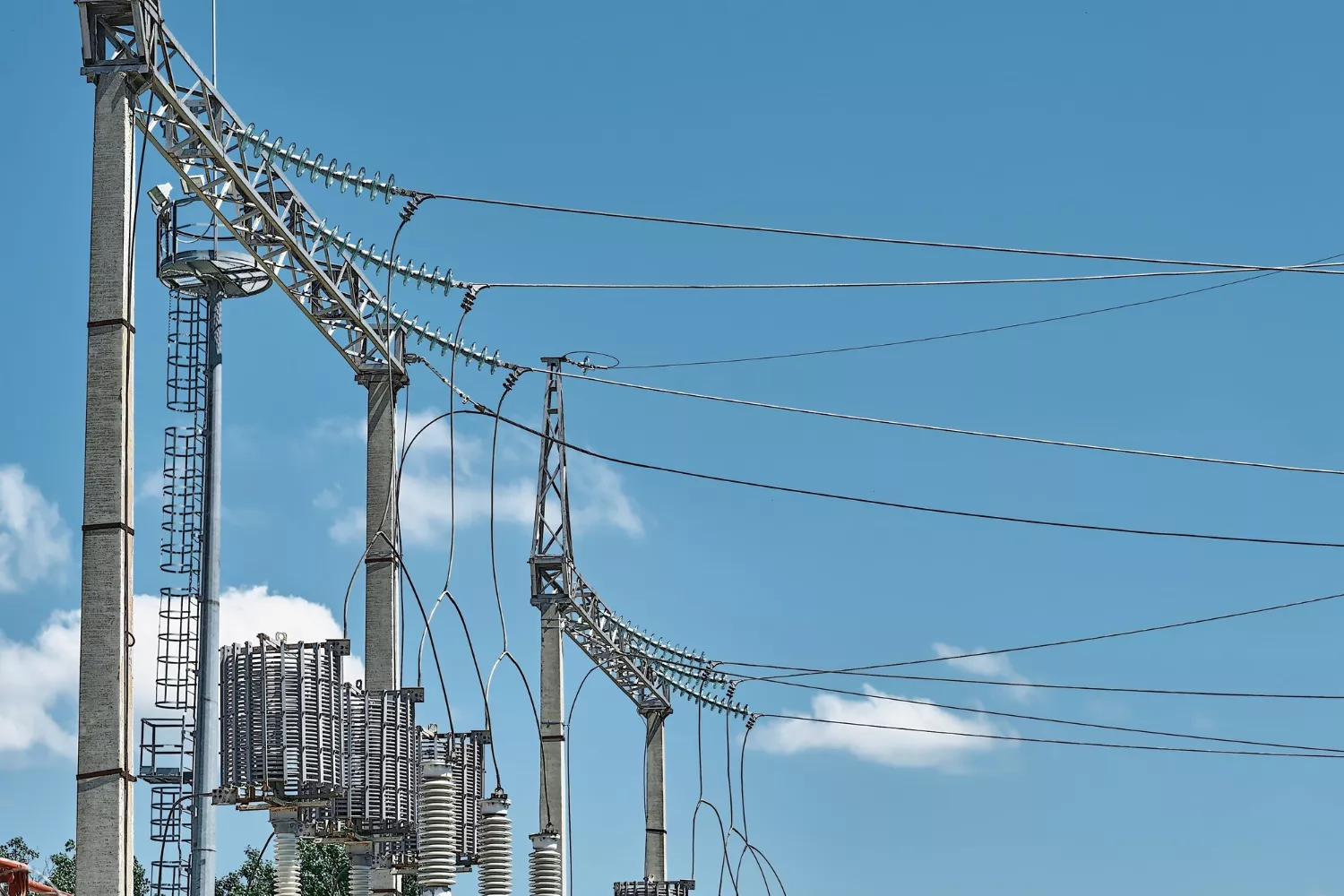
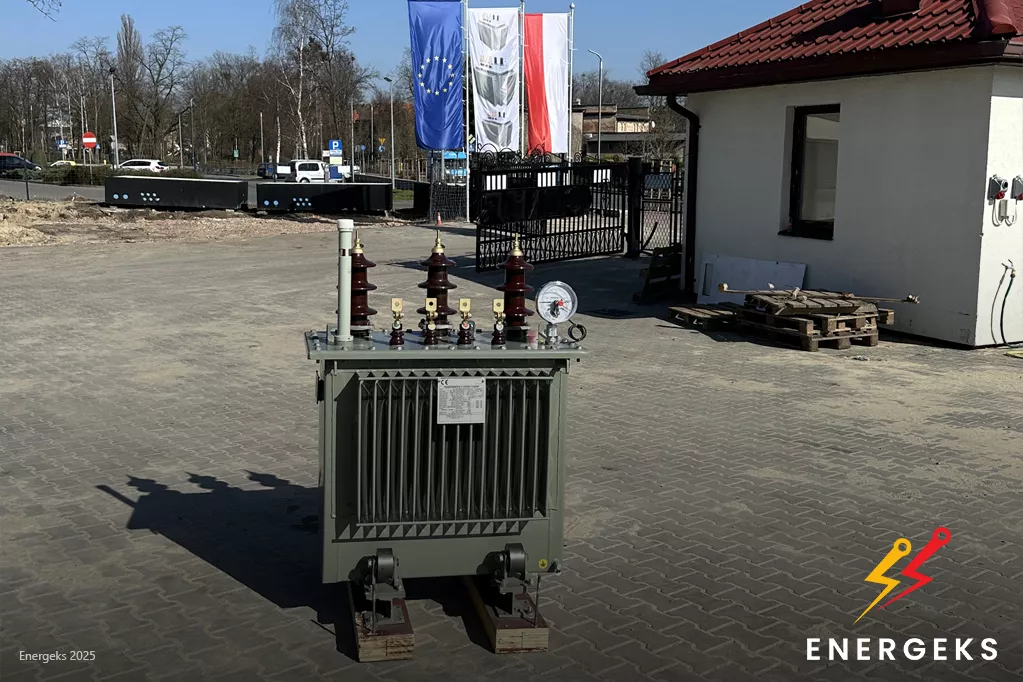
Take a look inside the transformer and discover how it thinks in phases, regulates voltage, and matches windings like a master of energy logistics.
This is not a text for everyone. But if you design, operate, or invest in power networks and want to avoid costly mistakes caused by incorrect winding configurations - stay with us. We’ll show you how mathematical precision and technical imagination meet at the heart of the transformer.
At Energeks, we verify every day that the future of efficient energy distribution begins in the details. We have experience in manufacturing and integrating medium-voltage transformers, which operate in diverse conditions - from EV charging stations to photovoltaic farms.
That’s why we know one thing for sure: it’s worth knowing how windings "communicate" with each other inside the transformer.
This article is a technical map for investors, designers, and operators who want to make informed decisions when selecting transformer configurations.
understand how voltage ratio regulation works and when it’s critical
learn about the most common types of winding connections and their voltage implications
find out how to avoid mistakes when operating transformers in parallel
What is a transformer’s voltage ratio and how is it regulated?
What are the possible winding connections and what do they imply?
What does winding configuration mean and why is it not just math but an engineering art?
What connection groups can be used and how to avoid short circuits?
What should you know before connecting two transformers to a common network?
Reading time: 10 minutes
Imagine that the voltage in a power grid is like the pressure in a water system. Too much – and the pipes burst like New Year's fireworks. Too little… and you're trying to take a shower, but the water trickles out like a drained power bank.
This is where the transformer comes into play, acting as an intelligent valve that, with surgical precision, keeps the pressure - that is, the voltage - exactly within the range you need.
But not just anyhow. It does so with the elegance of a mathematician and the dexterity of a magician, using the voltage ratio – the ratio between the low-voltage side (LV) and the high-voltage side (HV).
In practice: if a transformer has a ratio of 20/0.4 kV, it means it converts 20,000 volts to 400. It’s like turning turbocharged espresso into a cup of honey tea, gentle enough for houeshold appliances, but still full of energy.
Permissible voltage fluctuations in low-voltage networks range from -10% to +5%, which, in the case of a standard 400 V, means a range from 360 V to 420 V. That’s a really tight margin, one you need to maintain like a barista frothing milk - too far off, and the entire latte goes to waste (read: equipment failure or dissatisfied customers).
To achieve this, transformers are (literally) equipped with split windings, specially designed sections with taps that allow changing the number of active turns in the primary winding circuit.
Which in turn allows for precise adjustment of the output voltage. In the standard manual version, the tap changer operates only when de-energized, that is, “cold”, when the transformer is disconnected from the grid. It’s a simple, reliable, and economical solution, ideal, for example, for rural networks where voltage varies seasonally (like when everyone turns on irrigation pumps or central heating at the same time).
A typical tap range in such transformers is ±2 × 2.5%, which allows the operator to adapt to conditions without replacing the entire transformer. It’s like wearing hiking boots with adjustable lacing, same size, but a totally different comfort level.
But what if the voltage behaves like a teenager on an energy drink - jumping every hour?
Then we move to on-load tap changing . A tap changer that can operate:
manually,
remotely (e.g. from a control room),
or fully automatically – thanks to an installed voltage regulator.
The last one reacts like a good highway driver: smoothly, without jerks, always staying in lane. Such a solution is essential where any power outage means significant losses. For example, in industrial plants, data centers, or modern EV charging stations, where even a millisecond drop in voltage can “disconnect” the entire system.
What’s important: on-load tap changing takes place using special tap changers with arc-quenching chambers and oil or vacuum insulation. This setup minimizes arcing and avoids interruptions in operation like surgery inside the grid without making a single cut in the skin.
For comparison: with a nominal voltage of 20 kV and a primary current of 50 A, even a small voltage change of 2.5% means a power shift of tens of kilowatts. And that’s the difference between a running production line and an unexpected shutdown.
Imagine the inside of a three-phase transformer as a theater stage, where three actors - windings A, B, and C - perfrom an endless play of energy transfer. Each has its role, its entrances and exits, and their success depends on playing in the same key. That’s exactly what winding connections are about - making sure phases don’t clash like a trumpet, violin, and drum in a badly tuned orchestra.
A three-phase transformer is essentially three single-phase transformers enclosed in one housing - one for each phase. These three primary and secondary windings can be connected in several ways, and each affects how the transformer “understands” and processes voltage.
It’s no coincidence we say a transformer thinks in phases, because its operation depends on the relationships between phase voltages, not just their values.
The most commonly used connection types are:
Star (Y/y) – three windings are connected at one end to form the so-called neutral point (n), and the other ends go to the phases. This allows both line voltage (400 V) and phase voltage (230 V) to be available, making it ideal for single-phase loads like refrigerators, laptops, or lighting systems. Additionally, the neutral point allows for effective grounding, improving installation safety. Example? The Yy0 configuration is a classic in urban and residential networks.
Delta (D/d) – windings are connected “head to tail” in a closed loop, with no neutral point. This results in more stable phase voltages and a system more resistant to load imbalance. This setup is often used on the medium-voltage side, especially where the grid is exposed to disturbances but grounding of the star center is not required.
Zigzag (Z/z) – the most refined of the three, like a Swiss watch among connections. Each winding is split into two parts, and the connections are interlaced to suppress third-order odd harmonics.
This makes the zigzag configuration well-suited for networks with many electronic devices that generate interference. For example, in data centers or LED lighting systems. Downsides? Higher losses and… higher cost - the windings are longer, so more copper or aluminum is needed.
To visualize the differences: the star connection is like a three-armed chandelier with a central suspension point joining all arms.
The delta is like a ring - everything joined in a closed loop, no “loose ends.”
And the zigzag? Like a carefully braided plati, intricate, elegant, but requiring precision.
From a technical standpoint, the choice of connection type affects:
grounding method and protection against electric shock,
resistance to disturbances and load imbalance,
level of voltage distortion (THD) in the low-voltage network,
and the possibility of using the transformer in systems with reactive power compensation or active filtering.
For example, in the zigzag configuration, each secondary phase splits across two primary windings shifted 120° apart, allowing significantly better suppression of harmonic current components.
But here’s the catch: this design requires about 15% more winding material, so the transformer is heavier and more expensive. Additionally, load losses can increase by as much as 3–5% compared to the star configuration.
That’s why in practice, choosing the connection scheme isn’t a matter of aesthetic preference, it’s a strategic decision based on the needs of the network, its loads, and overall system economics.
If you know your network will handle many single-phase loads - go with star.
If you want simplicity, stability, and no neutral point - choose delta.
And if you’re dealing with a network filled with electronics, inverters, and switching power supplies, zigzag may be your hero, keeping voltage under control.
In summary: how the windings are “entangled” inside a transformer has a direct impact on the quality and stability of the entire network.
That’s why it’s worth thinking about winding connections not as boring technical diagrams, but as tactical plays in a team game – because even the best transformer won’t play a solo concert if the phases can’t agree.
Welcome to the most demanding and at the same time, the most fascinating, stage of transformer design. If the windings are the voices of a three-phase choir, then winding configuration determines whether they sing in harmony or each in their own tune.
And although from the outside a transformer may look inconspicuous - like a metal box standing by the roadside, inside it hosts a constant concert of currents, phase shifts, and clever engineering alignment.
This is where real engineering strategy begins. Why?
Because every three-phase transformer has two sides: the primary (MV) and the secondary (LV), and each can be connected using a different scheme - star, delta, or zigzag. This gives us a wide range of combinations, each with different electrical and practical properties.
For the configuration to make sense and work properly, three key aspects must be considered:
the winding connection type – that is, whether we're working with Y, D, or Z,
the tap orientation and winding direction – which affects which end is considered the start and which the end of the winding,
the phase shift angle – expressed in degrees, and in practice labeled using the “clock notation.”
The last one may sound like something from a physics class, but it has huge practical significance. The phase shift angle defines the difference between the voltage vectors on the primary and secondary sides - that is, how the signal “exits” the transformer compared to how it “enters.”
To make things easier for designers, a simple rule was adopted: every 30° of shift corresponds to one hour on a clock face.
And this is how popular configurations arise:
Yy0 – classic star-star connection with no phase shift. Ideal when both sides should be vector-aligned.
Yy6 – also star-star, but with a 180° shift, meaning a complete “reversal” of phases.
Dy11 – delta on the MV side, star on the LV side, with a 330° shift (that is, 11 o’clock on the clock). Very common in distribution transformers.
Dy5 – similar, but with a 150° shift (5 o’clock). Less common, but useful in specific load configurations.
Yd11, Yd5, Yd1 – star-delta connections, with shifts of 330°, 150°, and 30° respectively.
Great when you need stable three-phase voltages without a neutral point.
At first glance, it may seem like theory only, but in practice, selecting the wrong configuration can lead to disaster. If the phase shift doesn’t match network expectations or isn’t compensated, the result can be:
excessive equalizing currents between transformers,
internal short circuits during parallel operation,
increased power losses,
and even damage to end-user equipment.
Imagine two people carrying a sofa up the stairs. If they move in sync, everything works. But if one turns 180°, suddenly no one knows who’s pushing and who’s pulling. That’s what winding configuration is: synchronizing movements within the power grid.
That’s why every Energeks transformer is designed with full control over phase shift. During design, we consider not only the expected network configuration but also the potential need for parallel operation with other units - which requires connection group compatibility. This is a high-level discipline where the margin of error is... exactly 30°, or one clock hour. Go beyond that and things get complicated.
It’s worth adding that in practice, we use letter and number notations – for example, Dy11 means:
D – primary winding connected in delta,
y – secondary winding connected in star,
11 – a phase shift corresponding to hour 11, or 330°.
It’s a simple system – but one that requires knowledge, because this seemingly small “code” on the nameplate says a lot about how the transformer will behave in a larger grid structure.
In summary: winding configuration is the art of finding a common language between the MV and LV sides of the transformer. And although these “languages” may use different dialects (star, delta, zigzag), only the right combination makes the entire network speak with one voice.
Imagine an energy conference where transformers from across the country come together. They share a common goal: to deliver voltage to end users reliably.
But… not all of them speak the same “phase language.” One answers the question before it’s asked, another replies with a delay, the third one doesn’t even show up on time. The result? Chaos!…. and in the world of transformers: short circuits, overloads, or inefficient performance.
This is where three-phase transformer connection groups come into play, a set of clearly defined configurations that help determine whether two (or more) transformers can operate in the same network, especially in parallel.
How does it work?
Each pair of windings – primary and secondary, generates voltage vectors that may be shifted relative to each other by a specific angle. This angle, as a reminder, is measured clockwise from the primary voltage vector to the secondary, and expressed in degrees or more practically, in clock hours. Example? 30° = 1h, 150° = 5h, 330° = 11h.
Now the most important part: only transformers belonging to the same connection group can be safely operated in parallel, meaning they feed the same busbars on the secondary side. If their phase shifts differ - even by just one hour - equalizing currents can appear, and they can easily reach hundreds of amps.
It’s like trying to synchronize two clocks – one is fast by a minute, the other is slow. After a few hours, no one knows the real time, and voltages start “arguing.”
Throughout Europe, three standard connection groups are used:
0h – no phase shift (e.g. Yy0),
5h – 150° phase shift (e.g. Yd5),
11h – 330° phase shift (e.g. Dy11).
These are well-established configurations in distribution and industrial systems – compatible with common network design styles, grounding methods, and load structures.
What happens if we need to connect transformers with different phase shifts?
Theoretically… it’s possible. But it requires switching winding terminals, modifying connection configurations, or using additional devices to compensate phase differences. In practice, this is a risky, time-consuming procedure, only suitable for very experienced operators. And only if all other options are exhausted.
Imagine two transformers:
one with a Dy11 configuration (330° shift),
the other with a Yd5 configuration (150° shift).
The difference? 180° – meaning the secondary is “turned upside down.” If you try to connect them in parallel without modification, it’s like trying to zip two zippers with reversed teeth. Can it work? Technically yes. But why would you?
That’s why manufacturers design transformers with connection groups in mind from the production stage.
That’s also why, when ordering a transformer intended for parallel operation, you always specify the connection group and expected phase displacement. Because even if everything looks identical on the outside – the internal winding topology determines whether two devices will work together like twins… or fight at the first shared impulse.
Moreover, connection groups determine:
the phase sequence at the output,
the ability to synchronize with generators or other sources,
compatibility with phase-sensitive loads (like synchronous motors).
So when selecting a transformer for parallel operation:
make sure the connection groups are identical,
verify voltage levels, ratios, and polarity,
check that the transformers have similar short-circuit impedance (differences greater than 10% can lead to uneven load sharing),
ensure consistent phase order and terminal wiring – even the best transformer can “get lost” if phases A, B, C are wired as B, C, A.
In summary: connection groups are the language in which transformers communicate. If they don’t speak the same dialect, instead of jointly powering the grid – they’ll start fighting for dominance.
And neither you nor your end users want that.
For an even deeper understanding of the topic, we recommend the article:
is a solid dose of knowledge about the construction, materials and configurations of transformer windings.
At first glance, a transformer seems like just a device connected to the grid, standing there, humming, doing its job. But if you’ve made it this far, you already know that every detail of its contsruction, the voltage ratio, winding connection, phase displacement - is part of a broader energy strategy.
It’s a bit like chess: it’s not enough to move a pawn – you have to know what will happen a few moves later.
So… what comes out of this whole puzzle?
First and foremost: intentional design and proper transformer selection provide a real investment advantage. Thanks to smart technical decisions, you can:
avoid overloads, power losses, and short circuits,
ensure voltage stability for end users,
extend equipment lifespan and improve the safety of your entire infrastructure.
Sounds general? Let’s get specific.
If you choose the wrong winding configuration:
the transformer may not cooperate with the existing network – even if the nominal voltages match,
you may face unexpected costs for modifications or equipment replacement, because phase displacement won’t allow parallel operation with other units,
equalizing currents may appear, burdening the windings and shortening their life.
If you ignore voltage ratio regulation:
your clients may complain about voltage drops or flickering lights – and sensitive electronics may get damaged,
excessive voltage on the LV side can cause motors to overheat, reduce efficiency, and shorten service life,
instead of saving energy, the network will waste it – literally and figuratively.
If you neglect proper winding configuration:
you’ll lose the ability to operate transformers in parallel – a key foundation for flexibility in modern systems like microgrids, PV farms, or backup infrastructures,
you may trigger overloads and short circuits on secondary terminals, which in turn can damage end-user equipment and cause outages across entire sections of the grid,
instead of building balanced, efficient distributed energy, you’ll deepen the problem of technical losses.
In other words: a transformer isn’t just a box that converts voltage.
It’s a tool that - if well-designed and properly “configured from within” - allows you to control the grid precisely, reduce costs, and enhance user safety. Even a few percentage points difference in parameters can mean tens of thousands of euros annuall, either saved or lost, depending on your technical choices.
That’s why, at Energeks, we see the transformer as a living organism, with energy circulation, a nervous system (control), and an immune response (protection against disturbances).
Every winding, every tap, and every phase angle has its place and its meaning.
And in the end, remember this: a transformer doesn’t operate in isolation. It always functions within a system, so its effectiveness depends on context, on other transformers, energy sources, and connected loads.
That’s why choosing its features wisely is choosing the quality of your entire network.
So if you care about:
long-term reliability,
low operating costs,
flexibility for future network expansion,
and risk minimization…
…then don’t select your transformer just based on voltage and power. Look deeper - at how it thinks in phases, how it matches windings, and how smoothly it regulates voltage,because that’s where your advantage begins. Technical. Strategic. Financial.
Today, it’s not just about power, but about the intelligence of the system.
In the world of transformers, it’s not the biggest that “wins,” but the one that best anticipates network fluctuations, adapts to changing loads, and cooperates seamlessly with others. Voltage ratio, winding connections, and phase displacement are not mere technical details – they are the language in which the transformer communicates with the rest of the grid.
That’s why intentional winding configuration is not optional, but essential in every modern investment – whether industrial or municipal. When we design in harmony with the laws of physics and the rhythm of the market, we build infrastructure that not only works – it delivers tangible benefits: technical, financial, and environmental.
As a leading supplier of medium-voltage transformers in Europe, Energeks delivers more than just components – we deliver advantage. We design devices that think in phases, respond to fluctuations, operate in parallel, and align with long-term flexibility strategies.
That’s why our portfolio continues to grow. In addition to transformers and transformer stations, we offer:
modern electric vehicle charging stations,
efficient inverters and energy storage systems,
and optimized power generators for off-grid and industrial applications.
We also support renewable energy projects, delivering solutions for solar farms that ensure stable and safe solar energy distribution – no matter the conditions.
But what drives us the most is the fact that you’re reading this text, which means you’re among those who:
understand the complexity of energy systems,
seek informed technology choices,
and make decisions that truly matter.
Thank you for your time and attention. We hope this article was a source of inspiration, a confirmation of your expertise, or perhaps a spark for the next step in your project.
Would you like to talk about your project? Get in touch - we’ll be happy to help you choose a transformer that truly fits your vision. And if you want to stay up to date with what inspires, drives, and shapes us – join us on LinkedIn.
Let’s create an environment where clean, stable, and efficient energy is no longer a dream, but a standard.
Sources:
IEEE: A Transformer Tap Changer and Vector Group Study for Load Flow Analysis in Brunei Network
https://electrical-engineering-portal.com:
Shipped from our warehouse in Poland within 2–3 working days, 5-year warranty. Full range 25–2500 kVA in the shop (prices in PLN).
Need a complete MV/LV substation? See ready-made transformer substations in the shop or configure your own in the free station configurator (technical design, data sheet, configuration code; in Polish).
No reviews!