18 Feb
2025
Energeks
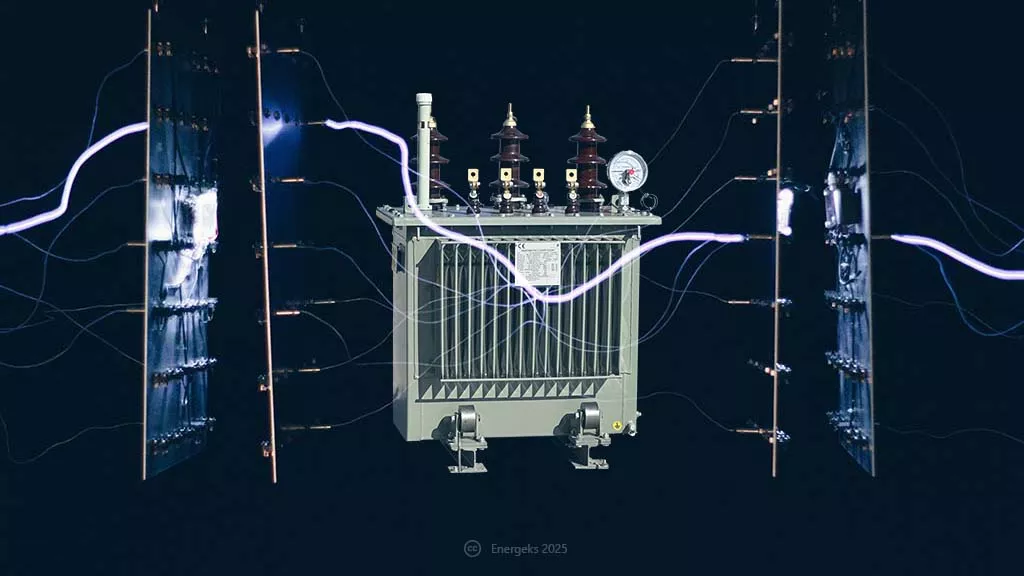
Without transformers, our civilization would resemble a rock concert without amplifiers – chaos, feedback loops, and distorted sounds that would give anyone a headache. Electricity from power plants would flow into homes in its raw, untamed form – with voltage in the hundreds of thousands, ready to turn every appliance into an expensive fireball.
And yet, instead of spectacular fridge and microwave explosions, we have stable and predictable electricity supply. Why? Because the transformer is the conductor of the energy symphony. It doesn’t let raw power tear through the system uncontrollably – instead, it steps up the voltage to minimize transmission losses and gently lowers it before it reaches your home.
This is no "unsung hero" – it’s the maestro of the power grid, fine-tuning energy flow with every winding. Without it, the entire system would sound like an out-of-tune orchestra – full of disruptions, inefficiencies, and uncontrolled surges. But with it? Every flick of a light switch delivers perfect harmony – precise, reliable, and absolutely essential.
This read will take you just 3.5 minutes.
Imagine ordering a coffee at an upscale café. The barista hands you a cup… the size of an Olympic swimming pool. There’s no way you could drink it – it’s pure overkill. That’s exactly how electricity would behave if there were no transformer.
Without it, energy from power plants would reach your home at absurdly high voltages, straight from generators producing thousands of megawatts. Your kettle would explode like New Year’s Eve fireworks, and your TV? It would turn into a piece of modern art – a charred, smoking frame on your wall.
And this is where the transformer steps in – like a refined voltage sommelier. Instead of letting raw power flow unchecked, it subtly "decants" it. It steps up the voltage when energy needs to travel hundreds of kilometers efficiently, and then gently steps it down before it reaches your socket, shielding you from electrical chaos.
This isn’t just a technological marvel – it’s the guardian of energy stability, working day and night so you can enjoy that perfectly brewed cup of coffee (not a swimming pool of it!), without the fear that your kitchen will suddenly turn into the set of a disaster movie.
Electrical energy is like water – it can be a powerful force, but when properly directed, it powers entire cities, factories, and homes. This is precisely what transformers do – they finely tune voltage to meet demand instead of letting it run wild.
Not all transformers are the same. Each serves a different function, depending on its role in the power grid, construction, or voltage level. There are four key classification criteria:
By application – from transmission giants to small voltage guardians in your neighborhood.
By construction and cooling method – whether a massive oil-immersed transformer or a lightweight, dry-type unit with no risk of leaks.
By operation mode – classic single-phase units or powerful three-phase industrial setups.
By voltage level – from low-voltage transformers to high-voltage behemoths handling hundreds of thousands of volts.
Discover the types of transformers without which our power infrastructure would resemble an old steam engine – noisy, inefficient, and prone to breakdowns.
These are the backbone of transmission systems – operating in power plants and major substations, stepping up voltage to 110 kV, 220 kV, or even 400 kV to ensure energy can travel hundreds of kilometers efficiently. Without them, we’d lose more power in transmission than we could ever use. Example? Massive units in Main Power Supply Points (GPZ), weighing tons and working tirelessly for decades to stabilize national grids.
If a power transformer is the architect of the grid, the transmission transformer is its diplomat. It converts voltage to appropriate levels at critical energy hubs, allowing electricity to travel vast distances with minimal losses. These transformers make sure power reaches its destination with the precision of a high-speed courier, rather than dissipating into inefficiency.
If electricity were a package, the distribution transformer would be the courier delivering it to your doorstep. It ensures that the voltage in your home is a safe 230 V, rather than something closer to railway power lines. You can spot them on utility poles and in urban substations – those small, inconspicuous boxes keeping your neighborhood powered.
Unlike the standard distribution transformer, the regional variant takes a broader approach. It doesn’t just deliver energy locally but ensures voltage balance across an entire region. Thanks to these transformers, there are no sudden spikes or fluctuations, and the grid operates like a well-oiled machine, controlling energy flow with precision.
Each of these transformers is part of a larger puzzle – remove just one, and the delicate balance of the power system would collapse into a cacophony of disruptions and inefficiencies. That’s why their role is invaluable: not just devices, but the architects, couriers, and guardians of energy that keep your lights on exactly when you need them.
Classifying transformers by their application is just the beginning. Just as not every engine fits every car, not every transformer suits every installation. It's not just about power and voltage – cooling method, construction, and the voltage range in which the device must operate are equally crucial.
Selecting the right transformer is not just a technical decision – it impacts efficiency, safety, and operating costs of the power system. Below are the key classification criteria that help ensure the chosen transformer is perfectly tailored to the working conditions.
Every transformer, regardless of its size, generates heat. The key question is how efficiently this heat is dissipated, as it directly impacts not only the transformer's lifespan but also operational safety.
🔹 Oil-filled transformers – cooled by insulating oil, primarily used in power transmission and heavy industry. Thanks to their design, they withstand extreme conditions, handle high loads, and can operate for decades. Their downside? They require regular maintenance and, in the event of leaks, pose a fire hazard.
🔹 Dry-type transformers – air-cooled, making them safer and more compact. They are widely used in residential buildings, data centers, and industrial plants where oil leakage risks must be avoided. Their main advantage is low maintenance, but they have limited capacity to operate under extreme conditions.
Choosing between these two transformer types is a trade-off between durability and safety, depending on installation location and operating conditions.
A transformer can be a precise tool for electronics or a cornerstone of industrial power networks – the key difference lies in its construction.
🔹 Single-phase transformers – function like precision scissors, trimming voltage to the required level for small devices. They are mainly used in residential installations, where compact size and simple operation are priorities.
🔹 Three-phase transformers – the backbone of industrial power distribution. They supply power to factories, railways, and large transmission systems, delivering electricity with the highest efficiency levels. Imagine three massive engines running in perfect synchronization – that’s how this type of transformer operates.
Electricity can be a gentle stream for electronics or a powerful tsunami fueling entire cities. The right voltage level is the key to optimal grid performance.
🔹 Low-voltage (up to 1 kV) – small but essential for powering consumer electronics and local control systems.
🔹 Medium-voltage (up to 36 kV) – operates in local distribution networks, supplying power to cities, factories, and critical infrastructure, such as airports and hospitals.
🔹 High-voltage (above 36 kV) – the giants of the energy sector, responsible for transmitting electricity over hundreds of kilometers. Their mission? Minimizing losses and delivering power exactly where it's needed.
Selecting a transformer is not just a technical decision – it's a strategic investment in the stability, efficiency, and safety of the entire power infrastructure. Whether you need a solution for low-voltage applications or a device capable of transmitting energy across continents, choosing the right transformer ensures that power flows exactly where it should, without losses or disruptions.
One wrong choice? It’s like installing a motorcycle engine in a locomotive. That’s why understanding the differences and selecting the transformer perfectly suited to your needs is essential.
A transformer is not just a box of wires. It is an engineering masterpiece, mastering the art of voltage manipulation like a skilled orchestra conductor – effortlessly raising or lowering voltage to ensure a smooth and safe flow of electricity.
The magic behind it lies in electromagnetic induction – simple in theory but impressive in practice. And to make everything work seamlessly, there are three key components, without which a transformer would be nothing more than a static block of metal.
Primary winding – the first point of contact
This is where the story begins. The primary winding captures voltage from the transmission network – much like a barista receiving raw coffee beans and preparing the perfect brew. The current flows in, creating a magnetic field and setting the stage for the next step.
Magnetic core – the master of precision logistics
To transfer energy from one winding to another, there needs to be an efficient pathway. Enter the magnetic core – the steel backbone of the entire operation. Think of it as a conveyor belt in a factory, ensuring that energy is transported precisely without loss or chaos. Thanks to this core, power reaches exactly where it should, preventing the transformer from becoming just a useless metal block.
Secondary winding – delivering energy on demand
Once the energy has traveled through the magnetic core, it reaches the secondary winding, which passes it on in the exact form required by the end users. It’s like a waiter in a restaurant, receiving a perfectly cooked meal and delivering it to the customer at just the right temperature. Thanks to this winding, electricity reaches homes, factories, and streetlights in a form that won’t set everything ablaze.
Of course, this is a simplified explanation – an entire engineering saga could be written about transformers (but that’s for another time). For today, this should do – I wouldn’t want to drag you into Maxwell’s equations after work.
One thing is certain: a transformer is an endless source of engineering inspiration, where precision meets raw power. And if you ever feel like diving deeper into the topic – remember, energy never stops at "simple theory."
In the world of power technology, the transformer is a true champion of efficiency – it operates silently, without fanfare, but when you look at the hard numbers, it outperforms most other engineering innovations. Don’t just take my word for it – check out these stats.
Efficiency? Nearly perfect!
In the energy sector, every loss is wasted money. That’s why modern transformers achieve an efficiency rate of up to 99.75%. This means that of all the power they process, only 0.25% is lost – that's less than a drop of coffee spilling from an overfilled cup! Compared to other energy transmission systems, this is the absolute gold standard.
A multi-billion-dollar business – the transformer as the backbone of the energy market
Think transformers are a niche technology? Think again. In 2023, the global transformer market was valued at over $55 billion, and projections indicate that by 2030, it will surpass $75 billion. Why this growth? The increasing demand for efficient energy distribution, the transformation of power grids, and the rise of renewable energy make transformers not just an essential component but the foundation of the energy future.
A lifespan worthy of legends
In the world of technology, 40 years is an entire era – trends, systems, and innovations evolve, but the transformer? It keeps running steadily for 25–40 years, and many units far exceed this threshold. That makes it one of the most durable investments in power infrastructure – like an engineering oak tree, standing firm over decades, fulfilling its role with unwavering precision.
A transformer isn’t just a piece of equipment – it's a symbol of precision, reliability, and longevity encased in steel. With its near-perfect efficiency, ever-growing market value, and legendary lifespan, it remains a cornerstone of modern energy systems.
And if those numbers don’t impress you, just imagine: what if your electronic devices had 99.75% efficiency and lasted for 40 years without fail? Pretty incredible, right?
Imagine a world where every time you flip a light switch, it’s like playing Russian roulette. Sometimes it works, sometimes it trips the circuit breaker, and sometimes—boom!—your toaster explodes. Without transformers, electricity would be an uncontrollable force, randomly wreaking havoc instead of reliably powering our lives.
Our civilization depends on energy stability, and this is exactly where the transformer plays its role as a filter and guardian, refining raw, untamed power into precisely regulated energy for every consumer. You’ll find it everywhere—in underground substations, high-voltage pylons, and industrial plants. It may not be flashy, but without it, nothing would function.
Greater energy efficiency – minimizing losses at the highest level
The principle is simple: the less energy we lose, the less we need to generate. And the transformer is the ultimate optimizer. Its key function in the power system is to minimize transmission losses, ensuring that energy doesn’t disappear along the way, but reaches exactly where it’s needed. Understanding how it works is the first step to energy savings, both for industries and individual consumers.
System safety – no more overheating and blackouts
Choosing the wrong transformer is a disaster waiting to happen. It can lead to overheating, system overloads, or even dangerous short circuits that could cripple the entire grid. A properly matched transformer acts like a precision voltage regulator, preventing uncontrolled power surges and keeping everything running smoothly.
That’s why the world’s best energy networks invest in smart transformers with advanced monitoring, reducing failure risks to an absolute minimum.
Innovation and development – the future of energy depends on transformers
A transformer is not just part of the past and present—it’s the key to the future of renewable energy and smart grids. Cutting-edge technologies like transformer-based energy storage could revolutionize how we manage power from renewables.
Imagine a system where excess energy from solar and wind farms is instantly stored and efficiently distributed by next-generation transformers. This is already happening—the world is moving toward a more sustainable power system, and transformers are one of the cornerstones of that revolution.
A transformer is more than just a device. It’s the guardian of energy balance, the filter of electrical chaos, and the conductor of power grid harmony. Thanks to transformers, our daily energy use is predictable, and every time we flip a switch, we get exactly what we expect—a smooth, stable flow of electricity.
So the next time you turn on the lights, remember—it’s not magic. It’s engineering, precision, and years of technological evolution, ensuring that energy reaches you in exactly the right form, without unnecessary losses or disruptions.
One of the largest steel mills in Europe was facing a growing crisis that could have cost millions—rising energy costs and production downtimes caused by an inefficient power infrastructure. The heart of the system, a furnace transformer, was no longer operating reliably. Instead of delivering stable power, it was generating excessive heat loss and frequently breaking down. Its efficiency had dropped below 93%, which meant one thing—energy was being wasted, and production was becoming increasingly unstable.
An immediate solution was needed. The engineers at Energeks stepped in, analyzed the situation, and designed a new 50 MVA furnace transformer with an efficiency of 98%. This seemingly small improvement in performance transformed the plant's costs and overall efficiency.
The results? The numbers speak for themselves:
✅ 35% reduction in energy losses – heat stayed where it was needed, eliminating unnecessary waste.
✅ Lower operating temperature, leading to extended system lifespan.
✅ 12% annual energy savings, directly cutting operational costs.
✅ 870 tons less CO₂ emissions per year, improving the mill’s carbon footprint and sustainability.
But we didn’t stop at just delivering a transformer. We implemented an advanced monitoring system, allowing real-time performance tracking and early detection of potential failures before they could happen.
The result? Unmatched energy stability, increased market competitiveness, and the elimination of unexpected production downtimes.
Without stable and efficient transformers, modern industry would struggle to function smoothly. These devices regulate energy flow, minimize losses, and enable businesses to operate without unnecessary downtimes. From urban power grids to strategic industrial centers and key infrastructure facilities, the right transformer selection translates into real savings and increased efficiency.
The steel mill case study proves that investing in modern energy solutions is not a cost—it’s a strategic move. It enhances system stability, reduces expenses, and improves a company's environmental footprint. In today’s world, where energy optimization has become a crucial step for every business, choosing reliable and innovative solutions is a necessity.
Looking for a transformer solution tailored to your business needs? At Energeks, we combine experience with cutting-edge technology, delivering transformer solutions designed for your specific requirements. Contact us—we’ll find a way to make your energy work more efficiently.
Sources:
IEEE Power & Energy Society - "Transformer Technology and Applications" (2023)
International Electrotechnical Commission (IEC) - "Transformer Standards and Performance Metrics" (2022)
No reviews!