29 Apr
2025
Energeks
IEC standards are more than just a set of rules – they are the language of safety and quality that connects the entire energy world.
Imagine a world without rules, where every power transformer operates however it wants – like musicians in an orchestra playing without sheet music. The sound? Chaos. Energy sector? Disaster. Failures, enormous energy losses, and infrastructure risks would be inevitable.
Fortunately, there is a solid foundation that organizes this world – the IEC Standards. Thanks to them, we have transparent, globally recognized benchmarks for safety and performance. In the world of power transformers, these standards act like an invisible safety net – ensuring reliability, protecting investments, and building user trust.
Today, we want to show you how the IEC Standards create a more organized, stable, and growth-friendly energy landscape. Keep reading to ensure that your technical decisions are rooted in the world’s best practices.
This article is for everyone aiming to build future-ready solutions – solid, durable, and sustainable. By the end of this read, you will understand how to leverage the 5 key pillars of IEC standards to make your power transformer investments even more efficient and safe.
You will learn what IEC standards are and learn about the 5 key pillars that form the foundation for operating power transformers in compliance with IEC Standards:
what IEC standards are and why they are the foundation of the modern power industry,
how IEC standards ensure global compatibility, safety, efficiency, and support sustainability,
how the application of IEC standards in design, materials, testing, operation, and safety changes the quality of power transformers,
which specific IEC standards are critical for transformers,
how standards translate into practice, affecting grid stability and environmental protection,
why a world without standards is a risk of loss, chaos, and hazards,
how MarkoEco2 oil-filled transformers meet the challenges of the modern power industry through compliance with IEC standards.
Reading time: 5 minutes
The International Electrotechnical Commission (IEC) is a global organization that develops and implements technical standards in the fields of electrotechnology, electronics, and related technologies. IEC standards provide a universal foundation upon which the modern power industry is built, defining guidelines for the design, production, testing, operation, and maintenance of power equipment.
Global compatibility and consistency
IEC standards enable interoperability between devices from different manufacturers worldwide, streamlining the integration of power systems and accelerating the implementation of new technological solutions.
Safety and reliability
These standards specify requirements for insulation, surge protection, thermal management, and other factors that help minimize failure risks and protect people and infrastructure.
Efficiency and energy savings
The standardization of production and testing processes for transformers and their components helps reduce energy losses — an extremely important factor given today’s global energy challenges.
Supporting sustainable development
IEC standards promote the use of modern materials and technologies, such as eco-friendly insulating fluids and high-efficiency transformers, aligning with global environmental protection goals.
A power transformer manufactured according to IEC 60076 is more than just a technical device — it is a trusted tool ensuring grid stability. Compliance with IEC 60076-10 (noise) results in reduced acoustic emissions, crucial for protecting the urban environment. Meanwhile, the use of materials compliant with IEC 60214 (tap-changer regulation) enables greater precision in voltage adjustment, enhancing overall system efficiency.
IEC standards are indispensable for anyone striving for safe, efficient, and environmentally friendly energy management. Thanks to these standards, a power transformer becomes a guarantee of quality, not just an element of infrastructure.
In the world of engineering, designing a transformer is like planning a voyage across a stormy sea. Without a map and compass, it’s easy to lose your way. IEC standards act as that map — precisely defining the parameters that must be met for the equipment to operate safely and efficiently.
Designing based on IEC standards helps minimize the risk of errors at an early stage. These standards specify permissible overload levels, insulation requirements, optimal cooling parameters, and structural strength. Thanks to this, every transformer meets — and often exceeds — minimum quality requirements.
How would your product development strategy change if you knew from the start that you were building on the world's best standards?
Imagine building a house with bricks of varying quality — would you trust its strength? In transformer manufacturing, every element — from windings to the enclosure — must meet strict material requirements defined by IEC standards.
These standards determine not only which materials are allowed, but also their resistance to temperature, humidity, mechanical, and chemical stresses. Using certified materials significantly extends transformer lifespan, reduces failure risk, and lowers operating costs.
Case study: In a transformer project for a wind farm, the use of premium-grade electrical steel compliant with IEC 60404 extended the transformer lifespan by over 20% compared to standard solutions.
A transformer is like an athlete preparing for the Olympics. Training alone isn't enough — rigorous tests are needed to verify readiness. IEC standards set strict testing procedures, both during production and before commissioning.
Tests include voltage endurance, no-load and short-circuit loss measurements, thermal tests, and mechanical inspections — all designed to confirm that the device meets the highest safety and performance standards.
How would your investment strategy change if you knew every element of your energy system had passed tests approved by global experts?
Even the best-designed and built transformer needs care. IEC standards provide guidelines that help equipment owners maintain peak performance for decades.
Maintenance procedures outlined in the standards include regular insulation checks, operating parameter monitoring, temperature management, and preventive actions. Following these guidelines significantly extends service life and reduces total ownership costs.
Case study: By implementing a maintenance program based on IEC 60076-7 guidelines, an industrial facility reduced medium-voltage transformer failures by 35% over two years.
Safety doesn’t happen by chance. It’s the result of conscious decisions and adherence to best practices. IEC standards set safety benchmarks for electric shock protection, fire risk management, and emergency shutdown procedures.
A transformer that meets IEC standards is a device that minimizes accident risks — protecting not only investments but, above all, people.
We treat safety as a supreme value. Thanks to IEC standards, we deliver devices that strengthen not only energy networks but also user trust.
What would your business look like if every day you built it on principles that enhance safety and responsibility?
The standards developed by the International Electrotechnical Commission (IEC) form a solid foundation for the design, testing, installation, and operation of power transformers. Each of the following standards plays an important role in ensuring the reliability, safety, and efficiency of these devices.
The IEC 60076 series is the cornerstone for the entire life cycle of power transformers. It includes detailed technical and operational requirements that support manufacturers, engineers, and power grid operators.
IEC 60076-1: Basic design and technical requirements
Defines the fundamental parameters of transformers, such as voltage, rated power, overload resistance, and insulation requirements. This standard establishes the basic assumptions that every power transformer must meet.
IEC 60076-3: Electrical tests
Specifies procedures for voltage testing, short-circuit tests, and other load tests. These tests are essential for verifying the electrical strength and operational compliance of the device.
IEC 60076-10: Noise analysis
Focuses on the measurement of noise generated by transformers during operation and methods for its reduction. This is particularly important for installations in urban areas or other environments where minimizing acoustic emissions is crucial.
IEC 61378 – Transformers for converter systems
A standard dedicated to transformers used in HVDC (high-voltage direct current) systems. It provides guidelines on specific requirements for electromagnetic compatibility (EMC), minimization of energy losses, and reliability in demanding converter operation conditions.
IEC 60214 – Tap-changer regulation in transformers
Covers on-load tap changers, which are crucial for adjusting a transformer's output voltage to the changing operating conditions of the network.
It precisely defines the technical requirements, testing procedures, and the mechanical and electrical durability of these components.
IEC 60137 – Insulating bushings
Describes the standards for insulating bushings, which are critical elements of transformers, providing both electrical insulation and mechanical connection between the internal conductors and the external network infrastructure.
The standard covers requirements for overvoltage endurance, current-carrying capacity, and resistance to environmental factors.
Imagine a world where no standards regulate the operation of power transformers. At first glance, it might seem like a paradise for engineers and manufacturers — no restrictions, total technological freedom! But very quickly, it turns out to be a direct path to disaster.
Transformer lottery – you never know what you’ll get!
Without unified standards, every manufacturer acts according to their own rules — or rather, the lack of them. One transformer might withstand 110 kV, another might explode at 80 kV, and a third might surprise you with a charming hum resembling a jet taking off. Buying equipment becomes a game of roulette where, instead of electricity, you might win a fire or a network failure.
Emergency domino effect in the energy sector
No standards mean no compatibility. Systems stop working together, and each new transformer requires months of trial and error just to function in the network. The result? Mass failures, blackouts, and frantic calls to suppliers who can only shrug helplessly.
Budget evaporated in a blink
Imagine that a new transformer in your company needs winding replacements after just three months. Why? Because the manufacturer "forgot" to test it under full load, and the design engineer chose to save costs by using a cheap alloy with the strength of toast. Operating costs skyrocket, downtime increases — and the investment becomes a financial nightmare.
Safety? What safety?
Without regulations, engineers install transformers under the "let’s hope it works" philosophy. The result: overvoltages regularly destroy equipment, and sparks shooting from bushings become the neighborhood’s new attraction. Add to this the lack of noise standards — who cares about neighbors when the transformer competes with a heavy metal concert?
The environment under fire
In a world without IEC standards, transformers "devour" energy like hungry monsters, and cheap, toxic fluids are used for cooling. Instead of investing in ecological solutions, the power industry becomes one of the planet’s biggest polluters.
IEC standards are more than just a set of rules — they are the foundation of civilized, safe, and efficient energy management. Thanks to them:
We know a transformer will operate reliably, regardless of the manufacturer.
Power networks function like a well-oiled machine.
Our environment is protected from excessive energy waste and toxic pollutants.
Without IEC standards, the energy sector would resemble a jungle where only the toughest survive. But the development of civilization is about everyone having access to stable, clean, and safe energy — without the risk of hearing a transformer hum... from the neighboring continent when switching on the lights at home.
If you want to be sure that your investments in the energy sector are based on the best standards, it is worth taking a closer look at what truly lies behind the reliability and efficiency of devices. At Energeks, we believe that choosing solutions compliant with IEC standards is not just a technical decision — it is a step toward a safer and more responsible future.
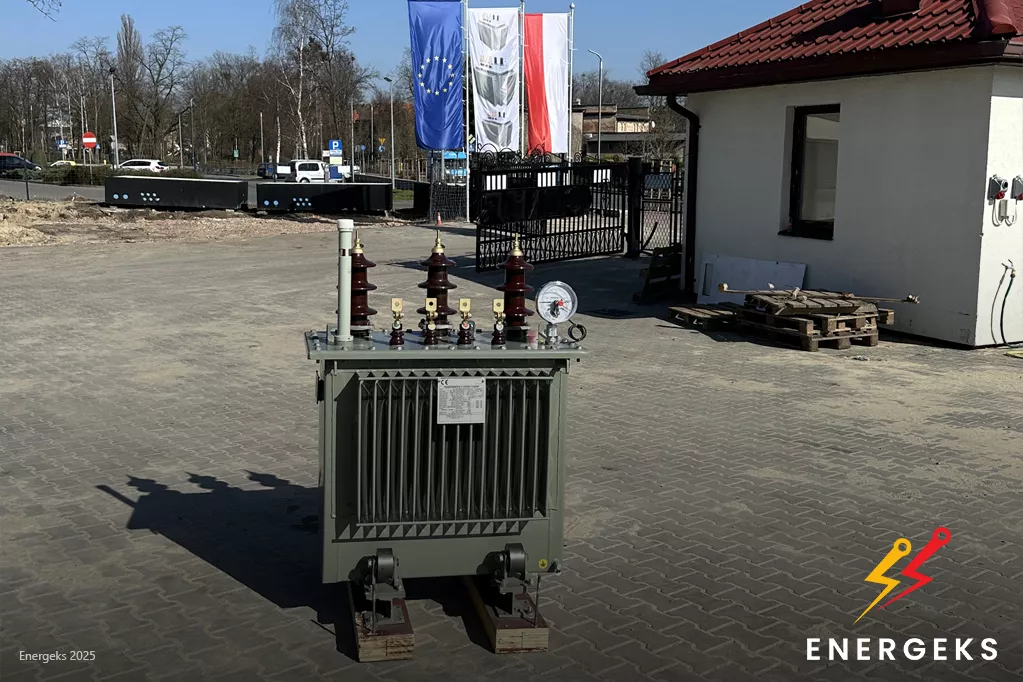
We are proud to support our partners in creating energy systems that work reliably today and are ready for tomorrow’s challenges. That’s why our offer includes MarkoEco2 oil transformers — devices designed with the highest standards of efficiency, durability, and safety in mind. Hermetic construction, certified insulating oils compliant with IEC 60296, porcelain insulators, and advanced on-load tap changers are just some of the features that make them a reliable choice for industry, renewable energy, and modern infrastructure.
We believe that the best solutions are created where technology meets the awareness of responsibility. That’s why we warmly invite you to explore our current range of transformers and to start a conversation about how we can tailor solutions to meet your needs.
If you want to see how IEC standards can work to your advantage — visit our website, discover our products, or join our community on LinkedIn. There, we share knowledge, experience, and inspirations that can help you build even more conscious and sustainable energy projects.
Energeks is not just about technology. It is also about people who believe that together we can create a better energy future — for today's world and for generations to come.
Sources:
International Electrotechnical Commission
Shipped from our warehouse in Poland within 2–3 working days, 5-year warranty. Full range 25–2500 kVA in the shop (prices in PLN).
Need a complete MV/LV substation? See ready-made transformer substations in the shop or configure your own in the free station configurator (technical design, data sheet, configuration code; in Polish).
No reviews!