Energy infrastructure security

The connection between a cable and the LV bushing stud carries hundreds of amps. A small rise in contact resistance is enough to release tens of watts of heat at a single point – and that heat goes straight into the stud, the bushing insulator and its seal. Below: where hot clamps come from, how to avoid them during installation and how to catch them before they cause a failure.
How much heat a bad contact produces
The power lost in a joint is P = I² × R. On a 630 kVA transformer the LV phase current is about 900 A. At that current every extra 0.1 mΩ of contact resistance means about 81 W of continuous heating in a single clamp. A hot contact oxidises faster, its resistance keeps rising and the process feeds itself.
The most common causes of clamp overheating
Too little clamping force
Clamping screws tightened “by feel” or never checked after commissioning. Conductors – aluminium ones in particular – settle under pressure and the clamping force drops over time.
Too much clamping force
Crushed strands, stripped threads, a cracked body. Tighten the screws with a torque wrench, gradually and alternately – not with brute force and not with an extension on the wrench.
Dirty or oxidised contact
Oxide on an aluminium conductor, a dirty stud, paint residue. Clean the conducting surfaces immediately before installation. TOC clamps accept aluminium and copper conductors – the tin-plated body limits corrosion at the contact with aluminium, but the conductor still has to be cleaned.
Poorly prepared conductor
Stripped too short (insulation under the screw) or too long (bare conductor sticking out of the socket), a cross-section outside the socket range, or a conductor shape the clamp is not designed for.
Cables hanging on the clamp
Heavy LV cables that are not supported bend and twist the stud. This increases the risk of a loose joint, bushing damage and oil leaking past the seal.
Higher load than the clamps were selected for
After an installation is extended, the current is often higher than the one the connections were chosen for – and it is not only the clamp that heats up. More on running a transformer near its limit in our article on transformer ageing.
Installing a transformer clamp step by step
- Inspect the bushing: cracks in the porcelain, oil traces, the condition of the stud thread.
- Clean the stud and the clamp sockets of dirt and paint residue.
- Screw the clamp onto the stud, align the sockets with the cable route and lock it with the fixing screws (TOC-1 – two screws on the foot, TOC-2 – screws on the side of the slotted stem).
- Prepare the conductors: strip them to the depth of the socket, clean aluminium conductors of oxide with a wire brush and – if the cable manufacturer recommends it – apply contact paste.
- Insert the conductors fully and tighten the clamping screws with a torque wrench – gradually and alternately.
- Support and fix the cables so that they do not load the clamp or the stud.
- Fit the insulating cover over the clamp.
- After commissioning, once the load has stabilised, carry out a thermographic check and re-check the clamping force in line with the substation's operating instructions.
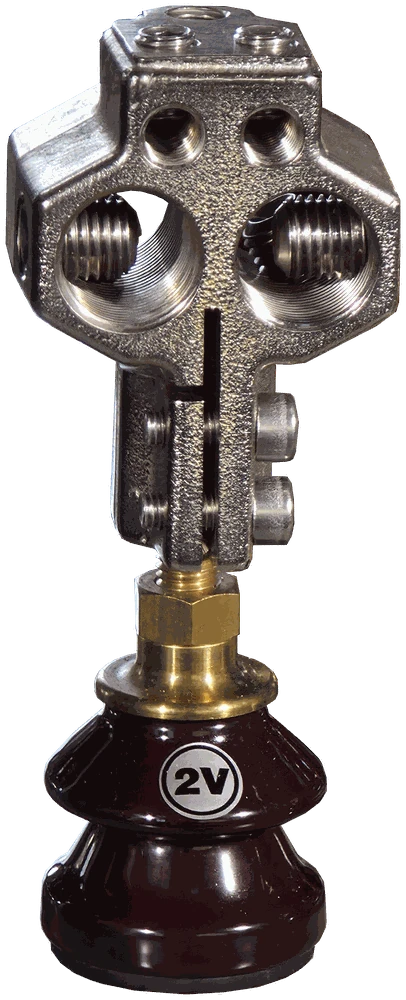
A set of TOC-1 clamps on the LV bushings – sockets aligned with the cable route.
Thermographic inspection – how to read the result
Thermography finds a bad contact without switching the transformer off. For the result to mean something:
- measure under load – the closer to the substation's typical load, the clearer the difference,
- compare the same point on all three phases; the difference between phases at similar current tells you more than the temperature alone,
- watch out for shiny surfaces: tin-plated brass has low emissivity and the camera under-reads its temperature – take readings from the cable insulation right next to the clamp or from a matt marker.
A useful reference are the criteria of the US standard ANSI/NETA (table 100.18), used by many inspection companies:
| ΔT between similar components | ΔT above ambient | Recommended action |
|---|---|---|
| 1–3 °C | 1–10 °C | possible deficiency – investigate |
| 4–15 °C | 11–20 °C | probable deficiency – repair as time permits |
| – | 21–40 °C | monitor until corrective action is taken |
| > 15 °C | > 40 °C | major discrepancy – repair immediately |
If the grid operator or the plant has its own operating instructions with different thresholds, those apply.
LV connection inspection checklist
- discolouration, deposits or melted insulation next to the clamp,
- oil traces under the LV bushings,
- condition of the clamp covers, traces of birds and rodents,
- cable fixing and support,
- comparative thermogram of the three phases and the neutral,
- screw tightness check – only when de-energised and earthed, as per instructions.
Regular inspection costs a fraction of a repair – see what a professional transformer overhaul looks like. If a clamp needs replacing, start with choosing the transformer clamp for the rating – ready-made sets are in our transformer clamps category.
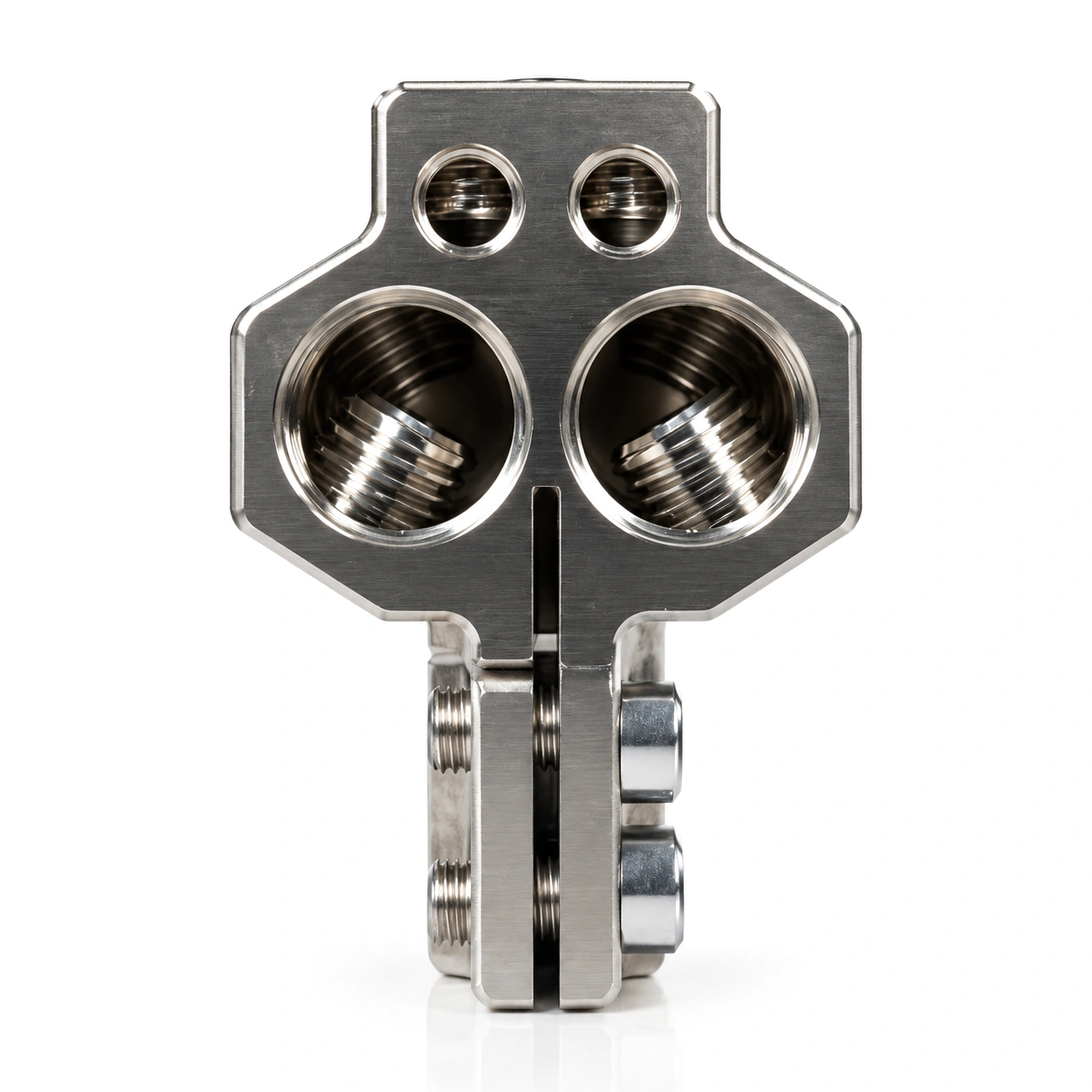 TOC-1 – horizontalM12 / M20 / M30, 250–1000 A, 2 × 300 mm²
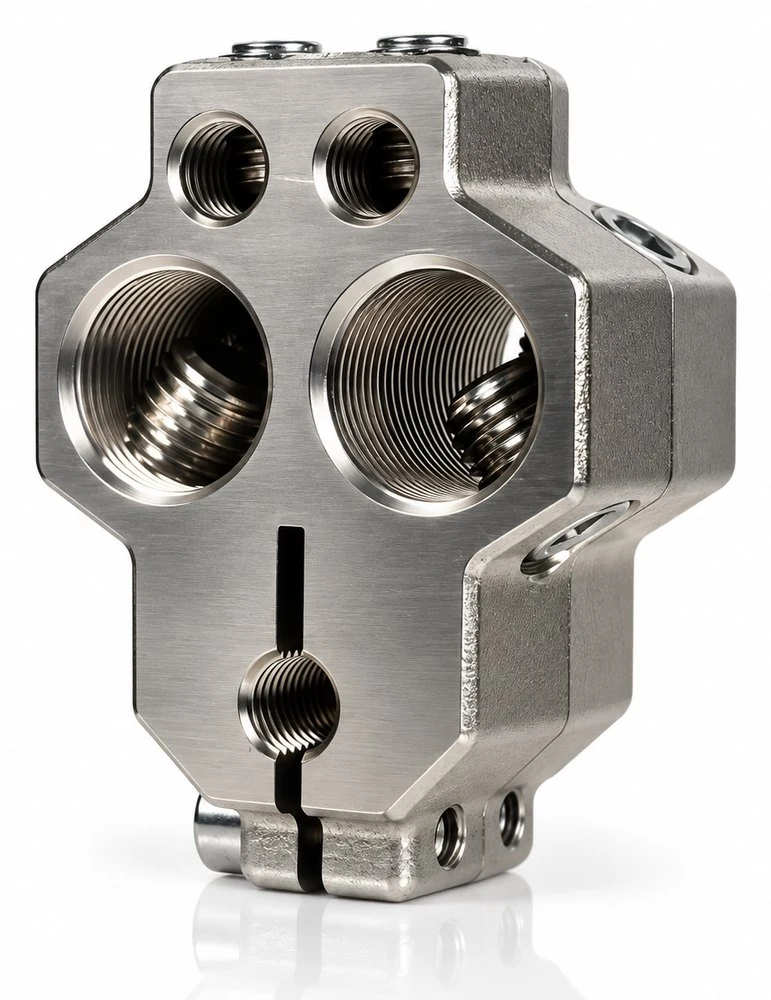 TOC-2 – compactsame connection capacity, smaller footprint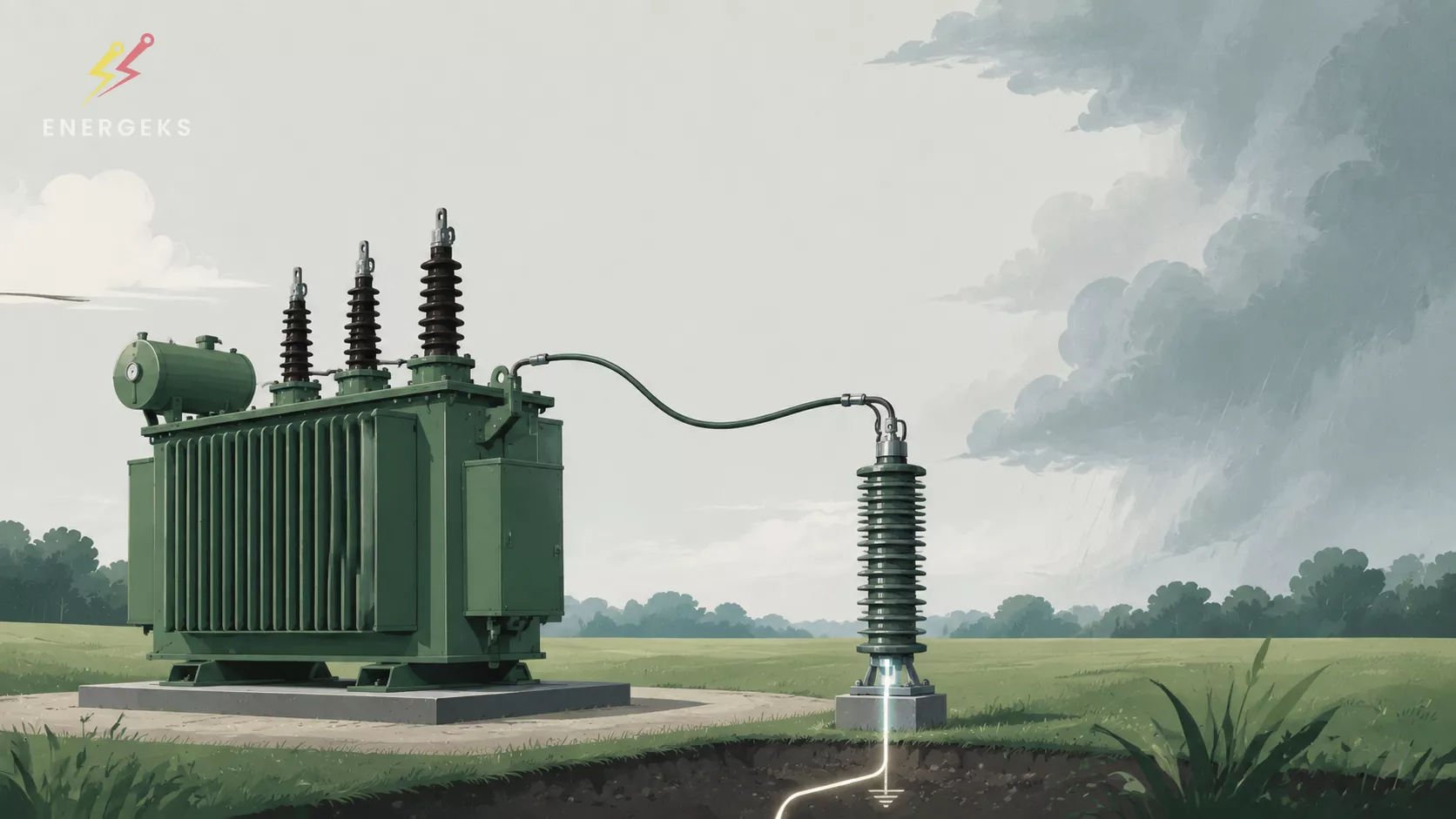
Heat melts people. Thunderstorms test transformers.
And it does it in microseconds.
The heatwave season has its own physics. The air stands still, asphalt softens, and we all slowly change our state of matter. A person starts treating shade like premium real estate, and every fridge opening sounds like a strategic decision.
And then the storm comes.
For a moment, it brings relief. The temperature drops, the wind picks up, the air regains its meaning. Except that for the power grid, that same storm is not a pleasant break from the heat. It is a test whose outcome can be decided in less time than a blink of an eye. Much less.
0.000001 seconds. That is how long one microsecond lasts.
It is on this scale that the front of a lightning surge develops. Does the transformer have a chance to survive it? Yes, provided that the right decisions were made before the first flash appeared in the sky.
The overvoltage reaching the transformer develops in microseconds. The operator will not have time to react. The controller will not call a meeting. The transformer also does not have a moment to "prepare" its insulation. The outcome is decided by solutions chosen earlier: insulation coordination, the type and parameters of the surge arrester, its location, the length of the connections, and the quality of the entire surge current discharge path.
This is why lightning protection for a transformer is a good topic right now. Not because a thunderstorm is spectacular, but because it reminds us of a simple rule in power engineering: the most important protections do their work when no one has time left to make a decision.
What really threatens the transformer during a thunderstorm?
A lightning strike does not have to hit the transformer directly to cause a dangerous overvoltage. A surge can enter the system through several paths.
A direct strike on an overhead line introduces a very high current with a steep change over time. A strike near the line can induce voltage in the conductors. Another possibility is a strike to a structure, a lightning protection system or the ground, which causes a sudden change in the potential of the earthing system. A surge wave can also arrive from another part of the grid, travelling along conductors and cables.
The transformer therefore sees not so much the flash itself, but the voltage wave appearing at its terminals.
If the value and steepness of this wave exceed the insulation's ability to withstand the electrical stress, a flashover on the bushing, breakdown of the main insulation or damage to the turn‑to‑turn insulation can occur. Not every event ends with an immediate short circuit. Sometimes the impulse leaves behind a weakening, local damage or the beginning of a degradation process that will manifest itself later.
This is precisely why the absence of a failure immediately after a storm is not automatically proof that the protection system worked perfectly. Insulation can remember electrical stress, even though it does not keep an event log.
Why do we talk about microseconds?
In high‑voltage engineering, the resistance of equipment to atmospheric overvoltages is assessed, among other things, using a standardised voltage impulse. The designation 1.2/50 µs describes a waveform whose nominal rise time is 1.2 microseconds and whose time to fall to half the value is 50 microseconds.
This is a test model, not a photographic portrait of every lightning strike. It does, however, allow the insulation strength of equipment to be compared and consistent principles of insulation coordination to be established.
One microsecond is one millionth of a second. In 1.2 microseconds, an electromagnetic wave can travel hundreds of metres, depending on the propagation medium. From a human perspective, nothing has happened yet. From the transformer's perspective, the voltage has already reached a level that can determine the fate of its insulation.
The steepness of the impulse is as important as its peak value. For fast‑changing currents, every fragment of conductor has inductance. The voltage on such a connection can be described by the relationship:
UL = L × (di / dt)
The faster the current rises and the greater the inductance of the connection, the greater the additional voltage drop. This voltage can add to the residual voltage of the arrester and appear at the terminals of the protected device.
The example is illustrative. If the connection has an inductance of about 1 µH and the surge current changes at a rate of 10 kA/µs, the connection itself can contribute about 10 kV. This does not mean that every metre of conductor always "costs" exactly 10 kV. It does, however, show the scale of the phenomenon and explains why, in surge protection, a short path is an electrical parameter, not an installer's aesthetic preference.
Does a lightning rod protect the transformer?
Yes, but not by itself and not against every scenario.
The external lightning protection system is designed to intercept a direct strike on the protected structure, conduct the current along a designated path and disperse it into the ground. It thus limits the risk of physical damage to the structure and the danger to people. The scope of this protection is described by the IEC 62305 series.
A surge arrester works on a different part of the problem. Its task is to limit the overvoltage on the device and direct the surge current to the earthing system. In medium‑voltage networks, it protects, among other things, transformers, bushings and switchgear against atmospheric and switching overvoltages.
Insulation coordination connects both worlds with the transformer itself. It consists of selecting the insulation strength, the protection level of the arresters and the system configuration so that the stress reaching the device remains below its assumed withstand level, with an appropriate margin.
So you can build a correct lightning protection system for the building and still leave the transformer with insufficient protection against a wave arriving via a conductor. You can also choose a good arrester and weaken its effectiveness with excessively long connections. Protection works as a system. The logo on one component does not replace the physics of the entire surge path.
How do arresters work, i.e., metal‑oxide surge arresters?
In modern AC networks, gapless metal‑oxide surge arresters with metal‑oxide resistors are widely used. Their requirements are specified in IEC 60099‑4 for systems with the highest voltage for equipment above 1 kV.
In everyday language, they are often called lightning arresters. In industry jargon, the more precise term is surge arrester, because the device does not catch lightning like a baseball glove. It limits the voltage and creates a controlled path for the surge current. A small linguistic difference, perhaps, but behind it lies the entire principle of operation.
The heart of the arrester is a non‑linear block, most often based on zinc oxide. Under normal conditions, the arrester has a very high resistance and only conducts a small leakage current. When the voltage rises sharply, its characteristic changes dramatically. The arrester begins to conduct the surge current, directing it to earth and limiting the voltage on the protected device.
After the overvoltage subsides, it returns to a high‑resistance state. It does not "swallow" the entire lightning strike and does not make the voltage disappear. It limits it to a specific level, called the residual voltage or protection level, and absorbs and dissipates part of the energy.
The whole process involves the appearance of the overvoltage, the rapid increase in the arrester's conductivity, the discharge of the surge current and the device's return to a high‑resistance state. For it to actually protect the transformer, the residual voltage, together with additional drops on the connections, must remain safely below the impulse withstand voltage of the insulation.
ZnO, spark gap or a special solution?
Different constructions can be found on the market and in older installations. Not all of them should be lumped together in the same drawer.
The modern standard for transformer protection is gapless arresters with ZnO blocks. They react thanks to the strongly non‑linear characteristic of the material and can withstand successive surges within their declared capability.
Older spark‑gap constructions, often with silicon carbide resistors, are still operating in some facilities. When modernising, ZnO is usually considered, but a "one‑to‑one" replacement without checking the network parameters and insulation coordination is not a good shortcut.
There are also special solutions, for example arresters with an external spark gap used on lines, and constructions for GIS. Their application is determined by the function, the insulation system and the overvoltage analysis, not by a catalogue power ranking.
The most effective therefore does not mean the most impressive in the catalogue. It means properly selected for the voltage, the network earthing method, the expected energy, the transformer's LI level and the environmental conditions.
Insulation coordination: the most important conversation between the transformer and the arrester
IEC 60076‑3 specifies the insulation requirements, dielectric tests and minimum test levels for transformers. The IEC 60071 series sets out the principles of insulation coordination for equipment and installations above 1 kV.
In design practice, at least two levels must be compared:
the rated lightning impulse withstand voltage of the transformer, often abbreviated as LI
the protection level provided by the arrester under specific current and impulse shape conditions
A margin should remain between them, taking into account uncertainties, the installation configuration, the distance from the transformer, the inductance of the conductors, wave phenomena and actual operating conditions.
It is not enough to check whether the number on the arrester data sheet is lower than the number on the transformer documentation. The voltage seen by the insulation can be higher than the residual voltage itself. Inductive drops and the effect of distance from the device must be added.
The shortest version of this rule is: the arrester does not protect the transformer's catalogue. It protects a specific transformer in a specific installation.
How to select a surge arrester for a transformer?
Selection begins with the system data, not with one voltage printed on the housing.
✅ Continuous operating voltage
The Uc value, i.e., the permissible continuous operating voltage, must correspond to the highest voltage that can occur on the arrester for a long time. The neutral earthing method and the voltage rise of healthy phases during an earth fault are important.
Too low a Uc can expose the arrester to overload during a temporary overvoltage. Too high a Uc usually means a higher protection level, which can reduce the margin for the transformer insulation.
✅ Rated voltage and temporary overvoltage withstand
The Ur and TOV parameters must be assessed together with the duration of the possible overvoltage. The arrester must survive a real fault scenario or other disturbance in the given network, not just the nominal operating point.
✅ Protection level
The residual voltage must be compared with the transformer's impulse withstand level. The influence of connections and location must also be taken into account. A low value in the table is useful only when the installation allows it to be exploited.
✅ Energy and charge capability
The exposure depends on the network configuration. Different requirements may apply to a station supplied by a long overhead line in an area of high lightning activity than to a device operating in a cable system. Switching overvoltages, the repeatability of surges and the nature of the protected facility also matter.
✅ Environmental and mechanical conditions
Altitude above sea level, pollution, UV radiation, temperature, humidity and mechanical loads influence the choice of design. The selection of a silicone or porcelain housing should result from the project conditions.
✅ Behaviour in the event of failure
The short‑circuit class, the method of safe venting or disconnection, and the risk to people and adjacent equipment must be considered. Protection of the transformer must not create a new problem at the moment when the arrester itself reaches the end of its service capability.
Why is the installation location just as important as the selection?
The best arrester placed too far from the transformer can provide weaker protection than a properly selected device mounted at the protected terminal.
Three principles decide:
the smallest possible distance between the arrester and the transformer bushing
short, straight connections on the phase and earthing side
avoiding loops, sharp changes of direction and unnecessary conductor sections
During surge current flow, the impedance of the entire path matters, not just the earthing resistance measured at power frequency or by a method suitable for static conditions. A fast impulse "sees" the inductance of the conductors, the geometry of the system and the mutual position of the connections.
Therefore, a larger conductor cross‑section does not automatically fix the problem of excessive length. Cross‑section remains important for thermal, mechanical and short‑circuit reasons, but for a very steep impulse, the path geometry can determine the induced voltage.
It is here that theory meets execution detail. An extra metre of conductor may look innocent. For an impulse measured in microseconds, it is a fully‑fledged circuit element.
Earthing: where should the energy actually flow?
A surge arrester does not remove energy from the system. It provides a controlled path for it. If this path has a high impulse impedance or is routed in a way that creates significant potential differences, the voltage on the protected device can still reach a dangerous level.
An effective system requires continuity of connections, correct connection of the transformer tank, the structure, cable screens and the other elements covered by the earthing design. Equipotential bonding is also important. During a discharge, the potential of the local earth electrode can rise sharply. The goal is not to magically keep the entire station at perfect zero potential, but to limit dangerous potential differences and ensure a predictable current path.
The earthing resistance value alone does not tell the whole story. Proper geometry, connections of adequate durability, corrosion control and compliance with the lightning protection design and network requirements are also needed.
Earthing is a bit like an evacuation route. Knowing that it exists is not enough.
It must lead where it should, be clear and work exactly when things get crowded.
Does a cable line eliminate the risk of atmospheric overvoltages?
No. It changes the risk profile but does not cancel it.
A cable is less exposed to a direct strike than an overhead line. A wave can, however, enter at the transition point from an overhead line, be caused by a rise in earth potential, or arrive from another part of the grid. Reflections at the boundaries of different impedances also change the voltage. Therefore, terminations, cable length, screens, earthing and surge limitation points must be analysed. A cable underground does not receive immunity from thunderstorms.
Is it enough to protect the MV side?
An arrester on the MV side protects the transformer against a wave arriving from that grid, but an impulse can transfer between windings. On the LV side, today there are controllers, inverters, measurements, communication and automation. Therefore, protection should be layered: include MV, coordinated SPDs on the LV side, auxiliary and signal circuits, and equipotential bonding. Protection of the transformer and of the electronics are related but not identical tasks.
7 mistakes in transformer lightning protection
A poorly selected arrester is a bit like a solid door installed next to the entrance.
It looks professional, but lightning has no obligation to use it.
❌ The first mistake is selection based solely on the rated network voltage.
Omitting the neutral earthing, the earth‑fault clearing time and TOV can give an incorrect Uc value. Too low a value exposes the device to overload, while too high a value can worsen the protection level.
❌ The second is installation far from the bushing.
In a surge, there is no such thing as "just a piece of conductor". Every section contributes inductance.
❌ The third is running long, looped connections to the earthing system.
A neatly routed conductor does not always mean a good surge path.
❌ The fourth is treating earthing resistance as the only measure of protection quality.
The measurement result is important, but it does not replace the assessment of continuity, geometry and impedance for fast transients.
❌ The fifth is the lack of coordination with the transformer insulation level.
The arrester cannot be selected in isolation from the LI, bushings, cables and switchgear.
❌ The sixth is neglecting the low‑voltage side and auxiliary circuits. A surge usually does not read the scope of delivery.
❌ The seventh is assuming that the arrester is permanent.
Multiple surges, moisture, damage and deteriorating connections can change its condition.
This does not mean replacement after every storm, but regular inspection instead of a wishful "it still looks fine".
Lightning vs. the budget: why protection simply pays off
The price of the arrester and correct installation is easy to see in the cost estimate. The price of a transformer failure has many more items, and some of them only appear when the device stops working.
The bill may include diagnostics, transport of heavy equipment, service work, equipment rental, repair or replacement of the transformer, emergency actions and loss of supply continuity. In a production plant, the cost of a stopped process is added. In an infrastructure facility, service availability matters. On a photovoltaic farm, every hour of downtime can mean energy that cannot be produced later.
Depending on the transformer power and the effects of the downtime, the total cost of an event can quickly reach tens or hundreds of thousands of PLN, and for large units much more. It is not worth promising, however, that any arrester will solve this problem. Savings only appear when the device is part of a properly coordinated system.
The investment therefore includes not only the purchase of the device. It includes selection, proper positioning, short connections, effective earthing, protection of subsequent levels and later inspection. This is less spectacular than a slow‑motion lightning video. It does, however, look much better in the installation availability report.
How to check protection after station commissioning?
Surge protection requires inspections adapted to the type of equipment, the manufacturer's recommendations and the importance of the facility.
During an inspection, it is worth considering:
the condition of the arrester housing, contamination, signs of discharge and mechanical damage
the quality of the terminals, phase and earthing connections
the continuity of equipotential bonding and the condition of the earthing
the readings of operation counters, if fitted
the trend of leakage current or its resistive component in installations equipped with monitoring
compliance of the station configuration with the design after modifications
A surge counter informs about events, but does not diagnose the arrester. Leakage current monitoring also requires interpretation. The greatest value comes from trends and comparison with the manufacturer's criteria. After a severe storm or protection operation, a targeted inspection based on the device condition and exposure history is advisable.
Good protection does not fight the storm. It manages its effects.
We cannot stop lightning discharges, and we are unlikely to persuade July to lower its temperature out of respect for infrastructure. We can, however, decide how the surge energy will pass through the station and what voltage the transformer insulation will see.
Effective protection is created when the transformer, arrester, connections, earthing and other protection levels are treated as one system. The arrester must have parameters appropriate for the network. It should be located close to the protected terminal. The current path must be short and consciously designed. The protection level should maintain an appropriate margin relative to the insulation strength.
That is a lot of dependencies for an event that lasts a few dozen microseconds.
That is precisely why it is worth resolving them calmly at the design stage, before the first summer storm appears over the station. If you are selecting a transformer, a transformer station or a surge protection system, let us compare the device parameters and the network configuration as a whole. Good questions asked today can do very concrete work during the next flash.
Energy deserves a good path
We cannot stop a storm. We cannot ask a lightning discharge to wait for the end of an inspection, and we are unlikely to persuade August to lower its temperature out of respect for infrastructure. We can, however, decide what happens at the moment the surge wave reaches the station.
We can give it a short, predictable path to earth. We can match the protection level to the actual insulation strength. We can look at the transformer, arrester, bushings, conductors, cables and earthing as one system, not seven separate items in an order.
And that is good news. In power engineering, we do not have influence over everything, but we have enormous influence over the quality of design decisions.
Thank you for taking the time to enter the world of microseconds with us. We know that surge protection does not sound as spectacular as lightning itself. In practice, it is precisely this protection that allows the transformer to continue doing its job after the flash: without drama, without downtime and without costly improvisation.
If you are selecting a transformer for a new station, modernising an existing system or want to verify parameters before submitting an enquiry, take a look at the oil‑immersed and cast‑resin transformers in the Energeks range. It is worth starting the conversation not only with the power in kVA, but also with the voltages, the LI level, the network operating mode, the environmental conditions and the entire protection concept.
Do you have a project where the arrester, cable and transformer must finally start talking to each other? Contact the Energeks team. We will look at the data, organise the technical questions and seek a solution matched to the real installation.
And if you like power engineering told concretely, with technique, experience and a touch of humour, follow Energeks on LinkedIn. There we share knowledge about transformers, stations, renewables and everything that makes energy go exactly where it is needed.
Thank you for your trust, your questions and every technical conversation. They help create better projects.
A thunderstorm may have the last flash.
But it does not have to have the last word.
Sources:
IEC 60071-1:2019, Insulation co-ordination, definitions, principles and rules
IEC 60099-4:2014, Metal-oxide surge arresters without gaps for AC systems
IEC 60076-3:2013 with Amendment 1:2018, Power transformers, insulation levels and dielectric tests
IEC 62305-1:2024, Protection against lightning, general principles
Hubbell Power Systems, The Importance of Lead Length for Arrester Applications
Transformers in stock
Shipped from our warehouse in Poland within 2–3 working days, 5-year warranty. Full range 25–2500 kVA in the shop (prices in PLN).

Transformers, transformer stations, MV/LV switchgear and infrastructure for renewables are all part of the same puzzle. An energy storage system is not a lonely island. It is an element of a system that must communicate with the grid, the inverter, protection devices, automation, and the operator's requirements.
This article is for renewable energy investors, designers, general contractors, industrial plants, PV+BESS farm developers, and everyone who wants to understand why a transformer for an energy storage system should not be selected like a standard transformer from a catalogue.
We often imagine an energy storage system as one large battery: containers, lithium‑ion modules, a cooling system, inverters, monitoring, algorithms. But in practice, all this technology is of little use if the energy cannot safely enter the grid and return from it.
And this is where the transformer enters the stage.
It is the gateway between the world of batteries, inverters and the PCS system, and the medium‑voltage grid. A bit like a lock in a canal: on one side we have the dynamic, fast, electronic world of the energy storage system; on the other – the stable, demanding and unforgiving power grid.
If the lock is poorly chosen, the whole project begins to lose efficiency, reliability and predictability.
The energy storage market is growing very rapidly.
According to the IEA, energy storage was the fastest‑growing commercially available energy technology in the power sector in 2023, with global battery storage additions reaching 42 GW.
This means one thing: more and more investors will have to ask themselves not only "which energy storage system to choose?" but also: "which transformer to select so that this storage system really works well?"
In the text, we will cover:
the role of the transformer in a BESS system,
the differences between a transformer for PV, industry and energy storage,
power rating selection in kVA/MVA,
the choice between oil‑immersed and dry‑type transformers,
the impact of harmonics, cyclicity and bidirectional operation,
the mistakes that most often cost the most,
a practical checklist for RFQ specifications.
Reading time: about 10 minutes
Energy storage is not a "large UPS"
The biggest mistake at the start?
Treating energy storage as a larger version of a backup installation.
Yes, a storage system can serve an emergency function. It can supply a facility when the grid is not working.
It can stabilise voltage, reduce peak power demand, or cooperate with photovoltaics. But a modern BESS, or Battery Energy Storage System, is not just a battery.
It is a power system with its own dynamics.
IEC TS 62786-3:2023 describes the requirements for stationary battery energy storage systems connected to distribution networks, including connection schemes, switchgear, operating range, active and reactive power response, power quality, protection, monitoring, control and grid‑connection tests.
The very list of these areas shows that an energy storage system is an active participant in grid operation, not just a consumer or a simple source.
A transformer in such a system must therefore do more than the classic "step up the voltage".
It must work with inverters, withstand variable load profiles, respond to bidirectional operation, and function in an environment where power electronics generate different phenomena than a traditional industrial consumer.
What exactly does a transformer do in an energy storage system?
In simple terms: the transformer matches the voltage of the PCS/inverter system to the grid voltage or the facility's internal installation.
On the battery side, we have direct current. The PCS system converts it to alternating current.
Then the transformer steps up the voltage to the level required by the LV or MV grid, most often in industrial and renewable projects to medium voltage.
But that is only the simplest description.
In reality, a transformer in a BESS system performs several functions simultaneously:
it galvanically isolates the storage system from the grid,
it matches voltage levels,
it affects the earthing method and protection operation,
it limits the transfer of some disturbances,
it must withstand loads resulting from inverter operation,
it operates both during charging and discharging of the storage system.
In a classic PV farm, the energy flow is essentially unidirectional: from the panels through the inverters to the grid. In an energy storage system, energy flows in both directions.
In the morning, the storage system may charge from the grid or from PV; in the afternoon, it may discharge; in the evening, it may operate in price arbitrage; and at night, it may provide a system service.
The transformer therefore does not have one "calm" operating profile.
It has a daily rhythm resembling breathing: inhale, exhale, pause, fast response, repeat.
The infographic shows a simplified diagram of a transformer's operation in an energy storage system. On the left is a battery container, from which energy goes to a PCS inverter that converts DC to AC. The central element is the transformer, which matches voltage levels, isolates the storage system from the grid, supports earthing and protection, and limits some disturbances from the power electronics. On the right, the power grid and industrial infrastructure are shown. Bidirectional arrows symbolise charging and discharging of the storage system, i.e., the flow of energy both from the battery to the grid and from the grid to the battery.
CC: ENERGEKS 2026
First question: what is this storage system for?
We do not select a transformer "just because".
We select it for a function.
A different transformer will make sense for an industrial plant that wants to reduce its contracted capacity. Another for a PV farm with a 10 MW/20 MWh storage system.
Another for a large grid‑scale storage system that is to provide balancing and regulation services or support a local grid node.
Before selecting a transformer, several questions must be answered:
Will the storage system operate mainly behind the meter, i.e., on the consumer's side?
Will it be connected as an independent unit to the grid?
Is it to cooperate with a photovoltaic farm?
Will it charge from the grid, from PV, or from both sources?
Will it frequently switch from charging to discharging?
Is it to supply reactive power?
Does the operator require a specific voltage regulation range, communication and observability?
These are not formal questions. They are questions that determine winding temperature, losses, power margin, connection group, cooling type and insulation durability.
Transformer power: kVA, MW and MWh are not the same thing
This is the point where it is easy to fall into a trap.
An energy storage system is usually described by two parameters: power and capacity.
Example: 5 MW / 10 MWh. The first value tells you how much power the system can charge or discharge. The second tells you how long it can maintain that power.
We do not select a transformer directly based on MWh.
The transformer "sees" primarily apparent power, i.e., kVA or MVA, and the load profile over time.
If the storage system has a PCS power of 5 MW and is to operate at a power factor of 1, the minimum apparent power is theoretically about 5 MVA.
But if reactive power supply or absorption is required, operation at cosφ = 0.9, or a wider regulation range, the apparent power increases.
For example:
5 MW / 0.9 = 5.56 MVA
This means that a 5 MVA transformer may be too tight if the system is to operate dynamically and provide additional grid services. In practice, the designer may consider a 6.3 MVA unit, but the final choice depends on the PCS requirements, the operator, the operating profile, environmental conditions and the overall system architecture.
Similarly for a 2 MW storage system:
2 MW / 0.9 = 2.22 MVA
Here, a natural point of analysis may be a 2.5 MVA transformer, but not as an "automatic answer", only as a result of calculations and coordination with the rest of the system.
⚡ The most important rule: MWh capacity tells you how large the "energy tank" is.
MW power and operating requirements tell you how wide the "pipe" through which this energy flows must be. We select the transformer for the pipe, not for the tank itself.
Oil‑immersed or dry‑type transformer?
This is one of the most common questions from investors.
The answer is: it depends on the location, power, fire risk, environmental conditions and the facility's requirements.
Oil‑immersed transformer for energy storage
An oil‑immersed transformer is very often a natural choice for larger energy storage systems, PV+BESS farms and outdoor transformer stations.
It has high heat dissipation capability, good overload capacity, a wide range of available powers, and performs well in outdoor applications.
In containerised projects and MV stations, an oil‑immersed transformer can operate as part of a compact infrastructure: energy storage, PCS, switchgear, transformer, metering and protection system. For larger powers, oil gives the designer greater thermal flexibility.
It is worth remembering, however, the requirements for oil containment basins, environmental protection, clearances, fire protection and site approvals.
In special environmental conditions, the use of esters can be considered, but this too should result from the design, not from fashion.
Dry‑type transformer for energy storage
A dry‑type transformer, especially cast‑resin, is a good solution where fire safety, indoor operation, limiting the risk of insulating liquid leakage, or location near utility infrastructure are important.
In energy storage systems installed at industrial plants, logistics centres, commercial facilities or technical buildings, a dry‑type transformer may be more acceptable from the point of view of health and safety, the insurer and the building designer.
However, it is more sensitive to cooling conditions.
It does not like being "closed in a cupboard" without airflow and expected to work like a transformer in an ideal test hall.
Ventilation, ambient temperature, dust, humidity and service space are of great importance here.
BESS is bidirectional operation. The transformer must be ready for it
In a typical industrial consumer, energy flows from the grid to the plant. In a classic PV farm, it flows from the source to the grid. In an energy storage system, it flows in both directions.
During charging, the transformer works as an element supplying the storage system. During discharging, it becomes part of the energy export path. This affects:
protection selection,
directionality of measurements,
automation,
MV/LV protection settings,
operator requirements,
active and reactive power flow analysis.
For this reason, the transformer for an energy storage system should be designed together with the PCS system, switchgear, protection and connection scheme. It should not be added at the end like a missing piece.
CIGRE, in its guidelines for BESS connection stations, indicates that the design of such infrastructure covers the entire life cycle: from design and development, through commissioning, to asset management, including output power assessment and parameters at the PCC. This is important because the transformer is not a separate product in a vacuum. It is part of the entire storage system's capability to operate at the point of connection.
Harmonics: the silent enemy of the transformer
Inverters and power electronic converters are the heart of an energy storage system. Without them, the battery could not cooperate with the AC grid. But power electronics generate phenomena that cannot be ignored.
One of them is harmonics.
Harmonics can increase additional losses in the windings and structural components of the transformer. They can cause additional heating, affect insulation durability and require appropriate thermal margin. It is a bit like driving a car on a smooth motorway and on cobblestones. The average speed may look similar, but the suspension load is completely different.
Therefore, when selecting a transformer for BESS, it is worth requiring data on:
the harmonic spectrum generated by the PCS,
current and voltage THD,
switching frequency,
filtering requirements,
permissible power quality levels,
operation under partial load.
IEC TS 62786-3:2023 covers, among other things, power quality, EMC, interface protection, active and reactive power response, and grid‑connection tests. This shows that the transformer for an energy storage system must be selected in the context of the entire electrical environment, not only voltage and rated power.
Transformer losses: small watts, big money
In energy storage systems, much attention is paid to battery, inverter and cooling system efficiency. The transformer is often treated as an obvious element. That is a mistake.
A transformer has no‑load and load losses. No‑load losses occur when the transformer is energised, even if the storage system is not operating at full power. Load losses increase with current flow.
A simple example like a power bill:
If a transformer has 3 kW of no‑load losses and is energised all year round, that gives:
3 kW × 8760 h = 26,280 kWh per year
That is over 26 MWh of energy lost annually on no‑load alone. For larger units, several transformers or a long project life, the difference between an average and an optimised solution can mean tens or hundreds of megawatt‑hours of losses over the entire operating life.
In an energy storage system that earns money from price differences, flexibility services or peak demand reduction, every unnecessary loss is like a leak in a tank. Small, seemingly. But it works every day.
Voltage, connection group and earthing – technical details that determine system operation
The selection of a transformer for BESS starts with voltages.
On one side we have the PCS voltage, often at LV level. On the other side we have the MV grid, e.g., 15 kV, 20 kV or another level specified in the connection conditions. The transformer must match these worlds not only in voltage but also functionally.
Important parameters are:
primary and secondary voltage,
rated power,
connection group,
short‑circuit voltage,
tap‑changing range,
insulation level,
neutral earthing method,
parallel operation requirements,
compatibility with protections.
The connection group is not cosmetic. It affects phase shift, behaviour during earth faults, zero‑sequence current flow and protection coordination. In projects with multiple PCS units, an architecture with several block transformers instead of one large unit can be considered. This can improve modularity, serviceability and availability.
Operator requirements: the transformer must fit the grid, not just the storage system
In Poland, an energy storage system does not end with the container and the detailed design. It ends when it can be safely connected, commissioned and operated in accordance with the operator's requirements.
TAURON Dystrybucja indicates that, in agreement with the DSOs associated in PTPiREE, procedures for obtaining a permit for use for type D electricity storage systems were developed, effective from 31 March 2026. The same page gives the maximum power thresholds for types B, C and D: 0.2 MW, 10 MW and 75 MW respectively.
This is important because, as the project power increases, not only the transformer power increases. The number of requirements regarding documentation, observability, controllability, tests, protections and connection conditions also increases.
URE also informed about new "General Application Requirements" resulting from NC RfG, which came into force on 1 December 2025 for type B, C and D units for which connection conditions are issued from that date. In practice, this means that BESS projects, especially hybrid PV+BESS or those connected as active grid resources, should be analysed not only from the equipment side but also from the formal‑technical requirements side.
Transformer for PV+BESS: one system, two operating profiles
A photovoltaic farm and an energy storage system look like a natural pair. PV produces energy when the sun shines. The storage system allows its use to be shifted in time, reduces curtailment, smooths the generation profile or increases self‑consumption.
But for a transformer, such a system can be more demanding than the PV farm alone.
Why?
Because PV generates energy in a specific daily profile, dependent on insolation. BESS can charge and discharge according to market, grid or industrial strategy. Sometimes the energy from PV feeds the grid, sometimes it charges the battery, sometimes the battery discharges to the grid, and sometimes the whole system operates with export power limitation.
The transformer must be selected for the real power flow scenario, not just the sum of nameplate powers.
Example:
A 20 MWp PV farm and a 10 MW / 20 MWh storage system do not automatically mean that the transformer must be 30 MVA. If the connection conditions limit export to 20 MW and the EMS strategy monitors the operating profile, the selection may look different. However, if the system is to have the ability for fully independent operation of the source and the storage system, the transformation power requirement may be greater.
This is the moment when simulations, connection conditions and a clear EMS strategy are needed. Without this, transformer selection is like choosing a bridge without knowing how many trucks will cross it and in which direction.
Transformer for industrial energy storage
In industry, energy storage often has a very practical function: to reduce peak demand, improve PV self‑consumption, provide reserve, stabilise the operation of loads or reduce contracted capacity costs.
Here, the transformer may be part of an existing plant station or new infrastructure dedicated to the storage system. The choice between a dry‑type and oil‑immersed transformer depends on the location.
If the storage system is located next to a production hall, in a technical building or close to people, a dry‑type transformer may be the natural choice. If the system is larger, installed outdoors and operates in a containerised station, an oil‑immersed transformer may be more advantageous in terms of thermal performance, power and cost per MVA.
For industry, the following are particularly important:
noise,
installation location,
fire safety,
service access,
compatibility with existing switchgear,
operation with sensitive loads,
expandability.
An energy storage system in a plant should not be designed as a gadget for invoice optimisation.
It is a new active element of the internal power network.
Transformer for a large grid‑scale storage system
In large grid‑scale projects, the transformer becomes part of a block architecture.
Instead of one huge unit, several blocks are often used: PCS + block transformer + MV switchgear, followed by a power take‑off to the main station.
Such architecture gives greater flexibility, facilitates servicing and limits the consequences of failure of a single component.
For a 50 MW / 100 MWh storage system, several blocks of 5 MW, 10 MW or more can be considered, depending on the PCS used and the connection concept. Then the question is not only "which transformer?" but "which transformation architecture gives the best compromise between efficiency, availability, cost and risk?".
This is especially important when the storage system is to earn money from system services. Failure of one transformer in a modular system can limit the power of part of the system. Failure of one central element can stop a much larger part of the project.
How to prepare a RFQ for a transformer for a BESS energy storage system?
Selecting a transformer for an energy storage system does not start with the question: "how much does a 2.5 MVA transformer cost?"
It starts with a much more interesting question: how will this storage system really operate?
Because BESS is not a fridge that simply draws power from a socket. It is an active power system that sometimes draws energy, sometimes gives it back, sometimes supports the grid, sometimes charges from PV, and sometimes does everything so dynamically that the classic approach of "let's choose a transformer with some margin and it will be fine" starts to resemble driving a sports car on wheelbarrow tyres.
We advise on the selection of transformers for energy storage systems based on actual operating parameters, not just a single power value from a table.
Below, we show what data is worth preparing and why each item matters.
PCS power in MW – how wide the energy flows
PCS power determines how much power the storage system can charge and discharge. This is one of the most important parameters for transformer selection, because the transformer must handle the actual power flow between the inverter and the grid.
If the PCS has a power of 2 MW, 5 MW or 10 MW, the transformer must be selected not only for that value but also for the system's operating mode. Will the storage system operate continuously? Will it respond to demand peaks? Will it provide grid services? Will it frequently change the direction of energy flow?
PCS power is not just a number. It is the rate at which energy "breathes" through the transformer.
Storage capacity in MWh – how large the energy tank is
Storage capacity, expressed in MWh, tells us how much energy the system can store. We do not select the transformer directly based on MWh, but this value helps to understand how long the storage system can operate at a given power.
A 5 MW / 10 MWh storage system can operate at full power for about 2 hours. A 5 MW / 20 MWh storage system can do so for about 4 hours. For the transformer, this means a completely different thermal profile.
A short power pulse is one thing. Several hours of regular operation under high load is another conversation. The transformer does not get offended immediately, but the winding temperature remembers everything.
Maximum charging and discharging power – because BESS works in both directions
In a classic consumer, energy flows from the grid to the consumer. In a PV farm, most often from the source to the grid. In an energy storage system, we have bidirectional movement.
Therefore, we need to know the maximum charging power and the maximum discharging power. Sometimes they are the same, sometimes different. This affects the selection of transformer power, protection, measurement and the whole system logic.
A transformer in BESS does not have the quiet life of a retiree. It is more like a goalkeeper at an airport: sometimes it lets energy through in one direction, sometimes in the other, and all the time it has to keep order.
Required cosφ or reactive power range – not only active power keeps the grid alive
Active power, expressed in MW, does useful work. But the power system also needs control of reactive power. That is why we ask about the required power factor cosφ or the range of operation with reactive power.
Why is this important?
Because the transformer is selected for apparent power, i.e., kVA or MVA. If the storage system is to operate at cosφ = 1, the situation is simpler. If it is to operate at cosφ = 0.9 or supply/absorb reactive power according to the operator's requirements, the required apparent power increases.
Example:
5 MW at cosφ = 1 means about 5 MVA.5 MW at cosφ = 0.9 already means about 5.56 MVA.
The difference is not academic. It can decide whether the transformer will operate with a comfortable margin or whether it will ask the designer every day: "did you really think that about me?"
PCS side voltage – the starting point for transformation
The PCS, or Power Conversion System, operates on a specific voltage side. The transformer must be matched to the inverter's output voltage and safely step it up to the grid or facility installation level.
This is a basic parameter, but it should not be treated routinely. A different PCS voltage means a different winding configuration, different currents, different losses and different protection requirements.
Simply put: before the transformer steps up the voltage, it must know which step it is starting from.
Grid voltage on the MV/LV side – where the energy is to go
On the other side of the system, we have the low‑voltage or medium‑voltage grid. In industrial and renewable projects, we most often talk about connection to medium voltage, e.g., 15 kV, 20 kV or another level specified in the connection conditions.
This parameter determines the transformer ratio, insulation level, MV switchgear, surge protection and compliance with the operator's requirements.
The transformer is the interpreter between the language of the PCS and the language of the grid. And in power engineering, the interpreter must know both languages perfectly.
Frequency – a simple but mandatory detail
In Poland and most of Europe, we operate at 50 Hz, but for international projects or unusual applications, this parameter must be clearly specified.
Frequency affects the core design, magnetic losses and transformer operation. For standard projects, this is an obvious point. For a good technical enquiry – still mandatory.
Number of PCS units and their connection method – one large system or several blocks?
An energy storage system can have one central PCS or several smaller units operating in parallel. It can also be built modularly: PCS + block transformer + switchgear.
This has a huge impact on the architecture of the entire installation. Several smaller transformers can improve serviceability and limit the consequences of failure of a single block. One larger unit may be more cost‑effective and simpler in layout, but it increases the importance of a single element for the availability of the entire system.
There is no one answer for all. But there is good engineering.
Required transformer short‑circuit voltage – the parameter that keeps short‑circuit currents in check
Short‑circuit voltage affects short‑circuit currents, voltage drops, parallel operation of transformers and protection coordination.
Too low a short‑circuit voltage can mean higher short‑circuit currents. Too high a value can cause greater voltage drops and affect system operation. Therefore, this parameter is not "fine print" in the specification. It is one of those values that decides whether protections work elegantly or start improvising.
And protections in power engineering should not have a talent for improvisation.
Connection group – phase geometry matters
The transformer connection group determines the winding connection method and the phase shift between the primary and secondary sides. It affects the system's behaviour during faults, zero‑sequence current flow, cooperation with protections and the possibility of parallel operation.
In BESS systems, where we have power electronics, measurements, directional protections and operator requirements, the connection group must be selected consciously.
It is a bit like setting the choreography in a three‑phase dance. If one side takes a step sideways and the other a step forward, the system may look spectacular only for the first few seconds.
Tap range – a small correction with a big impact on voltage
Transformer taps allow the ratio and voltage level to be adjusted to the grid operating conditions. In energy storage systems, this is particularly important when the installation operates under variable conditions, at different load levels, and with the possibility of exporting energy to the grid.
The tap range should correspond to the connection conditions and voltage requirements. A well‑chosen transformer gives the designer a regulatory margin. A poorly chosen one leaves them with a problem that later returns in measurements, complaints and nervous phone calls.
Insulation level – resistance to reality
The insulation level must correspond to the grid voltage, overvoltage conditions and operational requirements. This applies to both oil‑immersed and dry‑type transformers.
In practice, it is about the device's ability to operate safely in an environment where overvoltages, disturbances, switching operations, faults and all that energy weather that is not visible but which the transformer feels very well occur.
Insulation is no place for creative savings. It is the foundation of durability.
DSO/TSO requirements – because the grid has its rules
The distribution or transmission system operator specifies requirements regarding connection, protection, measurement, control, power quality parameters and system operation.
Therefore, when enquiring about a transformer, it is worth attaching the connection conditions or at least information on what stage the project is at. The operator's requirements can affect the voltage, connection system, protection, automation, measurement and station architecture.
An energy storage system can be modern, intelligent and beautifully described in a presentation. But if it does not fit the grid requirements, it is still only a very expensive container with ambitions.
Expected operating profile – the transformer also has a daily rhythm
Will the storage system operate every day? Will it charge at night and discharge during the peak? Will it cooperate with PV? Will it provide system services? Will it operate rarely but intensively?
The operating profile tells us how the transformer will be loaded over time. This is key for assessing temperature, losses, insulation durability and possible overload capacity.
Two storage systems of the same power may require a different approach if one operates calmly for several hours a day, while the other responds dynamically many times a day. On paper, they look similar. In the windings – not necessarily.
Harmonic spectrum from the PCS – because the inverter does not sing a pure sine wave
The PCS converts energy between DC and AC. It is the heart of the BESS system, but like all power electronics, it can introduce harmonics.
Harmonics cause additional losses, heating and loads for the transformer. Therefore, it is worth knowing the THD, harmonic spectrum, switching frequency and filtering requirements.
This is one of the most important reasons why a transformer for BESS should not be selected like a standard transformer for a calm consumer.
A sine wave from an inverter can be like a conversation after three coffees: essentially understandable, but full of nervous tremors.
Loss requirements – efficiency works all year round
Transformer losses have a real impact on the economics of an energy storage system. No‑load losses occur when the transformer is energised. Load losses increase with current flow.
In a BESS that is to earn money from price arbitrage, flexibility services, peak reduction or PV self‑consumption, every unnecessary loss reduces the financial effect.
That is why we ask about loss requirements and recommend analysing not only the purchase price but also operating costs over the entire life cycle. The cheapest transformer on the invoice is not always the cheapest in operation.
Location: indoor or outdoor?
The installation location influences the choice of transformer type, cooling, enclosure, protection, fire protection, noise, service access and building requirements.
Oil‑immersed transformers are often a good fit for outdoor installations, especially at higher powers. For indoor, industrial installations and facilities with increased fire safety requirements, cast‑resin dry‑type transformers are often worth analysing.
This is not about a fashion for "dry" or "oil". It is about the working environment, risk, power and technical common sense.
Environmental conditions – the transformer does not work in a catalogue
Ambient temperature, altitude above sea level, humidity, dust, salinity, ventilation, solar radiation, risk of flooding, aggressive industrial atmosphere – all of this matters.
A transformer from a catalogue lives in a beautiful world of even temperatures and ideal assumptions. A transformer in the field lives next to dust, heat, frost, rain, containers, cables and people who sometimes block ventilation grilles because "it's just for a moment".
That is why environmental conditions must be stated at the beginning. Then a device can be selected that will operate not in theory but in a real location.
Noise requirements – silence is also a technical parameter
A transformer generates noise. For industrial installations, this may not be a problem. For commercial, residential, office buildings or close to property boundaries – it can be very important.
Acoustic requirements should be specified at the enquiry stage. This allows the construction, location, enclosure or solutions to limit noise emissions to be selected.
Because a transformer should operate stably. It does not also need to give a nightly concert for the neighbours.
Oil‑immersed transformer, dry‑type transformer or an analysis of both variants?
At Energeks, we can advise on an oil‑immersed transformer, a dry‑type transformer, or compare both variants.
An oil‑immersed transformer usually works well for higher powers, outdoor installations, containerised stations and renewable projects. It has very good cooling properties and a wide range of applications.
A dry‑type transformer is often chosen for indoor installations, facilities with increased fire safety requirements, industry, logistics centres and places where limiting insulating liquid is an important argument.
The best choice does not come from an advertising slogan. It comes from the place of work, the power, safety requirements, ventilation, costs and the maintenance plan.
Temperature monitoring – because it is better to know earlier than by smell
Temperature monitoring of the windings and core allows the transformer's condition to be controlled, overloads to be responded to and operation to be better managed.
In BESS, where the operating profile can be dynamic, temperature monitoring is not a luxury. It is a practical tool for maintaining reliability.
Temperature sensors, protection relays, alarm signals and integration with the supervision system help to avoid situations where the first diagnostic message is "something is heating up".
Dimensional and transport limitations – because the transformer also has to get there
Power and electrical parameters are one thing. But the transformer must be delivered, unloaded, positioned and connected.
Therefore, we need information about dimensional limitations, weight, access road, foundation, room height, gate width, crane capabilities and service space.
This is very down‑to‑earth data. Literally. But without it, even the best transformer can become the hero of a logistical comedy that no one wanted to produce.
Planned system expansion – think about the second stage before the first stage sets in concrete
Energy storage systems are often designed in stages. Today 2 MW, in two years 5 MW. Today cooperation with PV, tomorrow additional grid services. Today one PCS, tomorrow additional blocks.
If the investor plans expansion, it is worth saying so immediately. This allows for a power margin, space in the station, switchgear configuration, cable cross‑sections, parallel operation capability and future connection strategy to be considered.
Power engineering likes planning. Improvisation is great in jazz, but in a transformer station we prefer notes, diagrams and protection selectivity.
What we advise at Energeks
We advise that the transformer for an energy storage system should be selected not as a separate device but as part of the entire BESS system: batteries, PCS, switchgear, protection, automation, transformer station and operator requirements.
We analyse:
whether an oil‑immersed or dry‑type transformer is better,
what rated power gives a safe margin,
what voltages and connection group suit the project,
how the operating profile will affect temperature and losses,
whether harmonics from the PCS require special attention,
what DSO/TSO requirements must be met,
how to prepare the transformer for future expansion.
⚡ The better the input data, the less guesswork.
And in power engineering, guesswork can be expensive, heavy and very awkward to transport.
Therefore, if you are planning a BESS energy storage system, a PV+BESS installation or an industrial energy optimisation system, it is worth starting with a well‑prepared technical enquiry.
We will help translate it into a specific transformer, station and MV/LV infrastructure selection.
Because an energy storage system starts with the battery only on a slide.
In reality, it starts where the energy must safely meet the grid.
A good transformer means a more relaxed energy storage system
A BESS energy storage system can do really beautiful things: charge when energy is available, discharge when it is needed, support photovoltaics, stabilise plant operation and help better manage energy costs.
But all this magic needs a solid gateway to the grid.
That gateway is the transformer.
We like to look at transformer selection not as a table of power, voltage and price, but as a conversation about the future operation of the whole system. About whether the storage system will charge calmly like a phone at night, or operate dynamically like an espresso machine on a Monday morning. About whether energy will flow in one direction, in two directions, often, rarely, stably or impulsively. About whether the transformer is simply "there" or truly supports the reliability of the investment.
We help select oil‑immersed and dry‑type transformers for energy storage systems, PV+BESS installations, industry, renewables, and MV/LV transformer stations. We advise, analyse operating parameters, operator requirements, PCS power, losses, harmonics, environmental conditions and future system expansion.
Because the transformer for an energy storage system should not be selected "by eye".
The eye is great for admiring the sunset over a PV farm.For BESS, it is better to use calculations, experience and a proper technical specification.
If you are planning an energy storage system or modernisation of power infrastructure, see our range of Energeks transformers.
If time is of the essence, also check the transformers available off‑the‑shelf in our warehouse.
Thank you for making it to the end of this technical walk through the world of BESS. If after reading you have more questions than at the beginning – that is a very good sign. In power engineering, good questions are often worth more than quick answers from a catalogue.
And if you want to stay up to date with technical analyses, market examples and a practical dose of power engineering knowledge, follow our profile on LinkedIn.
A well‑chosen transformer does not make noise around itself.
It simply works.
Stably, safely and exactly as it should.
Sources:
International Energy Agency, „Batteries and Secure Energy Transitions” via https://iea.blob.core.windows.net
DNV-RP-0043, „Safety, operation and performance of grid-connected energy storage systems”
Cover Photo: DC Studio/magnific.com
Transformers in stock
Shipped from our warehouse in Poland within 2–3 working days, 5-year warranty. Full range 25–2500 kVA in the shop (prices in PLN).
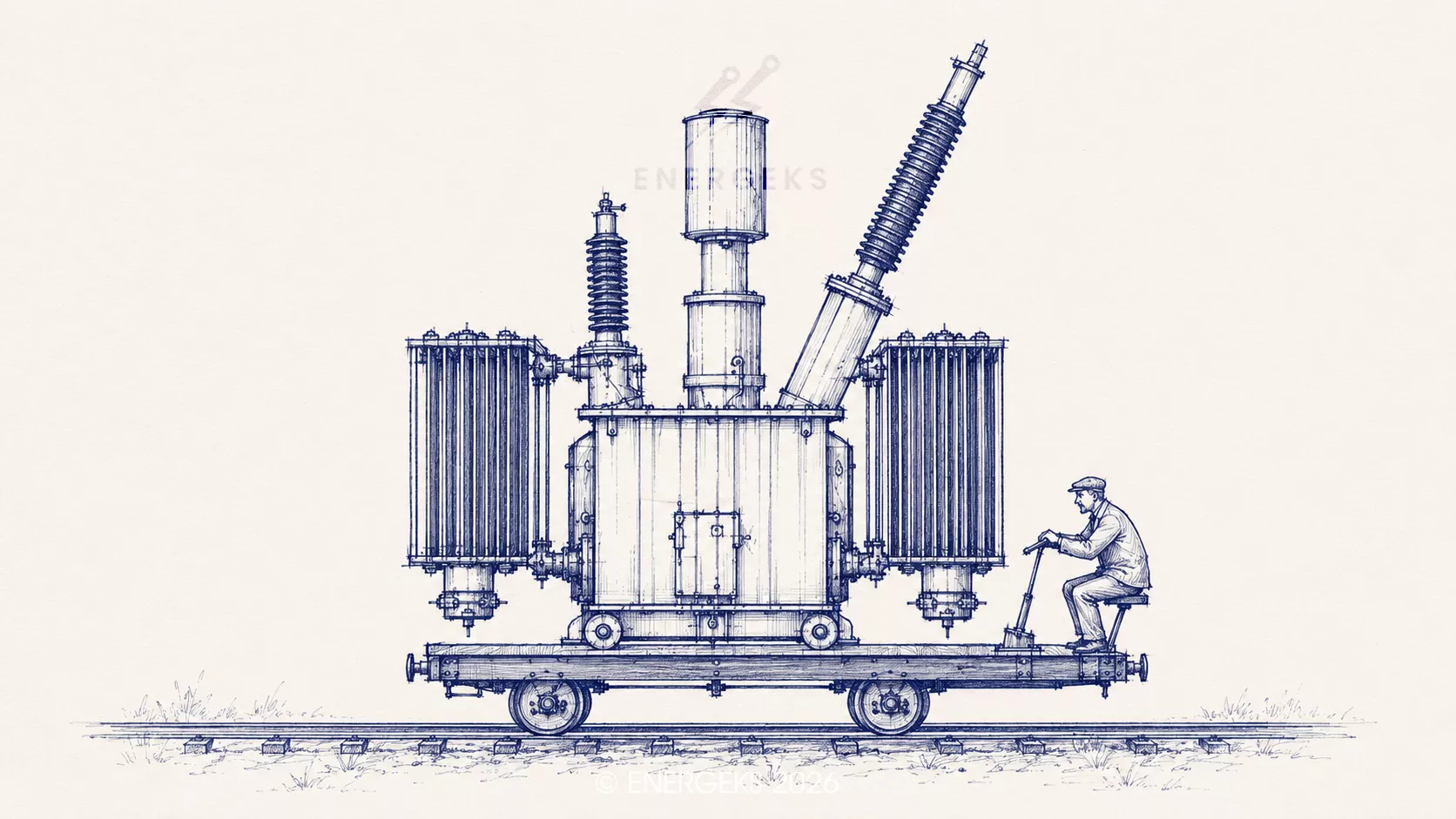
From this article you will learn how the transport of a power transformer is planned, what in practice dimensions of about 9.2 m length, 3.4 m width, 4.0 m height and a weight of about 165 tonnes without oil mean, how unloading looks, and why post‑delivery inspection protects the entire investment.
Power transformer transport is not a delivery. It is a technical operation.
There are loads that arrive on a pallet.
There are those that a courier leaves at the gate.
And there are those at which the gate itself starts asking existential questions.
A power transformer with a length of about 9.2 m, width of about 3.4 m, height of about 4.0 m and a transport weight without oil of about 165 tonnes does not travel like ordinary equipment. It does not "drive". It is led along the route like a technical operation on a living organism of infrastructure.
A powerful tractor and good intentions are not enough.
You need a route that really has a margin.
You need a trailer matched to the pressures.
You need an unloading plan that is not made over coffee five minutes before the manoeuvre.
You need people who know that 165 tonnes do not like sudden ideas.
At Energeks, we take this topic seriously, because a power transformer is not an ordinary delivery item.
It is the future heart of a power supply system.
Before it starts working, it must safely pass through transport, unloading, post‑delivery inspection, positioning and preparation for commissioning.
And that is what this text is about.
About logistics that looks spectacular but in practice is precision.
About unloading where patience weighs more than steel.
About post‑delivery inspection that tells you more than the best assurances.
And about why good power transformer transport is not an add‑on to the investment, but one of its first quality tests.
Reading time: about 9 minutes.
Dimensions, weight and centre of gravity: the transformer has its own physics
In power transformer transport, the numbers are not decoration in the documentation.
They are the instruction manual for the survival of the whole operation.
9.2 m length is not just information that the load is long. It is a forecast of how the whole combination will behave on curves, roundabouts, intersections, plant gates and the last metres to the foundation.
3.4 m width means that the comfort of a normal traffic lane ends. Logistics begins where the driver, pilot, traffic management and travel plan must act as one organism. At this width, even an ordinary road sign can suddenly become a technical problem.
4.0 m height forces you to look not only ahead but also upward. Bridges, overhead wires, gates, canopies, process pipelines and structures on the plant site cease to be scenery. They become a checklist.
And 165 tonnes of transport weight without oil?
That is no longer a number.
That is a character.
The weight of a transformer determines axle loads, trailer selection, lashing method, suspension behaviour, ground preparation, unloading options, support points and whether the foundation is really ready to meet a device of this class.
That is precisely why a transformer is not a load that simply needs to be transported.
It is an object that needs to be understood.
The most important thing is the centre of gravity. It does not look spectacular. It does not have its own nameplate with fanfares. Yet it decides how the transformer will behave during lifting, braking, turning, tilting, moving and positioning.
If the centre of gravity is treated superficially, you can have excellent equipment and still create a situation that no sensible person wants to see up close.
It is a bit like carrying a huge wardrobe with a hidden safe on one side. From the outside you see a rectangle. In your hands you feel the truth.
A transformer also has its truth. And you need to know it before the first move.
That is why transport drawings, marking of the centre of gravity, lifting points, lashing points, support points and manufacturer's instructions are so important. This is not paperwork. It is the nerve map of the whole operation.
The route: the shortest road is rarely the best
In power transformer transport, the shortest route does not win.
The route that does not pretend to be ready wins.
On paper, everything may look innocent. The road exists. The bridge exists. The gate exists. The curve exists. But a combination with a 165 tonne transformer does not ask whether something exists. It asks whether it can safely pass that way.
You need to check turning radii, bridge load‑bearing capacities, culverts, shoulders, height restrictions, overhanging wires, roundabouts, intersections, road surface, entrance to the site, and the last metres to the unloading point.
And those last metres can be the most malicious.
The transformer may travel hundreds of kilometres, passing bridges, gates and roundabouts, and then stop a few dozen metres from its destination because the ground is not ready, the turning radius is too tight, or the unloading equipment has no room to work.
That is why not only the public road is analysed. The plant site, site roads, manoeuvring areas, access to the foundation and the working area of the crane or sliding system are also analysed.
In heavy logistics, the map is the beginning. Reality always needs to be examined more closely.
Loading and unloading: here it is not strength that wins, but sequence
From the outside, transformer unloading may look simple.
A crane arrives. We attach. We lift. We move. Done.
A beautiful fairy tale.
In the real world, 165 tonnes do not respond to optimism. They respond to geometry, centre of gravity, working radius, ground load‑bearing capacity, lifting points, sling angles, sequence of movements and quality of communication between people.
It is not about having a big crane.
The crane must be selected for the specific operation. For the specific weight. For the specific radius. For the specific height. For the specific position of the transformer and the specific working space.
Rated capacity looks good in a table, but during unloading the real configuration counts. The larger the working radius, the more the available capacity drops. The more difficult the ground, the more important the outriggers become. The less space around, the more every decision begins to resemble a game of chess with gravity.
And gravity does not lose through inattention.
That is why before unloading you need to know where the transport combination will stand, where the lifting equipment will stand, where the supports will be, how the load will pass, who gives the commands, what the safety zones are, and what we do if conditions cease to be ideal.
The moment the transformer is in the air is the worst moment for creativity.
Good unloading looks almost boring. And that is a compliment.
No shouting. No guessing. No sudden corrections. No people running in different directions. Everyone knows where they stand. Everyone knows when to speak. Everyone knows who makes the decision. Everyone knows when to stop the operation.
With large masses, speed is not evidence of professionalism.
Control is.
Post‑delivery inspection: the transformer also leaves traces of its journey
When the transformer is finally in place, many people think that the hardest part is behind them.
That is exactly when one of the most important stages begins.
Post‑delivery inspection.
It sounds modest. Almost official. In practice, it is a moment of truth.
A transformer may look good and still require thorough verification. It may also arrive with minor transport traces that are harmless, but they need to be assessed correctly. The mere presence of the device on site does not yet mean that everything is ready.
It means that you can start checking.
Post‑delivery inspection includes visual inspection of the tank, paint coatings, nozzles, valves, seals, lashing points, transport securing, separately delivered accessories and completeness of documentation. If the transformer was transported without oil, you also need to check the protection conditions of the active part, for example dry air or nitrogen pressure and tightness.
One of the key elements is the shock recorder.
A small device with great significance. Its task is to record events that could have stressed the transformer during transport, transhipment, parking or unloading. We are talking about shocks, vibrations, accelerations and sometimes also tilts. In more modern systems, there is also time stamping, GPS location and temperature.
The shock recorder acts like the transformer's black box.
It is not interested in who said that everything went gently. It records what really happened.
This does not mean that every recorded event is a disaster. But every significant event requires assessment. You need to combine the recorder data with the external condition of the device, transport documentation, information from the crew and the manufacturer's recommendations.
It is not about looking for sensation.
It is about a technical decision.
Because a power transformer has inside it a core, windings, connections, insulation, a tap changer and a whole precise internal architecture. Not everything that matters is visible to the naked eye.
That is why post‑delivery acceptance should not be based on faith.
It should be based on data.
Foundation and positioning: 165 tonnes must have a place to sit calmly
The transformer has arrived.
It has been unloaded.
Now it needs to be positioned.
It sounds like the finale of the whole story.
In practice, this is the moment when many earlier decisions come to light. Not in theory. In the real contact of 165 tonnes with a prepared place.
The foundation for a power transformer is not a piece of concrete. It is part of the system.
It must carry static and dynamic loads. It must maintain geometry. It must work with support points, rails, rollers or a sliding system. It must enable operation, service, possible replacement and safe management of transformer oil if we are talking about an oil‑filled unit.
A transformer does not load the world generally.
It loads it specifically.
Through specific points, in a specific place, at a specific time. Therefore, the general load‑bearing capacity of the foundation is not enough. Local load under specific support points also matters.
Then there is levelling.
It is not cosmetic. It is not about the device looking nice in a photo. Incorrect positioning can affect load distribution, accessory assembly, access to valves, cooling performance, cable routing, earthing and future maintenance.
A power transformer should not fight with its own stand.
It is supposed to work on it.
That is why the positioning site must be ready earlier. Not almost ready. Ready. With an accepted foundation, checked level, prepared working space, provided service access, solved oil drainage and completed earthing.
With 165 tonnes, the word "almost" starts to become very expensive.
How much does power transformer transport cost?
This is one of those questions to which the honest answer is: it depends on how much reality likes to complicate logistics.
The cost of power transformer transport is not calculated like ordinary freight per kilometre. Here you do not pay only for the journey from point A to point B. The pricing includes the weight of the device, its transport dimensions, the route, the number of axles in the combination, escort, permits, analysis of bridges and viaducts, possible removal of road infrastructure, trailer selection, preparation for loading, unloading, crane or sliding system, and sometimes also additional securing, technical stops and the work of several teams simultaneously.
Therefore, transport of a power transformer weighing several dozen tonnes will be a completely different operation than moving a unit weighing about 165 tonnes without oil. In the first case, we are talking about demanding logistics. In the second, about an operation where every metre of the route, every turning radius and every support point begins to have financial significance.
The greatest impact on cost usually comes from:
transformer weight
transport length, width and height
distance of transport
number of countries and formalities along the way
need for escort
difficulty of the last metres of access
selection of crane or unloading system
ground and foundation preparation
working time of technical teams
post‑delivery inspection requirements
In practice, the cheapest transformer transport is rarely the best news. If the quote looks too light for the weight of the device, it is worth asking what is missing. Does it include unloading? Does it cover route analysis? Does it include escort? Is a shock recorder foreseen? Has anyone checked the last section to the foundation? Is the lifting equipment selected for real conditions, not for an optimistic scenario?
Because with a power transformer, transport cost is not just a line item in the budget. It is part of the protection of the whole investment.
A well‑planned transport may seem more expensive at the beginning, but it often saves money where it really hurts: in delays, damage, additional cranes, foundation corrections, assembly downtime and nervous decisions made already on site.
In short: power transformer transport costs as much as the calm delivery of a very expensive, very heavy and very necessary device without improvisation along the way.
And that is one of the things that sensible people do not try to do accounting magic on.
A large transformer does not need luck. It needs a process
Power transformer transport looks spectacular, but its real value lies not in photos from the road.
It lies in preparation.
In a route that has been checked. In equipment selected for the real weight and dimensions. In people who understand centre of gravity, lifting points, pressures, tilt and movement sequence. In post‑delivery inspection that relies not on impression but on data. In a foundation that is ready to receive the device without nervously writing the plan at the last minute.
A power transformer is not ordinary cargo. It is the future heart of a power supply system. Before it starts working, it must safely pass through transport, unloading, acceptance, positioning and preparation for commissioning.
And that is why good logistics is not an add‑on to the investment.
It is its first quality test.
If you are planning a project involving transformers, transformer stations, switchgear or solutions for power infrastructure, it is worth checking the full Energeks offer and seeing how broadly you can approach power supply from a technical, design and delivery perspective.
Depending on the working conditions, installation location and system requirements, a good starting point may be the choice between an oil‑immersed transformer and a dry‑type transformer. Each of these solutions has its specific applications, its advantages and its requirements, so the decision should result from real working conditions, not a random choice from a catalogue.
And if the project does not like to wait, it is also worth checking which transformers are available off the shelf.
Because sometimes the best news in power engineering is not a big promise, but concrete equipment availability when the schedule really needs it.
More technical inspiration, projects and power engineering specifics can also be found on the Energeks LinkedIn page.
references:
CIGRE Technical Brochure 673, Guide on transformer transportation
Mammoet, Transformer transport services
Hitachi Energy, Install and Commission
Transformers in stock
Shipped from our warehouse in Poland within 2–3 working days, 5-year warranty. Full range 25–2500 kVA in the shop (prices in PLN).

This article is about what really happens at the interface between a PV inverter and a transformer, when DC from the modules turns into AC, and then still has to get along with the grid. A practical look.
You see a PV farm.
Rows of modules like a well-ordered army.
Inverters working quietly, smokelessly, without any theatrics.
And somewhere nearby stands a transformer.
The same type of device that in other projects can be a boring backdrop.
But in photovoltaic installations, a transformer can have its most intense life precisely when everything looks calm.
Because an inverter isn't an ordinary energy source.
It's fast power electronics that can perform wonders with current, but at the same time can introduce phenomena into the system that aren't visible at first glance: harmonics, rapid changes, reactive power control, sometimes minor unwanted components.
And all of this lands at the interface with the transformer.
In PV, one thing is particularly clear: most problems don't arise because the equipment is bad. They arise because the interfaces between equipment are often poorly coordinated.
This article is for designers, contractors, investors, and maintenance people who want the inverter-plus-transformer system to operate stably for years, without nervous adjustments after commissioning.
After reading, you will be able to recognize typical friction points and select solutions that genuinely improve power quality, operating temperatures, and reliability.
First, we'll establish a common language: what actually happens at the interface between the inverter and the transformer.
Then, we'll go through typical problems: harmonics, overheating, reactive power control, overvoltages, and resonances.
We'll discuss the most important tools, breaking them down into their basic elements.
At the end, you'll get five solutions to the most critical problems in transformer-inverter cooperation—including simple 'rule of thumb' methods that improve stability—and you'll receive answers to frequently asked questions on the topic, in a ready-reference cheat sheet.
Worth reading.
Reading time: about 15 minutes
What really happens at the interface between a PV inverter and a transformer
In a textbook, it looks simple: modules produce DC, the inverter turns it into AC, the transformer steps up the voltage, and the grid accepts the energy.
In practice, this interface is where two worlds meet.
The first world is power electronics.
An inverter doesn't generate a sine wave the way a generator does. It synthesizes it by switching transistors at high frequency and controlling modulation. This gives excellent control over active and reactive power, but leaves behind side effects: harmonics, high-frequency disturbances, steep voltage and current rise times.
The second world is the transformer, an electromagnetic device that likes predictability.
It is designed for a specific voltage shape, specific losses, specific temperatures, and specific load dynamics. When it receives a waveform with more content than a pure sine wave, things start to get interesting.
The most important thing to remember is this: a transformer in a PV system isn't just a voltage pass-through. It's the component where the side effects of inverter control and grid parameters materialize.
What language to use to understand each other
Remember the story of the Tower of Babel?
Everyone was supposedly building the same thing, yet each spoke a different language. In a project, it works the same way: if designers, contractors, automation engineers, and service personnel use different words for the same phenomena, diagnosis takes longer than the repair itself.
Harmonics are current or voltage components with frequencies that are multiples of the fundamental. In a 50 Hz grid, the 5th harmonic is 250 Hz, the 7th is 350 Hz, and so on.
For a transformer, this means additional losses and additional heating.
THD (Total Harmonic Distortion) is a measure of the total waveform distortion.
In practice, it's worth separating voltage THD from current THD.
An inverter most often introduces current distortion, while voltage distortion worsens depending on grid impedance and the transformer setup.
Reactive power is the control of voltage and the flow of reactive energy.
An inverter can supply or absorb it according to grid operator requirements, but this control changes the currents in the system and can increase the transformer's load.
Resonance is a situation where inductive and capacitive elements in the system begin to amplify certain frequencies.
In PV systems, there's plenty of capacitance: cables, filters, compensation capacitors, grid properties. Inductance too: chokes, transformers, lines.
It doesn't have to explode, but it can generate overvoltages, vibrations, and... strange protection errors.
Why harmonics make the transformer do extra work
A transformer has no-load losses in the core and load losses in the windings. When harmonics appear, three things happen simultaneously.
The RMS current increases, even if the active power doesn't. This means greater I²R losses in the windings. And that's the first reason for heating.
Added to this are additional losses, such as eddy currents in the windings and structural components. These increase faster with frequency, so higher harmonics can cause disproportionately large thermal damage.
The third thing is noise and mechanical vibrations. The transformer may start operating louder, and the winding mechanics experience greater fatigue over the long term.
The most insidious part is that on SCADA, everything might look decent because the power is stable, and only thermal imaging shows that something is wrong.
—>
If you want to go deeper and understand how to calculate this and translate harmonics into real requirements for the transformer, we recommend our article:
Transformer K-Factor: The Key to Protection Against Harmonics.
In it, we explain what the K-Factor is, what it tells us about non-linear loads, how it helps select a transformer for actual operating conditions, and how to limit the risk of overheating and insulation life reduction before the problem shows up in temperatures and alarms.
Where overheating comes from when parameters seem normal
There are three typical scenarios.
The first is apparent load.
Someone looks at the MW and is calm, but the transformer is loaded by currents resulting from reactive power and distortion. It doesn't heat up from MW. It heats up from current and losses.
The second is inverter operation in regulation modes.
For example, voltage control via reactive power, active power curtailment, operation under variable grid conditions. This changes the transformer's load profile over time, often faster than in conventional power systems.
The third is a design mismatch.
A transformer selected for a linear load may have too small a margin for additional harmonic losses. The power rating seems to match, but thermally, there's no breathing room.
This leads to a practical conclusion: in PV, checking kVA isn't enough.
You have to think about power quality, the share of reactive power, and the expected operating profile.
Reactive power control: a tool that helps the grid but loads the system
Grid operators increasingly require voltage support.
The inverter then has to implement curves: cos φ as a function of P, Q as a function of U, or a specific set Q.
First, let's break this down in plain language, without magical shortcuts.
Imagine the inverter has two knobs: one for active power P (the one you sell in kWh), and one for reactive power Q (which doesn't give kWh but affects voltage and currents in the grid).
The grid operator tells the inverter how to turn the second knob.
What does 'cos φ as a function of P' mean?
Cos φ is, simply put, information about the share of reactive power relative to active power.
When cos φ is close to 1, there's almost no Q. When it drops, Q increases.
Cos φ as a function of P means:
the power factor should depend on the current active power. The more P you produce, the more the inverter should change cos φ according to a set curve.
How it looks in practice:
When the farm produces little power, the inverter can operate near cos φ = 1.
When the farm enters high production, the inverter starts generating or absorbing reactive power to help keep voltage within the permissible range.
It's like an automatic transmission for voltage: it depends on the load.
Why do this?
Because during high generation, the voltage at the connection point tends to rise.
Reactive power can pull it down or push it up, depending on the direction.
What does 'Q as a function of U' mean?
Q as a function of U means: reactive power should depend on voltage.
This is pure regulation automation.
If voltage rises above a set threshold, the inverter starts acting to lower it.
If voltage drops, the inverter does the opposite to raise it.
It works like a thermostat, only instead of temperature, you have voltage, and instead of a heater, you have Q.
Now, an important detail: This isn't just an on/off state. It can be a smooth curve. For example, the higher the voltage, the more Q the inverter should absorb to reduce it. The lower it is, the more it should supply Q to boost it.
What does 'a specific set Q' mean?
This is the simplest version:
Someone tells the inverter upfront how much reactive power to produce, regardless of P and U.
For example:
We set the inverter to constantly absorb 1 MVAr.
Or constantly supply 0.5 MVAr.
Or maintain Q at a level resulting from the operator's dispatch.
Why do this?
Because sometimes the grid needs a specific amount of voltage support at a given moment, not automation dependent on local measurements.
From the grid's perspective, this is good.
From the perspective of the transformer and cables, it means higher currents for the same active power.
If the installation operates with a significant share of reactive power, the transformer may hit its current limit before reaching its nominal active power rating.
This is a classic source of situations like: theoretically I have reserve, but in practice, the temperature is rising.
What's treacherous for the transformer and cables in all of this
Here's the core of why we're mentioning this.
Reactive power increases the current in the system. Even if the active power P doesn't change.
If you have P (active power) and you add Q, the apparent power S increases, and along with it, the current.
Simply put:
More Q = higher current = greater thermal losses in cables and the transformer.
And that's why sometimes this happens:
On the screen, everything looks fine because the MW are stable.
But the transformer has a higher temperature because the current is larger.
Or the current limit appears earlier, before you reach full active power.
Control via cos φ from P, Q from U, or a set Q are ways the grid operator tells the inverter to support voltage, but this support is carried out by current, so it can increase the load on the transformer and cables even when active power doesn't change.
Additionally, if there's separate compensation in the system, you have to be very careful about who is controlling what. An inverter with its own regulation and a capacitor bank without coordination can enter into unpleasant interactions.
This rarely looks like a major failure.
More often, it looks like instability, fluctuations, protection errors, strange background harmonics.
Overvoltages and resonances: a problem that often reveals itself after commissioning
In PV, you have plenty of elements that create capacitances and inductances.
Long cables on the AC side, filtration, sometimes compensation, plus the transformer and grid parameters. Resonance doesn't have to be constant.
It can appear only in specific operating states, at a specific power, or with a specific grid configuration.
Symptoms can be misleading:
overvoltages, an increase in voltage THD, reactive power fluctuations, random protection trips, sometimes damage to filter components or overheating that doesn't match the load.
The most important design practice is this:
resonance must be treated as a systemic risk, not as bad luck. If there are capacitors, filters, and long lines in the project, frequency analysis of the system ceases to be a luxury.
What tools really solve these problems
When do you need compensating reactors and filters, and when are proper settings enough?
A line compensating reactors on the inverter output limits the steepness of current changes and suppresses some higher harmonics. An LCL filter does this more effectively but is more sensitive to grid parameters and requires proper tuning and damping.
If the problem is mainly current distortion and local harmonic amplification, passive or active filters might be the right solution.
A passive filter is simpler but requires good matching because it can interact with the grid.
An active filter is flexible but more expensive and requires sensible power sizing.
In many projects, the first step should be inverter settings:
THD limits, control strategy, filter parameters, Q regulation modes.
Sometimes the problem isn't that you need new hardware, but that the control is set up in a way that provokes the system.
If you want to understand when a compensating reactor is a real stabilization tool and when it's just a patch for a poorly selected system, check out our article:
Why low-loss transformers don't need compensating reactors?
We break down there where the need for these in compensation systems even comes from,
what low-loss transformers change in the reactive power and current balance,
and how to avoid situations where adding compensation elements starts creating new problems instead of solving them.
It's a text for those who prefer to calculate and select correctly once, rather than tune the installation later in the field ;-D (been there, done that…)
How to select a transformer for non-linear load
A transformer for PV should be selected not only based on apparent power, but also on the expected harmonic level, reactive power share, and cooling conditions.
In practice, what matters is thermal performance and additional losses, because these determine whether the unit will operate stably for years or live on the edge of its insulation.
If you anticipate significant current distortion, you have to account for the fact that harmonic current increases losses.
Some losses simply increase with current, while others increase faster because higher frequencies drive additional losses in windings and structural components.
The classic approach then calls for transformers adapted to non-linear loads, a power margin, and conscious cooling design.
This isn't oversizing for sport. It's a thermal reserve meant to allow the system to breathe in a real operating profile, without constantly pushing temperatures to the limit.
In PV, there's another layer rarely discussed openly until the hunt for the cause of strange currents and events begins.
That's earthing and winding configuration, i.e., the connection group.
The choice of group affects how third-order harmonics and zero-sequence components behave, where they can close their circuit, and whether they get the conditions to do so at all.
If the connection has a delta on one side, some components have a place to circulate locally.
If it doesn't, these same phenomena can flow into the grid or appear as currents in places no one suspected. This isn't a detail. It's the difference between an installation that is quiet and predictable and one that generates additional loads and diagnostic complications.
In the same basket is the tap changer—voltage regulation on the transformer side.
In PV projects, it's tempting to treat it as a one-time setting during commissioning. But it often becomes a tool for matching voltages in a real grid, with real drops and rises, with real reactive power control.
If you have the wrong tap range or the wrong regulation method, you can end up with a system where the inverter overcompensates with Q regulation because the transformer is set too high or too low relative to the connection conditions.
And again, this doesn't have to look like one spectacular failure. More often, it looks like long-term, unnecessary current loading and temperatures that are a few degrees higher than they should be.
That's why selecting a transformer in PV is worth treating as matching the interface between the inverter and the grid, not as buying a device with the right nameplate power.
Preparation for this involves analyzing the operating profile, power quality requirements, reactive power control, and thermal conditions, and then selecting transformer parameters and winding configuration so that the system is predictable.
With emphasis on what's hardest to fix after commissioning: thermal performance, harmonic interactions, and zero-sequence behavior.
—>
If you have doubts, we're happy to advise, and we also explore this topic in this article:
Which transformer should you choose for a 50, 100 or 150 kW PV system? Here’s what you need to know
5 solutions to the most critical problems in transformer-inverter cooperation
A transformer is a fan of a clean sine wave and predictable work.
An inverter is a waveform editor: it takes DC, assembles AC, regulates P and Q, plays according to grid requirements.
Usually, this works beautifully. Trouble begins when this digital finesse leaves traces in the world of iron: harmonics, high-frequency components, rapid current changes, reactive power operation.
That's why in PV, two things are crucial: grid conditions and control.
Below, we suggest solutions to the five most common problems related to this topic.
1. Harmonics and current distortion, or the bill for 'nice' electronics
Inverters are non-linear by nature. Even if they have a filter at the output and look well-behaved, in practice they can introduce current harmonics, especially at certain operating points and grid configurations.
What this does to the transformer:
Harmonics increase losses in copper and the core, as well as so-called additional losses, which in transformers grow faster than linearly with frequency and distortion.
The end result is boring and brutal: higher temperature. And temperature is the currency of insulation life.
What to do?
The simplest move is to check whether the problem lies in the emission itself or in grid resonance. Because sometimes the inverter is 'OK', and the grid turns its harmonics into a megaphone.
In practice, the following help: well-chosen line chokes, passive filters, active filters in larger installations, and conscious management of the impedance seen by the inverter. For MV PV farms, how the cable distribution and section lengths are designed is also crucial, because cable capacitances can shift resonant frequencies.
2. Reactive power and voltage control, or when the inverter helps a little too much
Modern inverters have volt-var and volt-watt functions, i.e., voltage-dependent regulation. Grid connection requirements in Europe strongly promote the ability to control reactive power and provide voltage support from distributed generation.
What this does to the transformer:
Reactive power itself isn't bad. The problem arises when its flow is unpredictable or too intense relative to the assumptions.
The result can be: currents increase, losses increase, the voltage drop across the transformer impedance rises, sometimes control oscillations appear if several devices 'fight' over the same voltage.
Solutions in three steps:
The first level is inverter settings consistent with requirements and the operator's philosophy.
Manufacturer documentation and guidelines for specific connection rules, such as VDE AR N 4105 in the German context, show how important reactive power control parameters are.
The second level is coordination: if you have compensation, an OLTC in the transformer, inverter regulation, and automation at the HV/MV substation, it's worth asking one basic question: who is the voltage leader here, and who is just supporting.
The third level is measurement and monitoring: without recording the Q profile, cos φ, and voltage over time, it's impossible to distinguish normal operation from automation chasing its own tail.
3. Transformer overheating despite correct rated power
This is a classic: everything 'fits in kW', yet the transformer still struggles more than it should.
Most common causes:
First, harmonics and additional losses, as discussed.
Second, high ambient temperature and cooling conditions, because PV stations often stand in places where summer air is like a warm compress.
Third, dynamic loads: fast power ramps, daily weather cycles, frequent changes in operating point.
Solutions:
A dual-track approach works here: selecting a transformer with the load profile in mind and ensuring power quality. Sometimes this means conscious oversizing, sometimes it means design parameters for distorted loads and choosing a winding connection group that helps close certain harmonics in the delta instead of pushing them into the grid.
If you want to approach this engineering-wise, the path looks like this:
current measurement, spectrum analysis, additional loss calculation, winding and hotspot temperature verification, and only then decisions about filters or setting changes.
4. Overvoltages, steep edges, and voltage surprises in cables
The inverter works in a pulsed manner. Cables have capacitance. The transformer has inductance. The system likes to create oscillations, and oscillations like to appear when no one invited them.
What happens in practice:
With long cable runs between inverters and the transformer, or between the transformer and the connection point, phenomena related to wave reflections and local overvoltages can appear. Add to this classic surges from the grid and switching operations, which in PV can be more frequent because automation works intensively.
Solutions:
Surge protection selected for the actual installation location, sensible earthing, control of cable lengths and their parameters, sometimes damping elements. In larger systems, designers also use solutions that limit the steepness of current changes seen by the transformer—so again we return to chokes and filters, only this time the motivation isn't THD, but insulation protection and spike limitation.
5. The common coupling point and the magic of weak short-circuit power
There's another unassuming hero: the short-circuit power of the grid at the connection point.
The weaker the grid, the more visible the impact of inverters on voltage and distortion.
This isn't an inverter flaw. It's a fact about the system's impedance.
Solutions:
Power quality analyses are performed, taking into account grid impedance and emission allocation, precisely in the spirit of the approach from IEC TR 61000-3-6.
Practically, this means that sometimes it's better to invest in a filtration system and setting coordination than to hope the transformer will SOMEHOW bear it—because a transformer is not a harmonic filter.
Simple ways to improve stability
First, start with a diagnosis: is the problem current-related, voltage-related, or resonance-related?
If current harmonics dominate, target filtration and control parameters.
If voltage sags or fluctuates, look at grid impedance, Q control, and regulation coordination.
If there are random events and overvoltages, suspicion falls on resonances, filter tuning, interactions with compensation, and cable lengths.
Then, get control in order: inverter settings, consistent regulation curves, no conflict between compensation and the inverter, control of power ramps and limits.
Next, selection and verification of the transformer for the real operating profile.
If data shows that currents and additional losses are high, the solution might be a transformer with better thermal performance, a different range of permissible distortion, or simply a properly chosen margin.
Finally, only then add filtration equipment where it makes quantifiable sense: chokes, LCL filters, passive or active filters, sometimes correction of compensation and protection settings.
Answers to the most frequently asked questions - FAQ
Can a photovoltaic inverter accelerate transformer aging?
Yes, if current harmonics, a DC component, or poorly set reactive power enter the grid, the transformer can heat up more than would result from the active power alone.
What is the most common PV problem affecting transformers?
Power quality surprises: harmonics, voltage fluctuations, and reactive power operation controlled by inverters.
Does a filter or choke really make a difference?
Yes, because it limits distorted currents and steep current edges, which increase losses and temperature in the windings.
What's more important: transformer power or its resistance to distortion?
In practice, both. A kVA reserve helps, but design for non-linear loads and grid conditions also matters.
What standards help set harmonic limits and connection requirements?
In Europe, the reference point is often grid connection requirements based on EN 50549, as well as compatibility and harmonic emission assessment rules from IEC 61000-3-6.
The interface between a PV inverter and a transformer is a bit like a big city intersection
On paper, the rules are simple, but in reality, what counts is traffic intensity, road surface quality, and whether the signaling is set up for the actual rush hours.
In photovoltaics, these rush hours repeat daily, and power quality, grid stiffness, and protection settings can turn an ordinary installation into a system requiring smart coordination.
The good news is that most tricky topics can be handled without stress if you approach them systemically.
First, understanding what's really happening in the currents and voltages.
Then, measurement and PQ monitoring to speak the language of data, not impressions.
Finally, design decisions that make a difference.
Sensible filtration, reasonable reactive power control, adaptation to grid conditions, and a transformer selected for the real operating profile, not just the nameplate.
If you are at the stage of selecting a transformer for PV or want to stabilize the operation of an existing installation, we invite you to explore our offer.
For low-loss oil transformers MarkoEco2, compliant with EcoDesign 2 ——> click here,
for TeoEco2, cast resin transformers Tier 2 ——> click here
In both cases, we're happy to help select a solution for your grid conditions, connection requirements, and inverter operating mode.
We also develop these topics on LinkedIn, more behind the scenes and more operationally. If you like specifics, follow us on LinkedIn and join the conversation.
Thanks for this shared journey through a topic that at first glance looks like a detail, but in practice determines the stability of an entire farm.
We are people for people, and we work best in partnership when both sides bring curiosity, precision, and a desire to do things properly.
REFERENCES:
IEC TR 61000-3-6. Electromagnetic compatibility (EMC) - Part 3-6: Limits - Assessment of emission limits for the connection of distorting installations to MV, HV and EHV power systems
Technical Requirements of Photovoltaic Inverters for Low Voltage Distribution Networks, K. Chmielowiec, Ł. Topolski, M. Dutka, A. Piszczek, Z. Hanzelka, T. Rodziewicz via MDPI
IEEE Standard for Harmonic Control in Electric Power Systems
Transformers in stock
Shipped from our warehouse in Poland within 2–3 working days, 5-year warranty. Full range 25–2500 kVA in the shop (prices in PLN).

Accessories and equipment for transformers. What's worth having on hand?
Anyone who has worked with transformers for more than one season knows this scenario.
The documentation checks out, the parameters are calculated, the handover passed without remarks.
The transformer is in place. It's operating. And for a long time, nothing happens.
Then one day, an alarm sounds, there's a smell of heated oil, or irritating vibrations spread through the entire station. That's when the sentence we all know is uttered:
But everything was brand new! 🤬
The problem is that a transformer is never a solitary device.
It's the center of a small ecosystem. Current, heat, vibrations, moisture, dust, mechanical stresses. They all circulate around it daily. Accessories aren't just aesthetic or catalog add-ons.
They are the tools that allow this ecosystem to remain stable.
This article is a map for thinking about which transformer accessories are worth considering from the start, because later they become the answer to questions that arise under stress, often after the fact.
Reading time: ~10 min
Why transformer accessories determine trouble-free operation
A transformer ages slowly and very consistently.
Insulation loses its properties with temperature.
Oil degrades faster if it's not monitored.
Mechanical vibrations, even minor ones, can over years cause more damage than a single overload.
These are processes you can't see at first glance.
That's why experienced operators say plainly: a transformer without monitoring accessories is a device operating in the dark. And working in the dark always ends in reaction instead of prevention.
In the following chapters, we'll go through the most important groups of accessories.
From electrical components, through temperature measurement and monitoring, to mechanics and cooling.
Each one addresses real problems that genuinely occur.
Insulators and connections, or the first line of electrical peace
It always starts with the connection.
And that's not a coincidence or a figure of speech.
All the electrical systems in the world, regardless of voltage and power, boil down to one question:
how to safely and stably transfer energy from one element to another?
Cable, busbar, transformer termination.
It is precisely at this point that two orders, which by nature don't get along, meet.
The electrical order and the mechanical order.
On one hand, we have voltage, electric field, current, temperature.
On the other, mechanical forces, vibrations, thermal expansion, the weight of conductors, and movements resulting from the operation of the entire system.
The insulator is the element that must reconcile these worlds.
It must provide electrical insulation while simultaneously transferring mechanical loads.
It must maintain the geometry of the connection while preventing discharges.
It must be invisible in daily operation but absolutely reliable for years.
It is precisely at these connection points where problems most often begin, remaining hidden for a long time.
Local overheating due to insufficient contact pressure.
Surface micro-discharges that don't yet trigger protection but already degrade the insulation.
Slight loosening of connections caused by heating and cooling cycles.
The transformer as a whole may appear healthy, while its weakest points are operating at the edge of tolerance.
In the case of medium-voltage cable terminations, the method of securing the conductor is fundamental. A cable is not a static element. It changes its length with temperature, transmits vibrations, and is sometimes subjected to additional installation stresses. If the connection lacks controlled pressure, contact resistance appears.
And where there is resistance, heat appears.
In practice, the question often arises: what insulator to choose for a medium-voltage cable termination?
In such cases, medium-voltage cable terminal insulators are used, which provide a stable connection and controlled conductor pressure. Their task is not just electrical insulation.
They actively stabilize the connection.
They ensure uniform and repeatable conductor pressure, regardless of whether the installation is operating in winter at low temperatures or in summer under full load.
This solution is particularly important in stations where cables are long, heavy, or routed in a way that generates additional mechanical forces.
A well-chosen insulator with a terminal ensures the connection maintains its parameters not just on the day of handover, but also after 5 or 10 years of operation.
In installations based on busbars, the problem looks somewhat different.
A busbar is rigid, massive, and transmits much greater forces.
There is no room for random tolerances here.
Precision in positioning and resistance to vibrations resulting from high current flow and electrodynamic phenomena are what count.
Insulators with busbar clamps serve as precise support and guide points.
They maintain a constant system geometry, prevent busbars from shifting, and protect connections from loosening. Thanks to them, contact parameters remain stable even during prolonged operation under high load. This is especially important in industrial installations where a transformer doesn't operate occasionally, but daily, often close to its design limits.
Oil-air bushings are a separate category.
They are responsible for one of the most difficult tasks in the entire transformer.
Safely transitioning voltage from the oil-filled interior to the outside, to the air environment. In this single element, different dielectrics, different tempreatures, and different environmental conditions meet.
An oil-air bushing must be sealed, resistant to aging, contamination, and moisture.
Any weakening of its properties can lead to surface discharges, and in extreme cases, to a loss of the transformer's seal. Silicone versions are increasingly chosen today because silicone handles contamination, rain, UV radiation, and variable weather conditions excellently. Even when the insulator's surface isn't perfectly clean, silicone retains its dielectric properties.
This is precisely why silicone oil-air bushings have become the standard in modern transformer stations. Not because they are trendy, but because they better withstand the real world.
And the real world, as we know, is rarely laboratory-clean ;-)
In environments requiring particular mechanical flexibility, EPDM (Elastimold) insulators are also used. EPDM is, in simple terms, a special type of technical rubber, designed to work where ordinary materials would quickly give up. It's not soft rubber like in a tire nor brittle like plastic. It's an elastomer, i.e., an elastic material that, after deformation, returns to its shape and doesn't lose its properties for years.
You could compare it to a very durable seal that doesn't harden in the frost, doesn't crack in the sun, and doesn't crumble over time. EPDM withstands continuous vibrations, temperature changes from frost to high heat, and the effects of moisture and ozone present in the air.
In practice, this means that components made of EPDM don't 'age nervously'.
They don't crack suddenly, don't lose elasticity, and don't require frequent replacement.
Therefore in compact transformer stations and prefabricated solutions, where everything works close together and is subject to constant micro-movements, EPDM performs significantly better than rigid insulating materials.
Tapered bushings, or safe passage through the housing
A tapered bushing is a component rarely talked about until it starts causing problems.
And it is precisely this component that is responsible for one of the most critical points in a transformer:
the passage of voltage through the housing.
Leaks, micro-cracks, improper installation.
Any of these factors can lead to moisture ingress into the insulation and, consequently, to accelerated transformer aging.
That's why tapered transformer bushings are no place for compromises.
A well-chosen bushing ensures electrical stability, oil tightness, and mechanical strength. In practice, its quality directly translates to the lifespan of the entire device.
In many cases, upgrading the bushing solves problems that were previously attributed to the windings or oil.
Oil and winding temperature, or what really ages a transformer
If there is one parameter that most affects a transformer's lifespan, it's temperature.
A transformer doesn't wear out because it's old.
It wears out because it's too hot.
Sometimes just a little too hot, but for long enough.
In the physics of electrical insulation, there is no mercy or romanticism. There is temperature and time. The rest are consequences.
For decades, it has been known that every increase in winding temperature above the design value dramatically accelerates insulation aging. Every 6 to 8 °C above the nominal operating temperature can halve the insulation's lifespan.
This isn't a textbook curiosity; it's hard operational reality.
For a transformer, this means a reduction in life not by a few percent, but by half.
And most interestingly, this process happens quietly. Without sparks, without noise, without an alarm at startup.
The oil in a transformer cannot be treated solely as an insulating medium.
It is primarily a carrier of information about the device's condition. Its temperature speaks volumes about what's happening inside, even when the windings are still invisible and inaccessible. Therefore, measuring the oil temperature is not an add-on or a premium option. It's an absolute minimum if we want to know how the transformer is really performing.
The simplest and still very effective form of control is transformer oil temperature indicators. Mechanical, without electronics, resistant to environmental conditions. Their huge advantage is immediacy.
A single glance is enough to know whether the device is operating within a safe range or is starting to approach limits that are better not exceeded too often.
When the installation becomes more demanding and loads variable, information alone is no longer enough. This is where temperature controllers, such as the CCT 440, working with PT100 sensors, come into play. This is no longer just measurement. This is temperature management.
Automatic cooling activation, alarm signals, the possibility of integration with a superior system. The transformer stops being mute and starts actively communicating its state.
PT100 sensors for transformers have become standard for a reason.
They are stable, precise, and predictable.
They can be used for both oil temperature measurement and direct winding measurement.
It is precisely they that provide the data which allows for a reaction earlier, before elevated temperature turns into a real operational problem.
DGPT2 Monitoring and RIS Systems - or when a transformer starts to speak
A transformer communicates with its surroundings constantly.
It never operates in silence. It is always signaling something.
It changes oil temperature, reacts with increased pressure inside the tank, generates gases resulting from insulation aging or local overloads.
These phenomena occur regardless of whether anyone is observing them.
The problem is that without appropriate sensors, these signals remain unnoticed.
For the transformer, this is its natural language. For a person without monitoring, it's just background noise.
And it is precisely in this space between phenomenon and information where failures occur, later labeled as 'sudden'.
The DGPT2 system is a classic protective and measuring device used in oil-immersed transformers.
It monitors three basic parameters: Gas, Pressure, and Temperature.
The presence of gas signals processes occurring in the oil and insulation.
A rise in pressure informs about dynamic changes inside the tank.
Temperature allows for assessing the transformer's thermal load.
DGPT2 operates locally and provides clear alarm signals or triggers protective actions.
The RIS system, on the other hand, is a strictly monitoring solution focused on observing trends and analyzing the transformer's condition over time.
It collects data, archives it, and enables interpretation without the need to shut down the device.
Thanks to this, an operator can see not only that a parameter was exceeded, but also how it happened. Whether the temperature rose gradually or suddenly. Whether pressure changes are one-off or repetitive.
Not long ago, both DGPT2 and RIS systems were mainly associated with large transmission stations. Today, they are increasingly used in medium-sized industrial installations and renewable energy farms.
The reason is simple and very pragmatic.
Installation downtime costs more than a monitoring system.
Thanks to such solutions, the operator doesn't learn about a problem at the moment of failure or protective device operation.
They learn earlier, when they still have time to make a decision.
They can schedule maintenance, adjust the load, or check cooling conditions.
The transformer ceases to be a black box and starts being a device that speaks before it starts screaming.
Vibrations and mechanics, the signs of a transformer's life
A transformer vibrates.
Always.
Even a brand new one, fresh after handover, that still smells of paint.
This is not a factory defect or a sign of problems.
The magnetic field, electrodynamic forces, and the core's operation cause the device to live by its own, very subtle rhythm. This isn't visible in catalog data, but it's audible and tangible in the real world.
The trouble begins when these natural vibrations don't stay where they should.
Instead of dissipating within the transformer's structure, they travel further.
To the foundation, to the station housing, to building walls, and sometimes even to neighboring equipment. Then a faint humming appears, followed by irritating noise, and after years, minor cracks, loosened bolts, and components that have... simply shifted apart.
Vibration damping pads for transformers are one of those accessories that rarely impress at the project stage but earn huge points during operation.
They act like shock absorbers. They isolate vibrations from the rest of the structure, reduce noise, and ensure the foundation doesn't have to participate in every impulse of the transformer's work.
It's a simple, somewhat underappreciated, and very effective solution.
In many facilities, it's precisely the lack of vibroacoustic separation that turns out, after years, to be the cause of mechanical problems described with one word: wear and tear.
And the truth is often more prosaic. The transformer was simply gently reminding everyone of its existence the whole time, and no one gave it pads so it could do so more quietly.
Ventilation and cooling, or when nameplate power meets summer
Every transformer has its proud rated power listed in the documentation.
The numbers match, the calculations too. The problem is that these values are very often derived under conditions with only moderate connection to reality. A friendly ambient temperature. Proper ventilation. No heatwaves, no dust, no enclosed station standing in full sun.
And then summer comes.
Concrete heats up like a frying pan. The air in the station stands still.
The transformer does exactly what it always does: dissipates heat.
Only suddenly, it doesn't really have anywhere to put it.
And here begins the real verification of nameplate power.
Transformer overheating rarely starts dramatically.
First, there are a few extra degrees on the oil. Then more frequent fan operation, if there are any at all. Sometimes the need arises to limit load during peak hours.
Seemingly nothing serious, but each such episode adds its brick to the accelerated aging of the insulation.
AF fans for transformer cooling are the answer precisely for this moment when theory meets climate. Their task is simple and very specific. To increase heat exchange where natural convection is no longer sufficient.
Without interfering with the transformer's construction, without replacing it, without a revolution in the design.
That's why AF fans are used both in new installations, as a planned element from the start, and in the modernization of existing stations.
They often appear where a transformer is technically sound, but its operating conditions have changed over time. Greater load. A different consumption profile. Higher ambient temperatures than a decade ago.
In practice, it's precisely additional cooling that very often solves a problem that previously seemed serious.
Instead of constantly balancing on the edge of its power rating, the transformer returns to calm operation.
Instead of plans for costly replacement, reasonable support for heat dissipation is enough.
Cooling doesn't magically increase a transformer's power.
It allows it to safely utilize what it already has.
And in operation, that can be the difference between comfort and constantly worrying if it's going to be too hot again today.
Accessories as a system, not an add-on
The biggest mistake in approaching transformer accessories is treating them like a list of options to tick off at the end of a project. One here, another there, just to have them.
Meanwhile, in real operation, they don't work separately.
They cooperate. They form a system of safety, control, and daily operational comfort.
Insulators ensure energy has a stable path.
Bushings guard the boundary between the interior and the external world.
Sensors and monitoring provide information before a problem appears.
Vibration pads and fans take care of mechanics and temperature, things that work continuously, even when no one is looking.
Each of these elements addresses a very specific situation that, in practice, happens more often than we'd like.
A transformer equipped with such accessories isn't more complicated.
It's simply more resilient to reality. To summer, to variable loads, to vibrations, to time. And time, as we know, is the most demanding test for any installation.
If you've made it to this point, it means you think about transformers not as catalog objects, but as systems that need to work for years.
At Energeks, we believe in a partnership approach. We don't look at a transformer as a single device taken out of context, but as an element of a larger system that must operate stably for years. That's why, when designing and selecting transformers, we always consider the operating conditions, future load, and the realities of operation.
If you want to see which transformers and system solutions best fit your installation, we invite you to explore the Energeks offer.
And if you'd like to stay longer, exchange knowledge, and see what the world of transformers really looks like behind the scenes, join us on LinkedIn.
This blog is an invitation to systems thinking. And to further conversations.
Sources:
IEC 60076-1: Power Transformers - General Standard via studylib.net
Transformers in stock
Shipped from our warehouse in Poland within 2–3 working days, 5-year warranty. Full range 25–2500 kVA in the shop (prices in PLN).

Winter rarely arrives with a bang.
It more often creeps in quietly.
First, a few chilly mornings.
Then dampness that doesn't disappear even at noon.
And finally, small, easy-to-ignore signals. The transformer is operating. Parameters are still within spec. Nothing is whining. Nothing is sparking. And that's precisely when the problem begins.
Water vapor condensation inside a transformer tank doesn't produce spectacular symptoms.
It doesn't shut down the grid in one day. It doesn't send an SMS alarm. It works like a slow corrosion of trust. Accumulating on the tank walls, in the paper insulation, and in the oil, it systematically reduces the electrical withstand strength of the system.
This is a topic that returns every winter. And almost always when it's already too late.
For years, we have worked with medium-voltage transformers in real operating conditions.
We have seen transformers that were correctly sized electrically, met EcoDesign Tier 2 requirements, had complete documentation, and new oil.
And yet, after two or three winter seasons, they started causing problems.
The common denominator was very often moisture.
Water vapor condensation is not a manufacturing defect. It's a physical phenomenon.
This text is for everyone who wants to understand what really happens inside a transformer tank in winter and how to prevent it before the quiet killer starts counting the losses.
After reading, you will know where the water in a transformer comes from, why the problem intensifies in winter, what the real consequences are for the insulation, and how to mitigate the risk through both design and operation.
Reading time: 12 minutes
Where does water vapor in a transformer tank come from
Air always contains water.
Even when it seems dry.
Relative humidity is not an abstract parameter from a weather forecast. It is the actual amount of water vapor that can condense when the temperature drops.
A transformer tank is a closed space, but it is rarely perfectly sealed in the physical sense. Even hermetic constructions have micro-phenomena of diffusion.
Add to this moments of opening, transportation, installation, oil filling, and maintenance work.
If air with a specific humidity enters the tank interior, and then the temperature of the tank walls drops, water vapor begins to condense.
The dew point is often reached faster than we expect.
In winter, this mechanism works mercilessly.
During the day, the transformer operates, the oil heats up, and the air inside increases its capacity to carry moisture.
At night, everything cools down.
The water vapor seeks the coldest surface.
Most often, these are the upper parts of the tank and structural components
Why winter acts as a catalyst for the problem
Winter is a season of large temperature amplitudes. A difference of several dozen degrees between day and night is not unusual. For a transformer, this means the cyclic breathing of the oil and air volume.
The key concept here is the dew point. This is the temperature at which air with a given relative humidity can no longer keep water vapor in a gaseous state.
For example, air with a relative humidity of 60% at a temperature of 20°C reaches its dew point at around 12 degrees.
This means that any surface colder than this threshold becomes a site for condensation.
The walls of a transformer tank in winter very often have a temperature significantly lower than the air inside. Especially the upper parts of the tank, the covers, and structural components protruding above the oil level. That is where water vapor condenses first.
In breathing transformers, every cooling cycle means drawing in air from the outside. If the air dryer is worn out, incorrectly sized, or simply forgotten, moisture enters the interior. At temperatures near zero, the air's capacity to store water vapor drops sharply, so condensation occurs almost immediately.
In hermetically sealed transformers, the phenomenon is subtler but still exists. Oil changes volume with temperature.
With a temperature drop of 20°C, the oil volume can decrease by about 1%.
In a tank with a capacity of several thousand liters, this means real changes in pressure and the performance of seals.
Moisture doesn't enter through the door, but it enters through the window of physics. The diffusion of water vapor through sealing materials is slow but non-zero. Winter gives it time and favorable conditions.
Additionally, in winter, the transformer often operates under a higher load. Heat pumps, electric heating, electric vehicle charging infrastructure. More heat during the day, more cold at night.
Ideal conditions for condensation.
What happens to water after it condenses
Water inside a transformer tank does not behave like a puddle on concrete. Its fate depends on many factors.
Some of the condensed water flows down the tank walls and enters the oil.
Transformer oil has a limited capacity to dissolve water.
At a temperature of around 20°C, this is in the range of several dozen ppm*.
*ppm = parts per million - equivalent to 1 milligram per liter of substance (mg/l) or 1 milligram per kilogram (mg/kg) of water.
Excess water migrates into the paper insulation. And electrical insulation paper acts like a sponge. Once absorbed, moisture is very difficult to remove from it.
Each percentage point increase in water content within the paper dramatically lowers its electrical withstand strength and accelerates aging. This is not a linear process. It's a curve that suddenly begins to spike.
Olej i wilgoć. Toksyczny duet
Olej transformatorowy pełni dwie kluczowe funkcje. Izoluje i chłodzi. Wilgoć uderza w obie naraz.
Rozpuszczalność wody w oleju transformatorowym silnie zależy od temperatury.
W temperaturze 20° C typowy olej mineralny jest w stanie rozpuścić około 30 do 50 ppm*
Przy 60° C ta wartość może wzrosnąć nawet trzykrotnie.
To oznacza, że w ciągu dnia olej wchłania wilgoć, a w nocy, gdy temperatura spada, nadmiar wody zaczyna się wytrącać.
Już niewielki wzrost zawartości wody w oleju powoduje spadek napięcia przebicia.
Przy poziomie 20 ppm napięcie przebicia może wynosić ponad 60 kV.
Przy 40 ppm spada często poniżej 40 kV.
To różnica, która w warunkach zwarciowych decyduje o przeżyciu lub porażce izolacji.
Zimą zdradliwy jest efekt pozornej poprawy.
Pobierając próbkę oleju w niskiej temperaturze, można uzyskać wynik wskazujący niższą zawartość wody rozpuszczonej. Część wilgoci znajduje się wtedy już w papierze lub w postaci mikrokropelek, których standardowe badania nie zawsze wychwytują.
Do tego dochodzi przyspieszone starzenie oleju.
W obecności wody i podwyższonej temperatury rośnie tempo reakcji chemicznych.
Tworzą się kwasy. Zwiększa się liczba kwasowa.
Olej traci swoje właściwości szybciej, niż przewiduje IEEE.
Oil testing in winter - 3 key methods
In winter, interpreting oil test results requires particular caution.
Three tools become crucial.
The first is determining water content using the Karl Fischer method.
The result must always be referenced to the oil temperature at the time of sampling and the transformer's operational history. A low ppm result from a cold sample does not mean moisture is absent. It may mean it has already left the oil.
The second tool is the analysis of Dissolved Gases (DGA).
Elevated concentrations of hydrogen and carbon monoxide in the absence of classic fault gases can be the first signal of insulation paper degradation caused by moisture.
The third element is observing trends, not single data points.
In winter, comparing results from different seasons is especially important.
Spikes in water content between summer and winter tell more than the absolute value.
Analysis of transformer oil allows for detecting the effects of water vapor condensation before it leads to degradation. This type of analysis helps identify insulation threats before winter failures occur. Photo CC: Freepik/13628
A transformer doesn't fail on the day it's tested. It tells a story that one must know how to read.
Paper insulation. The weakest link
At first glance, paper insulation seems like a secondary element.
It's not visible from the outside, it doesn't have parameters easily sold in a table, it doesn't impress like power or efficiency. And yet, it is very often what determines the real end of a transformer's life.
Electrical insulation paper ages by definition.
The process of cellulose depolymerization always occurs, even under ideal conditions.
The problem begins when moisture enters the game. Even a small increase in the water content of the paper acts as an aging catalyst. It is accepted that each doubling of the paper's moisture content significantly accelerates the degradation of cellulose chains.
What does this mean in engineering practice?
A drop in the mechanical strength of the windings. The paper ceases to serve as a stable spacer, and the windings lose their resistance to the electromechanical forces that appear during faults.
A transformer can operate correctly for years, until the first major grid test. Then, weak insulation doesn't fail spectacularly. It simply doesn't hold up.
Moisture is not a failure. It's a process.
A quiet killer that doesn't destroy immediately but systematically erodes the transformer's safety margin. And that's precisely why paper insulation is often the weakest link in the entire system.
Not because it is bad, but because it is merciless towards neglect.
Hermetic transformer or one with a conservator? Differences in moisture risk
In winter, a transformer quickly reveals which school of construction it comes from.
A hermetic transformer, by definition, limits contact with external air. The oil, gas space, and tank form a closed system. For moisture, this is a difficult situation. There are no revolving doors, no daily invitations for water vapor to enter. This is a huge advantage during the heating season.
But a hermetic transformer is not a magical vacuum capsule.
It's still steel, seals, and people doing the assembly. One poorly tightened connection, one gasket installed on a humid day, and moisture has a subscription for years. No dryer, no vent, no evacuation route. Silence, calm, and very long-term consequences.
Constructions with an oil conservator work differently.
Here, the oil volume is compensated by contact with atmospheric air.
This is a known, proven, and still common solution. However, in winter, it requires character.
An air dryer is not a decoration. It's the security guard at the gate. If it's asleep, moisture walks in without asking. And in winter, a dryer tires out faster than in summer. The gel loses effectiveness, indicator colors can lie, and every night's cooling cycle is another dose of moisture sucked inside.
In short, it looks like this. In a hermetic transformer, the design and installation are responsible. In a transformer with a conservator, operation is responsible. Physics is impartial, but very meticulous.
Therefore, the choice shouldn't start with the question which is better, but rather who will take care of it during winter.
We've already covered this topic in more detail here:
Transformer oil conservator – what it is, how it works, and when it is needed
Because water vapor doesn't have a favorite technology.
It simply checks where it can enter without knocking.
Common installation mistakes
Moisture is rarely the fault of the equipment itself.
More often, it's the result of small oversights:
✖ Opening the tank in humid conditions without protective measures.
✖ Leaving the transformer without oil for extended periods.
✖ Transport and open-air storage without protective covers.
✖ Lack of preheating before startup in winter.
Each of these elements seems harmless on its own. Together, they build the perfect environment for condensation.
Symptoms that are easy to ignore
The first signals of moisture presence are subtle:
✖ Slight changes in oil parameters.
✖ A gentle increase in the dissipation factor (tan delta).
✖ A minimal reduction in breakdown voltage.
They often end up in a periodic test report and remain there for years. Without any action (✖!) because, after all, the transformer is operating. The problem is that physics doesn't read reports.
How to reduce the risk of condensation
It's impossible to completely eliminate moisture.
But it is possible to manage it.
From a design perspective, it's worth opting for hermetic constructions.
Ensure appropriate oil volume reserves and solutions that minimize temperature fluctuations.
From an operational perspective, discipline is key.
Inspections, oil testing, responding to deviations.
In winter, the startup procedure becomes particularly important.
Gradual loading.
Avoiding sudden heating and cooling cycles.
A modern approach to MV transformers
Modern transformers are designed with such scenarios in mind.
Winter will always come.
Water vapor condensation doesn't make noise.
It doesn't flash red.
But it leaves a mark every season.
Conscious design, correct installation, and attentive operation allow you to erase that mark before it turns into a costly failure.
That's why the choice of a transformer is increasingly not just a decision about power and voltage.
It's becoming a decision about resistance to real operating conditions.
If you are considering purchasing or replacing a transformer, our current range of oil-immersed transformers has been designed precisely for scenarios where moisture, temperature variability, and seasonal load changes are the norm, not the exception.
They are complemented by dry-type transformers for where environmental conditions or the nature of the installation require a different approach.
We also invite you to the Energeks community on LinkedIn, where we regularly share knowledge from the power engineering industry.
SOURCES:
IEEE Power and Energy Society. Moisture effects in oil filled transformers.
CIGRE Technical Brochures on transformer insulation ageing.
IEC publications on insulating liquids and moisture management.
Cover Photo: Freepik/2148635097
Transformers in stock
Shipped from our warehouse in Poland within 2–3 working days, 5-year warranty. Full range 25–2500 kVA in the shop (prices in PLN).

There is a moment like that.
The transformer is already on its foundation, the oil is filled, everything looks solid, and someone half-jokingly says, "Well, that's one thing off our plate."
The unit is in place, voltage is present, the network is operational. At first glance, the matter is closed.
Except an oil transformer doesn't know the concept of "off our plate."
It is only just beginning its work.
And it remembers very well how it was installed, the conditions it operates in, how it was treated in the first months of service, and whether anyone even glanced at its documentation after commissioning.
When writing about the installation and maintenance requirements of oil transformers, we are not revisiting theory for theory's sake.
We are revisiting experiences from project implementations, whose origins almost always lie much earlier than it seems. Often in decisions that, at the moment of installation, seemed minor, obvious, or "done this way for years."
This article is for designers, contractors, investors, and maintenance personnel who want to have calmer heating seasons and fewer phone calls that start with the words, "something's up with the transformer."
To start, we'll talk about why installing a transformer is more than just correctly placing it on a foundation.
Next, we'll look at daily operation and what the transformer "tells" us through its behavior long before a failure occurs.
Finally, we'll return to maintenance, understood not as a checklist of tests, but as a way of thinking about a device that is meant to operate stably for decades.
reading time ~10 min
Installation of an oil transformer, or the moment you create your future or problems in installments
Installing an oil transformer is not just a "logistical operation."
It is not just unloading, placing, and signing a handover protocol. It is the moment when this device gets its character. Like a person at the start of their career. You either set them up for success, or later you'll be hauling them to workshops. Except this involves costly, time-consuming hassle.
A transformer pays you back for everything in failures.
A shoddily made foundation is a classic.
Concrete, sure. Rebar, sure. There was a design, sure.
The level was checked once because they were in a hurry. "It's almost level."
And here, the first red light goes on. An oil transformer is patient, but it's not naive. It remembers every millimeter of tilt, every makeshift solution, and every solemn "we'll fix it later." "Later" usually never comes.
At first, everything looks proper. Oil is filled, the tank stands, cooling works.
Except with even a slight tilt, the oil inside starts working differently than the manufacturer intended. Cooling becomes uneven, windings experience conditions no one predicted, and the transformer begins to age faster than it needs to. This isn't visible immediately. It shows up over time. Always over time.
Ventilation is another topic that often loses to reality.
An oil transformer doesn't like standing in a stuffy corner, even if it looks like a chunk of solid iron. A too-tight enclosure of a prefabricated transformer substation, a lack of sensible airflow, poorly chosen clearances. A classic. The first season is quiet. The second one too.
And then questions start about why temperatures don't match the theory.
If anyone wants to see how much operating conditions can change the rules of the game, it's worth revisiting the topic of transformer substations operating in heavy industrial conditions:
Otoczenie, montaż i projekt to jeden organizm, a nie trzy osobne tematy:
How not to burn a million? Principles for building a transformer substation for heavy industry
The environment, installation, and design are one organism, not three separate topics.
Grounding is a separate story
"It's connected, the resistance tested out, the protocol is done."
Everyone has heard that.
Except that grounding doesn't exist for paper. It's there to protect the transformer, the installation, and people. A poorly executed one will take its revenge during the first disturbances, overvoltages, or lightning strikes. And again, not always immediately. Most often, when nobody has time for it.
Installation is not a cost. It is an investment. An investment in whether you'll sleep soundly in five years or be nervously sifting through documentation wondering who signed off on the foundation back then.
Operation of an oil transformer, or: it's talking all the time, you just have to stop pretending not to hear it
An oil transformer in operation is not a "grey box."
It is not a device that either works or it doesn't. It talks non-stop.
Just not via email or alarms, until it absolutely has to. It talks through sound, temperature, smell, and behavior. The problem is that many people consider this background noise.
At first, everything is by the book.
It runs, voltages match, load is normal. And then the most dangerous phrase in power engineering appears: "It works, don't touch it." Hearing that phrase, an oil transformer starts planning its revenge, only spread out over time.
The first signal is often sound.
A soft hum is normal, everyone knows that. But a change in the sound's character is not normal. A deeper tone, a metallic resonance, irregularity. This isn't "the charm of an old network." It is information. Ignored information.
Then come the temperatures. Someone glances at the readings and waves it off.
"Summer, it's warm, higher load." Sure, it happens.
But if the transformer regularly runs warmer than before, it's not a whim of the weather. It's a signal that something in the operating conditions has changed. Cooling, oil, ventilation, surroundings. Something is off.
The smell of oil near the transformer is something many people only notice when it's already really strong.
A pity. Transformer oil can tell you a lot much earlier. A change in smell, color, clarity. These are trivialities only for someone who doesn't want to see them. For the transformer, it's a full-fledged language of communication.
Oil leaks are one of those signals that everyone sees, but many pretend it's "nothing serious." A drop here, slight dampness near a gasket, a trace on the oil sump.
At this moment, the oil transformer isn't screaming. It's just raising its hand and calmly saying that something is no longer sealed. Ignoring such small things is a straight path to accelerated insulation aging, cooling problems, and costs that always appear at the least opportune moment.
That's why if someone wants to understand why oil leaks are not a cosmetic issue but a real warning signal, it's worth checking out the separate article dedicated to this topic:
Oil leaks in transformers – do not ignore these signals
There you can see in black and white that oil doesn't escape without reason, and every leak is information about the state of the transformer, not just the state of a gasket.
Operation is also about loading.
An oil transformer can handle overloads because it was designed for that.
But it handles them short-term. Permanently operating at the power limit is not proof that "we managed with a reserve." It is a very consistent and very predictable way of shortening the device's life.
An oil transformer doesn't spring surprises. It is predictable to a fault.
You just have to want to listen, not assume that if the light is green, the issue doesn't exist.
Maintenance of an oil transformer, or why revisiting the beginning saves the future
Maintenance has terrible PR.
It's associated with paperwork, costs, and an obligation that can always be pushed to later. Preferably to the next quarter. Or the next year.
Meanwhile, for an oil transformer, maintenance is the purest form of ensuring longevity. Without it, even the best-designed device starts showing signs of fatigue sooner.
And here it's worth going back to basics for a moment.
To the moment when the transformer was installed and commissioned. Because very often, what we call an operational problem today is not a new failure or some malicious fault of the equipment. It is a consequence of how the installation was done at the start.
An oil transformer doesn't change the rules mid-game. It simply delivers on what it was given at the beginning.
If something was rushed during installation, if something was done by eye, if the handover was quick because the deadline was looming, then maintenance will show it sooner or later. Temperature changes, unusual sounds, faster oil aging, cooling problems. These aren't new phenomena.
They are the effects of earlier decisions, just stretched over time.
Oil testing is the best example here.
It's not a manufacturer's whim or a standard's invention. It is the simplest and cheapest way to look inside a transformer without taking it apart. Physicochemical parameters, dissolved gas content, oil moisture level say more than many a visual inspection.
And yet, in practice, tests are done irregularly or only "for handover," as if the oil stopped working after the protocol was signed.
Seals, accessories, electrical connections, and grounding also age.
A transformer doesn't stand in a sterile lab. It operates under variable temperature, humidity, vibration, and pollution. Every season adds its share. A lack of regular inspection means small problems have time to grow. And then everyone is surprised that something that seemed cosmetic suddenly becomes an emergency issue.
That's why returning to the installation stage when operational and maintenance questions arise is one of the best things you can do.
Checking whether the foundation truly met the assumptions, whether ventilation works as intended, whether grounding was executed according to the craft, not just according to the protocol. This often explains more than hours of analyzing current parameters.
The specific stages that have a real impact on how the transformer behaves later in daily operation, and why some units work quietly for years while others start acting up much sooner, are described here:
Power transformer installation – a comprehensive checklist
The most important thing is the approach
Maintenance is not a checklist to tick off or an obligation imposed by standards.
It is a way of thinking about a transformer as a device that should operate stably for twenty, thirty years. Every test, every note, and every review shorten the list of surprises.
An oil transformer does not spring surprises.
It is predictable to a fault. If something starts happening, it is very rarely a coincidence. Usually, it's a response to the conditions it has been given. Except the response comes with a delay, at a time when everyone is already convinced the matter was closed long ago.
If you want smooth operation, you need to honestly look at the beginning and regularly check in along the way.
An oil transformer doesn't require flattery or gifts. It requires attention.
And attention pays back with interest, most often when others are busy putting out fires.
Don't stop at the start
An oil transformer is not a matter to "tick off." It is a piece of infrastructure that either works quietly for years or regularly reminds you of itself at the least opportune moments.
Transformer installation, operation, and maintenance are not three separate worlds.
It's one story, written from the day the transformer was placed on its foundation. Every decision at the beginning works in the background later. Either for you or against you. An oil transformer doesn't create drama. It simply adds up the facts.
That's why if you're planning an investment, a modernization, or simply want peace of mind in operation, it's worth looking broader than just the moment of purchase.
At Energeks, we have been working with oil transformers in real grid, industrial, and infrastructure conditions for years. Our offering includes both oil-filled and dry-type (resin-insulated) units, selected for specific operating conditions.
Everything is in the EcoDesign Tier 2 class, with full documentation and certificates:
You can find the current transformer offering here.
Thank you for taking the time to read this text.
If even one thought stayed with you, it means it was worth it. And if you want to stay updated, I invite you to Energeks on LinkedIn.
Transformers in stock
Shipped from our warehouse in Poland within 2–3 working days, 5-year warranty. Full range 25–2500 kVA in the shop (prices in PLN).
Winter is when everything comes to light.
For most of the year, the installation works correctly.
The oil transformer has a power reserve. Voltage stays within limits. There are no complaints, no alarms, no phone calls from users.
And then the first cold wave hits, and suddenly something no one planned for begins to happen.
Flickering lights. Notifications about voltage being too low.
Heat pumps that shut down exactly when they are needed most.
In the background, a transformer that according to the documentation "should handle this," but in reality is operating on the edge of stability.
This isn't a story about faulty technology.
It's also not a tale of user errors.
It's a story about the collision between a new way of using energy and infrastructure that was designed under completely different circumstances.
Heat pumps have changed the network load profile.
They did it quickly, massively, and often without a parallel shift in thinking about medium voltage transformers. The annual energy consumption still adds up. The nameplate power looks reasonable.
And yet, in winter, voltage drops, alarms, and questions arise that are difficult to answer in a single sentence.
Why do problems start precisely when the temperature drops below zero?
Why does an oil transformer, which operates calmly in summer, react completely differently in winter?
And why does the classical approach to power rating selection stop being sufficient in a world of mass-scale heat pumps?
This article was created to organize these phenomena.
Without scaremongering about failures. Without oversimplifying the physics. Without shifting blame to one side.
We will show what the load generated by heat pumps really looks like during the heating season, how an oil transformer reacts to it, where voltage drops occur, and why they are not random.
And what can be done before the only answer becomes a costly modernization.
If you are responsible for the network, a project, a facility, or investment decisions, this text will help you look at the problem from a broader perspective. One that considers both the technology and the real operating conditions.
Reading time: approximately 13 minutes
How heat pumps really stress the grid in winter
In summer, a heat pump is almost invisible to the grid.
It operates sporadically, mainly for domestic hot water. Its momentary power draw is moderate, and its load profile blends into the background of other consumers. An oil transformer sees it as just one element among many in the landscape.
In winter, the situation changes radically.
The heat pump stops being an add-on. It becomes the primary source of thermal energy, and therefore a device operating for long periods, intensively, and often in sync with hundreds of other similar installations on the same network.
One key word here is: momentary power.
Project documents most often analyze annual consumption. The kilowatt-hours add up, the SCOP coefficients look good, and the energy balance seems reasonable. The problem is that a transformer doesn't see kilowatt-hours. It sees amperes, here and now.
And in winter, "here and now" looks different than in summer.
When the temperature drops below zero, the demand for heat increases. The heat pump's compressor runs longer and more frequently. Its momentary efficiency drops, so generating the same amount of thermal energy requires more electrical energy. Add to this the defrost cycles of the evaporator, which generate short-term but repetitive power draw spikes.
On the scale of a single house, this still looks innocent.
On the scale of a housing estate, a facility, or an area supplied by one MV/LV transformer, the cumulative effect begins.
Everyone heats at the same time.
The coldest days mean peak load occurs at exactly the same morning and evening hours. The grid has no time to "breathe," and the transformer enters prolonged operation near the limits of its thermal and voltage capabilities.
This is where the first paradox appears, which often surprises investors and designers.
An oil transformer may not be overloaded in terms of power, yet it can still cause problems.
Why?
Because the problem isn't always exceeding the nameplate rating. Often, it is the voltage drop resulting from the nature of the load.
Heat pumps, especially inverter-driven ones, are not linear loads. Their current draw changes dynamically. At low temperatures, the current on the low-voltage side increases, and every additional ampere means a greater voltage drop across the transformer's impedance and the supply line.
In summer, the same transformer operates at a higher secondary voltage, lower current, and with a large regulatory margin. In winter, that margin disappears.
If we add to this networks designed decades ago with the assumption that the main loads would be lighting, appliances, and occasional electric heating, the picture becomes clear.
This isn't a failure.
This is a change in boundary conditions that the infrastructure simply wasn't designed for.
In the next part, we'll take a closer look at how an oil transformer reacts to such a load from a physics perspective. Without myths about "overheating in winter" and without magical explanations. Only what really happens in the core, windings, and oil when the grid starts breathing frost.
What really happens inside an oil transformer during a frost
From the outside, a transformer looks the same in July and January.
The same enclosure. The same oil. The same parameters on the nameplate.
The difference begins on the inside.
An oil transformer does not react to winter in an intuitive way. The low ambient temperature is not a problem in and of itself. Quite the contrary. Cooling is more efficient then. The oil dissipates heat to the surroundings more easily, and the thermal headroom seems larger than in summer.
And it's right here that a false sense of security is born.
Because in winter, the problem is not the transformer's temperature. The problem is voltage and current.
When the load on the low-voltage side increases, the current in the windings rises. Along with it, copper losses—proportional to the square of the current—increase. This phenomenon is well known and accounted for in design.
But simultaneously, the voltage drop across the transformer's impedance increases.
Every transformer has its short-circuit impedance. This is not a flaw or a random feature. It is a design parameter that determines how the transformer will behave under load and during a short-circuit.
The greater the current, the greater the voltage drop.
In summer, this drop is hardly noticeable. In winter, under prolonged load close to peak, it begins to be felt by the connected equipment.
Heat pumps are particularly sensitive to this.
The inverters controlling the compressors have their own lower voltage thresholds. When the voltage drops too low, the electronics react immediately. First, it limits power. Then it goes into an alarm state. Finally, it shuts the device down.
From the user's perspective, this looks like a random failure.
From the transformer's perspective, it's a logical consequence of operating under conditions the network wasn't designed for.
A further domino effect occurs.
When some heat pumps shut down due to low voltage, the load temporarily decreases. The voltage bounces back up. The devices attempt to restart. The inrush current appears simultaneously at many points in the network.
The transformer receives a series of load impulses that further destabilize the voltage.
This is not an overload in the classical sense.
It is an operational instability resulting from the nature of the loads and their synchronization.
This often leads to a question about the transformer's tap changer.
If the voltage is dropping, maybe it's enough to raise it.
Sometimes this helps. Sometimes it just shifts the problem elsewhere.
Raising the secondary voltage increases the margin for heat pumps, but it also raises the voltage during hours of lighter load. This can lead to exceeding permissible voltage levels for other consumers. Especially where the network is short and has low impedance ("stiff").
A transformer does not operate in a vacuum. It is a part of a system.
If the system has changed, the transformer begins to reveal its weak points.
In the next part, we will examine why classical methods for selecting transformer power ratings are becoming insufficient in a world of mass-scale heat pumps and what warning signs appear long before the first winter alarm.
Why the classical power rating selection method stops working
For years, everything was logical and predictable.
Selecting a transformer was based on installed power, simultaneity factors, and annual energy consumption. Add a small safety margin—sometimes 10 percent, sometimes 20. In most cases, that was enough.
Because the loads were passive and spread out over time.
Lighting, motors, household appliances. Each had its own operating rhythm. Even if several devices turned on at the same time, the scale of the phenomenon was limited.
Heat pumps have changed this order.
Not because they are faulty. Not because they draw "too much current." They changed it because they introduce a strong temporal correlation of load.
When it gets cold, they all want to run. At the same moment. For many hours without a break.
Classical simultaneity factors begin to lie. On paper, everything adds up. In reality, the network sees nearly the full load for a long time, not short inrush peaks.
Another element, often overlooked in analyses, comes into play.
A transformer is selected based on active power. Winter problems very often start with reactive power and the nature of the current.
The inverters in heat pumps improve the power factor (cos φ), but they don't completely eliminate current distortions. Harmonics, especially lower-order ones, increase the effective current without a proportional increase in active power. The transformer sees a greater current load, even though the energy meter doesn't show it directly.
This is another reason why "the kW adds up," but the voltage drops.
In practice, this means a transformer selected perfectly according to the old methodology can operate in winter under conditions no one considered. Not as a short-term exception, but as a new norm.
The first warning signs appear early.
They are not failures or protection tripping.
They are subtle symptoms that are easy to ignore.
Voltage at the lower limit of the norm in the morning hours. An increased number of voltage alarms in the inverters. User complaints that "something sometimes flickers." Logs from monitoring systems showing long periods of high load without distinct peaks.
This is the moment when the network is still working. But it has no margin left.
Many investment decisions are made only after the first serious problem appears. In winter, under time pressure, user dissatisfaction, and weather conditions. This is the worst possible moment for a calm analysis.
That's why, in the next part, we will move on to what can be done earlier.
What diagnostic tools truly provide answers, how to distinguish a power problem from a voltage problem, and when a transformer is actually undersized, versus when it's simply poorly matched to a changed network.
What to check before a real problem begins
In winter, the network doesn't forgive illusions.
If the first signs of instability appear, it means physics has already sent a warning signal. It's just not screaming yet.
The most common mistake is trying to answer with a single parameter. Transformer power rating. Cable cross-section. Protection setting. However, winter problems rarely have a single cause.
It starts with measurements. But not the kind that last a few hours on a random day.
A seasonal picture is needed.
Load profiles from summer and winter periods. At least several weeks of data. Preferably with fifteen-minute or shorter resolution. Only then can you see whether the load is impulsive or continuous. Whether the voltage drops slowly or collapses sharply at specific times.
A transformer rarely lies. It simply shows what the network is doing to it.
The next step is to analyze voltage at several points in the low-voltage network, not just at the transformer terminals. The voltage drop at the transformer might look acceptable, while at the end of a supply line it exceeds permissible limits.
This is especially important where heat pumps have been added to existing buildings without upgrading lines and distribution boards.
It's also worth looking at what happens with reactive power and effective current.
If the current rises faster than the active power, it's a signal that the transformer is being loaded in a way that isn't visible in standard energy consumption summaries. Harmonics, phase imbalance, and uneven switching of loads can eat up the margin faster than you think.
A frequently overlooked element is voltage regulation.
Transformer tap settings are often based on historical conditions, from before the facility's modernization. Changing one tap step can improve the situation in winter, but only if preceded by an analysis of voltages across the entire load range. Otherwise, the problem will shift to summer.
This brings us to an important distinction.
Not every winter problem means the transformer is too small.
Sometimes its power rating is sufficient, but it's operating in a network with too high impedance. Sometimes it's correctly sized, but the load is too strongly time-correlated. And sometimes the limit has indeed been exceeded, but no one wanted to call it by its name earlier.
A good diagnosis allows you to choose the right tool.
Upgrading the transformer is one of them. But it's not always the first, nor the most sensible, option.
We've covered this topic in more detail in a separate article:
Renovate or replace? The last chance for your transformer!
In the next part, we'll show which action scenarios are realistic in practice. From the simplest operational adjustments, through changes in network configuration, to investment decisions that only make sense when they are based on data, not winter panic.
How to design and operate transformers in a world of heat pumps
The biggest change in recent years hasn't been about the transformers themselves.
It's about the way we think about the network.
For decades, design was an attempt to predict averages. Average consumption. Average peaks. Average customer behavior. This model worked as long as appliances had different rhythms and didn't respond en masse to the same stimulus.
Heat pumps respond to temperature. Simultaneously. Without negotiation.
This means the network must be designed for extreme scenarios, not just for the annual balance.
A transformer ceases to be merely a source of power. It becomes an element of voltage stabilization under conditions of prolonged load. This changes the selection criteria.
Increasing importance is placed not only on the nameplate rating, but on the transformer's impedance, its voltage regulation characteristics, and its cooperation with the rest of the infrastructure. Two transformers with the same power rating can behave completely differently in winter if they have different short-circuit impedances or different regulation capabilities.
Operation also requires a new approach.
Instead of reacting to failures, it's worth observing trends. Are minimum voltages dropping year by year? Is the operating time under high load lengthening? Is the number of power electronic loads growing faster than assumed?
These are signals that appear long before a crisis.
A well-designed network with oil transformers is not afraid of winter. It has a margin. It has flexibility. And above all, it has the awareness that the way energy is used has already changed and will not return to the state before mass-scale heat pumps.
Therefore, the key question today is not: will the transformer survive this winter?
The question is: will it still operate stably in five years within a network that is increasingly reactive to weather, automation, and simultaneity?
If the answer isn't clear, the best time to act is now. Calmly. With data. Without winter panic.
Because winter will always come. And the network should be ready for it before it gets truly cold.
In the end, it's worth putting a period in a place that doesn't close the topic, but opens up possibilities.
Today, the oil transformer is no longer a passive piece of infrastructure.
In the reality of mass-scale heat pumps, it becomes a tool for conscious management of voltage, losses, and network stability. A well-chosen, properly configured unit that meets current Ecodesign Tier 2 requirements — like the MarkoEco2 from Energeks — can regain the margin that is most sorely missed in winter. Not through oversizing, but through better power quality, lower load losses, and a true match for modern operating profiles.
Our current transformer offering has been designed precisely for such scenarios, where the network must operate stably not only today but also in the heating seasons to come.
It includes both oil transformers, proven in demanding operating conditions and resilient to prolonged winter loads, and dry-type transformers, chosen where fire safety, environmental conditions, or indoor installation are of key importance.
In both cases, the starting point is the same. Voltage stability, low losses, compliance with current energy efficiency requirements, and a genuine fit for modern load profiles—where heat pumps are no longer the exception, but the norm.
Thank you for your time and attention. If you are interested in such analyses, real project experiences, and thoughtful conversations about how the energy sector is changing from within, we invite you to our community on LinkedIn.
Sources:
International Energy Agency (IEA)
https://www.iea.org/reports/the-future-of-heat-pumps
ENTSO E
https://www.entsoe.eu/publications/system-development-reports/
Transformers in stock
Shipped from our warehouse in Poland within 2–3 working days, 5-year warranty. Full range 25–2500 kVA in the shop (prices in PLN).