18 Jun
2025
Energeks
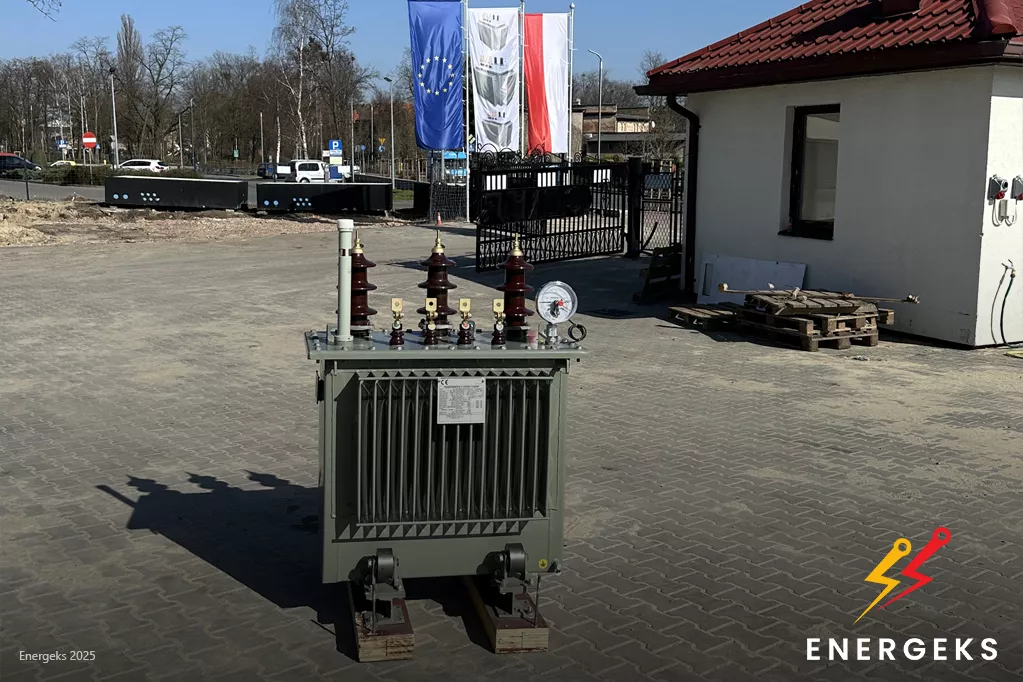
Imagine you're installing a transformer at a new station for a local community. The site is prepared, the documentation is ready, and the cables are waiting.
But before voltage flows into the grid, something crucial has to happen. Something invisible, yet essential.
That moment when the inspector picks up the type test report or checks compliance with the EN 60076 standard is a moment of truth. Is the transformer ready to become the heart of the power network?
In this article, we explore the world of standards, testing procedures, and certification protocols.
We will show why every letter in the PN‑EN 60076 symbol matters, how electrical strength tests are conducted, and what can go wrong if they are ignored.
This blog is for anyone who designs, procures, operates, or services transformers. Whether you are an engineer, an inspector, or someone optimizing an asset portfolio, you will find practical insights here.
After reading, you will:
understand how to interpret the EN 60076 standard in practice
get to know the key type, routine, and special tests
learn which tests are mandatory for your installation under current regulations
Reading time: approx. 8 minutes
What connects a quality audit at the factory and the quiet hum of a medium-voltage station on the edge of a village?
Imagine you're installing a transformer at a new station for a local community. The site is prepared, the documentation is ready, and the cables are waiting.
But before voltage flows into the grid, something crucial has to happen. Something invisible, yet essential.
That moment when the inspector picks up the type test report or checks compliance with the EN 60076 standard is a moment of truth. Is the transformer ready to become the heart of the power network?
In this article, we explore the world of standards, testing procedures, and certification protocols. We will show why every letter in the PN‑EN 60076 symbol matters, how electrical strength tests are conducted, and what can go wrong if they are ignored.
This blog is for anyone who designs, procures, operates, or services transformers. Whether you are an engineer, an inspector, or someone optimizing an asset portfolio, you will find practical insights here.
After reading, you will:
understand how to interpret the EN 60076 standard in practice
get to know the key type, routine, and special tests
learn which tests are mandatory for your installation under current regulations
Reading time: approx. 8 minutes
In the transformer industry, building something “well” is not enough. It needs to be built in line with a recognized technical language that is understood by everyone in the supply chain, from the manufacturer to the inspector to the end user. That language is the standard.
IEC 60076 is a set of international standards developed by the International Electrotechnical Commission. It is globally recognized as the technical benchmark for power transformers.
PN‑EN 60076, in turn, is its European adaptation, aligned with EU realities and formally enforced in Poland.
In terms of technical content, the two standards are almost identical.
The differences usually result from:
language version
references to local conditions (such as environmental factors or permissible noise levels)
the need to align terminology with the legal systems of individual countries
In practice, if a transformer complies with PN‑EN 60076, it also meets IEC 60076 requirements. Such a certificate is accepted across the European market and in most countries beyond. This is important information for exporters, EPC companies, and investors working on cross-border projects.
Part 1: General requirements – defines voltage levels, construction principles, and tolerances
Part 2: Temperature rise – outlines test conditions and allowable temperature ranges
Part 3: Dielectric tests – explains how to conduct impulse and insulation strength tests
Part 5: Short-circuit withstand – covers mechanical requirements in case of faults
Part 10: Sound levels – critical for urban and environmentally sensitive locations
Part 11: Sealing and oil analysis – required for liquid-filled transformers
These standards form the foundation for certification, CE marking, acceptance testing, and public procurement procedures. Their guidance is used daily by designers, manufacturers, network operators, and quality assurance institutions.
Sometimes, minor differences in the interpretation of these standards lead to major financial consequences. For example:
A 24/0.4 kV, 1000 kVA transformer installed in an acoustically protected zone in central Cracow met all electrical specifications. However, the noise level exceeded the allowed 50 dB. Result? Rejected at commissioning, replaced at the supplier’s cost, project delayed by two weeks.
This clearly shows that compliance is not a formality on paper. It is a shield that protects your investment during commissioning, operation, and potential dispute resolution.
Want to dive deeper into the topic?
Check out our dedicated article ➝ IEC standards: 5 pillars of transformer safety and efficiencyIt is a valuable supplement to this post, especially if you're looking to organize your knowledge and apply it in live, high-voltage projects
Every transformer must undergo a set of tests before it is put into service. These tests have one purpose: to ensure the device meets the declared parameters and is safe to use.
The standard distinguishes three main categories of tests:
Type tests – performed for a new model or upon customer request
Routine tests – mandatory for every manufactured transformer
Special tests – individually agreed, for example for photovoltaic farms, seaports, or military installations
Transformer testing is the foundation of safety, reliability, and compliance with European standards. Each test category answers a different question:
does the design work?
does each individual unit meet the requirements?
is the transformer suitable for specific conditions?
Let’s break these down in practical terms.
These tests are the absolute minimum. No transformer can leave the factory without them. They are performed on every unit, whether the device will be used in a PV farm or in an industrial facility. These are so-called final tests that confirm the individual unit meets the required specifications.
What do routine tests include?
Measurement of turns ratio
This verifies whether the transformer transfers voltage according to its rated value. It tests the voltage ratio between the primary and secondary windings at different tap changer positions. It is essential for proper voltage regulation in the network.
Winding resistance measurement
This measures the electrical resistance of windings and detects asymmetries, local insulation damage, or assembly errors. Although the differences may be only a few milliohms, they can signal the onset of serious faults.
Dielectric and impulse voltage testing
These simulate overvoltages caused by operational or atmospheric conditions. AC high-voltage testing and lightning impulse tests mimic extreme conditions such as a lightning strike.
No-load and load loss measurements
Every transformer has power losses. Measuring them allows you to assess energy efficiency and compare values against the catalog. If losses are too high, the unit may fail acceptance.
Leakage test of the tank (for oil-filled transformers)
The oil-filled tank must be sealed across the full temperature range. Any leak risks insulation degradation, contamination, or fire. The pressure test may last up to 24 hours and is often logged in the monitoring system.
All routine test results are recorded in the acceptance protocol and included in the transformer’s documentation. This test package confirms that a particular unit can be installed and energized.
Type tests are comprehensive lab tests carried out on a representative unit of a new transformer model. The goal is to determine whether the design meets the PN‑EN 60076 standard before starting serial production.
Typical use cases:
a new industrial line with high voltage class
energy storage systems (e.g. with LFP batteries)
transformers for extreme climates (e.g. Arctic cold or desert heat)
a device with new tank design or insulation materials
Examples of type tests:
Short-circuit withstand test (PN‑EN 60076-5)
Simulates fault conditions in the network. The transformer is subjected to short current pulses several times higher than normal load. A successful test proves the unit will maintain structural integrity in a critical moment.
Cooling performance test
Measures core and winding temperatures during nominal and overload operation. This assesses the efficiency of the cooling system, whether oil, air, or hybrid.
Sound level measurement (PN‑EN 60076-10)
Especially relevant for transformers installed near residential or office areas. The sound level in dB(A) must not exceed permissible values (e.g. 55 dB for urban stations).
Type tests are performed once, but the results apply to the entire product line. These tests allow you to trust a catalog-listed transformer without repeating all checks from scratch.
Some applications demand solutions that go beyond the standard. This is where special tests come in. They are selected individually to suit client requirements, local conditions, or the specifics of the project.
Common scenarios:
airport transformers with high electromagnetic disturbance
PV stations with atypical load curves and high harmonic distortion
transformers for military infrastructure requiring EMC robustness
Examples of special tests:
Dissolved gas analysis (DGA)
Analyzes gases dissolved in insulating oil. It detects microscopic signs of paper-oil insulation degradation. Early hydrogen or acetylene detection can prevent failure before symptoms appear.
Electromagnetic compatibility (EMC) test
Verifies whether the transformer emits or is susceptible to electromagnetic interference. Crucial in environments with control electronics such as SCADA, IoT, or inverters.
Dynamic overload simulation
Involves subjecting the transformer to variable currents over time while monitoring thermal and voltage responses. Essential for applications with fluctuating loads, such as EV hubs or decentralized grids.
High-frequency impulse testing
Assesses the transformer's resistance to transient surges, especially in systems powered by inverters or remote wind farms.
While not mandatory, special tests often determine long-term reliability, environmental compatibility, and peace of mind for investors.
Not every transformer test serves the same purpose. Some confirm that the design makes sense at all. Others verify that each manufactured unit works as intended. Still others determine whether a particular unit can handle demanding conditions not covered by any standard.
That is why distinguishing between type, routine, and special tests is not a formality. It is a risk management strategy.
Type tests are the first serious checkpoint for a new solution. They are not performed on every unit, but rather on a representative sample that becomes the reference model for the product line.
The outcome of these tests determines whether the device can be released to market, and eventually installed on a construction site, in a power distribution system, or an energy storage unit.
These tests typically include:
short-circuit withstand tests
insulation and impulse voltage tests
sound level and cooling performance measurements
mechanical and environmental resistance testing
A positive result gives the designer the green light. A failed result sends the model back to the drawing board. This phase closes the design chapter and opens the path to market readiness.
Learn more about acoustic performance in switchgear systems in our article:
Silence that protects: how MV switchgear acoustics affect safety and durability
Routine tests are like technical inspections for vehicles. They are mandatory and recurring checks that confirm the functionality of each unit. These tests are not about assessing the design itself but verifying that this particular unit has been manufactured according to specifications and meets all standards.
They usually include:
measurement of turns ratio and winding resistance
power loss measurements
dielectric tests and tank leak testing (for oil-filled transformers)
These tests generate the data included in the transformer’s documentation. Without positive results, there is no acceptance. Without acceptance, there is no energization. That is why routine testing equals reliability.
Sometimes, the standard is not enough. Environmental conditions, investor requirements, or unique project specifications demand an extra layer of certainty. This is when special tests are used, often defined in close cooperation with the design or engineering team.
The most common include:
Dissolved gas analysis (DGA) – detects early stages of insulation degradation
On that note, we recommend our article:
Gas laws in DGA: 5 physical rules that warn you before a transformer failure occur
Electromagnetic compatibility (EMC) tests – essential when operating near digital devices
Overload simulations and dynamic response testing – used in networks with variable load profiles
Infrared thermographic monitoring – identifies hotspots before a fault occurs
Although not required by the standard, special tests are increasingly becoming the norm in long-term, mission-critical investments that must endure the unpredictable future of the energy sector.
Transformer acceptance is not just a formality. It is the final line of defense against risks that could cost investors millions. Unfortunately, even experienced engineers may overlook key issues, especially under time pressure.
1. Misunderstanding the differences between test categories
It is not uncommon for clients to expect full type testing even though the transformer model has already passed these tests during the design approval process. On the other hand, buyers often forget that special tests, such as leak testing at specific temperatures, require a separate agreement.
The result? Delays, additional costs, and in some cases, disputes with the manufacturer.
2. Misinterpretation of test results
Common pitfalls include:
Winding resistance – minor deviations may be caused by temperature shifts but are sometimes mistaken for faults
DGA – acceptable gas concentrations depend on voltage class, oil type, and service time. Without referencing the correct standard, diagnostics may be inaccurate
Noise levels – measurements taken in unsuitable conditions can distort results and lead to false conclusions
3. Missing or unclear documentation
A transformer may fully comply with the standard, but if the documentation is incomplete or illegible, it will not pass acceptance. For auditors, the essentials are clear, signed test reports that include:
the unit’s serial number
standard references (with part numbers, e.g. PN‑EN 60076-3)
test date and conditions
results in a structured, tabular format
4. Skipping the leak test
This error has already impacted several projects. Leak-tightness in oil-filled transformers is critical for maintaining insulation and cooling performance. If the tank was not properly tested at the factory, it may begin leaking after just a few months of service.
Not long ago, complying with standards was mostly about ticking boxes. Sign the test protocol, meet catalog parameters, smile at the inspector and you were done. But times have changed. And so has the meaning of the word “compliance.”
Today, a standard is not just a list of requirements. It is a form of agreement between the designer and the future, between the manufacturer and the energy network, between the investor and society, which expects stable and sustainable electricity supply.
In the past, the transformer was like a night watchman. It stood still, silently transmitting voltage, working quietly in the background. No intervention required.
That is no longer the case.
These devices are now expected to operate in dynamic grids, respond to sudden load changes, function in urban environments, and integrate with smart metering and live data analysis systems.
This shift demands a new approach to how we define and apply standards.
Let’s look at some examples:
New clauses now address environmental impact and energy efficiency classes, meaning that not only output but also consumption and emissions are measurable.
Updated guidelines cover dry-type and low-noise transformers, increasingly used in urban installations.
IEC and EN standards are available in digital format, enabling direct integration with BIM projects and SCADA platforms.
Think of a large-scale photovoltaic farm or a data center. The transformer in such a project does not just need to meet standards. It needs to report them.
We are now seeing the rise of the digital passport – a set of measurement data, test reports, and certifications that:
is saved in a format suitable for automated verification
can be accessed remotely in real time by authorized personnel
allows long-term tracking of technical parameters and deviations
This is not just convenience. It is security, transparency, and a new benchmark: smart compliance.
A well-performed test is only half the job. The other half is proper documentation.
The quality of that documentation can determine whether the transformer is accepted on time and without issue.
According to PN‑EN 60076, each test report should contain:
full equipment identification data (serial number, type, manufacturer)
environmental conditions during testing (temperature, humidity, supply voltage)
precise description of the test method (as per the applicable section of the standard)
measurement results with defined accuracy
assessment of compliance with standard criteria
signature of the responsible person and the test date
Reports should be stored both in paper and digital formats, ideally in standardized file types (PDF/A or XML with metadata). This protects them from tampering and allows for seamless inclusion in the transformer’s digital passport.
Responsibility is shared between the manufacturer, investor, and contractor. The key is to define this clearly in the contract and ensure that a consistent documentation format is used.
This makes archiving easier, supports comparisons with previous tests, and enables long-term analytics.
What may seem like a set of paragraphs and symbols today may turn out to be the protective shield of tomorrow’s project. A standard is a language we use to communicate with the future.
It proves that your design choices are responsible. That you are thinking about the person who will operate this transformer in 10 years. And about the environment that must remain unharmed.
A well-tested transformer does not need a sales pitch.
It just needs to operate when it should, and stay silent when it must not. Its technical passport tells the whole story. In that quietness lies technology that understands the future of the grid.
If you are currently designing a new transformer station, planning a grid upgrade, or preparing for a compliance audit – we are here to help. Visit our contact page if you need support with acceptance testing, documentation, or tailored technical requirements.
We help you select, test, verify, and document your equipment so that it runs without disruption – today, in five years, and in conditions not yet imagined.
Explore our transformer offer – you will find models that meet the PN‑EN 60076 standard.
We offer ready-to-deploy units with full routine testing and optional special testing.
Join the Energeks community on LinkedIn – where we share knowledge not to shine, but to keep the network steady.
Thank you for reading this article to the end.
We hope it has not only provided valuable knowledge but also inspired you to ask more precise questions – because those are the fuel of every innovation.
Sources:
Shipped from our warehouse in Poland within 2–3 working days, 5-year warranty. Full range 25–2500 kVA in the shop (prices in PLN).
Need a complete MV/LV substation? See ready-made transformer substations in the shop or configure your own in the free station configurator (technical design, data sheet, configuration code; in Polish).
No reviews!