21 Mar
2025
Energeks
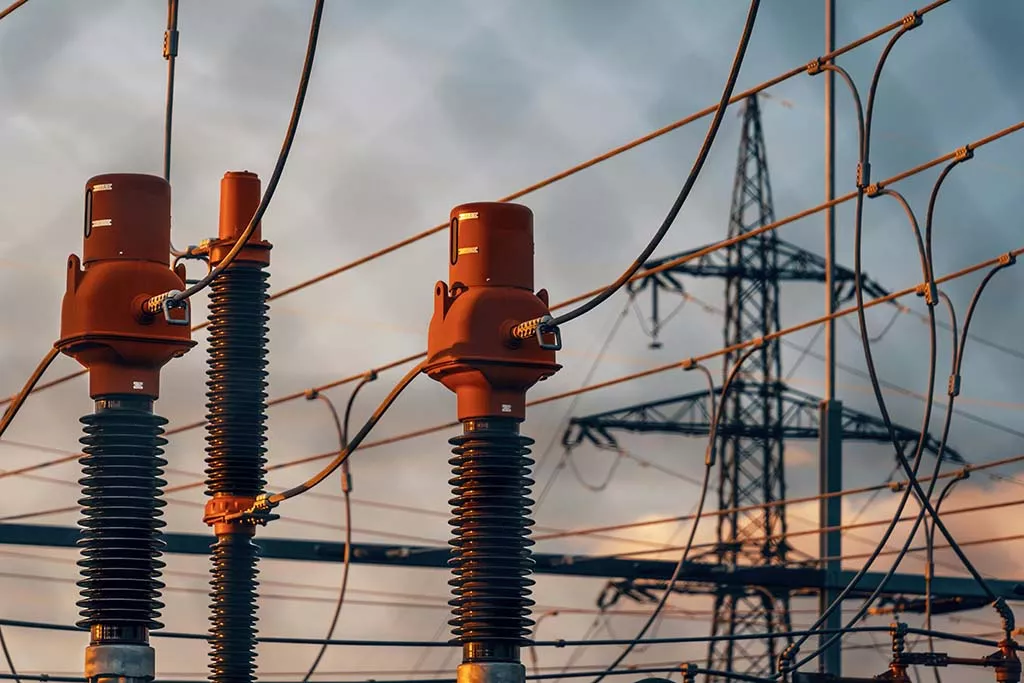
Imagine this scenario: a massive power plant, millions of consumers connected to its output, and suddenly… a power outage. What protects us from a complete blackout? This is where the emergency power supply steps in - an inconpsicuous yet absolutely indispensable component of energy security.
And transformer stations? They also have their own "Plan B," ready to activate at any second.
At Energeks, we provide solutions that safeguard critical points of the grid every day – from transformers to energy storage systems, always ensuring support for emergency power systems. Our expertise is the result of years of collaboration with distribution system operators, power plants, and industrial investors.
Curious how power plants and transformer stations operate without a connection to the grid? After reading this article, you will understand the mechanisms behind emergency power supply systems and learn which solutions keep the energy flowing, no matter the circumstances.
In this article, you will learn:
What types of loads require emergency power supply in power plants.
Which technologies underpin the backup systems in transformer stations.
What solutions are applied for various voltage levels and power demands.
What role power generators play and why they are essential to the power infrastructure.
Reading time: 6 minutes
A power plant is a complex ecosystem where hundreds of diverse devices coexist. It includes both precise IT systems and massive machines with multi-megawatt capacities. Although they differ in function and energy demand, they share one critical requirement: they must be powered continuously. Any power outage threatens serious disruptions to technological processes and, in extreme cases, even a complete halt in energy production. That is why emergency power supply systems for power plants are designed with surgical precision, taking into account the specific characteristics of each type of load.
At the heart of every control system in a power plant are the DC-powered loads. Automation systems, protection relays, telemechanics, and signaling equipment all rely on stable direct current. Typical DC voltage levels used in such facilities include 24V, 48V, 60V, 110V, and 220V, allowing for flexible adaptation to the requirements of individual devices.
In everyday operation, these loads are primarily powered by central battery systems. The batteries work in conjunction with buffer power supplies and DC/DC converters to maintain a stable voltage level regardless of fluctuations in demand. This ensures that critical system components, such as protection relays, PLC controllers, or SCADA communication devices, operate without interruption.
In smaller power plants or for selected loads, distributed systems are also used, where each device has its own dedicated power source in the form of an individual battery. This solution increases flexibility and minimizes the risk of power interruption in case of a central power source failure.
It is worth noting that in many power plants, emergency lighting is also powered by direct current. This simplifies the power infrastructure and ensures independence from the low-voltage grid.
The second group consists of AC-powered loads. This category includes both small IT devices and communication systems, as well as large-scale technological machines with power measured in megawatts. For each of these loads, dedicated emergency power solutions are designed, tailored to their operational characteristics.
Low and medium power loads, such as IT systems, monitoring systems, or working area lighting, are most commonly powered by UPS units. These can be either individual devices or central systems connected to plant batteries. Alternatively, DC/AC converters are used, converting energy from battery systems to the required alternating voltage.
For high-power loads, such as pump motors, ventilators, or compressors, more advanced solutions are required. Power plants utilize battery systems coupled with DC/AC converters or inverters, providing not only emergency power but also smooth drive control. These solutions minimize the risk of sudden shutdowns of technological processes and allow safe transition to emergency operation modes.
Additionally, uninterruptible power supply functions are increasingly implemented in large drives. These systems have their own battery power sources, independent of the main system, further enhancing the reliability of the entire power plant.
Transformer stations are critical nodes in the power grid. The larger the station and the more strategic its role, the higher the demands placed on its emergency power systems. This is especially true for high-voltage stations, where the flow of energy is measured in hundreds of megawatts. Here, there is no room for downtime or compormise. Even a few seconds of delay can result not only in local blackouts but also in destabilization of the entire transmission system.
Emergency power supply in transformer stations is far more than simply maintaining voltage. It is a carefully designed system of multiple interworking components that must guarantee the immediate restoration of device operation as soon as the main grid power returns.
Switchgear drives:
Essential for safe management of energy flow. They allow remote switching of circuits and reconfiguration of the grid. Their reliability determines how quickly operators can respond to changing operating conditions.
Protection relays and automation systems:
Responsible for protecting station equipment against short circuits, overloads, and other failures. Without their proper functioning, the risk of damage to transformers or switchgear significantly increases.
Telemechanics, control, interlocking, and signaling systems:
Provide full control over station equipment and transmit information to dispatch centers. Remote diagnostics, visualization, and response to disturbances would not be possible without continuous power to these systems.
Emergency station lighting:
Facilitates operation and maintenance during emergency conditions, ensuring personnel safety.
Auxiliary equipment of compensators:
Stabilizes voltage and power factor, directly affecting the quality of transmitted energy.
Battery systems (accumulators)
These are standard solutions in every power station. Batteries supply power to direct current loads, such as protection relays, telemechanics controllers, or drive control circuits. Typical voltage levels are 230V or 110V DC, adjusted to the requirements of each device. Batteries are constantly charged from the grid and immediately take over the power supply role when the grid fails.
Depending on the size of the station, the capacity of the battery system allows power to be maintained from several minutes to even several hours. During this time, operators can safely complete operations or prepare the station for reconnection to the grid.
Power generators
In larger transformer stations, battery systems are often supported by power generators. Their task is to supply energy to high-power loads that exceed battery capacity. This includes not only large switchgear drives but also ventilation systems, compressors, and auxiliary station devices that must continue operating even during prolonged outages.
Generators are automatically started when a power outage is detected and can operate for many hours or even days if the appropriate fuel infrastructure is in place. Thanks to them, the transformer station maintains full autonomy, and the process of restoring grid operations proceeds without risk.
Voltage converters
Voltage converters are an indispensable element of emergency power systems. Their primary function is to adjust voltage parameters to match the needs of specific devices. In practice, both DC/DC converters for direct current loads and DC/AC converters for alternating current loads are used. Regardless of whether the power source is a battery or a generator, converters ensure that every device receives precisely the voltage required for stable operation.
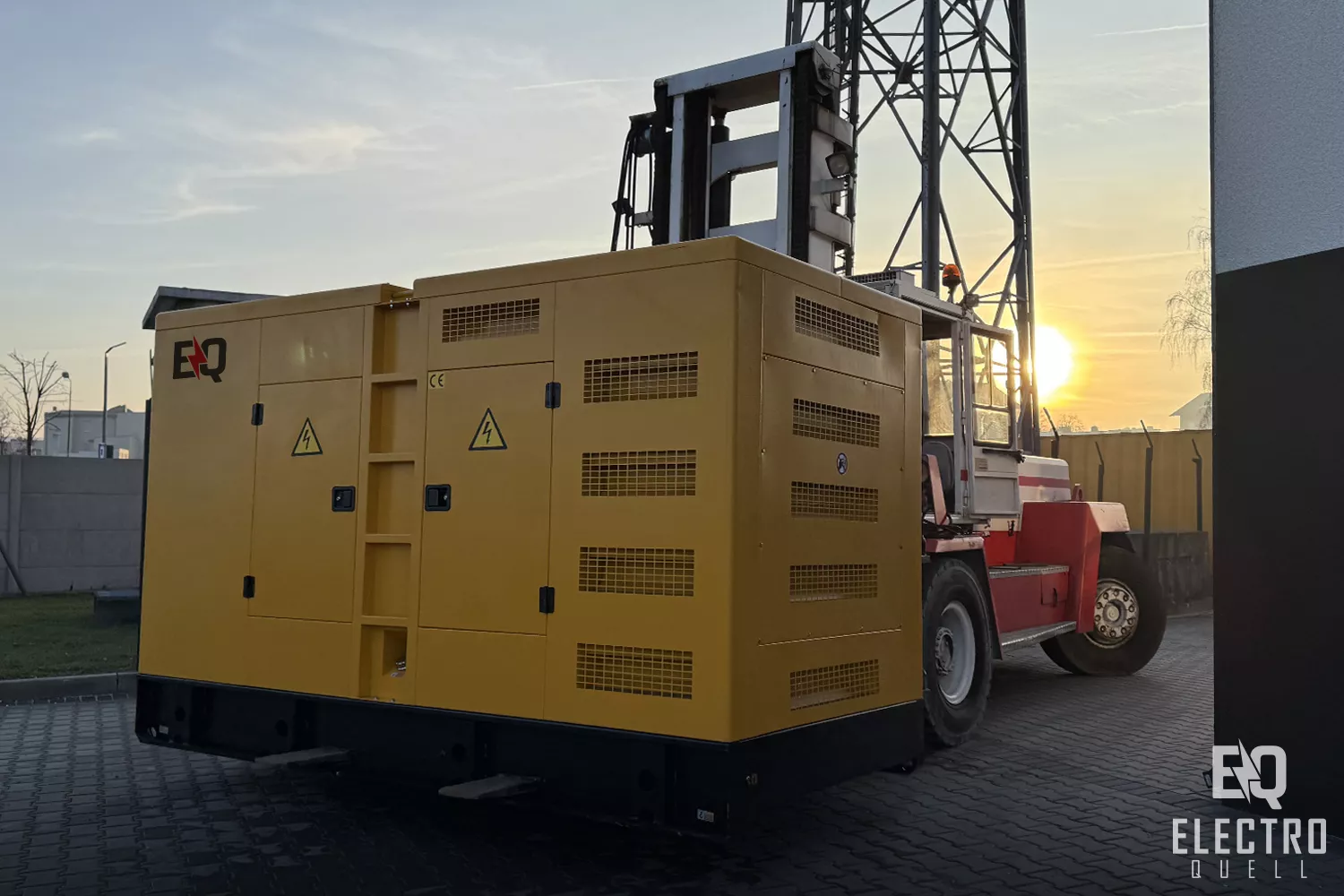
Batteries and UPS systems excel as the first line of defense, reacting instantly at the moment of a power outage. However, their capacity is like a phone battery – sufficient for short-term operation, but not enough to sustain the system for extended periods. When an outage lasts longer, and the load increases, power generators step in. They take responsibility for keeping the equipment running continuously when the loss of grid power extends to minutes, hours, or even days.
Power Generator Deutz, CC: electroquell.de
Consistency of technological processes:
Power plants resemble precisely synchronized clockwork mechanisms. Each device interacts with others, and stopping them, even for half an hour, can lead to costly downtime and destabilize the entire grid. In this setup, generators act as a reliable mainspring, delivering stable power to maintain process continuity for as long as necessary.
Supplying high-power loads:
Pump motors, cooling systems, compressors, ventilation systems – these are true energy giants, requiring constant high-level energy supply. While batteries are effective for supporting automation and control systems, they cannot meet such demanding loads. Generators bridge this gap, providing hundreds of kilowatts or even megawatts of energy essential for maintaining full infrastructure functionality.
Independence from the grid:
During crisis situations such as storms damaging transmission lines or major system failures, power stations must operate autonomously. Generators serve as miniature power plants, supplying the station without relying on the external grid. Thanks to properly designed fuel systems, including stationary tanks and automatic refueling mechanisms, they can keep the facility fully operational for several days without the need for external intervention.
Today’s generators are far removed from the simple units of the past. They are equipped with advanced systems that ensure reliable operation and compliance with standards required for critical infrastructure:
Automatic Transfer Switches (ATS):
Allow for immediate start-up of the generator right after a power loss is detected. The entire process occurs without human intervention, eliminating the risk of delays.
AVR (Automatic Voltage Regulation):
Maintains a constant output voltage level, which is crucial for sensitive automation and control systems.
Synchronous operation with the grid:
In many facilities, generators can operate in parallel with the power grid, smoothly taking over or sharing the load. This solution prevents any interruption in power supply.
Remote monitoring systems:
Thanks to online technologies, operators can continuously monitor the generator’s operating parameters, such as fuel level, temperature, voltage, or frequency. Quick response to irregularities is possible without the need for on-site presence.
While the principle of generator operation remains the same, their configuration and tasks differ depending on the type of facility.
Power plants:
Here, the requirements for generators are similar to those of large industrial plants. High-capacity units capable of continuous operation in Prime Power mode are used. Often, configurations include cascaded systems, where multiple generators work in parallel, providing flexible adaptation of output power to current needs. In many cases, generators are integrated with pump drives, ventilation systems, and auxiliary technologies, creating a cohesive and self-sufficient power supply system.
Transformer stations:
In transformer stations, the main role of generators is to maintain the operation of control systems, protection devices, and switchgear drives. Key factors here are reliable start-up, fast switchover time, and low fuel consumption. Generators in these facilities do not need to operate continuously but must guarantee full readiness to activate at any moment.
If you’re wondering whether your installation is operating at its full potential, it’s worth checking right at the source. At Energeks, we help our partners achieve more every day by optimizing energy consumption, simplifying systems, and eliminating unnecessary costs. Thanks to this trust, we’ve been able to share not only proven solutions but also practical experience for years.
We proudly invite you to explore our current range of low-loss transformers. With us, you’ll find both tried-and-true models available immediately and tailor-made solutions designed for your individual needs.
Our knowledge base and blog publications are built on real-life implementations and collaborations with manufacturing plants, photovoltaic farms, and grid operators. If you’re looking to consult on the modernization of your system or simply exchange ideas and experiences - join our community on LinkedIn. There, we don’t just share our offer but also knowledge, case studies, and insights that can help you make informed decisions.
Energeks is not just about products. It’s also about people who are passionate about shaping the future of the energy sector together with you. Get in touch with us and see how we can support your plans!
Sources:
See also: Energeks transformer substations (product range, dimensions, drawings); a configuration with documents can be prepared in the station configurator (in Polish).
Shipped from our warehouse in Poland within 2–3 working days, 5-year warranty. Full range 25–2500 kVA in the shop (prices in PLN).
Need a complete MV/LV substation? See ready-made transformer substations in the shop or configure your own in the free station configurator (technical design, data sheet, configuration code; in Polish).
No reviews!