Sustainable energy systems
There is a moment of silence before the first ampere trembles.
On the screen glows a 3D visualization, where the core consists of thousands of thin laminations, and the windings resemble precisely laid ribbons.
This is where the life of an oil transformer begins, long before it reaches a substation and powers a residential district or a production line.
A good story isn't magic; it's engineering told in the right sequence.
That is exactly what we are doing today.
At Energeks, we work with medium-voltage transformers, prefabricated transformer substations, switchgear, and energy storage systems every day.
We combine practical experience with the requirements of standards and the expectations of investors.
This text is the result of numerous conversations with designers, technologists, and assembly teams.
We present the process in a way that helps make better decisions and predict outcomes at the concept stage.
If you design, purchase, order, or will be operating an oil transformer, understanding the production chain of cause and effect will save you time, money, and nerves.
In the end, you will know why a specific requirement in the technical specification translates into particular operations, risks, and performance parameters for decades.
Agenda:
Design and digital visualization
CRGO lamination core and step lap configuration
Windings. Conductor selection and geometry
Insulation system. Kraft paper and DDP
Active part assembly and preparation for testing
Tank. Corrugated or with radiators
Surface treatment and anti-corrosion protection
Drying of the active part and moisture control
Vacuum oil filling and heat cycling
Routine tests and readiness for shipment
Reading time: ~20 minutes - just right for some worthwhile reading during your afternoon coffee and biscuit break!
Design and digital visualization
Every transformer begins with an idea, which looks less like a magical spark and more like... Excel, CAD, and... coffee at three in the morning.
The process of designing an oil transformer is a precise puzzle where physics meets mathematics, and everything must fit inside a tank with specific dimensions and weight.
Before anyone even orders steel or copper, the design team creates a digital model of the transformer, also known as a digital twin.
In this model, they test how the magnetic field will behave under different loads, how heat flows, where mechanical stresses will occur, and what the no-load and load losses will be.
This is not just a "nice 3D visualization of a transformer"—it's a virtual testing laboratory that saves months of work and hundreds of thousands of EUR.
The designer must reconcile several worlds:
The electrical world: parameters like voltages, ratios, and vector groups.
The mechanical world: short-circuit forces and cooling.
The material world: because CRGO steel has different properties than amorphous steel.
And finally, the environmental world: ambient temperature, humidity, and altitude above sea level.
This is where the engineering dance between theory and practice begins.
For example: increasing the number of turns improves voltage stability but raises the winding resistance and thus the losses. Reducing the conductor cross-section lowers costs but impairs cooling. As always—the devil is in the details, and the angel is in the tolerance table.
In modern factories, the transformer design doesn't end on paper. Digital visualization allows for simulations in environments like ANSYS Maxwell or COMSOL Multiphysics, where one can check how the transformer will behave during a short-circuit, overheating, or a lightning impulse. It's a bit like training—it's better for the equipment to "take a beating" in the computer than in the power grid.
Thanks to such models, it's also easier to adapt the construction to a prefabricated transformer substation, where every centimeter counts. The designer can see in advance if the mounting holes, coolers, tap-changers, and accessories will fit without collisions. This is the magic of 3D transformer design—a virtual factory before the real one is built.
A well-designed digital transformer already has a full data package defined at the design stage:
Technical documentation, a bill of materials, a winding schedule, and a detailed cooling plan.
This shortens production time by up to 20% and minimizes the risk of errors.
CRGO lamination core and step-lap configuration
At the heart of every transformer lies its core – the magnetic core.
It doesn't glow or shine, but its quality determines whether the device will purr like a cat or hum like a refrigerator from the 1980s. The core is precisely what dictates no-load losses, noise levels, and overall energy efficiency.
And it all starts with a material known by a three-letter acronym every electrician memorizes:
CRGO – Cold Rolled Grain Oriented Steel.
This silicon steel, with grains oriented in a single direction, has a unique gift:
It conducts magnetic flux like a well-designed channel conducts water.
As a result, hysteresis losses (the energy consumed with every reversal of the magnetic field) are even 30–40% lower than in ordinary hot-rolled steel.
From an engineer's perspective, it's like an engine running at lower throttle but delivering the same power.
During the production of the transformer core, CRGO laminations are cut with laser or knife-edge precision to within tenths of a millimeter.
It is crucial that they have no burrs or micro-cracks, which could become sources of loss or vibration.
Here, not only geometry matters but also the stacking sequence. Modern designs use a so-called step-lap configuration – a technique of overlapping the lamination edges, resembling roof tiles.
The effect? Magnetic flux flows smoothly, without abrupt "jumps" between segments, which reduces noise and improves efficiency.
Imagine the core as a labyrinth where the magnetic field seeks the shortest path.
Every gap, every misalignment is like a hole in the path = energy escapes as heat and sound.
This is why the following are so critical:
• High-quality laminations (low core loss, e.g., 0.9–1.1 W/kg at 1.5 T and 50 Hz),
• Precision cutting and stacking,
• And solid joints between yokes and limbs that eliminate micro-gaps.
In large units, the core is assembled in segments: first the limbs, then the yoke, and the whole structure is clamped with steel frames.
Some manufacturers use bonded interlayer insulation systems that limit vibration and improve the coherence of the core package. Amorphous cores, which are even more energy-efficient though more difficult to process, are also becoming increasingly popular.
From a user's perspective, you can hear the difference between a "good" and a "bad" core.
Literally. A transformer with a perfect step-lap configuration and the right CRGO steel can be several decibels quieter, meaning in practice you can hold a normal conversation next to the operating equipment. For urban substations installed near buildings, this isn't a minor detail, but a condition for project acceptance.
An interesting fact
Some production lines use algorithms to optimize the core cutting angles based on the working flux density.
This is pure field mathematics: the better the grain orientation, the smaller the magnetic distortions and the lower the losses at high voltages. As a result, the transformer gains a few percentage points in efficiency without additional material costs.
This is how the foundation of the entire device is created – both literally and figuratively.
The CRGO lamination core is an engineering compromise between physics, economics, and the quiet that speaks of perfection.
Windings. Conductor selection and geometry
If the core is the transformer's heart, then the windings are its muscles – they carry the energy, and their shape, material, and insulation determine how effectively they do so. In theory, it's simple: we have a primary winding, a secondary winding, the right number of turns, and Faraday's law of induction. In practice, it's a world of hundreds of nuances that can determine whether the transformer survives its first short-circuit.
First, the choice of metal. Copper or aluminium?
Contrary to myths, it's not just about price.
Copper has higher conductivity (approx. 58 MS/m), but it's heavier and more expensive.
Aluminium (approx. 35 MS/m) requires a larger cross-section but facilitates cooling thanks to better temperature distribution. For transformers with powers up to a few MVA, the choice often depends on material availability and client requirements. You can find more about differences in conductivity and material properties in analyses by the International Copper Association, which has been researching the efficiency of copper in the power industry for years.
Shape and geometry – a dance between the magnetic field and oil
The low-voltage (LV) winding is most often made from paper-insulated rectangular strip or wire, wound in layers. The high-voltage (HV) winding – from round or rectangular wires, also in paper, but with a more complex geometry. All this is done to minimize the stray field and distribute temperature evenly in the oil.
The principle is simple: the shorter the current path, the smaller the losses. But engineers know that reality is rarely straightforward. HV windings often use helical, cylindrical, or disc-type arrangements, which allow for controlled magnetic field distribution and oil cooling through microchannels.
In laboratories, you can see how such a winding in cross-section somewhat resembles a multi-layer cake – except instead of cream, we have cellulose Kraft paper and epoxy resin.
Insulation secrets – cellulose and DDP in action
Every winding needs protection from voltage and temperature. This is where Kraft paper and its enhanced version, DDP (Diamond Dotted Paper), come into play. This is a material where micro-dots of resin are arranged in a regular grid – during the heating process, they create a "weld" between the winding layers. The result? A rigid structure resistant to vibration and discharges. The layer insulation made from DDP paper has another advantage: it allows for precise control of the so-called "creepage distance." A high value for this parameter reduces the risk of flashover, which is crucial at voltages of 15–36 kV.
Insider jokes
In the industry, they say that "a winding can be made beautifully, but only once" – because if something goes wrong during the winding process, there is no second chance. Too much pressure? Damaged insulation. Too little? Vibration. That's why winding machine operators often have the status of artists – they can feel the tape's resistance with their fingers before a sensor shows any deviation.
Anyone who has had the chance to see the winding of an oil transformer coil live knows it's like watching a watchmaker at work on an XXL scale.
Precision, rhythm, and focus – all so that the current can flow for decades in perfect rhythm
Manual winding of oil transformer coils using copper conductors and DDP paper insulation.
A key manufacturing stage ensuring transformer efficiency and long-term reliability.
Insulation system. Kraft paper and DDP
Insulation in a transformer is somewhat like skin in a living organism – invisible from the outside, but absolutely crucial for the life of the entire system.
Without it, even the most beautifully designed core and windings wouldn't stand a chance of surviving the first overvoltage. And just as human skin relies on elasticity, resistance, and regeneration, the most important properties in a transformer are dielectric strength, mechanical stability, and resistance to thermal aging.
The primary material that meets these requirements remains Kraft paper – a cellulose classic with an extremely long history.
It is made from wood fibers of high chemical purity, which ensures low ash content and excellent electrical strength. In transformers, it is used in the form of tapes, sleeves, and spacers. In contact with mineral or synthetic oil, the paper swells minimally, maintaining dimensional stability, and its micropores allow for the exchange of gases and oil.
But the world of insulation has taken a step further. In higher voltage windings, DDP (Diamond Dotted Paper) is used, coated with a regular grid of micro-dots of epoxy resin. When the winding enters a vacuum oven and reaches the appropriate temperature, the resin melts, fusing the paper layers into a rigid, homogeneous structure.
The result? Insulation that doesn't shift even under severe electromagnetic transients and vibrations. It is this "glue" that prevents the transformer from "humming" during the startup of large drives.
A properly designed insulation system isn't just about the paper. It also involves vacuum impregnation, which removes air bubbles, and protective layers made from pressed cellulose boards that absorb mechanical stresses. A key parameter remains the breakdown voltage – values in the range of 40–60 kV/mm indicate the quality of the material and the purity of its structure.
A well-chosen insulation system for an oil transformer is an investment in peace of mind for maintenance crews for the next 25–30 years. It determines whether the equipment can withstand not only voltage overloads but also thousands of heating and cooling cycles, which act like slow, yet relentless, fatigue tests.
A tidbit from high-voltage laboratories
Modern research on dielectrics shows that even a slight increase in the paper's moisture content from 1% to 3% can reduce its electrical strength by over 50%. This is why drying and controlling the water content in cellulose is a topic that will reappear later in this article.
Active part assembly and preparation for testing
At this point, the transformer begins to resemble more than just a collection of parts – it slowly becomes a living organism.
The active part assembly stage is an engineering orchestra, where every element has its place, its specific torque, and its tolerance. The precision of these actions determines whether the device will operate without vibrations or failures for decades to come.
The active part is the combination of the core, windings, yokes, spacers, and insulation – everything responsible for conducting and transforming energy.
First, the low-voltage and high-voltage windings are placed over the core limbs.
Some designs require additional electrostatic screens or grading rings, which distribute the electric field evenly along the entire length of the winding.
Once the windings are in place, it's time to assemble the yoke, the top part of the core. It's like closing the lid of a well-fitted watch. Here, wedges, clamping frames, and spring-loaded bolts are used to mechanically stabilize the structure.
The whole assembly must be rigid, but not overly so – a transformer needs a minimal degree of flexibility to withstand short-circuit forces without cracking the insulation.
Next, the tap changer (OLTC or NLTC) is installed – this is what enables voltage regulation on the high-voltage side, compensating for fluctuations in the grid. In large units, it is mounted in a separate oil compartment; in smaller ones, directly on the cover.
Each tap changer is tested electrically before the oil is filled, as access to it becomes difficult after final assembly.
Stability, tightness, and cleanliness
Three words that govern this phase. Every speck of dust, every under-torqued yoke, every poorly positioned wedge can turn a future transformer into a potential source of failure. This is why assembly takes place in clean, controlled conditions – often in halls with positive pressure to prevent dust ingress.
After the active part is assembled, it's time for preliminary tests.
These are "dry tests" that ensure everything is according to design:
Winding resistance measurement,
Vector group verification,
Ratio measurement,
Inter-system insulation check.
These tests are the first moment the transformer "speaks" – its parameters begin to form graphs and numbers.
Find out how we test our transformers at Energeks, insider knowledge you won't find on Google:
How do we test our transformers? A symphony of factory quality!
A short digression on vibrations and patience
In experienced assembly teams, a rule prevails:
"Don't rush the clamping – the transformer will reward you with quietness."
Properly torquing the yokes and selecting the right elastic elements ensure the device does not produce unwanted sounds during operation.
After all, sound is energy that could have been better utilized – for example, for transmitting current instead of an acoustic concert in a substation.
Where theory meets practice
It is at this stage that many young engineers understand for the first time that a transformer is not just a CAD project, but a physical machine with its own dynamics, weight, and rhythm.
In theory, every current transformer, coil, and screen can be described by equations.
In practice – you need an eye for detail and respect for mechanics.
For those who would like to explore the topics of short-circuit forces and the stability of the active part in greater depth, I recommend publications from Transformers Magazine, in which experienced designers analyse the influence of assembly on the mechanical overload resistance of transformers.
Tank. Corrugated or with radiators
Every transformer needs armor. Not to look combat-ready, but so its interior—full of windings, cores, and insulation—can peacefully bathe in oil and avoid interacting with the external environment.
This armor is the tank of the oil transformer, a steel vessel that provides cooling, tightness, and safety for the entire structure.
Simply put, the tank is the transformer's "shell of life." Its construction must withstand vibrations, temperature differences, and pressure, while remaining absolutely sealed for decades. This is why designers choose between two main types: the corrugated tank and the tank with radiators.
Corrugated tank – the master of compact solutions
A corrugated tank somewhat resembles an accordion made of steel sheet. Each of its "ribs" acts as a natural radiator, increasing the oil's cooling surface area. When the internal temperature rises, the oil expands, and the corrugated walls flex elastically, compensating for the volume changes.
No conservator, valves, or breather pipes are needed – everything happens within a hermetic space.
This solution is ideal for distribution transformers and applications where compactness and maintenance-free operation are key. The lack of a conservator reduces the risk of moisture ingress and oil oxidation, thus extending its lifespan. Fewer moving parts also mean quieter operation and a smaller service footprint – engineers like that, and accountants even more so.
Tank with radiators – industrial-grade classic
For larger units (typically above 2.5 MVA), corrugated walls are insufficient.
This is where plate radiators come into play – vertical panels welded to the sides of the tank. They work like car radiators: hot oil rises, flows through the panels, transfers heat to the air, and then descends, creating a natural circulation (ONAN – Oil Natural Air Natural) or a forced one (ONAF – Oil Natural Air Forced) with fans.
Radiators can also be easily replaced and expanded, making this system more serviceable.
The downside is greater weight and the need for regular checks of weld integrity, but it offers better thermal stability under heavy loads. High-class designs additionally feature safety valves, thermometers, oil level gauges, and Buchholz relays, which react to gases generated during internal faults.
From steel to tightness – the engineering of precision welding
The foundation of every tank is steel with high purity and controlled carbon content. After the sheets are cut, the tank is welded using MAG or TIG methods, and the welds are tested with non-destructive methods – most commonly ultrasound or penetrant testing. Factories also perform pressure tests: the tank is filled with compressed air or helium and immersed in water to observe for any bubbles. Simple, yet effective.
After leak tests, the tank is chemically cleaned and degreased. The interior is coated with a special varnish resistant to transformer oil, while the exterior receives an anti-corrosion coating system tailored to the environmental category – from C2 for urban areas to C5-M for marine environments.
The sustainable direction – recycling and hot-dip galvanizing
Modern production increasingly emphasizes tank corrosion resistance and material recyclability. Hot-dip galvanizing can increase the coating's lifespan up to five times, which is particularly important in coastal and industrial areas. Interestingly, some manufacturers are also testing powder coatings based on nano-ceramics – lighter but just as durable as classic zinc.
For those interested in the details, it's worth visiting the Hydrocarbon Engineering portal, where research on protective coatings and welding techniques for the power industry is published.
Vacuum oil filling and heat cycling
At this stage, the transformer resembles an astronaut before a mission – ready, sealed, dry, and waiting only for the medium that will allow it to live.
That medium is transformer oil, which serves two functions: cooling and insulating.
Without it, the transformer would be like an engine without oil – it would overheat, lose its parameters, and fail faster than it could receive a serial number.
Oil under vacuum – the physics of pure calm
The process of vacuum oil filling is an engineering spectacle of Swiss watch precision. The active part of the transformer, now enclosed in its tank, is placed in a chamber where a deep vacuum is first created – typically below 1 mbar.
Why? Because even microscopic air bubbles trapped in the windings or insulation could later cause partial discharges and local overheating.
When the pressure reaches the required level, the slow filling with oil begins, usually from the bottom. The oil penetrates every gap, displacing the air. Sometimes the entire process takes several hours – especially for large power transformers requiring thousands of liters of oil.
The fill rate is strictly controlled to prevent the formation of gas pockets or pressure differentials that could damage the delicate insulation.
After filling, the unit is left undisturbed, still under vacuum conditions, to allow all micro-bubbles of gas time to rise and dissipate. Only then can the transformer be said to be "impregnated" – ready for the first flow of current.
Heat cycling – a spa for the windings
After filling comes the heat cycling process, which has two goals: to stabilize the structure of the paper and resins and to reduce residual moisture to an absolute minimum.
The transformer is maintained at a temperature of around 80–90°C for several hours. During this time, the oil and insulation reach a state of thermal and moisture equilibrium.
This isn't a stage visible from the outside – but it's when the transformer "matures." Every layer of paper, every impregnation, acquires its final structure. After this process, a key quality parameter is measured: the oil's breakdown voltage.
A value above 60 kV for a 2.5 mm gap indicates a perfect insulation system.
Oil quality and purity control
High-grade transformer oil (e.g., mineral oil like Nynas, Shell Diala, or synthetic fluid like MIDEL) undergoes a series of tests before use: measurement of dielectric strength, viscosity, dissipation factor (tan δ), and dissolved gas content.
Some manufacturers use Chromatographic Dissolved Gas Analysis (DGA), which can detect even trace amounts of hydrogen, carbon monoxide, or methane – signals that something might later go wrong inside the transformer.
Learn more:
Gas laws in DGA transformers: 5 rules that will warn you of a failure
To maintain its parameters for years, the oil must be perfectly clean – even a single drop of water or a dust particle per liter can reduce the breakdown voltage by several thousand volts.
Therefore, after filling, the system is hermetically sealed, and all bushings, breathers, and plugs are secured against contact with air.
When oil becomes a witness to history
An interesting fact for enthusiasts: in service, transformer oil retains a memory of the unit's life. Analyzing its composition allows experts to read how long the equipment operated under overload, if it experienced a short-circuit, and even what temperatures it reached in recent years.
In maintenance laboratories, it's from the oil that the first signs of insulation aging are read – long before any smoke appears from the tank.
Now that the transformer is sealed, filled and cooling down after heating, the final stage of its journey through the factory remains – routine tests and final checks that will determine whether it can be shipped out into the world and power its first network.
Routine tests and readiness for shipment
An oil transformer may look ready – closed, filled with oil, and shining with fresh paint. But until it passes its tests, it's merely a candidate for a transformer, not a full-fledged participant in the power grid. In the world of electrical power, final tests are like a state exam: there's no room for a second attempt.
Routine tests – or "mandatory exams of everyday life"
According to the IEC 60076 standard, every transformer must undergo a set of so-called routine tests before leaving the factory. Their goal is to verify that the device operates exactly as designed – without compromises, shortcuts, or guesswork.
Winding resistance measurement – A test that detects interturn short circuits, connection discontinuities, and assembly errors. Even a small resistance difference between phases can reveal a loose terminal.
Vector group and ratio verification – Checking that the voltage on the secondary side has the exact ratio specified in the design. This test immediately detects mistakes in the winding direction of the coils.
No-load and load loss measurement – A true barometer of the quality of the core and windings. If values exceed norms, it indicates excessive magnetic losses (core) or resistive losses (windings).
Impedance voltage measurement – A test simulating a short-circuit on the secondary side, checking the mechanical and electromagnetic stability of the system.
Dielectric tests – One of the most critical tests, checking the insulation's resistance to impulse voltages and long-term operating voltage.
Every measurement is recorded and compared with the design values. A transformer that passes everything within tolerance receives a Factory Acceptance Test (FAT) certificate.
Additional tests for demanding applications
Depending on the voltage class and customer requirements, type tests (on reference units) or special tests are also conducted, for example:
Sound level measurement to confirm compliance with environmental requirements (for urban units, this is often a condition for acceptance).
Measurement of magnetic circuit losses at different temperatures.
Partial Discharge (PD) test, assessing the cleanliness of the insulation and the quality of impregnation.
These tests are particularly important for transformers intended for use in sensitive networks or in prefabricated substations where the level of interference must be minimal.
Engineering Aesthetics: Preparation for Shipment
After passing all tests, the transformer enters a stage underappreciated in textbooks but highly valued by installation crews – preparation for transport.
This includes:
Draining excess oil and filling hermetic tanks with nitrogen.
Sealing all openings and securing transport fittings.
Installing lifting lugs, sensors, and the rating plate.
A final visual inspection of coatings and welds.
At this stage, the transformer looks ready for a parade: painted, labeled, tested, and packed in a steel transport frame. But before it hits the road, engineers perform a final vibration and leveling check to ensure nothing loosens or shifts during transit.
Documentation – The Transformer's DNA
Along with the unit, the customer receives a complete set of documents:
Technical and operational documentation.
Measurement and test reports.
Oil test results.
Material certificates for components used.
Certificates for weld quality and anti-corrosion coatings.
This is the transformer's DNA – a record of its entire "life" from design to the final test. In practice, this documentation determines whether the unit will be approved for operation by the Distribution System Operator (DSO).
More on transformer testing standards and certification can be found in publications from the IEC Webstore, where current editions of the IEC 60076 standards and guidelines for routine and special tests are available.
And so its factory journey ends – the transformer, which has been through design, core, windings, tank, drying, oil, and tests, is ready to hear the hum of the grid for the first time and to see the world not through an engineer's microscope, but through the current that begins to flow within it.
Conclusion
The production of an oil transformer is a fascinating journey from an idea to a finished source of energy – a journey where engineering meets patience, and precision meets practice. Every stage – from design to final testing – is a testament to the fact that reliability is not born by chance, but from consistency and a respect for detail.
For years, we have supported designers, contractors, and grid operators in selecting solutions that will stand the test of time and operating conditions. We help choose the right type of transformer, optimize cooling, select oil and insulation systems for specific environments, and plan maintenance over the entire lifecycle of the equipment.
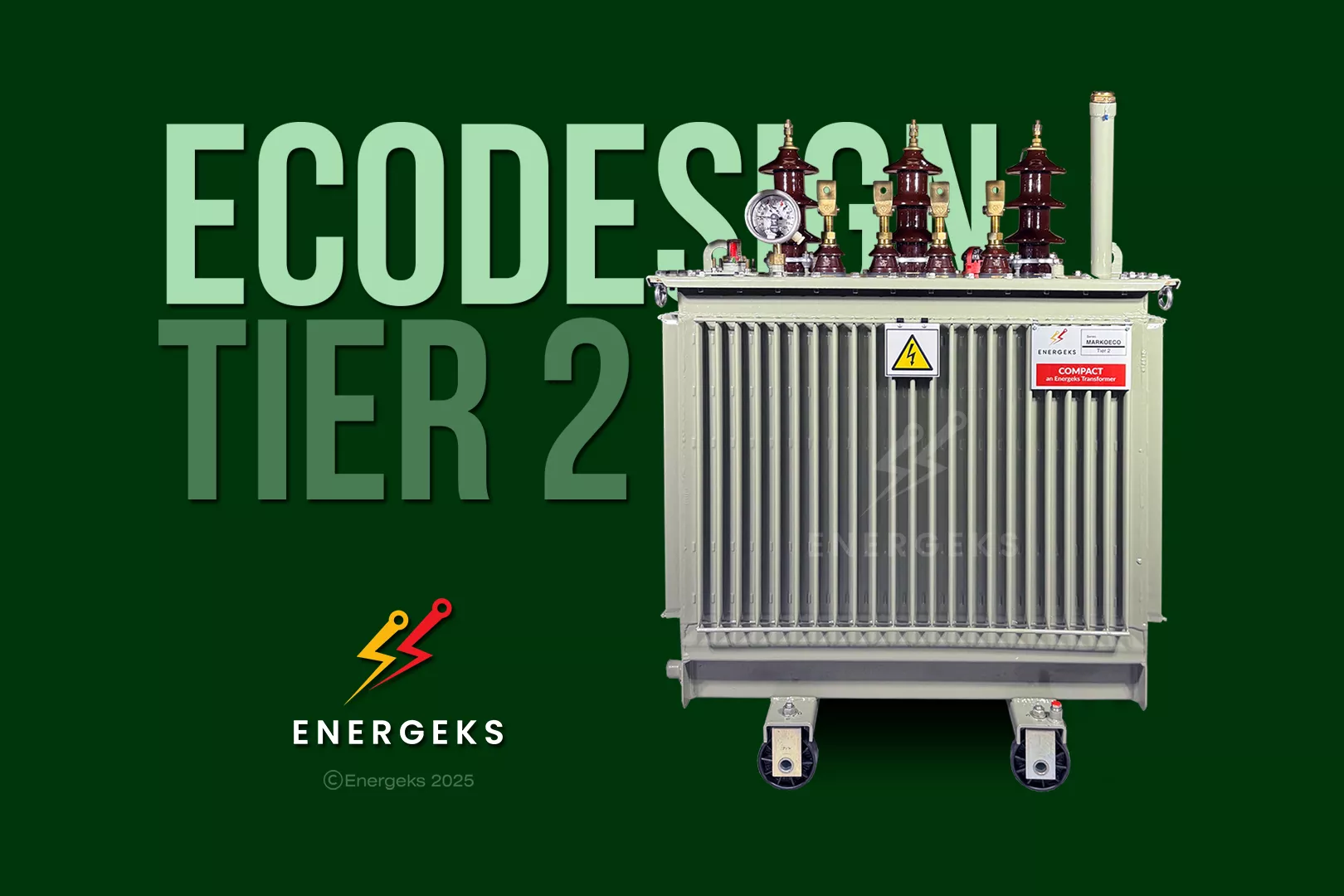
If you are working on a project where reliability, energy efficiency, and compliance with Ecodesign Tier 2 are crucial, we are here to translate technical requirements into real-world solutions.
Discover Energeks’ middle voltage transformers solutions, including:
MarkoEco2 Ecodesign Tier 2 Oil Transformers – Selection of power rating, parameters, and cooling for specific environmental conditions.
TeoEco2 Tier 2 Cast Resin Transformers – For facilities with high safety requirements and limited space.
Units available immediately, full documentation, 60-month warranty – for selected medium voltage models.
If you want to stay updated with our technical analyses, practical tips, and case studies from construction sites, join the Energeks community on LinkedIn. It's a place where we share knowledge without marketing fluff – substantively, practically, and with respect for the industry we help build.
Thank you for your trust and the opportunity to be part of projects where sense, precision, and safety are as important as innovation. If you need to clarify technical requirements, select a model, or prepare an acceptance checklist for your investment – just send us a message.
Let's do it together.
References:
Imagine your photovoltaic installation working at full power in the middle of the day, while the production line in the hall next door is on hold. Kilowatt hours slip away, sent to the grid at rates that do not generate a real return.
In the evening, when machines start up and demand grows, you buy electricity from the socket at a higher price than you sold it. Most industrial companies know this paradox all too well.
This is where an energy storage system comes in, like a "safety accumulator" that turns your PV installation into a true tool for cost optimization and process stability.
Why are we writing about this? We have been integrating PV systems with energy storage in industrial facilities for years and we know that the devil is in the details.
A poorly chosen energy storage system will not only fail to solve problems but can become an expensive burden.
This text is for industrial facility managers, installation designers and investors who want to know: can an existing PV installation be combined with an energy storage system?
What are the technical, regulatory and economic requirements?
After reading you will know not only how to connect PV with storage but, above all, whether it is worth it and in which business model it will generate real gains and a competitive advantage.
Agenda:
Why PV and energy storage integration in industry is a game-changer?
Can an energy storage system be added to an existing PV installation and under what conditions?
Technical aspects of integration: inverters, measurement systems, protections.
Regulatory requirements and the role of the distribution system operator (DSO).
Business models and return on investment – the numbers that matter.
Situational models: food industry, logistics and metallurgy.
Four most common mistakes when integrating PV with energy storage (and how to avoid them).
The future: energy storage systems as a standard in industry.
Reading time: approx. 12 minutes.
1. Why PV and energy storage integration in industry is a game-changer?
In the industrial world there is no room for chance. Every kilowatt of energy here is like currency that is counted more carefully than in an airport exchange office. Photovoltaics deliver cheap power but operate on their own schedule. When the sun shines, there is production. When it sets, the party is over. For a production line that needs electricity at 3 a.m., that is not very useful.
This is where an industrial energy storage system enters the stage – like a well-mannered waiter who not only collects the surplus from the table at lunchtime but serves the dishes when you are actually hungry.
Thanks to this:
On-demand self-consumption becomes reality. Energy from your own PV system goes exactly where and when you need it without losses and frustration. This is why industry reports often highlight the term "industrial solar plus storage integration."
Peak cost reduction is no longer theory. In tariffs for large industrial consumers whether in Poland, Germany or Spain it is not just about kilowatt hours but about contracted capacity. An AC coupled storage system acts like a shock absorber taking the hit during peak hours and avoiding penalties worth tens of thousands.
Production continuity is secured. Some industrial processes such as glass melting, meat cooling or paint lines cannot tolerate interruptions. Storage works like an industrial-scale UPS and guarantees safety that even the best grid contract cannot provide.
Grid support and system services are an increasingly attractive business model. In the UK or California industrial plants already earn money by providing services like frequency response. In other words you get paid because your storage system "breathes" with the grid.
Does it sound futuristic?
Not really. The numbers are very real. BloombergNEF reports that the cost of lithium-ion batteries has fallen by 80% since 2013.
And that is not the end. The IEA Renewables 2023 report predicts that by 2030 the global installed capacity of energy storage will quadruple reaching more than 1 terawatt hour.
For comparison that is enough energy to power the entire European railway system for almost two years. Or to give every person on the planet dozens of hours of Netflix without interruption.
Integrating PV with energy storage in industry is therefore not a luxury or a "green whim."
It is a real game-changer that turns chaotic sunlight into predictable and controlled power – exactly what factories that count every kilowatt hour need.
2. Can an energy storage system be added to an existing PV installation and under what conditions?
This is one of the questions we hear most often in industrial halls and at investor meetings:
“We already have a PV installation. Can we really connect an energy storage system to it, or do we have to rebuild everything from scratch?”
The answer is: yes, you can. But the whole truth comes after the "but."
In practice it is a bit like upgrading a car. You can add a turbocharger, but not every engine and gearbox will handle such an upgrade.
Key factors:
Type of PV inverter
If your facility uses hybrid inverters, the road is straightforward. The storage system integrates with them directly via the DC interface. But if you have a standard string or central inverter, you will need an additional battery inverter and an AC coupled configuration. This solution is used in over 70% of retrofitted industrial installations worldwide because it offers flexibility without replacing the entire infrastructure.Connection system
In many factories the PV installation is connected to the main medium voltage switchboard. Adding storage often means rebuilding one field, and sometimes installing a new switchboard with dedicated protection. This is where retrofit energy storage integration with existing PV plants in industrial facilities becomes a practical reality.Conditions from the distribution system operator (DSO)
Operators take different approaches, but the common denominator is simple: if the storage system affects power flows in the grid, you must update the connection conditions. In Germany, the procedure is mandatory for storage systems above 135 kW, in Spain the threshold is 100 kW, and in Poland 50 kW. Average waiting time for new conditions? From 2 to 6 months depending on the region.Connection capacity and short-circuit analysis
Storage systems not only accumulate power but also discharge it with significant output. This requires analyzing short-circuit flows and adjusting protection systems. In practice, every project above 500 kWh today requires simulation in software such as DIgSILENT PowerFactory or ETAP.
To illustrate: according to Fraunhofer ISE, in 2023 more than 40% of energy storage projects in Europe were retrofits of existing PV installations.
So integration is possible, but it always requires a technical audit and often paperwork.
The good news? In 80% of cases you can "finish the coffee with the same cup," meaning you can add storage without replacing the entire PV system. The bad? In the remaining 20% the cup breaks and you need a new one, which means modernizing part of the infrastructure.
In short, to answer the question “can you connect an energy storage system to an existing PV installation?” – yes… as long as you give engineers the time and tools to check whether your system is ready for such integration.
You may be interested also:
How to choose an energy storage system for PV: 5 answers that change everything
3. Technical aspects of integration – engineering in practice
Adding an energy storage system to a PV installation in an industrial plant may sound like simple math: here is a panel, there is a battery, connect a cable and you are done. Reality? It is more like a Tetris puzzle, where every block has to fit perfectly, otherwise the whole tower collapses.
AC coupling or DC coupling?
This is the first question raised in any design office.
For retrofitting existing industrial PV installations the most common choice is an AC coupled storage system. The storage is connected on the AC side, to the same switchboard where the PV inverters are installed. This makes it possible to add batteries to an already operating installation without major changes. One must remember, however, that every additional conversion (DC–AC–DC–AC) causes losses of up to 6–10%.
For new projects hybrid inverters with DC coupled storage systems are increasingly used. This solution reduces conversion losses to as little as 2–3% and significantly improves overall efficiency. In practice, integrating PV with energy storage via a hybrid inverter is now the standard in newly built industrial plants, especially where the goal is to maximize self-consumption and achieve fast ROI.
BMS – the brain of the operation
Every industrial storage system has its own Battery Management System (BMS). It works like a personal trainer: making sure cells do not overheat, charge evenly and do not fall into a dangerous "energy crash." Without a functioning BMS, even the most efficient lithium-ion cells can fail faster than a teenager’s phone during a gaming session.
Protection and standards
Safety cannot be forgotten. When an industrial-scale 1 MWh storage system “sneezes,” the effect is far more dramatic than a kettle shorting out in the office. This is why the following are required:
overcurrent switches and isolators,
fire suppression systems (often gas-based, such as Novec 1230),
certification compliant with PN-EN 50549, IEC 62933 or UL 9540A, depending on the market.
EMS – who calls the shots
At the end of the chain is the Energy Management System (EMS). It decides when the storage system charges and when it discharges. In practice, EMS is the digital conductor of the orchestra that must coordinate:
PV production,
the plant’s consumption profile,
energy prices (if the system operates with arbitrage),
sometimes also instructions from the capacity market or ancillary services.
Without EMS the storage operates chaotically and instead of saving money, it can actually increase costs.
Cooling
For small systems (around 50 kWh) ventilation is sufficient. But industrial systems of 1–5 MWh require HVAC with active cooling and humidity control. According to DNV GL research, proper cooling can extend the lifetime of lithium-ion cells by 25–30%. Without it, batteries degrade faster than a server in an overheated server room.
Integrating PV with industrial energy storage is more than just connecting cables. It is precise orchestration of inverters, protection systems, EMS and cooling. Every detail from equipment type to safety standards determines whether your system will deliver savings for 15 years or turn into an expensive toy after two seasons.
4. Regulatory requirements and the role of the DSO – paperwork that decides the system launch
Adding an energy storage system to a PV installation in industry is not only a technical challenge.
In many cases the bigger problem turns out to be… paperwork. The distribution system operator (DSO) must know that the plant connected to the grid will not turn into a "wild horse." That is why regulatory procedures are essential.
United Kingdom – flexibility but also responsibility
In the UK operators (DSOs) take a more market-driven approach. Adding storage to PV requires registration under a G99 application (for systems above 16 A per phase). Formalities include:
providing technical data of the inverter and battery,
agreeing on fault ride-through procedures,
simulations of the impact on grid frequency and voltage.
The advantage? In many regions the process can be accelerated if the storage system can provide ancillary services such as frequency regulation within the National Grid program. In that case approval can be granted in as little as 6 weeks.
Poland – thresholds and procedures
In Poland every PV installation above 50 kW must be approved by the DSO. Adding storage means:
updating connection conditions,
providing single-line diagrams,
certificates of compliance of inverters and storage with PN-EN 50549,
conducting commissioning tests including power quality measurements and simulations of behavior during voltage loss.
The average waiting time for a DSO decision is 3 to 6 months. The most common problem is documentation. If diagrams are incomplete the process starts over.
Germany – Ordnung muss sein
In Germany the Mittelspannungsrichtlinie (MV Directive) applies and requires registration of every storage system above 135 kW. In practice this means:
the need to conduct a grid impact analysis,
consultation with a certified expert (Sachverständiger),
mandatory tests of automatic disconnection during voltage loss.
Interesting fact: according to Fraunhofer ISE, more than 30% of applications are rejected due to incomplete forms not because the system is unsuitable but because someone filled in the paperwork incorrectly.
Spain – faster but with a catch
Spain has a rapidly growing PV and storage market, but operators require approval already for systems above 100 kW. The procedure is simpler than in Germany but there is a balancing condition. The company must demonstrate that adding storage will not cause uncontrolled feed-in to the grid.
In practice this means using EMS systems with a zero feed-in function that limit export when there is no demand in the facility.
What does this mean?
Although regulatory differences between Poland, Germany, Spain and the UK are significant the common denominator is clear: without DSO approval the system will not start.
Each market has its own thresholds (50 kW, 100 kW, 135 kW…), but the idea remains the same. A storage system is not just an "accumulator" it is an active participant in the power system.
That is why when preparing a project it is worth planning time for procedures. Often they decide whether the investment goes live in one year or in two.
Worth to read:
Earning light: how Germany is building an energy edge with power storage
5. Business models and return on investment – why CFOs should love energy storage
When the term "energy storage" comes up in a boardroom, reactions are often polarized. The technical team nods with enthusiasm, while the CFO frowns and asks: “How much will it cost and when will it pay back?” Fortunately this is no longer a science fiction topic. Today you can answer that question very concretely.
Self-consumption as the foundation of ROI
In industrial plants the key business model is increasing self-consumption of PV energy.
If a 500 kWp installation produces 550 MWh annually and the facility consumes most of its energy in the evening, then without storage as much as 30–40% of the energy is exported to the grid.
With feed-in tariffs 40–60% lower than the price of purchasing energy from the grid, the financial balance quickly becomes unattractive.
A 1 MWh storage system can raise self-consumption from 60% to as much as 90–92%. In practice this means annual savings of €65,000–€85,000 in a medium-sized plant in Central Europe. ROI? 5–6 years, and with rising energy prices even shorter.
Reduction of contracted capacity and peak charges
In logistics or heavy industry the biggest cost is not always energy itself but charges for peak demand. Each time contracted power is exceeded (for example in tariff categories such as C21 or B23) penalties can run into tens of thousands of euros per month.
Here storage acts like a shock absorber – it evens out the peaks by injecting energy into the facility’s grid exactly when demand exceeds the limit. This brings a rapid financial effect.
In logistics centers ROI can drop to 3–4 years, because you avoid penalties that were previously unavoidable.
New revenue streams – arbitrage and system services
In more advanced markets such as Germany, the UK or Spain, industrial storage systems earn money not only on self-consumption and peak shaving. A third revenue stream is emerging: price arbitrage and ancillary services.
Price arbitrage – the EMS charges batteries when electricity is cheapest (for example at night in dynamic tariffs) and discharges them when prices rise. In the UK the difference between nighttime and daytime peak prices can reach 200–300%, which can shorten ROI by an additional year.
System services (frequency response, demand response) – in Germany a plant with storage can sign a contract with the grid operator and receive payment for frequency stabilization.
Typical rates are €20,000 to €50,000 per year for each MW of available capacity.
6. Situational models – energy in numbers that everyone can feel
Big numbers often sound abstract. 1 MWp? 2 MWh? For most people that looks like codes from a vacuum cleaner manual. That is why it is worth looking at them through the lens of everyday struggles – the same ones we all know, only on an industrial scale.
Food industry – a cold store that cannot stop
Imagine your home refrigerator. When the power goes out, after an hour the butter starts melting and the ice cream turns into watery soup. Now scale that problem up to a hall full of cold stores and freezers holding hundreds of tons of food. Every hour without energy equals hundreds of thousands of euros in losses.
A PV installation with 1 MWp capacity produces over 1.1 GWh annually – which seems a lot, but without storage a significant portion flows into the grid. Adding a 2 MWh storage system increased self-consumption by 25%. The effect? Annual savings of about €90,000.
In short:
PV installation: 1 MWp
Production: 1.1 GWh/year
Storage: 2 MWh
Effect: +25% self-consumption, €90,000 annual savings
ROI: 6 years
That is like someone paying your household electricity bills for six years straight and throwing in fiber internet on top.
Logistics center – nerves over peak demand
We all know the moment when you turn on the washing machine, oven and kettle at once – and suddenly the fuse blows. Now imagine that in a logistics hub where dozens of forklifts are charging while a parcel sorting system is running. One such “peak” in demand and the bill jumps by tens of thousands of euros per month, because the operator charges a penalty for exceeding contracted capacity.
The solution turned out to be a 1 MWh storage system. It acts like a shock absorber – charging when the system is calm and discharging during sudden peaks. The effect? Penalties reduced by 70% and €75,000 in annual savings. ROI: 3.5 years.
In short:
PV installation: 800 kWp
Storage: 1 MWh
Effect: 70% reduction in peak demand penalties, €75,000 annual savings
ROI: 3.5 years
Is like your apartment paying off the mortgage on a new kitchen by itself, just because you stopped overloading the electrical system.
Metallurgy – when power must never falter
Melting metals is a process much like baking bread. If you turn off the oven halfway through because of a power cut, there is no saving the result. In metallurgy every voltage drop means not only lost production but also the risk of damaging furnaces worth millions.
Here a 5 MWh storage system not only increased reliability but also improved power quality – reducing harmonics and cutting reactive power losses. On top of that the plant started earning from ancillary services by helping the operator stabilize grid frequency. The result? More than €220,000 per year in combined savings and additional revenue, with ROI in 5 years.
In short:
PV installation: 2.5 MWp
Storage: 5 MWh
Effect: improved power quality, reduced harmonics, lower reactive power losses, + ancillary services revenue
Total: over €220,000 annual savings and earnings
ROI: 5 years
Like your oven not only baking bread but also getting a bank transfer for keeping the neighbor’s kitchen warm.
Conclusions?
Numbers may sound like industry equations, but in reality they show a simple truth: an industrial energy storage system works both as a safety buffer and as a savings calculator. In everyday life, ordinary people know the same frustrations – power not available when needed, bills higher than expected, and equipment that cannot handle interruptions. On an industrial scale the stakes are not melted ice cream but million-euro costs and competitive advantage.
7. Four most common mistakes when integrating PV with energy storage (and how to avoid them)
Integrating PV and industrial energy storage is a long-term investment, but just a few wrong decisions can turn it into an expensive lesson. Here is a list of mistakes that repeat across the world – from Poland to Germany to Spain – and how to avoid them.
1. Storage system too small
This is the most common trap. Companies often choose a 200–300 kWh system because it seems “just right,” but the actual needs of the plant are several times larger. The result? The storage discharges in an hour and does not fulfill its purpose. It is like buying a tiny phone powerbank – after one charge you are back at the socket.
How to avoid it? Analyze your energy consumption profile over at least 12 months. Choose a storage size that covers at least 2–3 hours of plant operation at average load.
2. No EMS (Energy Management System)
Without an intelligent controller the storage charges when the sun shines and discharges when… it is not necessarily profitable. Instead of saving money, the company can generate additional losses.
How to avoid it? Invest in an EMS that considers PV production forecasts, energy prices and the plant’s consumption profile. It is the heart of the entire system – without it you only have an expensive battery, not a tool for optimization.
3. Underestimating battery cooling
Lithium-ion cells do not like heat. Every 10°C increase in temperature shortens their lifespan by up to half. For systems above 500 kWh active cooling and humidity control are essential. Without it the battery wears out faster than an office air conditioner in summer.
How to avoid it? Plan for dedicated HVAC and regular servicing. This is not an extra cost but an investment in 20–30% longer storage lifetime.
4. Ignoring formalities with the distribution system operator (DSO)
Many investors skip this step, hoping it will “work itself out.” Later it turns out that system launch is blocked by missing operator approval. Sometimes you wait six months longer, and ROI shifts by years.
How to avoid it? Include regulatory procedures in the project timeline. Each country has its own thresholds (Poland – 50 kW, Spain – 100 kW, Germany – 135 kW). The sooner you start discussions with the DSO, the fewer headaches at the end.
These four mistakes – wrong system size, no EMS, weak cooling and missing DSO formalities – account for more than 70% of problems in industrial storage projects. With the right audit and planning you can avoid them and build a system that runs smoothly for the next 15–20 years.
8. The future of energy storage – standard, not luxury
Just a decade ago industrial energy storage systems were seen as a futuristic gadget for pioneers. Today it is clear: they are not a luxury but a cornerstone of competitiveness. The IEA forecasts that by 2030 the global installed capacity of storage will quadruple, and BloombergNEF points out that the cost of storing 1 kWh of energy will fall by another 40% compared to 2020.
This means that in a few years the question will no longer be “should we install storage?” but “how large should the system be and how should it be integrated?”
In Germany every third new PV installation in the industrial sector is already being designed with batteries included. In Spain support programs accelerate the adoption of solar plus storage systems, and in the UK plants are earning from ancillary services faster than analysts expected.
The trend is irreversible. Companies that do not start thinking about integration now will wake up in a few years with higher bills and less flexibility in the market.
From inverters to EMS to the quality of grid infrastructure – every element matters.
At Energeks we keep it simple. Our role is not only to help integrate storage with PV installations but also to make sure that all the energy you produce and store actually works for your business.
That is why we rely on our Tier 2 Ecodesign oil-filled and cast resin transformers – practically lossless, ensuring that nothing leaks away in cables or cores. This matters to us because we know every kilowatt counts, and in your facility what matters is not theory but real results.
The future of industry is not about technology but about decisions.
Energy storage and modern medium voltage transformers are no longer a “premium option” but tools that determine safety and profitability.
If you are an investor, designer or industrial facility manager and you want to:
increase PV self-consumption,
secure process continuity,
gain a competitive edge with Tier 2 technology,
we are open to partnership and collaboration. We believe the most is achieved not alone but by working together – with clients, designers, operators and suppliers.
Thank you for your time and attention in reading this article.
If the integration of PV and energy storage is relevant to you, we invite you to start a conversation. Together we can build a system that not only works but drives your business results – without losses, without compromises, in the spirit of future-oriented energy.
Join our community on LinkedIn, where we regularly share knowledge, analysis and stories from the industry. We are eager to hear your perspective and experiences – because the real value lies in exchange.
Sources:
IEA – Renewables 2023 Report
https://www.iea.org/reports/renewables-2023
BloombergNEF – Energy Storage Market Outlook 2024
https://about.bnef.com/energy-storage
Fraunhofer ISE – Energy Storage Integration in Industry
https://www.ise.fraunhofer.de/en/research-topics/energy-storage.html
Cover Photo: Young777/2172501561
No-load losses in Tier 2 transformers. Iron, heat and capacitors, the hidden cost nobody sees.
Imagine a kitchen tap dripping once every few seconds.
For a week you ignore the noise. After a month you stop hearing it.
After a year you find out that you paid a water bill that doesn’t match your real usage.
No-load losses in transformers work in a similar way. A transformer connected to the grid consumes energy even when there is no load on the low-voltage side. It is the breathing of the core. It is the magnetization of the laminations. It is heat that quietly escapes and turns into the operating cost of the installation.
Tier 2 tightened the requirements on losses and made it possible to finally measure these differences objectively. This is good news for investors, contractors, designers and asset managers, provided they know which numbers matter and how to read them. In this text we serve it on a plate.
If you are looking for specifics, here you will find formulas, regulatory thresholds, examples of numerical calculations and practical tips on how to read catalog sheets and test reports according to IEC.
We will show you when a difference of a few hundred watts in P0 is worth the effort, and when it is better to invest in better steel, a larger core or a different insulating medium, because the whole TCO will drop already in the first years of operation.
We will also explain the role of capacitors. Let me spoil the ending right away. Capacitors do not reduce the no-load losses of the core, but they can lower currents in the grid and improve the balance of load losses as well as contractual penalties for cosφ.
What you will find inside.
First, briefly and in plain language, I explain what no-load losses are and where they come from.
Then we organize the Tier 2 requirements in the European Union and show what the permissible loss tables really change.
Next we move to money. We calculate how much each additional kilowatt of P0 costs in a year and over a horizon of twenty-five years.
Finally, we check where and when capacitors make a difference and how to select them so as not to fall into resonance and not worsen the situation.
Reading time. About 10 minutes
What no-load losses are and why they always occur
Let us start with the basics.
No-load losses P0 are the power lost by a transformer when it is energized at its rated voltage, while the secondary winding carries no load.
Put simply, this is the price you pay for the very fact that the core is being magnetized by a field at fifty hertz. P0 is mainly composed of losses in the magnetic core laminations.
There are two main mechanisms at play.
First, hysteresis, which is the energy required to take the material through its magnetization cycle. Second, eddy currents, tiny circulating currents induced in the plane of the steel sheets, which dissipate energy as heat.
In practice, P0 remains largely constant from no load to full load under sinusoidal supply, because the core essentially sees the same voltage and frequency. This is why P0 is often colloquially called iron losses. The measurement definition for P0 under no-load conditions and rated voltage can be found in IEC 60076 Parts 1 and 7.
Why this is a fixed cost
Because in real life transformers are rarely switched off.
In medium-voltage substations, PV farms, data centers and industrial switchgears, they run around the clock. That means 8760 hours per year, during which every additional 100 watts of P0 consumes 876 kilowatt-hours of energy.
Over a 25-year horizon, this amounts to 21,900 kilowatt-hours from just that tiny fraction of a kilowatt.
Now let’s put a European number on it. If the combined energy and distribution price is about €0.12 per kilowatt-hour (roughly €0.08–0.20 across EU countries in 2025, depending on sector and contract), then an extra 100 watts of P0 costs around €2,628 over the transformer’s lifecycle.
That means one extra kilowatt of no-load losses equals 8760 kilowatt-hours annually – a merciless factor. For comparison, that is the yearly consumption of a typical European household of 2–3 people.
Where differences in P0 between transformers come from
The shortest answer: from the quality and grade of steel, the technology of cutting and stacking the core, the core size, and the working flux density chosen by the designer.
Higher-quality material and a larger core mean lower no-load losses, but they also imply greater mass and a higher purchase price. The real decision therefore is not about buying cheaper or more expensive, but how to optimize the total cost of ownership (TCO) for the specific load profile.
With Tier 2, manufacturers were required to lower loss thresholds. As a result, many modern transformers achieve P0 values clearly below the tabular limits. We will explore those limits in the next section.
How do capacitors relate to P0?
This is the question that tempts many to search for a shortcut.
Unfortunately, capacitors have no influence on the core losses, because P0 is determined by the material, geometry, applied voltage and frequency. Reactive power compensation lowers currents in lines and windings, which can improve the balance of load losses and reduce penalties for cosφ, but it does not reduce the P0 component.
We will return to the role of capacitors in more detail in a dedicated section, together with resonance risks and sizing guidelines.
A practical control question
Suppose the price difference between two transformers is €3,000–€4,000, but the more expensive version has 300 watts less P0. Which option is cheaper after five years in a continuously operating installation?
In many cases, by the third year the higher-efficiency transformer breaks even, and by the fifth year it begins to generate real savings.
That is why, in Europe’s current energy landscape – with electricity costs rising and climate policies tightening – Tier 2 no-load loss optimization is no longer just a technical matter, but a financial and strategic one.
Tier 2 in practice. What the EU loss tables changed and how to use them
The Ecodesign regulations for transformers in the European Union brought long-awaited order to the topic of transformer losses.
First came the initial stage, Tier 1, effective from 1 July 2015. Then, from 1 July 2021, stricter limits known as Tier 2 were introduced. These include maximum permissible no-load losses (P0) and load losses (Pk) for medium-power transformers up to 3150 kVA, with a distinction between oil-immersed and dry-type designs.
The regulation also requires that documentation specifies the rated power, P0, Pk, and the Peak Efficiency Index (PEI) where applicable. This makes it easier to compare offers directly against the normative tables instead of relying solely on marketing declarations.
How to read the tables and not get lost in the symbols
Take, for example, a three-phase transformer rated 2000 kVA with a high-voltage winding up to 24 kV and a low-voltage winding up to 1.1 kV.
For this configuration, the Tier 2 table for oil-immersed units shows maximum no-load losses of about 1.305 kW. For dry-type designs of the same power, the corresponding Tier 2 table allows P0 of about 2.34 kW.
In practice, permissible values vary with voltage combinations and specific cases. For instance, for 36 kV windings or dual-voltage designs, correction factors apply that increase the permissible limits.
It is therefore crucial to compare offers within the same voltage class and under the same design assumptions. Otherwise, you are comparing apples to pears.
What about units above 3150 kVA?
For larger transformers, the regulation focuses primarily on minimum PEI values. This does not mean that P0 stops being important.
On the contrary. PEI depends on both P0 and Pk, as well as on the load point at which efficiency is maximized.
Documentation should include both the PEI and the load level at which it occurs. If in doubt, demand from the manufacturer a complete data sheet with test results and calculation methods in accordance with IEC standards.
From regulation to money
Now comes the most pleasant part, because numbers simplify decisions.
Let us assume you are comparing two transformers in the same voltage class and with the same rating. One has P0 = 2.0 kW, the other P0 = 2.6 kW. Both are within the permissible Tier 2 limits for the configuration, but the second is 0.6 kW worse.
The difference in energy consumption due to no-load losses is 0.6 kW × 8760 hours = 5256 kWh annually.
At a total price of around €0.12 per kilowatt-hour (average combined energy and distribution cost across EU member states), you are paying about €631 every year just for that difference. Over 25 years, that adds up to roughly €15,780.
Even if the transformer with better steel is heavier and costs more in transport, the total cost of ownership (TCO) often drops significantly, especially where transformers are never switched off. It sounds simple – because it is – but only with Tier 2 did these comparisons become repeatable and quantifiable.
Why investors sometimes overvalue Pk at the expense of P0
Load losses Pk are most painful on sunny days and during production peaks, so they appear more visibly in reports. P0, on the other hand, keeps adding costs silently every day, including during idle periods and off-season.
If the installation runs continuously, every excess in P0 is a guaranteed expense.
It therefore makes sense to split the strategy. For facilities with highly variable loads, you should optimize Pk together with voltage regulation and cooling. For facilities operating seven days a week, you need to pay more attention to P0, because it dictates the baseline bill.
IEC documents define the measurement of P0 in a repeatable way, and Ecodesign enforces transparency of data in catalogues and nameplates.
A note on data quality
It happens that some offers list values like P0 ≤ 2600 W. Such a statement does not tell you what the manufacturer actually achieves in testing. Always demand figures with decimals and type-test reports according to IEC 60076.
This is not nitpicking against manufacturers, but standard purchasing practice for assets that will stay with you for decades.
Why a 5 kW difference means hundreds of thousands of euros over 25 years
No-load losses and the investor’s wallet
From the perspective of an investor or asset manager, every figure in the loss table translates directly into money. Imagine a 2000 kVA transformer with no-load losses of 15 kW. Another manufacturer offers a similar transformer, but with P0 = 20 kW. On paper, 5 kilowatts may look like a minor detail. In practice, it means an extra 5 kW drawn continuously for 8760 hours per year – that is 43,800 kilowatt-hours of energy that no one used but someone must pay for.
A 25-year calculation
At an average European electricity price of €0.12 per kWh (energy plus distribution), the annual cost difference is €5,256. Over 25 years, that adds up to €131,400.
This is not an abstraction. It is the equivalent of a new electric vehicle, an additional solar tracker for panels in a PV farm, or even a year’s maintenance budget for an entire transformer substation.
Why do tenders often overlook this?
Because most of the attention focuses on the transformer’s purchase price, transport, or foundation costs. No-load losses get lost in the table among dozens of other parameters. On top of that, sales teams often state values like “≤20 kW” without giving the actual measured figure.
It is like buying a car with a brochure that says, “consumption no more than 10 l/100 km”. In reality, it could be 7 or 9.9. Both are technically within the spec, but over years the cost difference becomes enormous.
The takeaway
A small difference in P0 is not a detail – it is money leaking systematically. Anyone comparing offers should convert watts into euros over a 20–30 year horizon before making a decision.
The role of capacitors – hidden ally or unnecessary ballast?
Capacitors and no-load losses
Let’s bust a myth first. Capacitors do not reduce core no-load losses. P0 is determined by the physics of iron, not by reactive power flows. The only way to reduce P0 is by improving the core material, its mass, or the manufacturing technology.
Where capacitors really make a difference
Capacitors play a key role in reactive power compensation. They improve the power factor (cosφ), which lowers currents in cables and transformer windings. This, in turn, reduces load losses (Pk), which are proportional to the square of the current. In other words, capacitors won’t touch P0, but they can significantly improve the loss balance of the whole installation.
How much capacitor power is needed?
That depends on the load profile and type of consumers. If a medium-voltage substation supplies equipment with a large share of induction motors, compensation may require several hundred kvar. In PV farms or energy storage facilities, values are usually smaller but still relevant – often in the range of 50–200 kvar. The rule of thumb is clear: capacitors should be sized to keep cosφ at the level required by the distribution system operator, typically above 0.95.
The resonance trap
Care must be taken to ensure that compensation does not enter resonance with network harmonics. Sometimes capacitors, instead of helping, worsen the situation by causing overvoltages or overheating. This is why modern substations often use detuned capacitor banks with reactors, or even active power factor correction systems.
Capacitors and investment strategy
So, are capacitors worth investing in? Yes – but not as a magic solution for P0. Their role is to reduce load-related losses, improve energy quality, and avoid penalties from the grid operator. In a well-designed system, capacitors can lower total energy losses by 5–10%, improving the transformer’s economic efficiency, particularly under heavy inductive loads.
How to read transformers technical data sheets and manufacturer offers
“≤30 kW” versus “exactly 28.7 kW”
At first glance, both notations look correct. The problem is that the “≤” symbol gives the manufacturer a wide margin – in reality, the transformer may have no-load losses of either 19 or 29.9 kW. In both cases it complies with the standard, but the difference in operating costs amounts to tens of thousands of euros. That is why you should always demand a precise value with a decimal point. This is not a whim – it is standard engineering practice.
IEC type test reports
A catalogue is one thing, but an IEC 60076-compliant type test report is another. The report shows the actual measured loss values, not just the manufacturer’s declarations. In tenders and technical acceptance procedures, it is worth requesting such documents. It is similar to demanding certified fuel consumption tests from a car manufacturer – only then can you be sure the data is real.
Language and marketing traps
In offers you will find terms such as “optimized core”, “innovative design” or “energy-efficient construction”. They sound good, but until you see a hard P0 figure, it is just marketing. Always look at the loss table, not the adjectives.
How to compare offers step by step
Select transformers with the same rated power and voltages.
Place P0 and Pk values in a table with accuracy to the watt.
Multiply the differences by 8760 hours per year and the electricity tariff.
Project the result over 25–30 years of operation.
Compare the total with the purchase price difference between transformers.
This simple algorithm shows that “more expensive at the start” very often means “cheaper over the entire lifecycle”.
The myth of the heavier transformer – does heavier always mean better?
More iron = fewer losses?
In many technical discussions there is a myth that the heavier the transformer, the better it is. There is some truth in this. A larger core with more laminations allows for lower flux density and lower no-load losses. But a heavier transformer also means higher costs for transport, foundations, and installation.
A comparative example
Suppose we have two 2500 kVA transformers. The first weighs 6.5 tonnes and has no-load losses of 5.8 kW. The second weighs 7.5 tonnes and its P0 is 5.1 kW. The 0.7 kW difference means about 6130 kWh saved annually. At a European average price of €0.12 per kWh, this equals about €735 per year. Over 25 years, that is roughly €18,375.
The question is: will the extra transport and foundation cost for the heavier transformer outweigh these savings? Often not – but you have to do the calculation.
When lighter beats heavier
If a project requires installation in a hard-to-reach location, where transport and cranes are extremely costly, a lighter transformer may be preferable despite higher losses. This is especially true in prefabricated transformer substations, where mobility and limited space matter – in such cases, weight becomes a real factor.
Heavier does not always mean better. Instead of evaluating by tonnes, you should evaluate by the balance of total cost of ownership (CAPEX plus OPEX). Then it becomes clear that sometimes it pays to add 100 kg of steel, and sometimes it is smarter to optimize logistics and foundation costs.
No-load losses are not a detail, but a strategic decision
No-load losses in transformers are not just “a tiny number in the datasheet”. They are a fixed cost that runs day and night, regardless of the load. Tier 2 standards have enforced greater transparency, but only a conscious approach by the investor, designer, and asset manager turns those numbers into real savings.
We have shown that just 1 kW of no-load losses equals nearly 9 MWh per year.
Over a 25-year perspective, this means hundreds of thousands in currency that can either stay in the budget or silently vanish into electricity bills. We also discussed the role of capacitors. They are not a tool for reducing P0, but a key element in reactive power compensation and in stabilizing the entire installation.
Well-designed capacitor banks reduce load losses, help avoid penalties from the grid operator, and improve the economic performance of the transformer.
For the investor, the key lesson is simple: look at the total cost of ownership (TCO), not just the purchase price.
Datasheets must be read critically, IEC test reports demanded, and watts converted into money. The transformer’s weight, price, or size is only part of the puzzle. Only by summing up all elements do you get the true picture.
Our approach
At Energeks, we have been designing and delivering medium-voltage transformers, prefabricated substations, and switchgears for years. In our portfolio you will find Tier 2 medium-voltage oil-immersed transformers as well as dry-type transformers, all designed to optimize no-load and load losses throughout the entire lifecycle. We support our partners at every stage of project execution – from concept, through transformer selection, to commissioning and service.
If you are looking for a partner who will not only deliver a transformer but also help you realistically calculate and optimize costs over decades – let’s talk.
Join the Energeks community of energy enthusiasts and professionals on LinkedIn
Sources:
EUR-Lex. Commission Regulation EU No 548/2014/ Loss Tables Tier 1 i Tier 2.
IEC 60076. Definitions of no-load loss measurement and test principles.
Schneider Electric. Transformer reactive power compensation and the role of capacitors.
A transformer can no longer "just work."
In the past, it was enough for a transformer to simply operate. It ran without failure, hummed quietly in the background, and no one really asked questions. But times have changed. Today, power equipment must not only be reliable but also energy-efficient.
And a transformer that consumes electricity at night just to stay on standby must now justify itself. To the client. To the auditor. To the planet.
The EU’s Ecodesign Tier 2 directive is not a bureaucratic whim. It’s a real paradigm shift: if something wastes energy, it has no right to exist. Since July 2021, new rules have been in force and they’ve changed the game for all transformer manufacturers.
And for investors and designers? It’s a test of attention to detail: what are you really buying, and how much does it actually cost over the product’s lifetime?
In this article, we’ll cover:
what a Tier 2 compliant transformer is
what the requirements and standards are
how it differs from previous models
what it delivers in practice and in your budget
how to translate energy savings into something more tangible than “kWh”
Reading time: 8 minutes
What a Tier 2 compliant transformer is
In short? It’s about reducing energy losses in standby mode and under load. A transformer compliant with Tier 2 must meet stricter energy efficiency requirements defined by Commission Regulation (EU) 2019/1783.
That means:
significantly lower no-load losses, i.e. the energy consumed when the transformer is energized but not transmitting power
optimized load losses, related to current flow through windings and voltage drop
a special core design – often based on high magnetic induction and low-loss steels, such as HI-B (High-Grade Grain-Oriented) or amorphous metals (metglass), which have 70–80% lower magnetic losses compared to standard materials
What does this mean in practice?
Take, for example, a 1000 kVA MV transformer. An older Tier 1 compliant design may generate 12,000 kWh of no-load losses annually. This means that even when it’s not transferring energy – it’s using electricity. Like a refrigerator running with nothing inside.
The Tier 2 version reduces those losses to 8,000 kWh per year – saving 4,000 kWh. At an average price of 0.80 PLN/kWh, that’s 3,200 PLN annually. In euros? Around €740 per year. Over 30 years? €22,200 in avoided losses. And we’re talking about just one transformer.
What does that mean in real-world terms?
We like to convert savings into something tangible:
4,000 kWh is about 5 months of electricity for an average household (in the EU, annual consumption is around 8,000 kWh)
€22,200 is enough to build a multi-use sports field for students in a rural municipality
or: more than 42,000 loaves of bread (€0.50/loaf)
or: 8 years of free LED lighting for a high school
So?
If your company operates ten transformers, switching to Tier 2 means potential savings of €220,000 – enough to sponsor an entire village with green energy
Why a Tier 2 transformer is more efficient
Lower magnetizing current – thanks to reduced magnetic hysteresis in HI-B steels, the transformer needs less energy to “wake up”
Better passive cooling – lower losses = less heat = less work for the cooling system
Larger winding cross-sections = lower resistance = reduced Joule losses
This isn’t innovation for the sake of trendiness. It’s engineering done right – once and for all. Because true efficiency isn’t about miracles. It’s about good decisions and long-term thinking.
What are the specific Ecodesign requirements
EU Regulation 2019/1783 does not beat around the bush: since July 1, 2021, all new transformers placed on the EU market must meet the Ecodesign Tier 2 requirements. What does that mean? Time to say goodbye to “energy chewers” that just sit and hum while consuming electricity like an old bathroom heater.
What exactly does the regulation say?
The requirements are precise – these are not “recommendations” or “goals to consider,” but hard limits:
No-load and load losses – must be below the Tier 2 limit values, depending on the transformer type (oil-immersed, dry-type, distribution).
Core and winding design – you can’t “do it the old way” anymore. Modern materials are required (e.g., B23R080-grade steel, amorphous metals), and often more copper mass too.
CE marking and declaration of conformity – without these, the product cannot be legally placed on the market.
Ban on using cooling fans to meet the limits – only passive efficiency counts, no artificial "fine-tuning."
Technical documentation – must include detailed performance and loss data measured according to EN 50708-1-1.
How does it look in practice?
If you're designing a transformer station, you need to know during the tender or ordering phase whether a model meets these limits. Because you can’t “tighten efficiency” later like a bolt. It all starts with the core geometry and number of turns.
What’s more – the documentation must include specific parameters measured at 75°C. And no – they cannot be “rounded up.” That’s why many manufacturers redesigned their transformers from scratch instead of “lifting” old constructions.
How much does this save in euros?
With an average loss reduction of 3,000–5,000 kWh annually (compared to older models), and a cost of €0.20/kWh, the savings amount to €600–1,000 per transformer per year. And that’s just one!
For a medium-sized industrial plant with five transformers? That’s up to €5,000 saved annually – the cost of a new forklift, equipment for a production hall, or... full funding for an energy monitoring system.
Is it worth investing in “invisible savings”?
Imagine you have a fleet of company cars, and each one consumes 1 liter of fuel per day... idling. No one’s driving, no work is being done, but the tank is draining. Over a year, that’s hundreds of liters. And what – you turn a blind eye because “that’s how it’s always been”?
Tier 2 is the decision not to look away. To stop wasting electricity on idle operation.
To make sure every kilowatt-hour makes sense. Not out of obligation – out of common sense.
What standards must be met (and what do they actually mean)
The Ecodesign Tier 2 requirements don’t exist in a vacuum. They’re based on very specific technical standards that determine whether a transformer can legally be placed on the EU market. And no – this isn’t a matter of the manufacturer’s “good will.” It’s strict certification that cannot be bypassed. And for a designer or investor? A clear warning: if a device lacks full documentation compliant with the standard – don’t even touch it with a stick.
Three key standards you need to know
EN 50708-1-1 – the core standard for power transformers. It defines acceptable losses, test procedures, reference temperature (75°C), measurement accuracy, and design requirements. The backbone of Tier 2.
EN 50588-1 – covers distribution transformers up to 3150 kVA. Regulates how to test efficiency, including lab conditions, temperature compensation, and the effect of rated voltage. Applies especially to dry-type and MV transformers in compact substations.
ISO 50001 – the energy management standard. It doesn’t deal with transformer construction, but if you want your entire installation to be ESG or Green Deal compliant – a Tier 2 transformer is simply a must.
What does “standard compliance” mean in practice?
The standards specify:
how to calculate losses (reference conditions, calibrated instruments),
how to convert data for catalogues (e.g., to 20°C or 75°C),
how to present technical data (you can’t list power at a voltage other than nominal without annotation),
how to document test results – lab reports must include margin of error, certification, and the measurement pathway.
In other words: a transformer that doesn’t have verified compliance is not only a financial risk – it’s a risk for the entire investment. In an audit, this is the first thing they check: documentation from tests compliant with EN 50708. No docs? Out.
Standards are not just paperwork – they mean real gains
Some treat a “standard” like an unnecessary PDF attachment.
But do you know what non-compliance means?
You might not get funding (many grant programs require Tier 2 transformers).
Your insurer may refuse compensation after a failure – because the device wasn’t certified.
The entire investment could be rejected at handover.
And that’s serious money: tens of thousands of euros in delayed payments, schedule delays, penalty fees.
Do you really need to know EN 50708?
It’s like traffic rules.
You don’t need to know all of them to drive. But if you don’t know what “no left turn” means, you’ll get a ticket sooner or later.
If you’re an investor, site manager, or project engineer – knowing EN 50708 won’t make you an energy law expert. But it will save your skin during project acceptance.
And that’s just smart business.
What is the difference between Tier 1 and Tier 2 in practice?
On paper? It’s just a different column in the loss limits table.
But in reality?
It’s like driving a car from the 90s versus a modern electric vehicle.
Both will take you from point A to B.
But one will guzzle fuel and growl, while the other does it quietly, efficiently, and economically.
Example: MV transformer 400 kVA 15/0.4 kV
A transformer compliant with Tier 1 (the older standard valid until 2021) generates no-load losses of about 550 W and load losses of 4,200 W. Over a year, this translates to roughly 39,700 kilowatt-hours of lost energy. At an average price of 0.20 euros per kWh, this means an annual loss cost of about 7,940 euros.
By comparison, a 400 kVA 15/0.4 kV transformer compliant with Ecodesign Tier 2 requirements has lower losses: 400 W in no-load state and 3,700 W under load. Annual losses are about 34,400 kilowatt-hours, translating to a cost of around 6,880 euros per year.
Annual gain? 1,060 euros. Roughly the cost of a new LV switchboard for a workshop hall.
Or five years of LED lighting in an office.
Example: MV transformer 630 kVA 15/0.4 kV
A 630 kVA Tier 1 transformer has no-load losses of about 800 W and load losses reaching 7,000 W. Per year, that’s around 62,500 kilowatt-hours of lost energy. At 0.20 euros per kWh, total loss cost is approximately 12,500 euros.
A 630 kVA transformer meeting Tier 2 requirements performs better:
600 W no-load losses and 6,200 W load losses. Annually, this equals about 55,000 kilowatt-hours of loss, with a cost of around 11,000 euros.
Gain? 1,500 euros per year. Enough to cover the cost of yearly inspections and oil testing in an entire transformer station.
Example: MV transformer 1600 kVA 15/0.4 kV
A large 1600 kVA Tier 1 transformer has no-load losses of about 1,800 W and load losses of 17,000 W. Annually, this means about 140,000 kilowatt-hours of energy lost as heat. At 0.20 euros per kWh, that’s a loss cost of 28,000 euros per year.
A 1600 kVA Tier 2 transformer reduces these values to 1,400 W in no-load state and 15,500 W under load. Annual losses amount to about 127,000 kilowatt-hours, with a cost of around 25,400 euros.
2,600 euros per year – that’s the gain. And over 30 years? 78,000 euros. Enough to afford a decent energy storage system for an entire production hall.
Where does the difference hide?
Magnetic sheets: Tier 1 uses standard grain-oriented steel, sometimes with lower induction. Tier 2 typically employs HI-B or even amorphous cores – reducing losses by 30–70%.
Windings: Tier 2 often uses thicker copper wire, lowering resistance and thermal losses. The transformer is heavier – but significantly more efficient.
Geometric design: Tier 2 requires more precise construction – better magnetic dispersion, reduced connection losses, optimized cooling.
Purchase price vs life cycle cost (LCC): Tier 1 units used to be 5–10% cheaper upfront. But after just a few years of operation, Tier 2 pulls ahead – and leaves its predecessor behind.
How does Ecodesign affect efficiency and profitability?
When we say "transformer profitability," most people think: "Well, the purchase cost, maybe transport, installation, and... that’s it." But that’s the real issue. The actual money doesn’t disappear during purchase. It quietly evaporates during operation – through unnecessary energy losses.
And that’s exactly what the EU’s Ecodesign Tier 2 regulation aims to fix.
What does higher efficiency bring?
A transformer compliant with Ecodesign Tier 2 is by design:
more energy-optimized,
loses less heat (hence less energy),
has a longer lifespan thanks to lower operating temperatures,
requires no additional cooling (lower maintenance costs),
and generates a lower Total Cost of Ownership (TCO).
This isn’t opinion – it’s fact.
A transformer with 20% lower losses pays for itself in 3–6 years, and from then on… it works for you. For free.
Additional benefits: less visible but just as important
Fewer failures – lower operating temperatures reduce the risk of overheating.
Better compatibility with automation and inverters – Tier 2 offers more stable voltage parameters, improving energy quality.
Higher ESG rankings – for companies that publish sustainability reports, every saved kilowatt-hour improves their image – and investor score.
What would you do with €5,000 a year?
Install 20 new LED lamps in the production hall.
Fund annual maintenance for your entire machine park.
Or simply hire an energy technician part-time – to monitor other loss sources.
These aren’t "green daydreams" – they’re hard numbers. And the more energy you produce, transmit, or store – the more it pays off.
Transformers are like tires: even bad ones keep you moving… but they’re burning your money.
A transformer that works with purpose
If you’ve made it this far – thank you. That means transformer efficiency matters to you. And rightly so.
Because modern energy is no longer about "buy and forget." It’s about conscious choices that deliver returns not only financially, but also environmentally. Tier 2 is not just a regulation – it’s a direction. And at Energeks, we know how to turn that direction into concrete solutions.
At Energeks, we design medium-voltage transformers that:
comply with Tier 2 requirements,
genuinely reduce energy losses,
are ready for integration with PV systems, storage, and e-mobility,
and most importantly – work for you, not against your bottom line.
If you’d like to learn how to choose a Tier 2 transformer for your investment, check out our offer:
See Energeks transformers.
Thank you for being with us.
Join our community on LinkedIn.
That’s where we share knowledge, solutions, and… a human approach to engineering.
Sources:
European Commission – Ecodesign for Transformers (Regulation (EU) 2019/1783)
International Energy Agency – The Role of Efficient Transformers in Grid Decarbonisation
Current electricity costs for industry in the EU are 2 to 3 times higher than in the US.
Is Europe still able to catch up with the competition?
That is why it is worth asking:
Is the Green Deal a realistic path to the future, or a luxury that we, as an industrial continent, simply cannot afford?
In this article:
we will examine how the Green Deal affects energy costs and the competitiveness of European industry
we will show which sectors suffer the most and why
we will compare the EU’s approach to the practices in the US and China, as well as the other side of the coin
we will present possible adaptation paths based on technology, not ideology
Estimated reading time: 10 minutes
What was the Green Deal supposed to be, and what has become of it by 2025?
The Green Deal, or more precisely the European Green Deal, was meant to be more than an economic strategy. It was intended as Europe’s response to the climate, economic and resource crisis. A global mega-project that would connect climate goals with reindustrialisation of the continent.
A new Declaration of Independence in energy, digital and technological terms. In its ideal form, the Green Deal was to create thousands of jobs, spark an investment boom in clean technologies and position Europe as a global leader in the race to climate neutrality.
Sounds great? On paper, absolutely. But paper can handle anything.
In practice, by 2025, the Green Deal increasingly resembles not a recovery plan, but a regulatory trap. Because transformation, although necessary, is costly.
And industry feels it the most. Especially the energy, steel, chemical and automotive sectors – those that operate on low margins, high volume and are extremely sensitive to energy costs.
Today, European industry pays 2 to 3 times more for electricity than its American competitors. For gas, even 4 to 5 times more. And this is not a temporary anomaly. It is the new normal, driven largely by the regulatory framework of the Green Deal.
And here comes the question that many politicians are still afraid to ask aloud: by following this path, is Europe actually increasing its competitiveness?
Or by ambitiously taking the lead in the climate race, is it leaving its own industry behind, exposing it to capital flight, plant closures and the import of "dirty" products from outside the EU?
Because this is already happening. But no one wants to talk about it publicly.
The Green Deal and energy costs. Who pays the price, and how much?
The Green Deal was supposed to be a modernisation boost. Today, it is increasingly becoming a stress test. For many companies, it is an equation with no good outcome. Costs are rising faster than the ability to absorb them, and global competitors are not waiting. The question European industry is asking today is no longer "if", but "how much longer can we hold on".
Energy prices that cannot be ignored
The average industrial electricity price in the European Union in 2024 was around 0.20 EUR per kilowatt-hour. In the United States, it ranged from 0.08 to 0.10 EUR, in China even less, often below 0.07 EUR. In Germany and Italy, prices reached 0.25 EUR, and sometimes more, especially in volatile spot markets. On top of that comes regulatory uncertainty.
Industry needs predictability, not a table of changing coefficients.
To all of this we must add the ETS system. In 2023, the cost of CO2 emission allowances reached 100 EUR per tonne. This mainly affected the steel, cement, smelting and chemical sectors. Starting in 2027, the ETS 2 system is expected to include additional sectors, including transport and construction. In practice, this means that not only large corporations, but also small and medium-sized manufacturing plants will need to factor in not only the cost of raw materials and energy, but also emissions and increasing administrative burdens.
European competitiveness on the defensive
Energy costs directly translate into a loss of competitiveness. For many companies, profit margins are becoming too thin to maintain production in Europe. Investments are vanishing, uncertainty is growing. In 2023, BASF announced a gradual reduction of its operations in Germany and relocation of some production to Asia and North America. ArcelorMittal suspended parts of its steel production, and Alcoa halted plans for aluminium plant expansion in Europe. The reason? High costs and a lack of clarity about the direction of climate policy.
Here lies a hard truth. Due to regulatory overreach, Europe is beginning to lose the industrial race. And not for technological reasons. We have the know-how, the talent, the innovation. But we do not have the cost structure that allows companies to compete globally.
The green paradox and the price of silence
Europe wants to be a leader in climate action. But if it does so at the expense of its own economy, there is a risk that emissions will simply be exported beyond EU borders. Production moves to countries that do not apply the same environmental standards. The result? Global emissions do not fall, while Europe pays an increasingly high price. Not for the transformation itself. But for the lack of balance.
That is why we need to ask out loud today: is the Green Deal in its current form a tool for growth, or rather an expensive luxury that only the biggest players can afford.
Which sectors suffer the most, and what does it mean for people, not just statistics
The energy transition is not only about infrastructure, technologies and legislation. It is also the everyday life of hundreds of thousands of people: workers, engineers, line operators, shift supervisors, owners of family-run companies. Their lives are the first to change when a factory scales down production, when investments are frozen, when energy prices rise faster than the margin on a manufactured part.
And it is precisely in sectors like automotive, steel and aluminium that this pressure is felt the most.
Automotive: a concrete wall of regulations
Over the past two years, European carmakers have found themselves in a particularly difficult position. After years of investment in electromobility, they are now confronted with much stricter emissions standards. The limit for new internal combustion vehicles by 2030 is set at 55 grams of CO2 per kilometre. By comparison, the average emissions of new cars in the EU in 2023 was 95 grams. That means a reduction of more than 40 percent in just a few years. With current technologies, this can only mean one thing: a costly and accelerated shift to electrification, regardless of whether the market and infrastructure are ready.
For large companies, this is a strategic challenge. For smaller suppliers, it is often an existential threat. According to the European Association of Automotive Suppliers, as early as 2024 nearly 275 thousand jobs in the supply sector are at risk, mainly in companies with fewer than 250 employees. In countries such as Poland, the Czech Republic, Romania and Hungary, these companies are the backbone of local economies.
Steel and aluminium: the industrial foundation under pressure
Steel and aluminium production is inherently energy-intensive. Smelting and rolling processes require stable and affordable electricity and gas supplies. Unfortunately, in Europe, these two components have become the most volatile cost factors. For example, the cost of energy can account for up to 40 percent of the total cost of producing one tonne of aluminium. When energy prices double or triple within a year, the economics of the entire plant stop making sense.
It is no surprise that in the past two years we have seen more closures and reductions in production capacity. In 2023, primary aluminium production in Europe fell by 25 percent compared to 2018 levels. In the steel sector, cuts ranged from 10 to 15 percent depending on the country. These figures are not just statistics. They represent thousands of jobs disappearing from industrial regions. And we are talking about strategic industries, essential for infrastructure, defence and renewable technology development.
Execution, not vision. Where to look for a way out
No one in their right mind denies the need for a green transition. But vision is one thing. Execution is another. It is this gap that generates frustration in the industrial sector. Because companies want to change, invest, implement new solutions. But they need the right conditions: stable energy prices, access to financing, technical infrastructure and predictable regulation.
There are already signs of hope. Hybrid systems that combine local energy storage, photovoltaics and gas or biogas generators can stabilise production and reduce reliance on expensive wholesale markets. Initiatives are emerging to share energy between plants in industrial clusters. More and more companies are investing in their own renewable sources, as well as improving energy efficiency in their processes.
But that is not enough if the system-wide approach to energy policy does not change. What is needed is not abandoning climate goals, but recalibrating the pace and method of implementation. Through dialogue, not decree. With an understanding of both potential and constraints.
USA and China: pragmatism instead of declarations
The energy transition does not happen in a vacuum. While in Europe the Green Deal has been designed as a comprehensive strategy for the economy and the climate, in other parts of the world the priorities are distributed differently. Both the United States and China are pursuing their environmental goals, but they are doing so in a way that is subordinate to national interests and industrial stability. For them, ecology is a tool for building advantage, not a risk to industry. And that makes a difference.
USA: climate matters, but competitiveness comes first
In 2022, the Biden administration launched the Inflation Reduction Act, the largest package of support in history for a net-zero economy. This includes 369 billion dollars in grants, tax breaks and investment guarantees for the energy, electromobility and component manufacturing sectors. Importantly, this support was not tied to a CO2 pricing system. American companies do not pay additional taxes for emissions and are not subject to an ETS mechanism, yet they still invest in renewables, energy storage and charging infrastructure. Because it makes economic sense.
An example? In Texas, an industrial cluster was developed based on local solar sources and a large-scale battery installation to supply a factory producing electric vehicle components. The entire project was completed with the help of federal guarantees and preferential loans. That is what pragmatism looks like in practice.
China: scale, speed and full control
China's energy transformation strategy is based on three pillars: maximizing domestic production of renewable energy components, maintaining energy security in parallel, and full state support. In 2022, China installed over 300 gigawatts of new renewable capacity. For comparison, all of Poland reached 10 gigawatts in the same period. This reflects not only a difference in volume, but in cost. The larger the scale, the lower the unit cost. And that translates into export competitiveness.
Crucially, China is not shutting down its coal-fired power plants overnight. They retain them as a buffer for system stability. At the same time, they are developing their own supply chains for batteries, inverters and charging stations. They operate systematically, with a 20-year horizon. As a result, Chinese companies can now offer complete solutions to global markets faster and cheaper than their European counterparts.
Germany: between idea and reality
Germany, long a leader in energy transition in Europe, has found itself in a difficult position. After phasing out nuclear power and limiting gas imports from Russia, the country had to accelerate the development of renewables and grid infrastructure. At the same time, the industrial sector began to feel the impact of rising energy costs and difficulties maintaining production capacity. In 2023, several steel and aluminium plants were closed. More and more companies are openly discussing the need to relocate some operations to countries with lower operating costs.
German research institutes, such as Fraunhofer ISE, are warning that without strategic investment in new energy technologies and transmission networks, Germany may lose part of its industrial potential. At the same time, there is an ongoing debate about whether the current Energiewende model requires adjustment. Not in terms of abandoning goals, but in seeking a better balance between climate ambition and economic resilience.
Conclusion: collision between narrative and reality
Europe has created an ambitious, multi-layered model of transformation. But other market players have opted for simpler and more direct mechanisms. The result? While the EU leads in climate responsibility narratives, the US and China lead in execution. Fast, large-scale, and cost-effective.
It is not about Europe giving up on its goals. It is about aligning implementation with the real conditions of the industrial sector. Because competitiveness is shaped not by declarations, but by the ability to deliver on time, at the right cost, and with manageable risk.
When pace outstrips the system. Where pragmatism ends and risk begins
The US and China are often cited as examples of a more flexible approach to the energy transition. They focus on competitiveness, scale, and local production of components. But even there, tensions emerge – both figuratively and literally. Because no strategy, however pragmatic, can function without infrastructure.
China: more does not always mean better
In 2023, China reached a record-breaking pace in renewable energy development – installing more than 350 gigawatts of new wind and solar capacity. No other country has matched this speed. But along with it came a challenge previously discussed mainly in Europe: transmission bottlenecks and a lack of integration with the grid.
According to Bloomberg New Energy Finance, the level of curtailment – the situation where excess renewable energy cannot be absorbed by the grid – reached as high as 20 percent in some provinces. That means one in five kilowatt-hours of clean energy was wasted. Not because it was not produced, but because the system was not ready.
China is adjusting infrastructure quickly, but this example shows that technological advantage without a cohesive grid and storage can backfire on both climate and economic goals. Even the best intentions can fail if the rhythm of development is not in sync with the rhythm of the system.
USA: competitiveness collides with availability
In the United States, despite the enormous resources of the Inflation Reduction Act, barriers remain in the form of complex permitting procedures for transmission infrastructure and local opposition to new installations. In practice, this means many energy storage and large renewable projects are delayed by two or three years, not due to lack of funding, but due to procedural and technical bottlenecks.
Grid operators in California and Texas increasingly report issues with energy oversupply at midday and shortages in the evening. Without rapid development of load management systems and intelligent distribution, local blackouts become a real threat. The technology exists. The intentions are there. But the nervous system – the grid and operational infrastructure – is falling behind.
The lesson: adaptation is not a race, it is synchronization
Europe often compares itself to the US and China, citing their investment advantages and regulatory flexibility. But comparisons without context can be misleading. Because even in those countries where the pace is faster and support is stronger, there are serious challenges with integrating renewables, oversizing sources, and ensuring physical transmission capacity.
That is why, instead of copying other models one to one, it is worth observing their mistakes. And asking not only how fast they build, but how they ensure each investment works reliably and harmoniously within the system.
This is exactly where Europe, despite its costs and constraints, can still gain an advantage. Not through speed, but through coherence.
By designing the energy transition not for headlines, but for what actually works.
Adaptation without illusion. What can industry do to stay in the game
The energy transition requires courage, but above all it demands operational efficiency. In public debate, we too often hear two extremes – either admiration for the vision of a green future, or catastrophism in the style of "nothing can be done." The truth, as usual, lies in the middle. It is not ideology that determines who survives, but the ability to adapt quickly and reasonably. In terms of technology, cost and operations. This raises the essential question: what solutions can companies implement today to regain control over energy costs and operational stability?
Energy storage is not a trend, it is a safety buffer
One of the most important development directions is local energy storage. No longer just a supplementary option, but a fundamental buffer for production continuity. Energy storage allows companies to reduce their exposure to wholesale market price peaks, stabilise their consumption profile and integrate renewables without the risk of outages.
The most efficient systems are hybrid installations: a storage unit operating alongside a local photovoltaic farm and, if needed, a gas or biogas generator. These solutions make it possible to store energy when it is cheapest or generated from in-house sources, and use it during peak demand periods. The result? Monthly energy bills up to 30 percent lower in some consumption profiles.
Process optimisation. Not everything needs replacing, much can be improved
Not every company can afford to immediately invest in new energy sources. But practice shows that significant savings can be achieved through careful review of existing production processes. Motor upgrades, energy management systems, rebalancing production lines to run more evenly – these actions deliver measurable results within months, not years.
At one machine component factory in Austria, a simple rule was introduced: every production line must have its energy profile reviewed weekly. Based on this data, some cycles were rescheduled to night hours, start-up sequences were optimised, and heating in production halls was automated. Implementation cost: under 100 thousand euros. Annual savings: over 300 thousand euros.
Flexibility as the new competitive edge
In an environment of volatile prices and regulation, the ability to react quickly is becoming a strategic advantage. And it is not only about technology, but also about organisational culture. Companies that deploy consumption forecasting tools, manage energy contracts actively, and maintain contingency scenarios for energy crises are more resilient in turbulent conditions.
One German aluminium producer avoided shutting down its smelter in 2023 only because it had already implemented flexible contracts with the grid operator and its own real-time energy monitoring system. As a result, it could respond immediately to price alerts and adjust shift schedules without compromising product quality.
Industrial energy clusters. Cheaper and safer together
More and more companies are also exploring shared energy use models through industrial clusters. The idea is simple – several neighbouring industrial plants jointly invest in renewables, storage and control infrastructure. They benefit from scale, share costs and risks, and gain flexibility and independence from market fluctuations.
In Denmark, one such cluster has operated since 2021 near Esbjerg. Three companies from the chemical, food and logistics sectors built a shared solar park and storage system. Each of them reduced their annual energy costs by around 20 percent, and the return on investment was 4.5 years.
Adaptation is a process. It does not require perfection, only decision
There is no single path. There are different starting points, budgets and needs. But the common denominator is readiness to change. You do not have to be the biggest player in the market to build resilience. It is enough to start improving what is already within reach. In technology, in management, in mindset.
Because the energy transition is not about everything becoming green tomorrow. It is about doing something today, so we do not remain stuck where we are.
Industry today needs room for smart decisions
In today’s industrial world, where every energy decision affects real jobs, production capacity and competitive advantage, silence no longer means inaction.
Maturity does not need grand declarations. It needs effective decisions. The kind that create space for development without chaos. The kind that do not disturb peace, but build it – through technology, precision and trust in the people who know what they are doing.
The Green Deal, in its idea, was meant to be an opportunity.
And it still can be.
But only if, instead of political slogans, we give industry access to real tools.
If we start talking about the transition the way it actually happens on the factory floor, not in a brochure.
If we accept that competitiveness and responsibility can go hand in hand, as long as they are based on solid knowledge, cooperation and the courage to implement solutions step by step – not in an instantly perfect version.
If today you are at a point where you need to decide whether to invest, wait, or recalculate everything once again – you are not alone. We understand the reality of these decisions. How much the numbers matter, not just the declarations. How hard it is to keep pace with change and still stay responsible – to people, to processes, to infrastructure.
That is why we share knowledge. That is why we listen. That is why we are here – not to sell you ready-made products, but to build, together, solutions that actually work.
If you want to talk about infrastructure upgrades, energy storage or possible scenarios for your company, we are here to support you. Explore what we can offer you today.
And if you are looking for inspiration, implementation stories and a place for honest, pressure-free discussion – join our Energeks community on LinkedIn.
It is made for people who are not looking for quick answers, but for the right questions.
Thank you for your time and your engagement.
Sources:
DNV: ENERGY TRANSITION OUTLOOK 2024
Bloomberg – China’s Renewables Surge Leaves Europe Playing Catch-Up
INSTITUTE FOR ENERGY ECONOMICS AND FINANCIAL ANALYSIS: New paradigms of global solar supply chain
Do you know the feeling?
You install a modern photovoltaic system, the meter runs in rhythm with the sun... and yet the energy escapes, as if it cannot find its home. Because that’s exactly what happens when a PV system doesn’t work in harmony with a well-matched energy storage system.
At Energeks, we work daily with engineers, investors, and property owners who want to unlock the full potential of their PV installations. From charging stations and transformers to storage systems – we show that efficiency begins with the right questions and sound technical decisions.
This article is for you if you have or plan to install a PV system and don’t want to waste a single watt-hour. You’ll learn how to choose an energy storage system that truly performs: optimally, efficiently, and for the long term. At the end, you’ll receive a practical decision-making chart to download.
What’s inside?
Why there is no such thing as a universal storage system
What types of energy storage systems are available
What you need to know about capacity and cycles
How to choose storage based on your consumption profile
What mistakes even experienced installers make
Reading time: 5 minutes
Why there is no such thing as a universal storage system
Choosing an energy storage system is like choosing hiking boots – the same pair won’t work in the Alps, the Sahara, and an urban jungle. Even if they’re from a well-known brand and look solid. It’s the same with energy storage systems. There is no one-size-fits-all solution for every user, PV system, and consumption profile.
That’s why the question “how to choose an energy storage system for PV?” doesn’t have a single correct answer. Local conditions, user goals, and system parameters are all key. And although manufacturers compete to offer universal “PV + battery” sets, reality is much more complex.
Every installation has a different story
A single-family house with a heat pump has very different needs than a farm with a cold storage unit and grain dryer. The consumption profile varies not only between sectors but also throughout the year and day – photovoltaics produce energy mostly during the day, while we usually need it in the evening and at night.
Self-consumption, meaning how much of the energy you produce you use yourself without storage, is on average only 25–35%. With a well-chosen storage system, it can rise to 70–80%. That difference directly affects your bills and return on investment.
Two houses, same power – two different solutions
Imagine two neighbors with PV installations of 8 kWp. One works from home and uses energy mostly during the day. The other returns from work in the evening, when the panels no longer produce. The first one can manage with a smaller battery (e.g. 5–7 kWh) because most energy is used instantly. The second one needs a larger system, around 10–12 kWh, with peak shaving and night charging functions.
This shows that an energy storage system should be tailored not just to the PV installation, but to the person – their lifestyle and rhythm of energy use.
What influences the choice of energy storage system?
There are five main factors that determine the right choice:
PV system power – the greater the power of your photovoltaic system, the more energy surpluses you can produce on sunny days. This creates an opportunity to store them and use them when the sun isn’t shining.
Energy consumption profile – offices, farms, and production halls have entirely different energy usage schedules and intensities. In energy storage, it’s not just about capacity, but about matching the rhythm of your work or life.
Energy prices and tariffs – night-time electricity is often cheaper. The storage system can charge at night and discharge during peak hours. This not only increases self-consumption but also lets you manage costs like a savvy prosumer.
Grid availability – if you operate off-grid, your storage system needs to ensure full independence. This means greater capacity, more advanced automation, and often a hybrid setup with a generator.
Expected independence – should your battery provide backup power? Or do you simply want to optimize self-consumption? The answers are crucial for defining technical parameters.
What if you choose wrong?
A poorly selected battery is a costly strategic mistake. If it’s too large – you overpay, and the investment never pays off. If it’s too small – it won’t meet peak demand and remains just a decoration in the system. And if it’s not integrated with the inverter? You’ll lose up to 20% of efficiency just in energy flow control.
What types of energy storage systems are available?
If energy storage systems were cars, the choice wouldn’t be limited to “diesel or gasoline.” We’d have SUVs for mountain folks, hybrids for city dwellers, vans for business, and race cars for fans of fast charging. That’s exactly what the world of energy storage looks like – diverse, surprising, and full of nuances. And each has its place – if it ends up with the right user.
If you’re wondering how to choose an energy storage system for PV, you first need to understand the technologies and their characteristics – not just in terms of capacity, but chemistry, durability, efficiency, and application. Below you’ll find a clear analysis of the key types of energy storage systems, without technical posturing, but with full engineering respect for the data.
1. Lithium iron phosphate batteries (LiFePO₄) – longevity champions
These dominate modern PV systems, especially in single-family homes and microinstallations. Their secret? The chemical stability of iron phosphate, which makes them safe, durable, and environmentally friendly.
Typical capacities: from 5 to 20 kWh for home applications.
Cycle life: up to 6000–8000 cycles while maintaining 80% capacity – that means over 15 years of operation with daily charging and discharging.
Charging/discharging efficiency: 92–96%, practically lossless.
Advantages: high energy density, long lifespan, low sensitivity to temperature, no fire risk.
Disadvantages: higher initial cost than AGM/GEL batteries.
Practical applications: passive houses, modern PV households, “on-grid with backup” systems, commercial solutions focused on efficiency and cyclic use.
2. AGM and GEL batteries – a good start, but with limits
These are classic sealed lead-acid batteries, often chosen due to lower investment costs. Although they don’t offer parameters comparable to LiFePO₄, in some cases they may suffice – especially in off-grid or temporary setups.
Typical capacities: 1–5 kWh per module.
Cycle life: 300–1000 cycles under deep discharge.
Efficiency: 70–85% – depending on temperature and component quality.
Advantages: low cost, simple technology, easy availability.
Disadvantages: shorter lifespan, heavy weight, performance drops under high load, risk of damage from deep discharge.
Practical applications: summer cottages, seasonal buildings, mountain shelters, low-budget systems without intensive use.
3. Flow batteries – a powerful card for industry
These are like laboratories sealed in containers. Their operating principle is based on ion exchange between two electrolyte solutions, enabling very long life and nearly unlimited scalability.
Capacities: from 50 kWh to several MWh.
Cycle life: >10,000 cycles with minimal capacity loss.
Advantages: resistant to deep discharge, power and capacity are independent, no chemical degradation.
Disadvantages: higher implementation costs, requires more space, complex control system.
Practical applications: solar farms, industrial plants, grid-level energy storage, microgrids with high demand.
4. Supercapacitors – fast, but short-lived
Supercapacitors are like espresso – they won’t replace a full breakfast but can act instantly. Ideal for very short charging and discharging cycles where immediate response is needed.
Capacity: very small (in Wh range), but with extremely fast response.
Applications: compensation for momentary voltage drops, electronic device backup, starting systems.
Not suitable for full-scale PV systems, but a valuable supplement – e.g. in hybrid setups with a generator or inverter where response time is critical.
5. Hybrid storage systems – a mix that works
Hybrids combine various technologies, leveraging the strengths of each. For example: a LiFePO₄ battery to power a home and a supercapacitor for surge protection, or a flow battery as a reservoir with a fast-response lithium buffer for handling peaks.
In container-based storage systems or solar farms, we increasingly see layered energy management, where each type of storage plays a defined role in system architecture.
Practical applications: industrial facilities, EV charging stations, data centers, wind and solar farms with high dynamic loads.
Technology aside... what about service and scalability?
Just as important as the technology are:
expandability – can your storage system be scaled with new modules without replacing the entire installation?
service part availability – does the manufacturer provide support for 10+ years?
integration with the inverter and energy management system (EMS) – does the device operate as part of a PV ecosystem?
Choosing the right energy storage system is like picking equipment for a mountain expedition – knowing the brand isn’t enough. You have to know where you’re going, how much you’re carrying, and whether you plan to return before dark.
If you’re asking how to choose an energy storage system for PV, you need to ask yourself more questions: Do you care about durability? Are you counting life cycles? Do you know the level of efficiency you need and whether the battery will work alone or as part of a larger system?
These answers help you select not only the right technology but also a system that works for you – not the other way around.
What you need to know about capacity and cycles
Imagine choosing a thermos for a mountain trip. One holds a cup, another half a liter, a third two liters. But it’s not only about how much it holds – it’s also about how many times you can use it before it wears out. That’s exactly how it is with energy storage systems. Capacity tells you how much energy you can store, but only the number of cycles tells you how long it will continue doing that effectively.
And this is where the real engineering conversation begins. Because if you want to know how to choose an energy storage system for PV, you have to stop thinking in terms of “the more, the better.” You need to start thinking: “how much do I need – and how often?”
1. Capacity – how much energy can you store
The capacity of an energy storage system is measured in kilowatt-hours (kWh). It tells you how much energy can be stored and later used. In simple terms: 1 kWh is the energy needed to power a 1000 W kettle for one hour.
But here’s the key – usable capacity matters more than nominal. If the manufacturer declares 10 kWh, but the usable value is 8.5 kWh, that’s the number you should use in your design calculations.
Who needs how much?
Single-family home with 5–7 kWp PV and daily consumption of 12–15 kWh: storage system of 7–10 kWh
Home with a heat pump and EV charger: 10–15 kWh
Small service business (e.g. a bakery): 15–25 kWh
Farm with a grain dryer and cold storage: 30+ kWh, often in a modular system
What matters isn’t just how much energy you use in total, but when you use it. A bakery working from 2 AM will need different charging logic than a household with a family returning home at 6 PM
2. Cycle life – how long will your storage system last
A cycle is one full charge and discharge. In the world of batteries, it’s not just about “how much,” but how many times. This figure determines whether your battery will last 5, 10, or 15 years.
Let’s compare:
LiFePO₄ (lithium iron phosphate): 6000–8000 cycles
AGM/GEL: 300–1000 cycles
Flow batteries: 10,000+ cycles with minimal degradation
NMC (nickel manganese cobalt, used in EVs): 1500–2500 cycles
What does this mean? If you cycle your battery daily:
1000 cycles = approx. 3 years
6000 cycles = over 16 years
10,000 cycles = over 27 years
So while AGM may be cheaper upfront, the cost per cycle is much higher than with lithium systems. In practice, a LiFePO₄ battery may outlive three full sets of lead-acid units.
3. Depth of discharge – the small detail that makes a big difference
Depth of Discharge (DoD) refers to the percentage of capacity that can be safely used in one cycle.
Lithium batteries: DoD up to 90–95%
AGM/GEL: DoD around 50–70% – deeper discharge shortens lifespan
Flow batteries: DoD 100%, without affecting cycle life
Why does it matter? If your nominal capacity is 10 kWh and your DoD is 70%, you can actually only use 7 kWh. The rest stays untouched to protect the battery.
And in off-grid scenarios, this could mean the difference between having energy through the night – or running out just before sunrise.
4. Charging and discharging speed – not all storage systems work at the same pace
Ask yourself: when do I need energy the most? If you want to heat your home and charge your EV in the evening, your storage system needs to deliver a lot of power quickly. This depends on the continuous output power (in kW).
Example:
A 10 kWh battery with a 3 kW output = 3 hours of powering 3 kW load
The same battery at 5 kW output = 2 hours of runtime
The capacity may be the same, but the performance is completely different. Fast-discharge capability is especially critical for heat pumps, induction stoves, and EV chargers.
Well-sized storage means not only “how much,” but also “how fast.” In energy management – as in life – timing is everything.
5. PV integration – how does the storage system respond to sunlight?
Ideally, your storage system should react dynamically to what your PV setup is doing. When production increases – it should charge. When it drops – it should discharge. Only intelligent energy management (EMS) lets you fully unlock the system’s potential.
Otherwise, you risk a scenario where you sell your energy to the grid for pennies, only to buy it back later for full price. A well-sized and properly cycled battery is your protection from such inefficiencies.
Capacity alone is not enough. The number of cycles, depth of discharge, response speed, and PV system integration all determine whether your battery is just a nice add-on – or a true tool for energy and cost optimization.
If you’re asking how to choose an energy storage system for PV, don’t just ask “how many kWh?” Ask also “for how long?”, “how often?” and “how fast?” – only then will your decision be clear and your investment worthwhile.
How to choose storage based on your consumption profile
Imagine buying a refrigerator without knowing how much food you typically store. Too small – nothing fits. Too big – you overpay for electricity and space. It’s the same with an energy storage system – it can’t be too small or too large. And the key to making the right choice is… knowing yourself. More precisely: knowing your own energy consumption profile.
It’s like analyzing your household’s daily and nightly rhythm, your lifestyle, the devices you use, and how and when you use them. You already understand capacity and cycles – now it’s time to ask: how to choose an energy storage system for PV that truly fits your needs?
1. Understand your energy rhythm – day by day
Each of us consumes energy differently. And that’s where the secret lies. In a typical household, energy use peaks in the morning (kettle, hairdryer, coffee machine, EV charger), drops during working hours, and peaks again in the evening when we turn on lights, cook dinner, start Netflix, and run the washing machine.
But no two days are exactly alike. That’s why it’s worth it to:
analyze six typical weekdays (Mon–Sat),
gather data from a smart meter or inverter app,
examine seasonal variation – in summer, PV produces more; in winter, demand rises (e.g. for heating water or spaces).
Pro tip: if you use heat pumps, electric boilers, or an EV charger – your consumption profile can differ significantly from standard patterns.
2. Ask yourself the project-defining questions
Before choosing an energy storage system, ask yourself (or your installer) five key questions:
When do I use the most energy? Morning, evening, weekends, seasonally?
Do I want to store energy for regular use, backup, or for selling back to the grid?
Will my consumption increase in the next few years? (e.g. planned EV, home expansion, work-from-home shift)
Do I have a dynamic or night tariff? Is it profitable to charge from the grid during off-peak hours?
Do I want full energy independence (off-grid), or just to optimize costs?
These answers will help determine not only capacity, but also battery type, discharge power, and the kind of EMS (energy management system) you’ll need.
3. The three most common user scenarios
SCENARIO A – home with PV and a heat pump
High energy demand in winter.
Peak consumption: morning and evening.
Priority: heating and hot water.
Solution: 10–15 kWh lithium battery, integrated with EMS and fast discharge capability (3–5 kW).
SCENARIO B – farm with a grain dryer
High seasonal demand (summer and fall).
High peak loads, need to power heavy machinery.
Possible voltage fluctuations in the local grid.
Solution: containerized, scalable system, flow or hybrid battery, 30–60 kWh capacity, off-grid backup ready.
SCENARIO C – family with hybrid work and EV
Some household members work from home, others are away.
Energy use is spread out during the day, with spikes in the evening (EV charging, cooking, media).
Solution: 8–12 kWh LiFePO₄ battery, inverter integration, programmable charging to match tariff windows.
These examples show that there is no one-size-fits-all battery – only well-matched solutions that account for how you live, work, and move.
4. The trap: designing “for today” instead of “for tomorrow”
A common mistake is sizing the battery based on current usage – without forecasting the future. Meanwhile:
kids grow up → more laptops, consoles, chargers,
number of EVs increases → each adds 5–10 kWh per day,
energy prices rise → even small surpluses are worth storing
Think in 10–15 year horizons. It’s better to invest in a 12 kWh battery now with expansion potential to 20 kWh than to replace the entire system in three years.
5. EMS support – your battery should think with you
Choosing a battery is just the beginning – then the real work starts. Without proper EMS integration, even the best battery is “deaf” to PV or inverter signals.
An EMS (Energy Management System) acts like a smart conductor:
switches power sources in real time,
responds to production and usage changes,
optimizes EV charging and heat pump operation,
allows programmable charging/discharging cycles based on tariffs
Without EMS, your system is reactive. With EMS – it's proactive.
You won’t choose the right storage system if you don’t know how you live, how you work, and how your needs evolve. It’s like designing a wardrobe without knowing the climate – it’s possible, but why take the risk?
When you ask how to choose an energy storage system for PV, don’t look for a number in kilowatt-hours. Look inward – at your life, your everyday routines, and the needs that haven’t even appeared yet. A good design starts with a conversation – not a catalog.
What mistakes even experienced installers make
A good installer knows how to connect a cable. A great one knows when not to connect something hastily. When it comes to energy storage systems, surprisingly many mistakes are made – not due to a lack of technical knowledge, but because of skipping context analysis and the end user’s perspective.
Even the most experienced installation companies can “fail” on small things that, from the system owner's perspective, make a huge difference. Below are six of the most common traps worth knowing – not just as an investor, but as a conscious participant in the renewable energy sector.
1. Choosing storage without analyzing the consumption profile
This is the biggest sin – and still a common standard. Installing a battery “by eye” – for example, 10 kWh “because that’s what people use now” – completely ignores data on when and how the user consumes energy.
Consequences: mismatched capacity, underused PV potential, reduced self-consumption
How to avoid it: create a weekly energy usage profile with hourly granularity before selecting capacity
2. Lack of inverter integration
The battery is connected, but doesn’t “talk” to the inverter or energy management system. As a result, it works in offline mode, unable to dynamically respond to changes in production and consumption.
Consequences: energy losses during charging and discharging, lack of real-time optimization, no scheduling ability
How to avoid it: choose systems with native communication (Modbus/TCP, RS-485) or dedicated integration APIs
3. Ignoring grid-side limitations
Installers rarely consider the local grid parameters, especially in rural or industrial areas, where voltage and frequency can fluctuate.
Consequences: overloads, triggered protections, battery disconnection from the grid
How to avoid it: perform a network parameter audit before installation and verify allowable inverter and battery operation ranges
4. No scalability in system design
The project is designed for “here and now.” Two years later, the investor buys a second EV, expands heating, and it turns out the battery can’t be enlarged.
Consequences: needing to replace the entire system or pay for forced upgrades
How to avoid it: choose modular batteries, stackable designs, or solutions that declare long-term expandability
5. Allowing deep discharges without DoD management
Both lithium and AGM batteries have Depth of Discharge (DoD) limits. Exceeding them shortens lifespan and increases failure risk. Some installers skip configuring protection thresholds, letting batteries get fully “squeezed out.”
Consequences: cell degradation, capacity loss, premature failures
How to avoid it: always define a DoD buffer – e.g. 80% for lithium, 60% for AGM – and configure system thresholds
6. No user training
It’s often forgotten that even the best battery is only as effective as the user’s understanding of how it works.
The user should know:
how and when the battery charges,
how to read system status,
how to set operation schedules (especially with dynamic tariffs),
when to switch operating modes (e.g. from backup to optimization)
Without this knowledge, the battery runs in default mode – often inefficiently – and the user… never sees the expected benefits.
Consequences: frustration, loss of trust in renewable energy, negative feedback about the system
How to avoid it: provide user training or a clear guide matched to their technical level – ideally with real-life use cases
An energy storage system is not a refrigerator – you can’t just plug it in and expect it to work. It’s a dynamic, advanced system that must be designed and installed with the user’s habits, future plans, and grid realities in mind.
If you want the investment to succeed, make sure your installer is not just a technician, but also a partner in analysis. Because when you ask “how to choose an energy storage system for PV”, the answer doesn’t end with a specification table. That’s where it starts.
A well-designed storage system is more than just equipment. It is trust.
At Energeks, we don’t offer “boxes with batteries” – we design solutions that understand the rhythm of your photovoltaic installation, your lifestyle, and your future energy needs. Because choosing an energy storage system is a long-term decision – it should be based not only on technical specifications but on understanding how this technology will function in your environment over the next 10–15 years.
That’s why we choose energy storage systems for our projects that are fully compatible with inverters, expandable, and protected against overloads. We provide full support in integrating with PV systems, as well as with EV charging systems and backup power solutions.
If you’re looking for a starting point – read our article on the risks and mistakes in designing photovoltaic systems. It’s an excellent supplement for anyone planning an investment with reliability and safety in mind:
👉 Solar fire hazards: 5 devastating mistakes that spark disasterThis knowledge comes together as a complete picture – because an energy storage system does not work in isolation. It is part of a larger system, where every component – from PV, through the inverter, to the switchgear – influences safety, efficiency, and comfort.
If you need support in choosing a system tailored to your needs – we’re here to help. And if you are an installer or designer who wants to work with solutions that make life easier for you and your clients – let’s talk about collaboration.
Check which transformer models we offer from stock – with a 5-year warranty, complete technical documentation, and our engineering support at every stage of implementation. We believe that availability does not mean compromising on quality – it means readiness to act, here and now.
Also, visit our Energeks profile on LinkedIn, where every week we share experiences, solutions, and knowledge that truly reshape the power industry. We’d be glad if you joined the conversation.
We are happy you are part of this change. Thank you for your trust.
Sources:
IRENA – International Renewable Energy Agency
IEA – International Energy Agency
PV Magazine – Energy Storage Special
How does energy security work behind the scenes?
Imagine this scenario: a massive power plant, millions of consumers connected to its output, and suddenly… a power outage. What protects us from a complete blackout? This is where the emergency power supply steps in - an inconpsicuous yet absolutely indispensable component of energy security.
And transformer stations? They also have their own "Plan B," ready to activate at any second.
At Energeks, we provide solutions that safeguard critical points of the grid every day – from transformers to energy storage systems, always ensuring support for emergency power systems. Our expertise is the result of years of collaboration with distribution system operators, power plants, and industrial investors.
Curious how power plants and transformer stations operate without a connection to the grid? After reading this article, you will understand the mechanisms behind emergency power supply systems and learn which solutions keep the energy flowing, no matter the circumstances.
In this article, you will learn:
What types of loads require emergency power supply in power plants.
Which technologies underpin the backup systems in transformer stations.
What solutions are applied for various voltage levels and power demands.
What role power generators play and why they are essential to the power infrastructure.
Reading time: 6 minutes
Emergency power supply for power plants – how to maintain full control even in a crisis?
A power plant is a complex ecosystem where hundreds of diverse devices coexist. It includes both precise IT systems and massive machines with multi-megawatt capacities. Although they differ in function and energy demand, they share one critical requirement: they must be powered continuously. Any power outage threatens serious disruptions to technological processes and, in extreme cases, even a complete halt in energy production. That is why emergency power supply systems for power plants are designed with surgical precision, taking into account the specific characteristics of each type of load.
DC-powered loads – the foundation of stable automation
At the heart of every control system in a power plant are the DC-powered loads. Automation systems, protection relays, telemechanics, and signaling equipment all rely on stable direct current. Typical DC voltage levels used in such facilities include 24V, 48V, 60V, 110V, and 220V, allowing for flexible adaptation to the requirements of individual devices.
In everyday operation, these loads are primarily powered by central battery systems. The batteries work in conjunction with buffer power supplies and DC/DC converters to maintain a stable voltage level regardless of fluctuations in demand. This ensures that critical system components, such as protection relays, PLC controllers, or SCADA communication devices, operate without interruption.
In smaller power plants or for selected loads, distributed systems are also used, where each device has its own dedicated power source in the form of an individual battery. This solution increases flexibility and minimizes the risk of power interruption in case of a central power source failure.
It is worth noting that in many power plants, emergency lighting is also powered by direct current. This simplifies the power infrastructure and ensures independence from the low-voltage grid.
AC-powered loads – large-scale stability
The second group consists of AC-powered loads. This category includes both small IT devices and communication systems, as well as large-scale technological machines with power measured in megawatts. For each of these loads, dedicated emergency power solutions are designed, tailored to their operational characteristics.
Low and medium power loads, such as IT systems, monitoring systems, or working area lighting, are most commonly powered by UPS units. These can be either individual devices or central systems connected to plant batteries. Alternatively, DC/AC converters are used, converting energy from battery systems to the required alternating voltage.
For high-power loads, such as pump motors, ventilators, or compressors, more advanced solutions are required. Power plants utilize battery systems coupled with DC/AC converters or inverters, providing not only emergency power but also smooth drive control. These solutions minimize the risk of sudden shutdowns of technological processes and allow safe transition to emergency operation modes.
Additionally, uninterruptible power supply functions are increasingly implemented in large drives. These systems have their own battery power sources, independent of the main system, further enhancing the reliability of the entire power plant.
Transformer stations – where every second counts
Transformer stations are critical nodes in the power grid. The larger the station and the more strategic its role, the higher the demands placed on its emergency power systems. This is especially true for high-voltage stations, where the flow of energy is measured in hundreds of megawatts. Here, there is no room for downtime or compormise. Even a few seconds of delay can result not only in local blackouts but also in destabilization of the entire transmission system.
Emergency power supply in transformer stations is far more than simply maintaining voltage. It is a carefully designed system of multiple interworking components that must guarantee the immediate restoration of device operation as soon as the main grid power returns.
Which devices require uninterrupted power supply?
Switchgear drives:
Essential for safe management of energy flow. They allow remote switching of circuits and reconfiguration of the grid. Their reliability determines how quickly operators can respond to changing operating conditions.
Protection relays and automation systems:
Responsible for protecting station equipment against short circuits, overloads, and other failures. Without their proper functioning, the risk of damage to transformers or switchgear significantly increases.
Telemechanics, control, interlocking, and signaling systems:
Provide full control over station equipment and transmit information to dispatch centers. Remote diagnostics, visualization, and response to disturbances would not be possible without continuous power to these systems.
Emergency station lighting:
Facilitates operation and maintenance during emergency conditions, ensuring personnel safety.
Auxiliary equipment of compensators:
Stabilizes voltage and power factor, directly affecting the quality of transmitted energy.
What technologies ensure uninterrupted power?
Battery systems (accumulators)
These are standard solutions in every power station. Batteries supply power to direct current loads, such as protection relays, telemechanics controllers, or drive control circuits. Typical voltage levels are 230V or 110V DC, adjusted to the requirements of each device. Batteries are constantly charged from the grid and immediately take over the power supply role when the grid fails.
Depending on the size of the station, the capacity of the battery system allows power to be maintained from several minutes to even several hours. During this time, operators can safely complete operations or prepare the station for reconnection to the grid.
Power generators
In larger transformer stations, battery systems are often supported by power generators. Their task is to supply energy to high-power loads that exceed battery capacity. This includes not only large switchgear drives but also ventilation systems, compressors, and auxiliary station devices that must continue operating even during prolonged outages.
Generators are automatically started when a power outage is detected and can operate for many hours or even days if the appropriate fuel infrastructure is in place. Thanks to them, the transformer station maintains full autonomy, and the process of restoring grid operations proceeds without risk.
Voltage converters
Voltage converters are an indispensable element of emergency power systems. Their primary function is to adjust voltage parameters to match the needs of specific devices. In practice, both DC/DC converters for direct current loads and DC/AC converters for alternating current loads are used. Regardless of whether the power source is a battery or a generator, converters ensure that every device receives precisely the voltage required for stable operation.
Power generators – the backbone of long-term emergency power supply
Batteries and UPS systems excel as the first line of defense, reacting instantly at the moment of a power outage. However, their capacity is like a phone battery – sufficient for short-term operation, but not enough to sustain the system for extended periods. When an outage lasts longer, and the load increases, power generators step in. They take responsibility for keeping the equipment running continuously when the loss of grid power extends to minutes, hours, or even days.
Power Generator Deutz, CC: electroquell.de
Why are generators indispensable?
Consistency of technological processes:
Power plants resemble precisely synchronized clockwork mechanisms. Each device interacts with others, and stopping them, even for half an hour, can lead to costly downtime and destabilize the entire grid. In this setup, generators act as a reliable mainspring, delivering stable power to maintain process continuity for as long as necessary.
Supplying high-power loads:
Pump motors, cooling systems, compressors, ventilation systems – these are true energy giants, requiring constant high-level energy supply. While batteries are effective for supporting automation and control systems, they cannot meet such demanding loads. Generators bridge this gap, providing hundreds of kilowatts or even megawatts of energy essential for maintaining full infrastructure functionality.
Independence from the grid:
During crisis situations such as storms damaging transmission lines or major system failures, power stations must operate autonomously. Generators serve as miniature power plants, supplying the station without relying on the external grid. Thanks to properly designed fuel systems, including stationary tanks and automatic refueling mechanisms, they can keep the facility fully operational for several days without the need for external intervention.
Technologies used in power generators for the energy sector
Today’s generators are far removed from the simple units of the past. They are equipped with advanced systems that ensure reliable operation and compliance with standards required for critical infrastructure:
Automatic Transfer Switches (ATS):
Allow for immediate start-up of the generator right after a power loss is detected. The entire process occurs without human intervention, eliminating the risk of delays.
AVR (Automatic Voltage Regulation):
Maintains a constant output voltage level, which is crucial for sensitive automation and control systems.
Synchronous operation with the grid:
In many facilities, generators can operate in parallel with the power grid, smoothly taking over or sharing the load. This solution prevents any interruption in power supply.
Remote monitoring systems:
Thanks to online technologies, operators can continuously monitor the generator’s operating parameters, such as fuel level, temperature, voltage, or frequency. Quick response to irregularities is possible without the need for on-site presence.
Generators in power plants vs. transformer stations
While the principle of generator operation remains the same, their configuration and tasks differ depending on the type of facility.
Power plants:
Here, the requirements for generators are similar to those of large industrial plants. High-capacity units capable of continuous operation in Prime Power mode are used. Often, configurations include cascaded systems, where multiple generators work in parallel, providing flexible adaptation of output power to current needs. In many cases, generators are integrated with pump drives, ventilation systems, and auxiliary technologies, creating a cohesive and self-sufficient power supply system.
Transformer stations:
In transformer stations, the main role of generators is to maintain the operation of control systems, protection devices, and switchgear drives. Key factors here are reliable start-up, fast switchover time, and low fuel consumption. Generators in these facilities do not need to operate continuously but must guarantee full readiness to activate at any moment.
If you’re wondering whether your installation is operating at its full potential, it’s worth checking right at the source. At Energeks, we help our partners achieve more every day by optimizing energy consumption, simplifying systems, and eliminating unnecessary costs. Thanks to this trust, we’ve been able to share not only proven solutions but also practical experience for years.
We proudly invite you to explore our current range of low-loss transformers. With us, you’ll find both tried-and-true models available immediately and tailor-made solutions designed for your individual needs.
Our knowledge base and blog publications are built on real-life implementations and collaborations with manufacturing plants, photovoltaic farms, and grid operators. If you’re looking to consult on the modernization of your system or simply exchange ideas and experiences - join our community on LinkedIn. There, we don’t just share our offer but also knowledge, case studies, and insights that can help you make informed decisions.
Energeks is not just about products. It’s also about people who are passionate about shaping the future of the energy sector together with you. Get in touch with us and see how we can support your plans!
Sources:
You’re inside a transformer factory, witnessing firsthand how precision, quality control, and raw materials worth millions come together in a meticulously orchestrated process. On one side, engineers scrutinize every micron of wound wire; on the other, optimization specialists work tirelessly to make the process faster, better, and more cost-effective. And somewhere in between? Six Sigma and LEAN, two powerful tools promising perfection.
If you've ever searched for a job in the industry and come across mysterious requirements like "experience with LEAN Manufacturing" or "knowledge of Six Sigma at the Green Belt level," you might have wondered, "What does that even mean?" It sounds like a secret code, but in reality, these are well-defined methodologies that shape modern manufacturing—and it’s worth understanding how they work.
We know this topic inside and out—every day, we design, manufacture, and optimize to deliver transformers built to last for decades. We’ve implemented processes that refine every element down to the fraction of a millimeter, but we also know that blindly following a methodology can sometimes complicate life more than it simplifies it.
In this article, we’ll take you behind the scenes:
🔹 Six Sigma – why it’s not just about decimal points but about eliminating defects before they appear.
🔹 LEAN – is it really possible to “trim the fat” in transformer production without sacrificing quality?
🔹 Pros and cons – where these methods shine and where they can become a headache.
🔹 What works best in our industry – how to extract the most value from these approaches without getting lost in management textbooks.
In just 10 minutes, you’ll find out whether Six Sigma and LEAN are truly the blueprint for engineering perfection—or just another set of rules that work “in theory, but not in practice.” Let’s dive in!
Where did Six Sigma come from? – A history of precision in manufacturing
Six Sigma was born in the 1980s within the American technology giant Motorola. At the time, the company was struggling with a serious issue—too many defective products, leading to financial losses and dissatisfied customers. Bill Smith, an engineer at Motorola, noticed that most defects stemmed from minor deviations in the production process, which accumulated over subsequent stages.
Smith and his team began measuring, analyzing, and optimizing production processes, creating a system based on rigorous quality control. The key goal? Reducing defects to just 3.4 per million operations—a near-perfect level of reliability.
Motorola’s success caught the attention of industrial giants, and in the 1990s, General Electric (GE) under Jack Welch implemented Six Sigma on a massive scale. The company achieved billions in savings and significantly improved product quality. From that moment, Six Sigma became a gold standard across industries, including automotive, aerospace, medical, and power equipment manufacturing.
What does “Six Sigma” mean?
The term “Sigma” (σ) is a statistical measure of standard deviation, which reflects variability in a process. The smaller the variation, the more stable the process—and the fewer defects.
A Six Sigma level (6σ) means that process variation remains within extremely tight tolerance limits, minimizing the chance of producing defective products. In other words, every component is nearly identical, and the probability of error is close to zero.
Six Sigma operates through two primary approaches:
📌 DMAIC (Define, Measure, Analyze, Improve, Control) – A cycle used to enhance existing production processes.
📌 DMADV (Define, Measure, Analyze, Design, Verify) – Focused on optimizing and designing new processes from scratch.
This methodology is not just about detecting problems—it’s about eliminating them before they even arise. That’s why electrical engineers widely adopt Six Sigma to ensure transformers deliver unparalleled reliability for years to come.
Six Sigma – It’s not about numbers, it’s about controlling reality
Six Sigma is often associated with an obsession over statistics—graphs, standard deviations, variance analysis… But in reality, it’s far more than mathematical gymnastics. It’s a mindset that enables engineers to anticipate and eliminate defects before they become a problem.
Manufacturing transformers isn’t like assembling LEGO bricks—even the slightest inconsistency can lead to overheating, failures, or, in the worst case, power outages on a massive scale. Six Sigma provides precise tools to detect and eliminate such risks at the process stage—before they ever reach final testing.
🔹 How does it work? Imagine we’re producing transformer cores. Traditionally, if a lamination defect is found, we start looking for blame—was the machine improperly calibrated? Did the operator make a mistake? Was the raw material flawed? Six Sigma forces us to trace the problem to its root cause, break the process down into its key variables, and implement changes that prevent the defect from happening again.
🔹 The goal? 3.4 defects per million operations. Sounds extreme? Maybe. But in the power industry, this level of precision translates directly into reliability. If a trnasformer’s winding is manufactured with a 99.9997% accuracy, it means lower risk of electrical faults, overheating, and failures, which in large-scale power grids could cost millions.
🔹 More than just numbers—it’s strategy. Six Sigma is not just about data—it’s about making decisions based on evidence rather than intuition. That means better supply chain planning, optimized production time, and greater foresight into potential issues before they arise.
Does Six Sigma require investment? Yes. Does it require a shift in mindset? Absolutely. But if you’re creating something designed to last for decades without failure, you’d better make sure statistics work in your favor—before randomness does.
Six Sigma Belts – What’s the deal with the ranking system?
If you've ever seen a job posting requiring a "Green Belt" or "Black Belt" in Six Sigma and thought you were applying for a martial arts dojo, you’re not alone. Yes, Six Sigma has a belt system, but instead of punches and kicks, it ranks expertise in process optimization.
Why belts?
The Six Sigma methodology emphasizes a structured progression of knowledge and skills—the higher the "belt," the greater the responsibility and proficiency in data analysis, process optimization, and project management.
🔹 White Belt – A basic understanding of Six Sigma. Perfect for those new to the methodology who want to grasp the fundamentals of defect reduction and process analysis.
🔹 Yellow Belt – A supporting role in larger Six Sigma projects, assisting in data collection and waste identification but not yet leading independent initiatives.
🔹 Green Belt – Mid-level leaders who oversee smaller Six Sigma projects. They analyze processes, apply statistical tools, and drive improvements. In transformer production, a Green Belt might optimize material usage or enhance winding quality.
🔹 Black Belt – Six Sigma experts managing large-scale projects and training Green Belts. They tackle the most complex manufacturing challenges, using advanced analytics and statistics to eliminate process variability.
🔹 Master Black Belt – The true Six Sigma masters. They don’t just manage projects—they define strategic quality standards for entire organizations. In major electrical engineering firms, they establish quality benchmarks and oversee methodology implementation.
Where do Champions and Executive Leaders fit in? These are senior-level professionals who may not need in-depth statistical knowledge but must understand Six Sigma’s philosophy and support its execution at the corporate level.
Is certification worth it?
If you work in engineering or process optimization, earning a Six Sigma certification—even at the Green Belt level—can be a huge career advantage. Six Sigma may not solve every issue, but it provides powerful tools to make data-driven decisions rather than relying on intuition.
LEAN – The Manufacturing Philosophy that’s changing the industry
LEAN Manufacturing isn’t just another optimization method—it’s an entire philosophy of production, focused on minimizing waste while maximizing value for the customer. Unlike Six Sigma, which primarily targets defect reduction, LEAN eliminates everything that doesn’t directly contribute to the final product’s value.
Where did LEAN come from?
The roots of LEAN trace back to 1950s Japan, where Toyota developed the Toyota Production System (TPS),
model that revolutionized modern manufacturing. In the aftermath of World War II, Japan had to rebuild its industry without access to abundant raw materials, infrastructure, or capital. Toyota faced a challenge: how to produce more while using less?
In response, Taiichi Ohno and Shigeo Shingo devised a system that, unlike the mass production methods used in the U.S., eliminated waste and optimized every step of the process. This led to the development of the Just-In-Time (JIT) model—a production system ensuring that components were manufactured exactly when needed, avoiding excessive stockpiling, material waste, and unnecessary operations. TPS became the blueprint for what we now know as LEAN Manufacturing.
What is LEAN?
LEAN identifies seven major types of waste (Muda):
1️⃣ Overproduction – Producing more than is needed (e.g., excessive stockpiling of transformer cores).
2️⃣ Waiting – Delays in production, such as waiting for components or approvals.
3️⃣ Unnecessary transport – Inefficient movement of materials across the production floor.
4️⃣ Overprocessing – Adding extra steps that don’t enhance the final product’s value.
5️⃣ Unnecessary motion – Poorly designed workspaces and inefficient procedures.
6️⃣ Defects and errors – Every mistake requires rework, leading to wasted time and materials.
7️⃣ Excess inventory – Storing unnecessary parts and semi-finished products.
How does LEAN impact transformer manufacturing?
In the power engineering sector, LEAN helps:
✅ Reduce production time – By eliminating bottlenecks and improving workflow efficiency.
✅ Lower material costs – By avoiding unnecessary stockpiling and optimizing supply chains.
✅ Increase flexibility – By making it easier to adapt to shifting customer demands.
✅ Enhance workplace ergonomics – By streamlining workstations and automating repetitive tasks.
But can Six Sigma and LEAN truly optimize transformer production, or do they sometimes lead to excessive reductions? Let’s explore the challenges and pitfalls of these methods, which can sometimes make a "lean" production system dangerously thin.
Case Study: How Six Sigma revolutionized the Vapour Phase Drying (VPD) Process in transformer manufacturing
In one transformer manufacturing plant, engineers had been grappling for years with inefficiencies in the Vapour Phase Drying (VPD) process—a critical production stage designed to ensure proper insulation drying. Instead of delivering the expected results, the process led to frequent defects, inaccurate measurements, and financial losses.
Every day, up to 50 defects were detected, accumulating to 297 defects annually, translating into additional costs of approximately €400 per year. The core issues?
Incorrect calibration of temperature sensors, leading to inaccurate readings.
Uncalibrated moisture sensors, causing inconsistencies in water extraction measurements.
Incorrect insulation weight entries in the ERP system, resulting in improper drying parameters.
Each of these seemingly minor discrepancies contributed to inconsistent insulation drying, requiring rework, increasing production time, and lowering the final product’s quality.
Applying Six Sigma DMAIC – Tackling problem at its root
Determined to eliminate defects at their source, the project team implemented the Six Sigma DMAIC methodology, treating the issue like a mathematical equation with a single goal: process optimization.
First, they conducted an in-depth analysis of the entire VPD process, identifying the root causes of defects.
📌 Key findings included:
Poor placement of temperature sensors, leading to false readings.
Irregular calibration of moisture measurement sensors, causing variations in water extraction tracking.
Errors in insulation weight input, resulting in incorrect drying cycle settings.
After conducting a thorough statistical analysis, the team implemented checklists and automatic sensor calibration procedures, reducing defects by a staggering 90%. The cost of errors dropped by approximately €380 per year, while the entire process became more predictable and energy-efficient.
Beyond problem-solving – Setting new standards
The most significant benefit of implementing Six Sigma wasn’t just fixing existing issues—it was establishing new industry standards for drying ultra-high-capacity transformers. Previously, these transformers were dried using more expensive methods, such as hot-air drying, which consumed more energy and took longer to complete.
By enhancing quality and process stability, Six Sigma not only saved time and money but also led to the introduction of microprocessor-controlled monitoring, ensuring better insulation drying, shorter drying cycles, and increased long-term reliability of each transformer.
This case study serves as yet another proof that optimization is not a luxury, it’s a necessity in modern manufacturing.
LEAN Pitfalls – When “Lean Production” Becomes Too Thin
Not every optimization effort ends in success. This became painfully clear for a German manufacturer of medium-voltage transformers, which, in the name of LEAN, decided to cut warehouse inventory to the absolute minimum. The company adopted a Just-In-Time (JIT) model, assuming that components would arrive precisely when needed, eliminating the cost of storing transformer cores, windings, and insulating oil.
On paper, the idea looked brilliant—less waste, faster inventory turnover, and increased efficiency. But then, something happened that no one had anticipated.
The first crack in the perfect system appeared when one of the key suppliers delayed the delivery of laminated core sheets by 72 hours. Production had to halt. The following week, a sudden change in order specifications resulted in a shortage of critical insulation spacers, forcing the company to urgently source them from another facility at a 35% higher cost.
The biggest blow came in winter. In January, logistical delays stranded a shipment of insulating oil at the border, bringing production to a complete standstill. Customres started calling anxiously, demanding updates on their orders. The production team, which had previously praised the flexibility of LEAN, suddenly realized that eliminating inventory buffers meant total dependence on suppliers with zero margin for error.
Instead of lowering costs, the company saw a 15% increase in operational expenses, caused by production stoppages and emergency material purchases. Additionally, several key customers expressed dissatisfaction, forcing the company to rethink its LEAN strategy and reintroduce minimal material buffers instead of relying entirely on JIT.
Reducing inventory is beneficial—but only to a point. LEAN must align with real-world industry challenges rather than become a blind cost-cutting measure that sacrifices system resilience.
At Energeks, we understand that the key to stable transformer production is balancing efficiency with operational security.
Perfection isn’t an accident —it’s a strategy
Are Six Sigma and LEAN just buzzwords? If you look at them through the lens of corporate training manuals, they might seem like it. But when you see them through the eyes of an engineer responsible for delivering a multimillion-dollar transformer without a single defect, they take on an entirely different meaning.
At Energeks, we don’t play with theories—we design, manufacture, and implement real solutions that work in practice. In our industry, there is no room for “almost perfect” transformers.Precision, reliability, and proactively identifying potential issues before they arise are what truly matter. That’s why we apply these methods where they make a real difference, eliminating waste, improving efficiency, and delivering transformers built to last for decades.
Every percentage point of cost savings, every hour removed from the production process, and every defect eliminated translates into real financial gains and a tangible competitive advantage.
How do you optimize your processes? Have you experienced Six Sigma or LEAN in action, making a real difference? Share your insights—let’s talk about engineering that works not just in theory but in real-world practice.
Sources:
ASQ - American Society for Quality
Lean Enterprise Institute
IEEE Xplore – Six Sigma in Power Transformer Manufacturing
Journal of Emerging Technologies and Innovative Research
Energy that doesn’t rely on the wind, the sun, or the time of day. This is geothermal energy—one of the most stable yet underestimated renewable sources. Today, we no longer ask if we can scale it up.
The real question is: how fast can we do it?
For years, geothermal energy has remained in the shadow of flashier technologies—solar panels gleaming in the sun and wind turbines majestically spinning on the horizon. And yet, geothermal may prove to be the most valuable piece of the puzzle. It doesn’t stop working, doesn’t require energy storage, and isn’t affected by weather conditions. If we want a 100% renewable energy future, we must invest in it.
The technology is ready. Enhanced Geothermal Systems (EGS) are unlocking new possibilities. We’re talking about a breakthrough that could make geothermal a cornerstone of the global energy transition. Scalable, renewable, and reliable—exactly what we need in a world that can no longer afford energy compromises.
Reading time: 4.5 minutes.
What is geothermal energy and how does It work?
Geothermal energy is heat stored deep within the Earth. Where does it come from? It is a remnant of planetary formation and the continuous decay of radioactive elements within the Earth's crust.
This is not a new invention. As early as 1904, Italian engineer Piero Ginori Conti built the first geothermal power plant in Larderello. Today, more than 90 countries harness geothermal energy, with a total installed capacity exceeding 16 GW—enough to power 16 million households.
Geothermal power plants operate much like an espresso machine: hot water and steam from beneath the Earth’s surface drive turbines to generate electricity. But now, we’re taking it a step further—with AI and cutting-edge technologies, we can extract heat even from magma chambers.
In the following sections, we will explore global innovations and groundbreaking technologies redefining how humanity approaches geothermal energy. We’ll analyze the latest advancements, compare the strategies of industry leaders, and examine what the future holds for this rapidly evolving sector.
Breakthrough in Nevada – How Fervo energy is transforming geothermal energy
Just a few years ago, Enhanced Geothermal Systems (EGS) were considered a futuristic concept, requiring years of research and massive investments. Today, however, this energy model is becoming a reality. Fervo Energy, a U.S.-based company specializing in advanced geothermal systems, has proven that deep-earth energy can be efficient, scalable, and cost-competitive.
Fervo Nevada, Photo Credit: Fervo Energy
25 MW of Power – The first true success of EGS
In 2023, Fervo Energy launched one of the world’s first EGS installations in Nevada, with a capacity of 25 MW. This groundbreaking project currently powers around 20,000 homes. But this is just the beginning—engineers are already working on additional wells that could increase the plant’s capacity several times over.
What sets this project apart from traditional geothermal power plants? The key lies in cutting-edge technology—inspired by the oil and gas industry. Fervo Energy utilizes advanced horizontal drilling techniques and precise geothermal reservoir stimulation, making it possible to extract heat efficiently even in locations where it was previously considered impossible.
Advantage No. 1 of geothermal over other renewables: STABILITY
Solar power – great on sunny days, but inefficient at night.
Wind power – effective, but only when the wind is blowing.
Geothermal energy? It works 24/7, 365 days a year.
The Fervo Energy plant does not require costly energy storage systems or additional backup power, making it one of the most reliable renewable energy sources available.
Is geothermal energy cost-competitive?
The cost of generating geothermal electricity is still slightly higher than solar or wind power, but it is on a downward trend. Currently, geothermal power costs range from $0.06 to $0.08 per kWh, meaning it is already competing with natural gas ($0.05–$0.07 per kWh).
According to a U.S. Department of Energy report, if drilling efficiency improves by just 30%, the cost of geothermal power could drop to $0.04 per kWh. That would make it cheaper than coal, gas, and even most wind farms.
For comparison:
Solar power (without energy storage) – $0.03–$0.06 per kWh
Onshore wind energy – $0.04–$0.07 per kWh
Natural gas – $0.05–$0.07 per kWh
Geothermal energy (potential future cost) – $0.04 per kWh
What does this mean in practice? If drilling costs continue to decline, geothermal will become one of the cheapest and most stable renewable energy sources.
Iceland – A Geothermal future laboratory
Iceland is a textbook example of how consistent energy policy and efficient use of natural resources can revolutionize the way a country produces and consumes energy. The volcanic activity of this small nation, home to just over 370,000 people, provides immense heat reserves, which Icelanders have been harnessing for decades to generate electricity and heat their homes. Over 90% of Iceland’s buildings are heated with geothermal energy, and 66% of the country’s electricity comes from the Earth's interior.
Iceland Geothermal Energy, Photo via reykjavikcars.com
How does Iceland utilize its geothermal resurces?
Thanks to its unique geology, Iceland has some of the world’s best geothermal conditions—with over 200 active geothermal systems and more than 600 hot springs scattered across the island. But having the resources is one thing—effectively using them is another.
The key factor behind Iceland’s success is government policy. As early as the 1970s, the Icelandic government strategically invested in geothermal energy as a foundation for energy independence. As a result:
Over 90% of Icelandic buildings are heated with geothermal energy—the highest percentage in the world.
66% of the country’s electricity is generated from geothermal sources, with the remainder coming from hydropower.
The cost of electricity? On average, just $0.035 per kWh—one of the lowest rates globally.
Carbon emissions per capita are among the lowest in the developed world, despite Iceland’s harsh climate requiring intensive heating.
More than just electricity
For Iceland, geothermal energy is not just about power generation—it powers entire industries and daily life:
District heating – A nationwide network of pipelines delivers hot water to cities and towns, eliminating the need for coal or gas. Reykjavik, the capital, is the largest city in the world heated entirely by geothermal energy.
Geothermal greenhouses – Icelanders grow fruits and vegetables year-round, despite their harsh Arctic climate. Once heavily reliant on imports, the country now produces tomatoes, bell peppers, and even bananas in geothermal-heated greenhouses.
Food industry – The drying of fish for export is done using geothermal energy, reducing dependence on fossil fuels.
Tourism & wellness – The Blue Lagoon, one of the world's most famous geothermal spas, attracts over a million tourists annually. Iceland has turned hot springs into a national brand, developing a wellness tourism industry around geothermal resorts.
Hydrogen production – Iceland is actively experimenting with using geothermal energy to produce hydrogen, positioning itself as a pioneer in renewable fuel production.
After decades of investment and research, Iceland has become an exporter of geothermal expertise and technology. Icelandic companies such as Mannvit, Reykjavik Geothermal, and HS Orka design geothermal power systems worldwide—from Kenya to Indonesia to California.
Icelandic engineers advise on some of the world's largest geothermal projects, and the government actively promotes geothermal resource management. One example is the United Nations University Geothermal Training Program (UNU-GTP), which has been training global geothermal experts since the 1970s, helping develop this energy source in emerging markets.
Iceland is one of the few places in the world where geothermal is not just part of the energy mix—it is the backbone of the country’s energy system. This small, rugged island, shaped by glaciers, volcanoes, and lava fields, has proven that even in extreme conditions, it is possible to build a stable, sustainable energy infrastructure that is virtually free of fossil fuels.
What can the rest of the world learn from Iceland?
Iceland proves that having resources is not enough—there must be a strategy for utilizing them. It was not geology, but energy policy and long-term investments that turned the country into a global leader in geothermal energy.
If other nations follow Iceland’s example—focusing on long-term planning, infrastructure expansion, and financial support—geothermal energy could become one of the key pillars of the global energy transition.
It wasn’t just natural resources or geological luck that led to Iceland’s success—the decisive factors were government commitment and the determination to build a stable, renewable infrastructure. Iceland prioritized a long-term strategy, geothermal subsidies, and extensive research on the efficiency of this energy source.
The result? A cost of $0.035 per kWh—one of the lowest electricity prices in the world. As a result, Iceland has not only eliminated its dependence on fossil fuels but has also become a global leader in exporting geothermal technology.
Iceland vs. the USA – two approaches to geothermal energy
Now let’s compare this with the United States. The USA has the world’s largest geothermal potential, far greater than Iceland, yet geothermal accounts for less than 1% of the country’s electricity production.
For comparison:
The total geothermal potential in the USA is estimated at over 500 GW—more than the combined capacity of all its renewable energy sources today.
Currently installed geothermal capacity in the USA is around 3.7 GW, a tiny fraction of its real potential.
The cost of geothermal energy in the USA ranges from $0.06–0.08 per kWh, slightly higher than in Iceland but still competitive with natural gas.
So why isn’t the USA fully utilizing its geothermal resources?
Lack of strategic investments – For decades, geothermal development was neglected in favor of more visible and heavily subsidized technologies like solar and wind power.
High upfront costs – Drilling and geothermal infrastructure require large initial investments, which discourages private investors.
Lack of a developed transmission network – Geothermal hotspots are concentrated in western states like California, Nevada, and Utah, while the greatest energy demand is on the East Coast and Midwest. Without a modernized grid, even high-efficiency geothermal plants can’t supply distant metropolitan areas.
However, this is starting to change. Thanks to modern Enhanced Geothermal Systems (EGS) and AI-driven drilling optimization, the cost of geothermal electricity in the USA could drop to $0.04 per kWh—making it cheaper than any other renewable energy source.
It’s not about resources, but about approach
Comparing these two countries proves one thing: having resources is not enough—what matters is how you use them. Iceland has consistently invested in geothermal energy for decades, while the USA is only now beginning to take it seriously.
If American EGS projects—such as Fervo Energy’s breakthrough in Nevada—continue to succeed, we could witness a true geothermal revolution in the USA. In the long run, the United States has the potential to become a global leader in geothermal energy, but only if it follows Iceland’s strategic approach.
Geothermal energy in Podhale – an example for all of southern Poland
You don’t have to look far to see how geothermal energy can transform a region’s energy landscape. Podhale is the best example of how a stable, renewable heat source can not only power households but also significantly improve air quality and boost the local economy.
Currently, Geotermia Podhalańska supplies over 400 TJ of heat per year to thousands of buildings—from single-family homes to hotels, guesthouses, and public facilities. This eliminates the need for burning coal and gas, making a massive impact on emissions reduction. It is estimated that this system prevents more than 40,000 tons of CO₂ from being released into the atmosphere every year.
Podhale is one of Poland’s hottest geothermal zones—underground water temperatures reach 80–90°C, making it an ideal energy source for district heating systems. Water is extracted from a depth of several kilometers, used for heating, and then returned to its natural reservoirs, completing a closed-loop cycle. This allows for near-zero consumption of fossil fuels for heating, a crucial advantage in a region that has struggled with severe air pollution for years.
And this is just the beginning.
Photo Credit: Geotermia Podhalańska
Podhale is a pioneer, but geothermal energy shouldn’t stop at Zakopane
90% of Poland’s land area has geothermal potential, yet it remains largely untapped. In southern Poland, the conditions are particularly favorable, offering a massive opportunity for expansion.
The Carpathians and the Sudetes hold vast geothermal water reserves that could supply cities and villages, reducing coal and gas dependency.
Kraków, Nowy Sącz, Tarnów, and even Katowice could tap into geothermal energy sources, significantly cutting air pollution in Małopolska and Silesia.
Smaller towns like Rabka-Zdrój and Krynica-Zdrój could power their sanatoriums and wellness resorts with clean energy from deep underground.
Today, geothermal energy in Poland is still seen as a "technology of the future", even though it’s already a standard in Iceland, Germany, and France. So why should southern Poland continue to wait?
If Poland wants to truly reduce its reliance on fossil fuels, geothermal energy must become a key part of its energy mix—especially in regions with high heat demand. Southern Poland is a perfect candidate for this transition—from major metropolitan areas to mountain towns, where geothermal power could replace expensive, high-emission fuels.
Podhale has proven that it works. Now, it’s time for other regions to follow suit.
What is blocking us? Obstacles to the geothermal revolution
We have the resources, we have the technology, and we have proof of its effectiveness. So why isn’t geothermal energy dominating the global energy mix?
Problem #1: The Cost of Drilling
Extracting energy from deep within the Earth isn’t cheap—at least not at this stage of technological development. Drilling accounts for up to 50% of the total budget of a geothermal investment, with costs ranging from $5 to $10 million per well. The key question is: how can we significantly lower these costs?
Modern drilling techniques inspired by the oil and gas industry might provide the answer. Advanced horizontal drilling methods and enhanced geothermal reservoir stimulation are already improving extraction efficiency. If we increase well productivity by just 30%, the cost of geothermal energy could drop to $0.04 per kWh, making it one of the cheapest renewable energy sources.
Problem #2: Transmission Infrastructure
Geothermal energy is not always found where demand is highest. In the USA, vast geothermal resources are concentrated in the western states—California, Nevada, and Utah—while the highest energy demand is on the East Coast and in the central states.
Without expanding the transmission network, even the most efficient geothermal plants won’t be able to supply distant metropolitan areas. This means not only multi-billion-dollar investments in infrastructure but also years of work to establish new energy connections.
For comparison: Iceland, despite having a much smaller power grid, has consistently expanded its geothermal network, adapting it to local needs. Meanwhile, in the U.S. and Europe, planning new transmission lines can take years, hindered by bureaucracy and a lack of political will.
The Biggest Obstacle #? Capital and Political Decisions
Investors are wary of risk. Geothermal projects require significant upfront investments, with returns taking years to materialize. Compared to solar farms, which can be built within months, geothermal energy demands long-term planning and stable financing.
And what are governments doing? They continue to focus subsidies on wind and solar, even though geothermal energy could perfectly complement these technologies by providing grid stability. In some countries, like Germany, support for geothermal energy is increasing, but it still falls short of the financial backing given to solar and wind power.
How can we change this?
If we want geothermal energy to become a real pillar of the energy transition, we must accelerate the development of EGS technology, lower drilling costs, and expand transmission infrastructure. But most importantly—we must convince investors and governments that a stable renewable energy source is worth every dollar.
This is not a question of "if"—it's a question of "how fast."
Geothermal energy is not the future—it is ready now. The technology works, the first large-scale projects are delivering promising results, and energy production costs are falling. What seemed like an engineering fantasy a decade ago is now shaping the future of global energy transformation.
But are we keeping up with this change?
This is not about technological capability, but about our decisions—political, investment, and strategic. The world faces two choices:
We can continue pouring billions into intermittent, decentralized energy sources that require expensive storage and backup systems.
Or we can bet on stability and predictability, using the Earth's natural heat, available 24/7, 365 days a year, for free.
It's time to change priorities
Currently, more than 70% of global renewable energy investments are directed towards solar and wind power, even though these technologies do not guarantee a continuous energy supply. Meanwhile, geothermal energy, which could solve this issue, receives only a fraction of financial support.
We can no longer ignore this disproportion. Energy stability cannot rely solely on storage systems and grid flexibility – we need sources that operate continuously.
Strategy for the next decade: Scaling up
Reducing drilling costs – if new drilling technologies lower costs by 30%, geothermal energy will become cheaper than natural gas.
Expanding transmission infrastructure – without it, even the most efficient geothermal plants won’t be able to supply energy to cities and industries.
New energy policies – subsidies and support programs should include geothermal energy on an equal footing with other renewables.
Public and private investments – in countries like Iceland and Germany, governments and energy companies are already recognizing the potential of this technology. The rest of the world should follow their lead.
Each year of delay means billions of dollars poured into solutions that will never provide the stability that geothermal energy can offer. Will we seize this moment before more countries double down on less stable energy sources? The transition won’t happen on its own – it requires courage, long-term planning, and decisive action. But one thing is certain: geothermal energy will no longer stay on the sidelines.
Now, only one thing matters: How fast can we scale it? What about you? How do you see the future of geothermal energy? Share your thoughts!
Sources:
Article Cover Photo: Hellisheiði, Geothermal Plant, CC: Pedro Alvarez/The-Observer via The Guardian
International Energy Agency (IEA) – Geothermal Power Report
🔗 https://www.iea.org/reports/geothermal-power
U.S. Department of Energy (DOE) – The Future of Enhanced Geothermal Systems (EGS)
🔗 https://www.energy.gov/eere/geothermal/enhanced-geothermal-systems
International Geothermal Association (IGA) – Global Geothermal Development Report
🔗 https://www.lovegeothermal.org/
Orkustofnun – National Energy Authority of Iceland – Iceland Geothermal Development
🔗 https://nea.is/geothermal