27 May
2025
Energeks
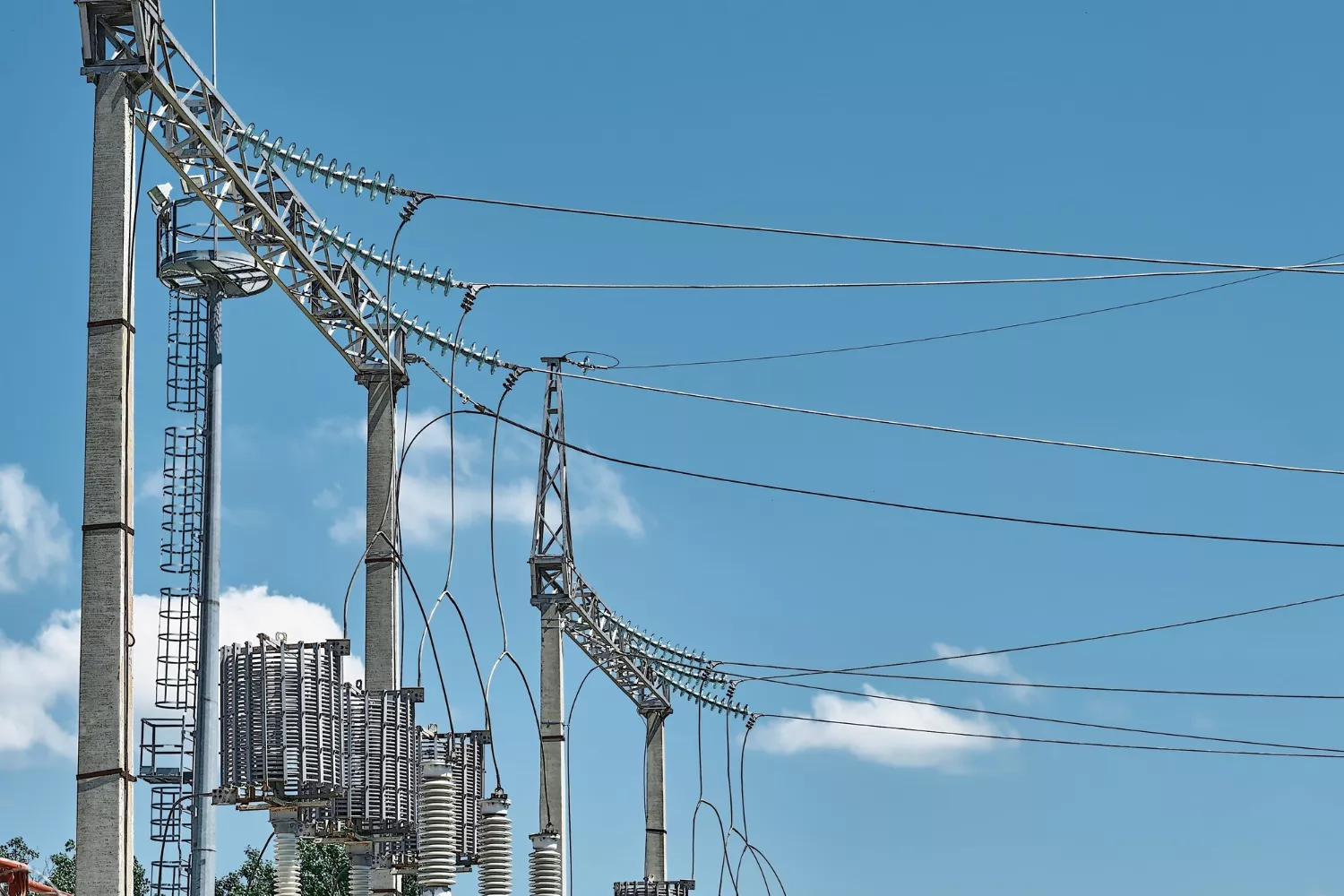
Imagine this: hundreds of tons of steel every day, powerful arc furnaces, an enormous demand for electricity, and all of it relies on a single heart: the transformer station. If it fails, the cost of downtime is not counted in thousands, but in millions of euros per day. In this article, we take you behind the scenes of designing and building what we call the "big shed", a high-capacity industrial transformer station. You will see why shortcuts are not an option, neither in the design nor in the execution.
At Energeks, we have designed and delivered solutions where there is no margin for error. Where the transformer does not work in an office, but in the very heart of industrial heat, operating twenty-four seven. We are sharing knowledge that can protect your investment and reputation before the first shovel even touches the ground.
This blog is for investors, engineers, and designers who are dealing with industrial-scale power systems. You will discover what should immediately raise red flags during the concept stage and which decisions to avoid so you do not end up in a costly disaster.
What’s inside?
Where to start when building a transformer beast
Power analysis, location, environmental conditions, and forecasting future loads.
A 40 MVA transformer is no small feat
How an industrial transformer differs from a “standard” one. Cooling, protection, and service life.
A transformer station is not a garage, it’s an engineering fortress
Proper space, ventilation, fire resistance, maintenance access — examples of best and worst practices.
Mistakes that hurt (and sometimes burn)
Cutting corners with busbars
Hiding losses in cable connections
Poorly selected switchgear or backup supply
Skipping harmonic and fault current analysis
Engineer’s checklist: how to sleep soundly after commissioning
A list of ten things you must check off before pressing “power”
Estimated reading time: approx. 6 minutes
They say the transformer is the heart of the station, but in heavy industry, it is more like the aorta and the entire circulatory system. When you are powering a steel plant, a mine, or a refinery, you cannot just drop in a bundle of copper coils and hope for the best. A 40 MVA transformer and beyond is not something you deliver in a van and plug into an outlet. It is a complex machine where every technical decision affects the entire power system.
First cooling.
Standard oil-cooled systems are not enough. Active oil to air cooling is needed, often with forced circulation and redundant fans. One of our clients who installed a unit with ONAN and ONAF cooling later admitted that without it, the transformer would have melted by the third furnace.
Second protection.
Transformers of this class require a serious protection system. Buchholz relays, winding temperature sensors, differential protection, overcurrent relays, and gas detection are the bare minimum. Let us not forget fault recorders and SCADA systems for real-time remote monitoring.
Third materials.
Windings made of electrolytic copper, a core with high magnetic permeability, insulation with enhanced thermal endurance. These are not extras. They are essential. Saving money at this stage is an invitation to disaster. Literally.
A 40 MVA transformer can weigh up to 70 tons. Moving it is a logistics project in itself. It requires low-loader transport, escort vehicles, and sometimes dismantling infrastructure. In one of our projects, we had to remove a pedestrian bridge to access the site.
After delivery, comes assembly. Cleanroom-level discipline is required, along with controlled ambient conditions, followed by high-voltage testing, insulation checks, and short-circuit trials. Each of these stages is a potential failure point if rushed or ignored.
Specifications that matter
Let the numbers speak:
Primary voltage: 110 kV
Secondary voltage: 6.3 kV
Rated current: 3660 A
Impedance: 8.5 percent
Power factor: cos φ = 0.9
These are not catalog values. They are precise parameters that define both efficiency and safety of the system.
In one project, a client requested a transformer with hybrid cooling, online sensors, and IoT integration. He was skeptical. A year later he said it was the best investment decision in the entire project. It was no longer just about power, but about data, predictive diagnostics, and performance optimization.
Today’s industrial transformer is not just a machine. It is the command center of the energy infrastructure. And it deserves to be treated as such.
Let us start with a story. When one of our clients received a transformer station design from a local engineering office, his first reaction was, “Gentlemen, this looks like a tractor shed.” And he was right. A station for a 40 MVA transformer is no place for makeshift solutions. A sheet metal roof and a concrete slab are far from enough. This is a facility that must protect, support and enable safe operation of infrastructure worth several million euros.
First volume. A transformer of this class needs ample space. Not only for the machine itself but also for ventilation, maintenance, safe access and evacuation. Building codes set minimum distances from walls and other equipment but in practice, these are often not enough. True safety and operational comfort start well beyond those minimums.
Next the foundation. A transformer weighing more than 70 tons requires a special reinforced concrete base that supports point loads while insulating against vibration and moisture. A poorly built foundation leads not only to structural settling but also to equipment malfunctions, failures and reduced service life.
Then ventilation. Opening a window when things get hot is not an option. The station must be equipped with a mechanical ventilation system that removes heat from the transformer and protects against humidity and condensation. In some designs, we include temperature sensors that automatically activate fans once thresholds are exceeded.
Plenty. Here is a real example. A transformer station was designed without any explosion risk zone analysis. An oil-filled transformer is always a potential ignition source. If someone places the LV switchgear and generator within the same zone, they should not be surprised when disaster strikes. A proper design must consider not only electrical requirements but also fire protection, service zones, gas venting, and emergency access.
Let us not forget accessibility. This is not a museum. The station must allow quick access to key components, transformer replacement, and inspection of insulators and busbars. Doors must be wide enough, floors slip resistant, and lighting must ensure visibility even during a power failure.
We have heard stories about stations where technicians had to walk sideways because there was no room to turn with a tool in hand. A lack of operational space is not just uncomfortable. It is a real risk for errors, slips or electric shock. In our practice, we follow a simple rule. Design as if you will have to work there yourself at 3 AM on a Saturday with a flashlight and a wrench.
A transformer station must withstand environmental factors, UV radiation, extreme temperatures and chemical exposure. In industrial areas, you must expect dust, acids and oils. That means walls with appropriate coatings, roofs sealed against leaks and infrastructure that allows regular inspection.
And finally, do not overlook rodent protection. Sounds trivial? We had a case where rats chewed through sensor cables and took down the entire protection system. The cost?
Six digits.
Every experienced engineer knows the moment of silence after energizing a station when something is not working and no one knows why. Worse still is when everyone thinks they know. That is when it becomes clear which mistakes were harmless shortcuts and which ones opened the door to catastrophe. In this section, we examine the most common and painful sins in industrial transformer station projects. No sugarcoating.
A classic. When investors see the cost of copper busbars sized 2 by 120 by 10, they often ask, “Can’t we use thinner ones? They will hold, right?” The answer is no. Oversized busbars are not overkill. They are protection against overheating, skin effect losses and short-circuit loads. We have seen installations where undersized busbars warped during the first fault. And of course, the project was to blame. But it was the contractor who had to explain it to the insurance company.
Another costly mistake is selecting the wrong supply cable. For 3600 A, you cannot use typical aluminum conductors of 240 mm². Overload, power losses, overheating and eventually fire. Literally. One case we analyzed involved cables that expanded from heat and pushed insulation out of the termination. The result was an arc fault and a 24 hour outage. Production stopped. The loss exceeded half a million euros.
Minimalist protection schemes are a recipe for disaster. We saw a project where someone decided surge arresters were a luxury. The result was insulation breakdown and permanent transformer damage. Proper protection not only saves equipment but also reduces diagnostics and repair time. If you need to disassemble half the station to figure out what failed, the designer was clearly not paying attention.
And here we touch on a more subtle but very serious issue: power quality. In industrial environments full of inverters, induction furnaces and variable-speed drives, harmonic distortions are common. They can lead to excess core losses, transformer overheating and disturbances in control systems. Sadly, this issue is often ignored because “everything is working fine.” Until it is not. Often when the transformer is halfway through its life after just a few years of service.
One of our most stressful projects involved a station where the design came from one engineer, construction from a second team, and the transformer from a third party across Europe. The outcome? The transformer did not fit the foundation. Busbars were misaligned. The main switchboard had no input for backup power. It ended in a week of improvisation, last-minute fixes and costs higher than the transformer itself.
Lastly, let us talk about a topic often treated lightly: grounding. In installations of this magnitude, a symbolic ground bar will not do. You need a comprehensive grounding mesh, properly laid out, coordinated with lightning protection, corrosion resistant and fault tolerant. Without it, you are risking electric shock, false trips and voiding equipment warranties.
There is a certain ritual that repeats with every major power infrastructure project. It is called commissioning. Sounds harmless but this is the moment of truth when everything gets weighed up. Was the station designed properly? Was it built flawlessly? Does the transformer work as intended? If you are the engineer responsible for the handover or oversight, this list might just save your nerves and your reputation.
Technical documentation. Everything, not just folders
Make sure you have the complete set of documents including execution design, electrical schematics, declarations of conformity, factory test reports and commissioning protocols. You would be surprised how many investors try to start up a station without a loop impedance test report. And then look for someone to blame when it goes wrong.
Transformer tested and certified
Without high-voltage testing, insulation measurements, winding resistance checks and verified protection functions, energizing the transformer is a gamble. Check inlet and outlet cooling temperatures, oil levels, pressure switches and all sensor signals. Everything should feed into SCADA.
Grounding system visible, continuous and effective
Ensure the grounding mesh was executed according to the design and properly measured. A grounding resistance below 1 ohm is generally a good result. Also perform a visual inspection. A single missing bolt can cause more trouble than the wrong voltage on a busbar.
Protections work? Prove it
Do not take the manufacturer's word for it. Run relay tests, simulate faults, check the response of surge arresters and breaker trips. Remember, theory matters but practice always wins.
SCADA and monitoring all speaking the same language
Your SCADA system must collect signals from the transformer, current transformers, protection relays, environmental sensors and UPS. Make sure all the data routes are working. Even if the documentation says it can be added later, do it now. It will only get harder.
Ventilation and climate control
The internal temperature of the station must be monitored and regulated. Check whether fans are running, ducts are clear and backup power can support them for at least several minutes in the event of a power failure.
Accessibility and ergonomics
Walk through the entire station as if you were the service technician. Can you reach the current transformer easily? Is there room to safely operate a fuse? Can you remove the transformer without dismantling half the wall? If not, the design needs to be revised.
High-voltage testing not optional
This is where most hidden faults are discovered. Monitor insulation behavior, track temperature rises, and listen to the transformer. Seriously. Odd noises, rattles or humming can point to problems in the core or windings.
Operation manual and operator training
Often overlooked but critical. If you do not train your operators, even the best station becomes a minefield. Prepare a user manual and hand it over to the team responsible for day-to-day operations. Make sure they read it before pressing the start button.
Service plan and periodic inspections
Create a maintenance and inspection plan. Schedule measurement intervals, filter cleaning, sealing checks and insulation resistance tests. Even the best transformer ages. But one that is cared for does it gracefully.
If you made it this far, you are probably one of the rare individuals who take responsibility for bold infrastructure investments. The kind where every mistake can cost hundreds of thousands. But also the kind where every smart decision pays off for decades.
Building a large transformer station is no place for compromise. It is where physics, logistics and engineering precision come together with courage. And that is why you need partners who have lived it, not just read about it.
At Energeks, we offer complete solutions for industry including high-capacity medium-voltage transformers. And if time is critical and you need equipment immediately, check our current list of transformers available off the shelf.
We also recommend another blog post:
The ultimate 2025 buying guide for switchgear: What your vendor won’t tell you
And if you value knowledge, insight and connection with professionals, join our community at LinkedIn Energeks. We regularly share project stories, forward-thinking ideas and lessons from the field. We would love to see you there.
Thank you for taking the time to read this. If even one point was helpful to you, it was worth writing. We appreciate your focus, ambition and professionalism. The world needs more people like you.
Sources:
IEEE Xplore – Transformer Design and Testing
CIGRÉ – Technical Brochure No. 851: Transformer Reliability Survey
T&D World – Substation Design in the Third Dimension
Shipped from our warehouse in Poland within 2–3 working days, 5-year warranty. Full range 25–2500 kVA in the shop (prices in PLN).
No reviews!