25 Sept
2025
Energeks
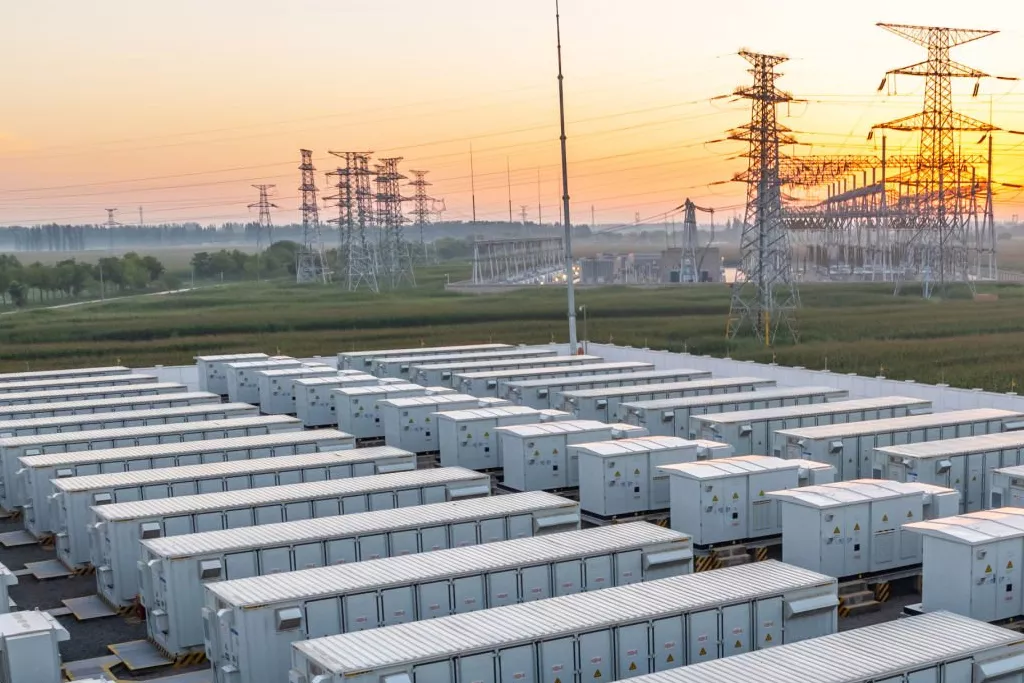
Imagine your photovoltaic installation working at full power in the middle of the day, while the production line in the hall next door is on hold. Kilowatt hours slip away, sent to the grid at rates that do not generate a real return.
In the evening, when machines start up and demand grows, you buy electricity from the socket at a higher price than you sold it. Most industrial companies know this paradox all too well.
This is where an energy storage system comes in, like a "safety accumulator" that turns your PV installation into a true tool for cost optimization and process stability.
Why are we writing about this? We have been integrating PV systems with energy storage in industrial facilities for years and we know that the devil is in the details.
A poorly chosen energy storage system will not only fail to solve problems but can become an expensive burden.
This text is for industrial facility managers, installation designers and investors who want to know: can an existing PV installation be combined with an energy storage system?
What are the technical, regulatory and economic requirements?
After reading you will know not only how to connect PV with storage but, above all, whether it is worth it and in which business model it will generate real gains and a competitive advantage.
Agenda:
Why PV and energy storage integration in industry is a game-changer?
Can an energy storage system be added to an existing PV installation and under what conditions?
Technical aspects of integration: inverters, measurement systems, protections.
Regulatory requirements and the role of the distribution system operator (DSO).
Business models and return on investment – the numbers that matter.
Situational models: food industry, logistics and metallurgy.
Four most common mistakes when integrating PV with energy storage (and how to avoid them).
The future: energy storage systems as a standard in industry.
Reading time: approx. 12 minutes.
In the industrial world there is no room for chance. Every kilowatt of energy here is like currency that is counted more carefully than in an airport exchange office. Photovoltaics deliver cheap power but operate on their own schedule. When the sun shines, there is production. When it sets, the party is over. For a production line that needs electricity at 3 a.m., that is not very useful.
This is where an industrial energy storage system enters the stage – like a well-mannered waiter who not only collects the surplus from the table at lunchtime but serves the dishes when you are actually hungry.
Thanks to this:
On-demand self-consumption becomes reality. Energy from your own PV system goes exactly where and when you need it without losses and frustration. This is why industry reports often highlight the term "industrial solar plus storage integration."
Peak cost reduction is no longer theory. In tariffs for large industrial consumers whether in Poland, Germany or Spain it is not just about kilowatt hours but about contracted capacity. An AC coupled storage system acts like a shock absorber taking the hit during peak hours and avoiding penalties worth tens of thousands.
Production continuity is secured. Some industrial processes such as glass melting, meat cooling or paint lines cannot tolerate interruptions. Storage works like an industrial-scale UPS and guarantees safety that even the best grid contract cannot provide.
Grid support and system services are an increasingly attractive business model. In the UK or California industrial plants already earn money by providing services like frequency response. In other words you get paid because your storage system "breathes" with the grid.
Does it sound futuristic?
Not really. The numbers are very real. BloombergNEF reports that the cost of lithium-ion batteries has fallen by 80% since 2013.
And that is not the end. The IEA Renewables 2023 report predicts that by 2030 the global installed capacity of energy storage will quadruple reaching more than 1 terawatt hour.
For comparison that is enough energy to power the entire European railway system for almost two years. Or to give every person on the planet dozens of hours of Netflix without interruption.
Integrating PV with energy storage in industry is therefore not a luxury or a "green whim."
It is a real game-changer that turns chaotic sunlight into predictable and controlled power – exactly what factories that count every kilowatt hour need.
This is one of the questions we hear most often in industrial halls and at investor meetings:
“We already have a PV installation. Can we really connect an energy storage system to it, or do we have to rebuild everything from scratch?”
The answer is: yes, you can. But the whole truth comes after the "but."
In practice it is a bit like upgrading a car. You can add a turbocharger, but not every engine and gearbox will handle such an upgrade.
Key factors:
Type of PV inverter
If your facility uses hybrid inverters, the road is straightforward. The storage system integrates with them directly via the DC interface. But if you have a standard string or central inverter, you will need an additional battery inverter and an AC coupled configuration. This solution is used in over 70% of retrofitted industrial installations worldwide because it offers flexibility without replacing the entire infrastructure.
Connection system
In many factories the PV installation is connected to the main medium voltage switchboard. Adding storage often means rebuilding one field, and sometimes installing a new switchboard with dedicated protection. This is where retrofit energy storage integration with existing PV plants in industrial facilities becomes a practical reality.
Conditions from the distribution system operator (DSO)
Operators take different approaches, but the common denominator is simple: if the storage system affects power flows in the grid, you must update the connection conditions. In Germany, the procedure is mandatory for storage systems above 135 kW, in Spain the threshold is 100 kW, and in Poland 50 kW. Average waiting time for new conditions? From 2 to 6 months depending on the region.
Connection capacity and short-circuit analysis
Storage systems not only accumulate power but also discharge it with significant output. This requires analyzing short-circuit flows and adjusting protection systems. In practice, every project above 500 kWh today requires simulation in software such as DIgSILENT PowerFactory or ETAP.
To illustrate: according to Fraunhofer ISE, in 2023 more than 40% of energy storage projects in Europe were retrofits of existing PV installations.
So integration is possible, but it always requires a technical audit and often paperwork.
The good news? In 80% of cases you can "finish the coffee with the same cup," meaning you can add storage without replacing the entire PV system. The bad? In the remaining 20% the cup breaks and you need a new one, which means modernizing part of the infrastructure.
In short, to answer the question “can you connect an energy storage system to an existing PV installation?” – yes… as long as you give engineers the time and tools to check whether your system is ready for such integration.
You may be interested also:
How to choose an energy storage system for PV: 5 answers that change everything
Adding an energy storage system to a PV installation in an industrial plant may sound like simple math: here is a panel, there is a battery, connect a cable and you are done. Reality? It is more like a Tetris puzzle, where every block has to fit perfectly, otherwise the whole tower collapses.
This is the first question raised in any design office.
For retrofitting existing industrial PV installations the most common choice is an AC coupled storage system. The storage is connected on the AC side, to the same switchboard where the PV inverters are installed. This makes it possible to add batteries to an already operating installation without major changes. One must remember, however, that every additional conversion (DC–AC–DC–AC) causes losses of up to 6–10%.
For new projects hybrid inverters with DC coupled storage systems are increasingly used. This solution reduces conversion losses to as little as 2–3% and significantly improves overall efficiency. In practice, integrating PV with energy storage via a hybrid inverter is now the standard in newly built industrial plants, especially where the goal is to maximize self-consumption and achieve fast ROI.
Every industrial storage system has its own Battery Management System (BMS). It works like a personal trainer: making sure cells do not overheat, charge evenly and do not fall into a dangerous "energy crash." Without a functioning BMS, even the most efficient lithium-ion cells can fail faster than a teenager’s phone during a gaming session.
Safety cannot be forgotten. When an industrial-scale 1 MWh storage system “sneezes,” the effect is far more dramatic than a kettle shorting out in the office. This is why the following are required:
overcurrent switches and isolators,
fire suppression systems (often gas-based, such as Novec 1230),
certification compliant with PN-EN 50549, IEC 62933 or UL 9540A, depending on the market.
At the end of the chain is the Energy Management System (EMS). It decides when the storage system charges and when it discharges. In practice, EMS is the digital conductor of the orchestra that must coordinate:
PV production,
the plant’s consumption profile,
energy prices (if the system operates with arbitrage),
sometimes also instructions from the capacity market or ancillary services.
Without EMS the storage operates chaotically and instead of saving money, it can actually increase costs.
For small systems (around 50 kWh) ventilation is sufficient. But industrial systems of 1–5 MWh require HVAC with active cooling and humidity control. According to DNV GL research, proper cooling can extend the lifetime of lithium-ion cells by 25–30%. Without it, batteries degrade faster than a server in an overheated server room.
Integrating PV with industrial energy storage is more than just connecting cables. It is precise orchestration of inverters, protection systems, EMS and cooling. Every detail from equipment type to safety standards determines whether your system will deliver savings for 15 years or turn into an expensive toy after two seasons.
Adding an energy storage system to a PV installation in industry is not only a technical challenge.
In many cases the bigger problem turns out to be… paperwork. The distribution system operator (DSO) must know that the plant connected to the grid will not turn into a "wild horse." That is why regulatory procedures are essential.
United Kingdom – flexibility but also responsibility
In the UK operators (DSOs) take a more market-driven approach. Adding storage to PV requires registration under a G99 application (for systems above 16 A per phase). Formalities include:
providing technical data of the inverter and battery,
agreeing on fault ride-through procedures,
simulations of the impact on grid frequency and voltage.
The advantage? In many regions the process can be accelerated if the storage system can provide ancillary services such as frequency regulation within the National Grid program. In that case approval can be granted in as little as 6 weeks.
Poland – thresholds and procedures
In Poland every PV installation above 50 kW must be approved by the DSO. Adding storage means:
updating connection conditions,
providing single-line diagrams,
certificates of compliance of inverters and storage with PN-EN 50549,
conducting commissioning tests including power quality measurements and simulations of behavior during voltage loss.
The average waiting time for a DSO decision is 3 to 6 months. The most common problem is documentation. If diagrams are incomplete the process starts over.
Germany – Ordnung muss sein
In Germany the Mittelspannungsrichtlinie (MV Directive) applies and requires registration of every storage system above 135 kW. In practice this means:
the need to conduct a grid impact analysis,
consultation with a certified expert (Sachverständiger),
mandatory tests of automatic disconnection during voltage loss.
Interesting fact: according to Fraunhofer ISE, more than 30% of applications are rejected due to incomplete forms not because the system is unsuitable but because someone filled in the paperwork incorrectly.
Spain – faster but with a catch
Spain has a rapidly growing PV and storage market, but operators require approval already for systems above 100 kW. The procedure is simpler than in Germany but there is a balancing condition. The company must demonstrate that adding storage will not cause uncontrolled feed-in to the grid.
In practice this means using EMS systems with a zero feed-in function that limit export when there is no demand in the facility.
What does this mean?
Although regulatory differences between Poland, Germany, Spain and the UK are significant the common denominator is clear: without DSO approval the system will not start.
Each market has its own thresholds (50 kW, 100 kW, 135 kW…), but the idea remains the same. A storage system is not just an "accumulator" it is an active participant in the power system.
That is why when preparing a project it is worth planning time for procedures. Often they decide whether the investment goes live in one year or in two.
Worth to read:
Earning light: how Germany is building an energy edge with power storage
When the term "energy storage" comes up in a boardroom, reactions are often polarized. The technical team nods with enthusiasm, while the CFO frowns and asks: “How much will it cost and when will it pay back?” Fortunately this is no longer a science fiction topic. Today you can answer that question very concretely.
In industrial plants the key business model is increasing self-consumption of PV energy.
If a 500 kWp installation produces 550 MWh annually and the facility consumes most of its energy in the evening, then without storage as much as 30–40% of the energy is exported to the grid.
With feed-in tariffs 40–60% lower than the price of purchasing energy from the grid, the financial balance quickly becomes unattractive.
A 1 MWh storage system can raise self-consumption from 60% to as much as 90–92%. In practice this means annual savings of €65,000–€85,000 in a medium-sized plant in Central Europe. ROI? 5–6 years, and with rising energy prices even shorter.
In logistics or heavy industry the biggest cost is not always energy itself but charges for peak demand. Each time contracted power is exceeded (for example in tariff categories such as C21 or B23) penalties can run into tens of thousands of euros per month.
Here storage acts like a shock absorber – it evens out the peaks by injecting energy into the facility’s grid exactly when demand exceeds the limit. This brings a rapid financial effect.
In logistics centers ROI can drop to 3–4 years, because you avoid penalties that were previously unavoidable.
In more advanced markets such as Germany, the UK or Spain, industrial storage systems earn money not only on self-consumption and peak shaving. A third revenue stream is emerging: price arbitrage and ancillary services.
Price arbitrage – the EMS charges batteries when electricity is cheapest (for example at night in dynamic tariffs) and discharges them when prices rise. In the UK the difference between nighttime and daytime peak prices can reach 200–300%, which can shorten ROI by an additional year.
System services (frequency response, demand response) – in Germany a plant with storage can sign a contract with the grid operator and receive payment for frequency stabilization.
Typical rates are €20,000 to €50,000 per year for each MW of available capacity.
Big numbers often sound abstract. 1 MWp? 2 MWh? For most people that looks like codes from a vacuum cleaner manual. That is why it is worth looking at them through the lens of everyday struggles – the same ones we all know, only on an industrial scale.
Imagine your home refrigerator. When the power goes out, after an hour the butter starts melting and the ice cream turns into watery soup. Now scale that problem up to a hall full of cold stores and freezers holding hundreds of tons of food. Every hour without energy equals hundreds of thousands of euros in losses.
A PV installation with 1 MWp capacity produces over 1.1 GWh annually – which seems a lot, but without storage a significant portion flows into the grid. Adding a 2 MWh storage system increased self-consumption by 25%. The effect? Annual savings of about €90,000.
In short:
PV installation: 1 MWp
Production: 1.1 GWh/year
Storage: 2 MWh
Effect: +25% self-consumption, €90,000 annual savings
ROI: 6 years
That is like someone paying your household electricity bills for six years straight and throwing in fiber internet on top.
We all know the moment when you turn on the washing machine, oven and kettle at once – and suddenly the fuse blows. Now imagine that in a logistics hub where dozens of forklifts are charging while a parcel sorting system is running. One such “peak” in demand and the bill jumps by tens of thousands of euros per month, because the operator charges a penalty for exceeding contracted capacity.
The solution turned out to be a 1 MWh storage system. It acts like a shock absorber – charging when the system is calm and discharging during sudden peaks. The effect? Penalties reduced by 70% and €75,000 in annual savings. ROI: 3.5 years.
In short:
PV installation: 800 kWp
Storage: 1 MWh
Effect: 70% reduction in peak demand penalties, €75,000 annual savings
ROI: 3.5 years
Is like your apartment paying off the mortgage on a new kitchen by itself, just because you stopped overloading the electrical system.
Melting metals is a process much like baking bread. If you turn off the oven halfway through because of a power cut, there is no saving the result. In metallurgy every voltage drop means not only lost production but also the risk of damaging furnaces worth millions.
Here a 5 MWh storage system not only increased reliability but also improved power quality – reducing harmonics and cutting reactive power losses. On top of that the plant started earning from ancillary services by helping the operator stabilize grid frequency. The result? More than €220,000 per year in combined savings and additional revenue, with ROI in 5 years.
In short:
PV installation: 2.5 MWp
Storage: 5 MWh
Effect: improved power quality, reduced harmonics, lower reactive power losses, + ancillary services revenue
Total: over €220,000 annual savings and earnings
ROI: 5 years
Like your oven not only baking bread but also getting a bank transfer for keeping the neighbor’s kitchen warm.
Conclusions?
Numbers may sound like industry equations, but in reality they show a simple truth: an industrial energy storage system works both as a safety buffer and as a savings calculator. In everyday life, ordinary people know the same frustrations – power not available when needed, bills higher than expected, and equipment that cannot handle interruptions. On an industrial scale the stakes are not melted ice cream but million-euro costs and competitive advantage.
Integrating PV and industrial energy storage is a long-term investment, but just a few wrong decisions can turn it into an expensive lesson. Here is a list of mistakes that repeat across the world – from Poland to Germany to Spain – and how to avoid them.
1. Storage system too small
This is the most common trap. Companies often choose a 200–300 kWh system because it seems “just right,” but the actual needs of the plant are several times larger. The result? The storage discharges in an hour and does not fulfill its purpose. It is like buying a tiny phone powerbank – after one charge you are back at the socket.
How to avoid it? Analyze your energy consumption profile over at least 12 months. Choose a storage size that covers at least 2–3 hours of plant operation at average load.
2. No EMS (Energy Management System)
Without an intelligent controller the storage charges when the sun shines and discharges when… it is not necessarily profitable. Instead of saving money, the company can generate additional losses.
How to avoid it? Invest in an EMS that considers PV production forecasts, energy prices and the plant’s consumption profile. It is the heart of the entire system – without it you only have an expensive battery, not a tool for optimization.
3. Underestimating battery cooling
Lithium-ion cells do not like heat. Every 10°C increase in temperature shortens their lifespan by up to half. For systems above 500 kWh active cooling and humidity control are essential. Without it the battery wears out faster than an office air conditioner in summer.
How to avoid it? Plan for dedicated HVAC and regular servicing. This is not an extra cost but an investment in 20–30% longer storage lifetime.
4. Ignoring formalities with the distribution system operator (DSO)
Many investors skip this step, hoping it will “work itself out.” Later it turns out that system launch is blocked by missing operator approval. Sometimes you wait six months longer, and ROI shifts by years.
How to avoid it? Include regulatory procedures in the project timeline. Each country has its own thresholds (Poland – 50 kW, Spain – 100 kW, Germany – 135 kW). The sooner you start discussions with the DSO, the fewer headaches at the end.
These four mistakes – wrong system size, no EMS, weak cooling and missing DSO formalities – account for more than 70% of problems in industrial storage projects. With the right audit and planning you can avoid them and build a system that runs smoothly for the next 15–20 years.
Just a decade ago industrial energy storage systems were seen as a futuristic gadget for pioneers. Today it is clear: they are not a luxury but a cornerstone of competitiveness. The IEA forecasts that by 2030 the global installed capacity of storage will quadruple, and BloombergNEF points out that the cost of storing 1 kWh of energy will fall by another 40% compared to 2020.
This means that in a few years the question will no longer be “should we install storage?” but “how large should the system be and how should it be integrated?”
In Germany every third new PV installation in the industrial sector is already being designed with batteries included. In Spain support programs accelerate the adoption of solar plus storage systems, and in the UK plants are earning from ancillary services faster than analysts expected.
The trend is irreversible. Companies that do not start thinking about integration now will wake up in a few years with higher bills and less flexibility in the market.
At Energeks we keep it simple. Our role is not only to help integrate storage with PV installations but also to make sure that all the energy you produce and store actually works for your business.
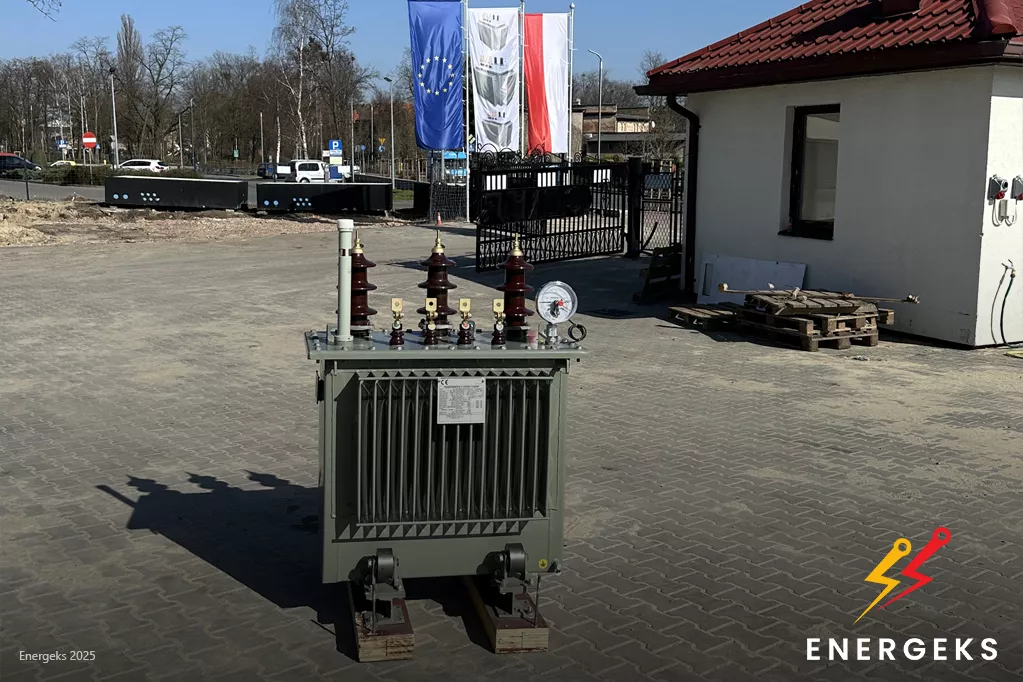
That is why we rely on our Tier 2 Ecodesign oil-filled and cast resin transformers – practically lossless, ensuring that nothing leaks away in cables or cores. This matters to us because we know every kilowatt counts, and in your facility what matters is not theory but real results.
The future of industry is not about technology but about decisions.
Energy storage and modern medium voltage transformers are no longer a “premium option” but tools that determine safety and profitability.
If you are an investor, designer or industrial facility manager and you want to:
increase PV self-consumption,
secure process continuity,
gain a competitive edge with Tier 2 technology,
we are open to partnership and collaboration. We believe the most is achieved not alone but by working together – with clients, designers, operators and suppliers.
Thank you for your time and attention in reading this article.
If the integration of PV and energy storage is relevant to you, we invite you to start a conversation. Together we can build a system that not only works but drives your business results – without losses, without compromises, in the spirit of future-oriented energy.
Join our community on LinkedIn, where we regularly share knowledge, analysis and stories from the industry. We are eager to hear your perspective and experiences – because the real value lies in exchange.
Sources:
IEA – Renewables 2023 Report
https://www.iea.org/reports/renewables-2023
BloombergNEF – Energy Storage Market Outlook 2024
https://about.bnef.com/energy-storage
Fraunhofer ISE – Energy Storage Integration in Industry
https://www.ise.fraunhofer.de/en/research-topics/energy-storage.html
Cover Photo: Young777/2172501561
No reviews!