7 Sep
2026
Energeks
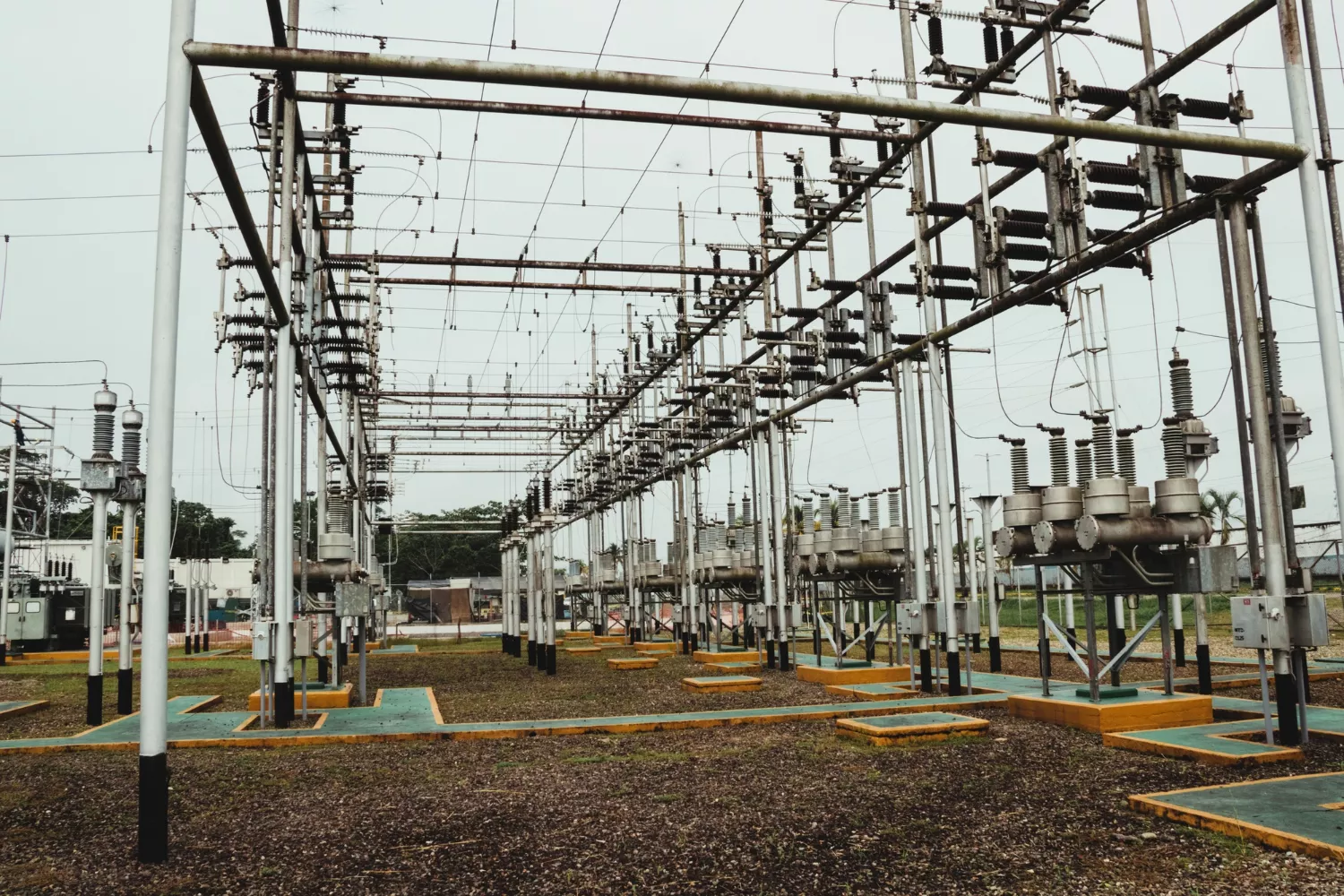
The decision on selecting a medium‑voltage (MV) transformer is usually made at an early stage of the project – when the investor knows the current power demand but rarely has certainty about what the installation will look like in five or ten years. Yet it is the MV transformer, as the heart of the transformer station, that largely determines whether the future expansion of a plant, PV farm, energy storage system or production line will be a simple engineering task or a costly rebuild of the entire power infrastructure. In this article, we answer the most frequently asked questions about selecting an MV transformer with future installation expansion in mind.
An MV transformer is a device that transforms voltage from medium level (most often 6, 10, 15 or 20 kV) to low voltage (0.4 kV) for use by consumers in a plant, or conversely – in the case of energy‑generating installations such as photovoltaic farms or energy storage systems (BESS) – steps up the voltage from low to medium level before feeding energy into the distribution grid. The MV transformer is therefore the boundary point between the distribution system operator's (DSO) grid and the consumer's or generator's internal installation.
From the perspective of expansion planning, the MV transformer acts as a bottleneck, it determines the maximum power that the installation can draw or feed into the grid at any given time.
As long as the demand is within the transformer's rated power, expansion mainly involves adding new loads or sources.
When demand exceeds the available power, the transformer must be replaced, an additional station built, or other usually costly modifications made to the power supply system.
The selection of MV transformer power should take into account not only the current load but also a realistic, justifiable scenario for the installation's development over the next 10–15 years – the typical service life of this type of device before its first major overhaul or replacement.
In practice, engineers use several approaches:
Analysis of investment plans – if the investor plans to expand the production hall, add a production line, EV charging stations or a PV installation within a few years, the transformer power should immediately account for these scenarios, even if implementation is staged.
Power margin factor – a margin of 20–40% above the current peak load is commonly adopted, although in facilities with dynamic growth (e.g., data centres, industrial plants in expansion), this margin can be higher.
Load character analysis – installations with a large share of non‑linear loads (inverters, variable frequency drives, EV chargers) generate additional harmonic loads, which should be considered at the power selection stage rather than only during modernisation.
Station modularity – transformer stations are increasingly designed so that the foundation, enclosure and MV switchgear bay allow for the future installation of a second transformer operating in parallel, without building a new station from scratch.
Excessive oversizing of the transformer, however, has its drawbacks, which are discussed in the next section.
This is one of the questions investors ask most often, and the answer is not straightforward. Oversizing an MV transformer – i.e., selecting a power significantly higher than the current demand – has both advantages and significant disadvantages.
Advantages of oversizing:
ability to connect new loads or sources without replacing the transformer,
lower total cost over many years compared to a double investment (buying a smaller transformer and then replacing it),
lower risk of installation downtime during future expansion, as work is limited to connecting new circuits rather than replacing the main device.
Disadvantages of oversizing:
a transformer operating continuously at low load (below 30–40% of rated power) has poorer energy efficiency – no‑load losses (core losses) burden the installation's energy balance regardless of power consumption,
higher investment cost frozen for years until expansion actually takes place,
larger dimensions and weight of the device, which may require a larger station, a stronger foundation and more expensive transport,
in RES installations – possible restrictions or different connection conditions from the DSO if the declared power significantly exceeds the actual demand at start‑up.
The recommended compromise is usually the previously mentioned 20–40% margin and, where possible, designing the station to allow a second transformer to be installed in the future, rather than a one‑time, significant oversizing of the first unit.
The opposite situation – selecting an MV transformer exactly for current needs, with no margin – also carries risk that only becomes apparent at the expansion stage.
The most common consequences of underestimation include:
the need to replace the transformer along with the associated infrastructure (MV cables, protection devices, sometimes also the MV switchgear if its rated parameters prove insufficient),
installation downtime during replacement, which in production plants means direct financial losses,
extended connection procedure – increasing the connection capacity with the DSO means a new application, new connection conditions, and often also modernisation of the grid infrastructure on the operator's side, which can take many months,
loss of value of the original investment – a transformer that has not yet reached the end of its service life must be dismantled and sold or scrapped, which rarely allows a significant portion of the costs to be recovered,
additional design and administrative costs – a new technical design, renewed consultations with a fire protection expert, updating the as‑built documentation.
In practice, the cost of replacing an MV transformer along with the associated work can be several times higher than the difference in purchase price between a unit selected "on the edge" and one with a reasonable power margin.
The cost of replacing an MV transformer depends on many variables, so it is difficult to give a universal figure, but it is worth knowing the cost structure to consciously compare it with the cost of appropriate oversizing at the start of the investment.
The total replacement cost typically includes:
the price of the transformer itself (depending on power, type – oil or dry, manufacturer and additional parameters such as connection group or noise level),
the cost of dismantling the old unit and disposing of or reselling the insulating oil (in oil‑immersed transformers),
possible modernisation of the MV and LV switchgear bays if the current parameters of the new unit require it,
the cost of transport and crane – MV transformers weigh from several hundred kilograms to over a dozen tonnes,
design costs, DSO approvals and, in many cases, a fee for increasing the connection capacity,
the cost of production downtime or a break in energy generation during the work.
For this reason, a TCO (Total Cost of Ownership) analysis at the transformer station design stage should consider not only the purchase price but also the probability and cost of any future replacement.
Beyond rated power, when planning installation expansion, several additional MV transformer parameters should be considered:
Short‑circuit voltage (uk) – affects voltage drops at high loads and protection selection; with planned expansion, it is worth checking whether the typical uk value will not limit the future connection of additional loads sensitive to voltage fluctuations.
Connection group – important especially for installations with distributed generation (PV, BESS), where incorrect selection can lead to synchronisation problems or protection selectivity after new sources are added.
Tap range (tap changer) – the ability to adjust the ratio within a certain range makes it easier to match the LV voltage as the load profile changes during expansion.
Insulation class and cooling type (ONAN, ONAF, AN, AF) – oil‑immersed transformers with forced cooling (ONAF) can temporarily operate at a power higher than the ONAN rating, which is sometimes used as a "buffer" during the implementation of the target expansion.
Dimensions and weight – if the transformer station is to accommodate a larger unit in the future, adequate space, foundation strength and door and transport route dimensions should be planned at the design stage.
In RES installations and BESS systems, the expansion topic has a slightly different character than in classical industrial plants, because the MV transformer power determines not only the ability to draw energy but primarily the ability to feed it into the grid.
Key issues in this context:
Connection conditions issued by the DSO – the MV transformer's rated power should be consistent with the connection capacity specified in the conditions, while being flexible enough to allow future generation capacity increases without the need to apply for entirely new connection conditions from scratch.
Staged expansion of a PV farm – installations are increasingly being designed with future addition of further panel sections or inverters in mind; an MV transformer selected with adequate reserve avoids replacing the main connection point at each subsequent stage.
Integration of BESS with an existing PV installation – adding energy storage to an already operating PV farm increases the total power that must be transmitted through the MV transformer, especially in the mode of simultaneous storage discharge and panel production.
IRiESD requirements – the Distribution Grid Operation and Maintenance Instructions impose specific technical parameters on sources connected to the MV grid, including voltage and reactive power regulation requirements, which should also be considered when selecting a transformer with future expansion in mind.
The choice between an oil‑immersed and a dry‑type (cast‑resin) transformer matters not only for current operation but also for the flexibility of future installation expansion.
Oil‑immersed transformers generally offer a better power‑to‑size ratio and lower unit cost at higher powers, making them a popular choice in large‑scale industrial and power installations. However, they require a dedicated oil compartment, a fire protection system and an oil containment basin, which limits flexibility if the station size needs to be increased in the future.
Dry‑type transformers are more often chosen in facilities where fire safety and the ability to install inside buildings close to loads (e.g., production halls, office buildings, data centres) are important. Their disadvantages can be a higher unit cost at high powers and usually slightly greater sensitivity to environmental conditions (humidity, dust), which should be considered at the selection stage when planned expansion is in more difficult industrial conditions.
From a future expansion perspective, good practice is to choose a transformer type consistent with the facility's long‑term development strategy – if expansion towards indoor installations is planned, a dry‑type transformer can facilitate later project stages.
Planning a transformer station with expansion in mind goes beyond the transformer itself and includes the entire associated infrastructure:
Space reserve in the MV switchgear – designing an additional switchgear bay at the station construction stage significantly facilitates later connection of a second transformer or a new outgoing circuit.
Proper selection of supply cables – the cross‑section of MV and LV cables should be selected with the target, not just the initial, installation power in mind, because replacing cable routes can be as costly as replacing the transformer itself.
Foundation and station structure – providing in the building design the possibility of supporting a larger unit or adding another container module.
Protection and control system – protections selected with some setting margin are easier to adapt to increased power than to replace from scratch.
Transport and service access – planning access roads and manoeuvring space for the dimensions of the target, not just the first, transformer.
Expansion of an installation involving an increase in MV transformer power usually requires going through several formal stages:
Applying for new or updated connection conditions from the relevant DSO if the planned power exceeds the value specified in the existing connection agreement.
Updating the technical design of the transformer station, including protection selection, selectivity analysis and – if necessary – a short‑circuit analysis for the new parameters.
Fire protection approvals from a fire protection expert, particularly important for oil‑immersed transformers of increased power.
Technical inspections and measurements carried out by authorised entities before the modernised station is put into operation.
Updating the distribution service agreement and, for generation installations, amending the connection agreement with the DSO.
Early planning of these steps – ideally in parallel with the expansion design stage, not after its physical start – avoids delays resulting from the long processing times of applications by grid operators.
Selecting an MV transformer is a decision that in practice goes far beyond the current power balance of the installation. Consciously considering an expansion scenario – whether in the form of additional production lines, a fleet of electric vehicles, PV farm expansion or energy storage integration – avoids a situation where an investment made a few years earlier becomes a barrier to further development.
Important principles worth applying when planning:
select transformer power with a reasonable margin (usually 20–40%), based on real investment plans rather than solely on current demand,
design the transformer station in a modular way, with the possibility of adding another switchgear bay or a second transformer,
analyse not only the purchase price but the full life‑cycle cost (TCO), including the risk and cost of any future replacement,
account for load characteristics – the share of non‑linear loads, planned distributed generation or integration with energy storage,
start the formal procedures with the grid operator early enough, as these most often determine the actual expansion schedule.
A properly planned MV transformer is not merely a device meeting current technical requirements – it is an investment in the flexibility of the entire installation for years to come.
If you have made it this far – respect, because that was a solid chunk of knowledge about a piece of equipment that usually stands quietly in the corner and simply does its job.
At Energeks, we like such topics and we like to talk about them, so if you are planning an installation expansion and are puzzling over MV transformer selection, we will be happy to help calculate and select it with a sensible reserve for the future – without oversizing for every possible eventuality and without underestimations that only hurt two years later.
The full range of MV transformers can be found here,
and if you need a unit ready to go, take a look at our shop with transformers available off‑the‑shelf – sometimes a transformer in stock is better than an ideal one in six months.
We also invite you to follow us on LinkedIn Energeks – no spam, just concrete content from the MV and LV world.
See you on the next project!
Sources:
WAGO Poland, Connection point to the grid – discussion of technical conditions, the role of IRiESD and requirements for MV installations when connecting consumers and generation units (PV, energy storage)
International Electrotechnical Commission (IEC), IEC 60076-7:2018 — Power transformers, Part 7: Loading guide for mineral‑oil‑immersed power transformers
Technical Connection Rules explained via vde.com
No reviews!