17 Jan
2025
Energeks
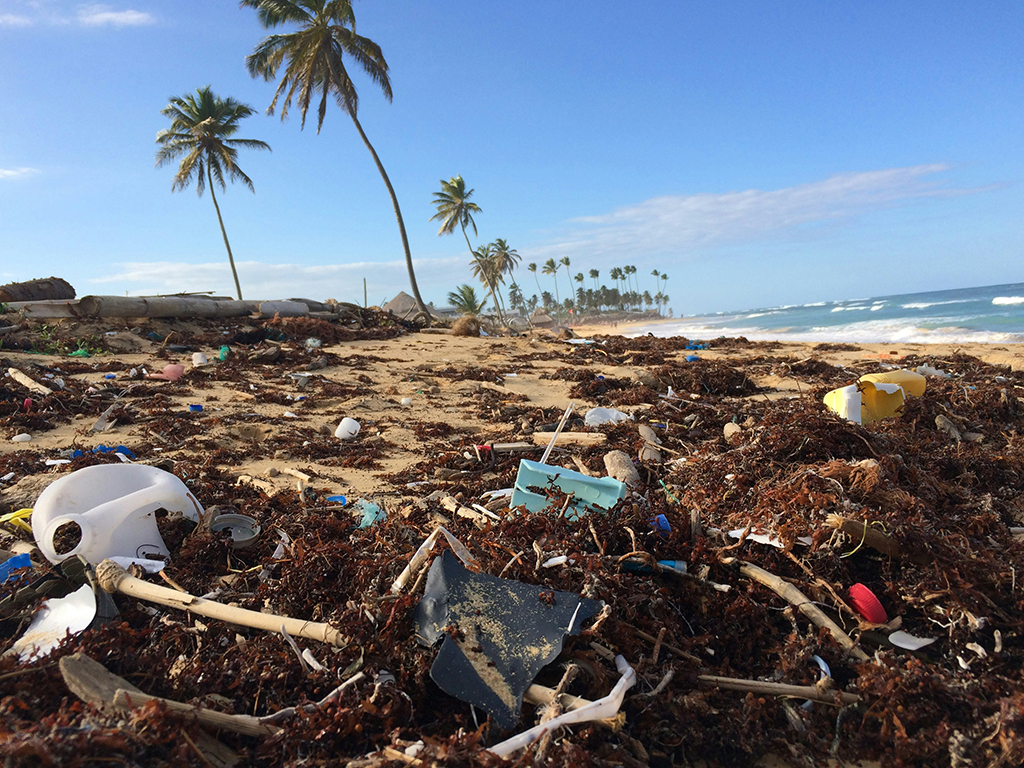
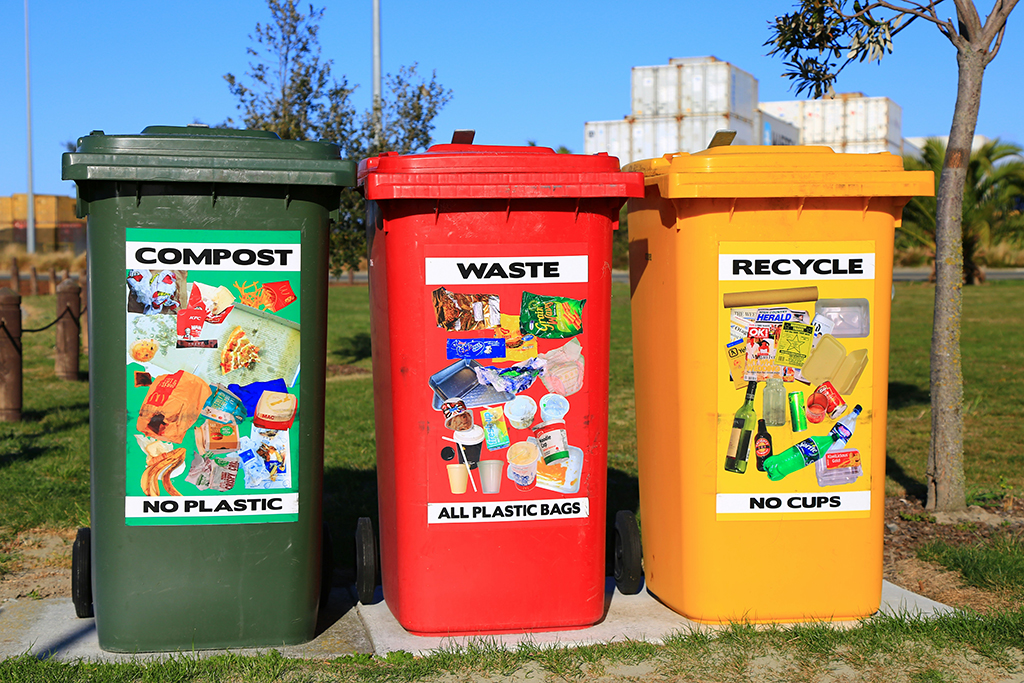
Each of us produces several kilograms of waste per week on average – according to data, the average European generates up to 500 kg of waste annually. That’s equivalent to the weight of a small car! When multiplied by billions of people worldwide, the amount of waste becomes overwhelming – we’re talking about millions of tons ending up in landfills every year, polluting the environment and generating harmful emissions.
But what if this waste, instead of being a problem, became a solution? Imagine a world where what you throw away today transforms into a valuable resource – electricity and heat powering cities, reducing greenhouse gas emissions, and eliminating the need for new landfills.
This is not a futuristic vision – it’s the reality offered by Waste to Energy (WtE) technology, revolutionizing the way we think about waste.
In just 2.5 minutes, you’ll learn:
How the process of converting waste into energy works.
Why WtE is a more sustainable and cost-effective solution than traditional landfilling.
How global leaders, from Sweden to Japan, are already turning waste into resources.
8 practical strategies to inspire innovation in your company or community.
After reading this article, you’ll understand why WtE is more than just technology – it’s a step toward a circular economy where every kilogram of waste contributes to a better future. It’s an opportunity to drive global change while generating profits.
Ready? Let’s dive into a world where trash becomes the fuel of success!
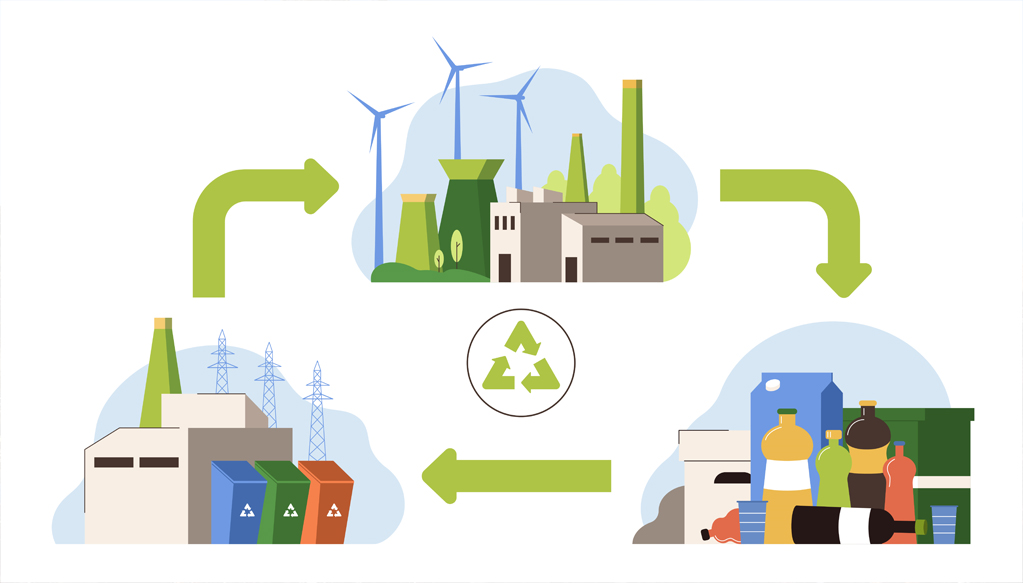
Waste to Energy (WtE) is a modern process that transforms non-recyclable waste into useful energy – electricity, heat, or alternative fuels. It utilizes advanced technologies such as incineration, pyrolysis, gasification, and anaerobic digestion to recover the maximum energy potential contained in waste.
Unlike traditional landfills, where waste decomposes over decades and emits methane – one of the most harmful greenhouse gases – WtE ensures a controlled and efficient conversion of waste, significantly reducing its negative environmental impact. The energy generated in this process is fed into the power grid, supports heating systems, or serves as a base for producing synthetic fuels such as hydrogen.
CC: Freepik
Incineration: The most common method, where waste is burned at high temperatures, releasing heat that is converted into steam to drive turbines generating electricity.
Pyrolysis: A thermal process in which waste is treated in an oxygen-free environment, producing fuel oils, combustible gases, and biochar.
Gasification: A process that converts materials into syngas, which can be used as fuel in power plants or as a raw material for chemical production.
Anaerobic digestion: Particularly effective for organic waste such as food scraps or biomass, producing biogas and high-quality compost as byproducts.
Why is WtE better than traditional landfilling?
Waste volume reduction: The WtE process reduces the amount of waste going to landfills by up to 90%, saving space and reducing the need for new landfill sites.
Resource recovery: During the process, metals and other valuable materials can be recovered from the ash produced by incineration.
Lower greenhouse gas emissions: WtE significantly reduces methane emissions, a gas over 25 times more harmful to the climate than carbon dioxide.
Waste to Energy is not only a method for efficient waste management but also a crucial component of energy transition strategies. This technology is widely adopted in cities and countries striving to achieve climate neutrality and a circular economy.
Waste to Energy (WtE) is not just a solution to waste management challenges – it is a strategic investment in the future of the energy sector, sustainable development, and advanced technologies. Through collaboration with providers of cutting-edge electrotechnical solutions, such as gasification systems, steam turbines, and heat recovery installations, WtE becomes an integral part of modern energy infrastructure.
Let’s take a closer look at why implementing these innovations is worthwhile and the crucial role played by electrotechnical solution providers in the energy sector.
1. Reducing Landfills
Traditional landfills occupy vast areas that could be used more efficiently. WtE reduces waste volume by approximately 90%, which means:
Less demand for new landfill sites.
Protection of land that can be repurposed for energy infrastructure, housing, or agriculture.
Mitigation of risks related to landfill leachate and groundwater contamination.
Electrotechnical solution providers play a pivotal role in this transformation by delivering advanced waste sorting lines, controlled combustion systems, and flue gas purification technologies.
2. Carbon Neutrality
WtE is a critical tool in the pursuit of carbon neutrality. Unlike landfills, which emit methane – a greenhouse gas over 25 times more harmful than carbon dioxide – WtE:
Reduces greenhouse gas emissions by minimizing the decomposition of organic waste in landfills.
Uses waste as fuel to generate electricity and heat, replacing traditional sources like coal or natural gas.
Contributes to the achievement of Sustainable Development Goals (SDGs), particularly in the areas of climate and energy.
Providers of energy solutions, such as cogeneration systems or high-efficiency turbines, are indispensable for maximizing the energy efficiency of WtE facilities.
3. Waste as a Resource
WtE revolutionizes the perception of waste by transforming it into a valuable resource with diverse applications. Using advanced technologies such as plasma gasification or pyrolysis:
Even hard-to-recycle materials, like plastics and industrial waste, can be converted into energy.
Alternative fuels, such as syngas, methanol, or hydrogen, are created and find applications in industry and transportation.
Valuable metals like aluminum and copper can be recovered, increasing the profitability of WtE investments.
Electrotechnical companies support these innovations by providing advanced gasification systems, boilers, and heat recovery units that optimize the efficiency of the entire process.
CC: Dustan Woodhouse/unsplash
WtE is not just a method of waste management – it’s also the future of sustainable energy. Here’s how it fits into the global energy landscape:
Integration with energy grids: Advanced WtE technologies can supply energy to national grids, reducing dependence on fossil fuels.
Local energy security: WtE facilities can act as local energy production hubs, ensuring stable supplies even during crises.
Support for Smart Cities: WtE is a key component of modern cities striving for a circular economy.
Providers of electrotechnical solutions, such as Energeks, play an indispensable role in this transformation, designing systems that are not only efficient but also compliant with environmental and social requirements.
Investing in Waste to Energy is a step toward a more sustainable future, where waste is no longer a problem but a resource with immense potential.
It’s an opportunity to combine environmental responsibility with innovations that drive economic and technological progress.
Landfilling and converting waste into energy represent two entirely different philosophies of waste management. While landfills focus on storing the problem, Waste-to-Energy (WtE) technology transforms waste into valuable resources.
To determine which option is better, it’s worth examining the key aspects of these two approaches.
Landfills: Environmental and Economic Costs
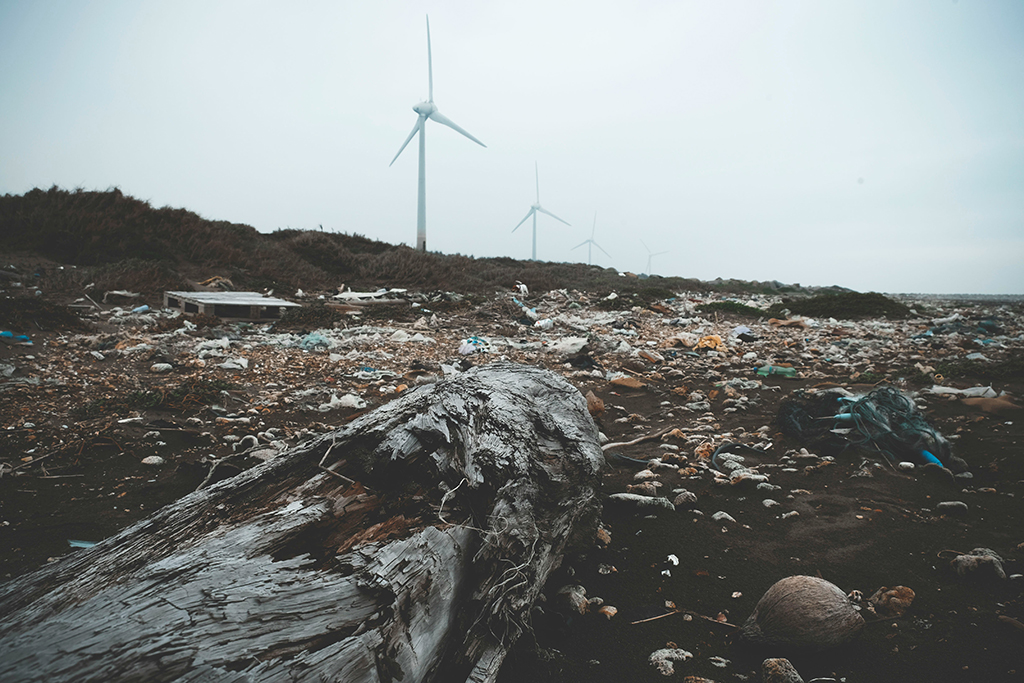
Methane emissions: Landfills are a major source of methane emissions, a greenhouse gas 25 times more harmful to the climate than carbon dioxide. Methane is generated during the anaerobic decomposition of organic waste.
Space consumption: In densely populated cities, there is limited space for new landfills. These areas could be better utilized for infrastructure development or green spaces.
Maintenance costs: Landfills generate long-term costs related to leachate management, emissions monitoring, and preventing groundwater contamination.
Waste-to-Energy: Energy, Recovery, and Waste Reduction
Converting waste into energy: WtE facilities transform non-recyclable waste into electricity and heat, reducing waste volume by up to 90%. This means fewer landfills and more energy for communities.
Emission reduction: Compared to landfilling, WtE processes significantly reduce greenhouse gas emissions. Modern facilities are equipped with advanced flue gas purification systems that minimize environmental impact.
Resource recovery: WtE allows for the recovery of valuable metals, such as copper and aluminum, from the ash produced during combustion. This is an additional step toward a circular economy.
CC: OCG Saving the Ocean/unsplash
Investment in Gasification Technology
Modern gasification systems convert waste into syngas – a versatile fuel that can be used to produce hydrogen, methanol, or electricity. This is not just a way to minimize waste but also an opportunity to create a new, eco-friendly energy source. Gasification is the key to a zero-emission future, proving that waste can become the foundation of a green economy.
Neighborhood Micro-Power Plants
Small-scale WtE solutions, such as local micro-power plants, enable the conversion of household waste into electricity and heat. This allows cities to become more energy self-sufficient while reducing waste sent to landfills. Imagine a neighborhood where the energy for street lighting comes from your daily waste – it’s not science fiction; it’s a reality within reach.
Pyrolysis Systems
Pyrolysis is a technology that transforms plastic waste into valuable products such as fuel oil, syngas, and biochar. This innovation addresses the issue of hard-to-recycle plastics while creating new energy sources. It’s proof that even plastic can gain a second life in a way that supports sustainable development.
Bio-Waste Utilization
Biomass, such as food scraps or agricultural waste, can be converted into biogas and high-quality natural fertilizers. Proper management of bio-waste can power energy grids and support agriculture. This strategy reminds us that nature always gives us a second chance if we use it wisely.
Metal Recovery Stations
During waste processing in WtE facilities, valuable metals like copper, aluminum, and steel can be recovered. These materials can be reused in industry, further increasing the profitability of WtE investments. In this way, every ton of waste becomes a treasure trove of resources fueling the economy.
Public-Private Partnerships
Collaboration between municipalities and private investors is crucial for developing WtE facilities. These partnerships provide access to advanced technologies and support the financing of large-scale projects. This approach demonstrates that collective action always leads to greater results – for the environment and communities alike.
Optimizing Waste Logistics
Effective waste segregation and transportation significantly enhance the efficiency of WtE processes. Implementing intelligent waste management systems, such as sensors or automated sorting, minimizes costs and maximizes efficiency. Every step towards better waste logistics is a step towards a more sustainable and efficient society.
Community Education
An informed society is key to the success of any WtE strategy. Engaging local communities in waste segregation, educating them on the benefits of WtE, and promoting responsible waste management lay the foundation for lasting change. Education is an investment in the future, where every resident becomes an ambassador for sustainable development.
CC: Nareeta Martin/unsplash
USA: Maryland – Energy for 400,000 Households
In Maryland, WtE facilities convert waste into energy sufficient to power 400,000 households. These investments have reduced the amount of waste sent to landfills while enhancing local energy security. Isn’t it fascinating that every bag of trash can become a small building block of energy independence?
China: A Waste-to-Energy Giant
China, the world's largest waste producer, is expanding its WtE network at an incredible pace. These massive investments help reduce environmental impact and meet the country's growing energy demands. Imagine a nation where hundreds of millions of tons of waste each year are turned into electricity – transforming mountains of problems into rivers of opportunity.
Japan: Tokyo as a Model of Efficiency
Japan’s capital converts 70% of its waste into energy, reducing landfill dependency to just 3%! Tokyo proves that even in a massive metropolis, waste's environmental impact can be minimized. Thanks to innovative WtE technologies, residents of Tokyo can literally feel their waste powering the city.
Netherlands: Waste Energy on a European Scale
Rotterdam hosts one of Europe’s most advanced WtE plants, converting waste into energy for 190,000 households annually. It’s as if every home in a medium-sized city were heated and powered by waste that would otherwise go to a landfill. Imagine a city where waste not only disappears but returns to residents as comfort and convenience!
Sweden: 99% of Waste is a Resource, Not a Problem
Sweden has become a global model thanks to its exceptional waste management strategy. As much as 99% of municipal waste in the country is processed, with nearly half fueling combined heat and power plants. Fun fact: Sweden imports waste from other countries because it runs out of its own! Who would have thought waste could become such a sought-after commodity?
Spain: Barcelona – Waste in Service of the City
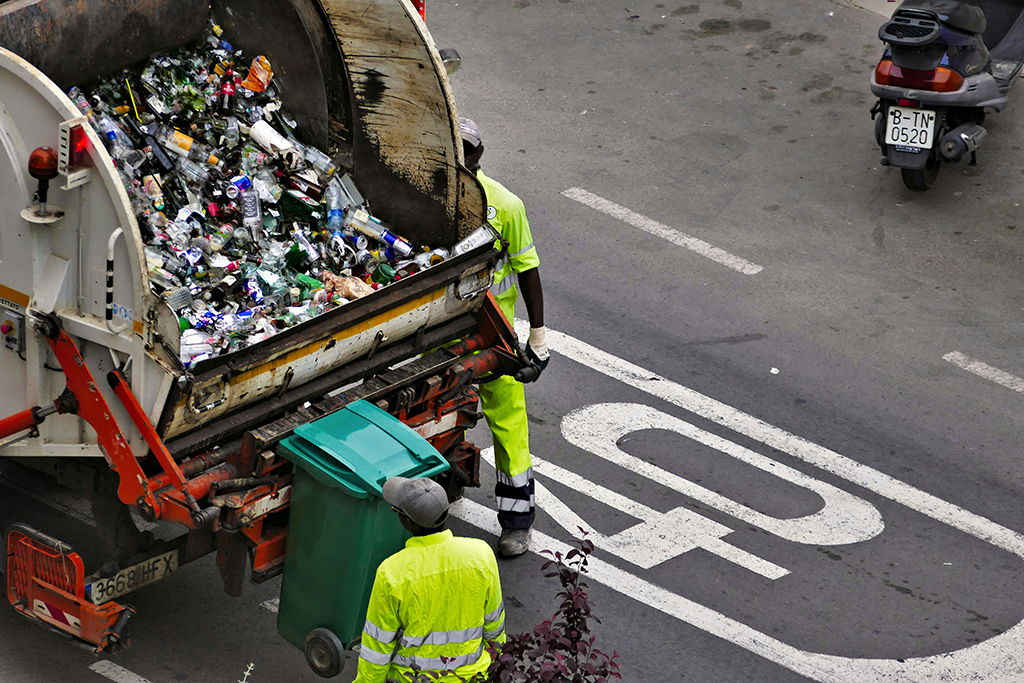
The WtE plant in Barcelona, located in Sant Adrià de Besòs, processes thousands of tons of waste into electricity and heat, powering urban heating and cooling networks. Thanks to this, Barcelona reduces methane emissions and promotes sustainable waste management, inspiring other cities to follow suit.
CC: Zibik/unsplash
Each of these examples demonstrates how different countries are turning waste into resources. The world is becoming increasingly sustainable thanks to WtE while inspiring action. Perhaps it’s time to consider how your country or city could join this global transformation?
Energy is waiting in our waste – we just need to extract it! WtE technology is the foundation of a circular economy. It’s the answer to the growing challenges of waste management and the need for energy transformation.
Waste-to-energy is not only an ecological but also an economical solution that perfectly aligns with the needs of future cities.
Are you ready to turn waste into energy? The world is already doing it!
Sources:
No reviews!