Emissions and energy losses in power systems
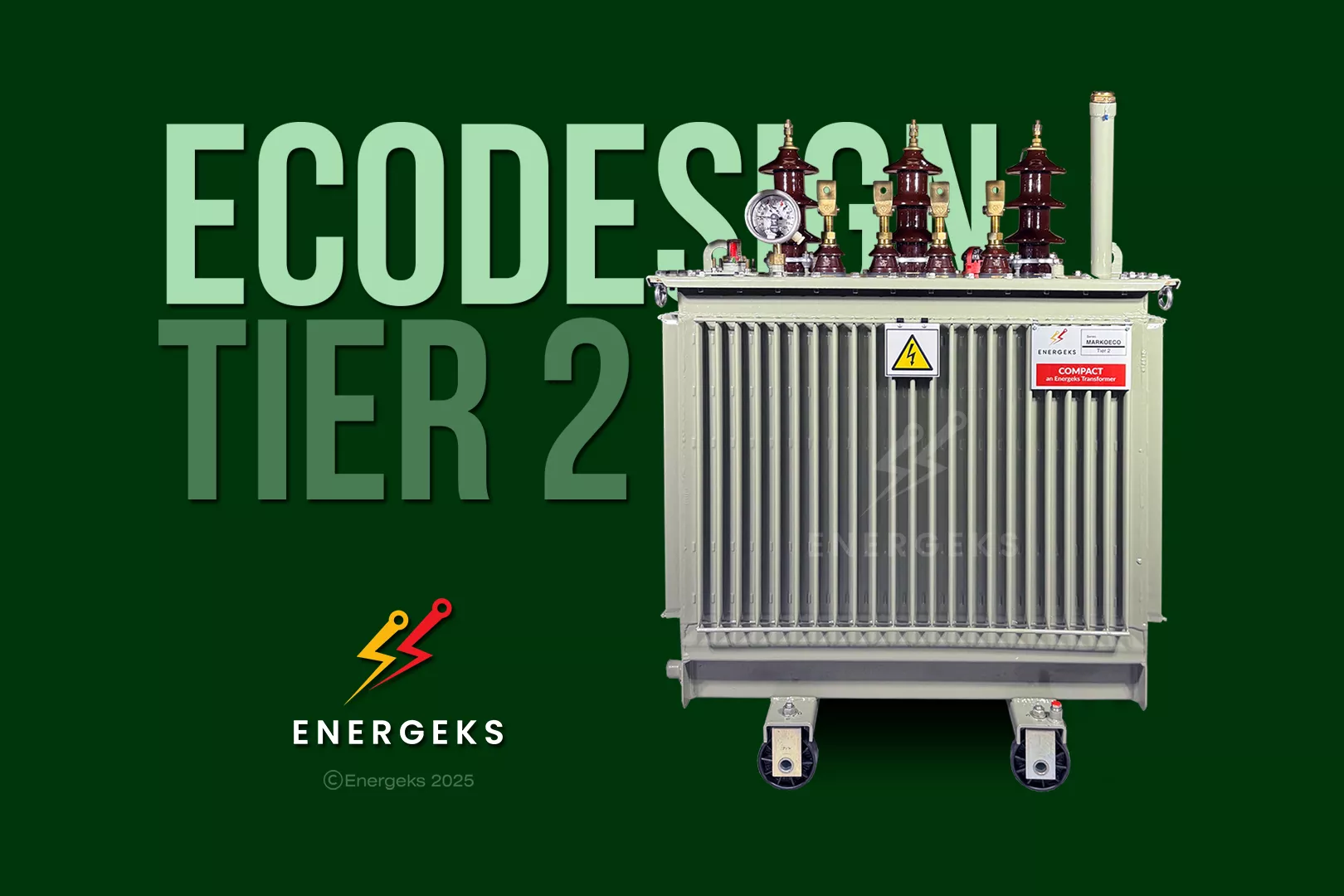
A transformer can no longer "just work."
In the past, it was enough for a transformer to simply operate. It ran without failure, hummed quietly in the background, and no one really asked questions. But times have changed. Today, power equipment must not only be reliable but also energy-efficient.
And a transformer that consumes electricity at night just to stay on standby must now justify itself. To the client. To the auditor. To the planet.
The EU’s Ecodesign Tier 2 directive is not a bureaucratic whim. It’s a real paradigm shift: if something wastes energy, it has no right to exist. Since July 2021, new rules have been in force and they’ve changed the game for all transformer manufacturers.
And for investors and designers? It’s a test of attention to detail: what are you really buying, and how much does it actually cost over the product’s lifetime?
In this article, we’ll cover:
what a Tier 2 compliant transformer is
what the requirements and standards are
how it differs from previous models
what it delivers in practice and in your budget
how to translate energy savings into something more tangible than “kWh”
Reading time: 8 minutes
What a Tier 2 compliant transformer is
In short? It’s about reducing energy losses in standby mode and under load. A transformer compliant with Tier 2 must meet stricter energy efficiency requirements defined by Commission Regulation (EU) 2019/1783.
That means:
significantly lower no-load losses, i.e. the energy consumed when the transformer is energized but not transmitting power
optimized load losses, related to current flow through windings and voltage drop
a special core design – often based on high magnetic induction and low-loss steels, such as HI-B (High-Grade Grain-Oriented) or amorphous metals (metglass), which have 70–80% lower magnetic losses compared to standard materials
What does this mean in practice?
Take, for example, a 1000 kVA MV transformer. An older Tier 1 compliant design may generate 12,000 kWh of no-load losses annually. This means that even when it’s not transferring energy – it’s using electricity. Like a refrigerator running with nothing inside.
The Tier 2 version reduces those losses to 8,000 kWh per year – saving 4,000 kWh. At an average price of 0.80 PLN/kWh, that’s 3,200 PLN annually. In euros? Around €740 per year. Over 30 years? €22,200 in avoided losses. And we’re talking about just one transformer.
What does that mean in real-world terms?
We like to convert savings into something tangible:
4,000 kWh is about 5 months of electricity for an average household (in the EU, annual consumption is around 8,000 kWh)
€22,200 is enough to build a multi-use sports field for students in a rural municipality
or: more than 42,000 loaves of bread (€0.50/loaf)
or: 8 years of free LED lighting for a high school
So?
If your company operates ten transformers, switching to Tier 2 means potential savings of €220,000 – enough to sponsor an entire village with green energy
Why a Tier 2 transformer is more efficient
Lower magnetizing current – thanks to reduced magnetic hysteresis in HI-B steels, the transformer needs less energy to “wake up”
Better passive cooling – lower losses = less heat = less work for the cooling system
Larger winding cross-sections = lower resistance = reduced Joule losses
This isn’t innovation for the sake of trendiness. It’s engineering done right – once and for all. Because true efficiency isn’t about miracles. It’s about good decisions and long-term thinking.
What are the specific Ecodesign requirements
EU Regulation 2019/1783 does not beat around the bush: since July 1, 2021, all new transformers placed on the EU market must meet the Ecodesign Tier 2 requirements. What does that mean? Time to say goodbye to “energy chewers” that just sit and hum while consuming electricity like an old bathroom heater.
What exactly does the regulation say?
The requirements are precise – these are not “recommendations” or “goals to consider,” but hard limits:
No-load and load losses – must be below the Tier 2 limit values, depending on the transformer type (oil-immersed, dry-type, distribution).
Core and winding design – you can’t “do it the old way” anymore. Modern materials are required (e.g., B23R080-grade steel, amorphous metals), and often more copper mass too.
CE marking and declaration of conformity – without these, the product cannot be legally placed on the market.
Ban on using cooling fans to meet the limits – only passive efficiency counts, no artificial "fine-tuning."
Technical documentation – must include detailed performance and loss data measured according to EN 50708-1-1.
How does it look in practice?
If you're designing a transformer station, you need to know during the tender or ordering phase whether a model meets these limits. Because you can’t “tighten efficiency” later like a bolt. It all starts with the core geometry and number of turns.
What’s more – the documentation must include specific parameters measured at 75°C. And no – they cannot be “rounded up.” That’s why many manufacturers redesigned their transformers from scratch instead of “lifting” old constructions.
How much does this save in euros?
With an average loss reduction of 3,000–5,000 kWh annually (compared to older models), and a cost of €0.20/kWh, the savings amount to €600–1,000 per transformer per year. And that’s just one!
For a medium-sized industrial plant with five transformers? That’s up to €5,000 saved annually – the cost of a new forklift, equipment for a production hall, or... full funding for an energy monitoring system.
Is it worth investing in “invisible savings”?
Imagine you have a fleet of company cars, and each one consumes 1 liter of fuel per day... idling. No one’s driving, no work is being done, but the tank is draining. Over a year, that’s hundreds of liters. And what – you turn a blind eye because “that’s how it’s always been”?
Tier 2 is the decision not to look away. To stop wasting electricity on idle operation.
To make sure every kilowatt-hour makes sense. Not out of obligation – out of common sense.
What standards must be met (and what do they actually mean)
The Ecodesign Tier 2 requirements don’t exist in a vacuum. They’re based on very specific technical standards that determine whether a transformer can legally be placed on the EU market. And no – this isn’t a matter of the manufacturer’s “good will.” It’s strict certification that cannot be bypassed. And for a designer or investor? A clear warning: if a device lacks full documentation compliant with the standard – don’t even touch it with a stick.
Three key standards you need to know
EN 50708-1-1 – the core standard for power transformers. It defines acceptable losses, test procedures, reference temperature (75°C), measurement accuracy, and design requirements. The backbone of Tier 2.
EN 50588-1 – covers distribution transformers up to 3150 kVA. Regulates how to test efficiency, including lab conditions, temperature compensation, and the effect of rated voltage. Applies especially to dry-type and MV transformers in compact substations.
ISO 50001 – the energy management standard. It doesn’t deal with transformer construction, but if you want your entire installation to be ESG or Green Deal compliant – a Tier 2 transformer is simply a must.
What does “standard compliance” mean in practice?
The standards specify:
how to calculate losses (reference conditions, calibrated instruments),
how to convert data for catalogues (e.g., to 20°C or 75°C),
how to present technical data (you can’t list power at a voltage other than nominal without annotation),
how to document test results – lab reports must include margin of error, certification, and the measurement pathway.
In other words: a transformer that doesn’t have verified compliance is not only a financial risk – it’s a risk for the entire investment. In an audit, this is the first thing they check: documentation from tests compliant with EN 50708. No docs? Out.
Standards are not just paperwork – they mean real gains
Some treat a “standard” like an unnecessary PDF attachment.
But do you know what non-compliance means?
You might not get funding (many grant programs require Tier 2 transformers).
Your insurer may refuse compensation after a failure – because the device wasn’t certified.
The entire investment could be rejected at handover.
And that’s serious money: tens of thousands of euros in delayed payments, schedule delays, penalty fees.
Do you really need to know EN 50708?
It’s like traffic rules.
You don’t need to know all of them to drive. But if you don’t know what “no left turn” means, you’ll get a ticket sooner or later.
If you’re an investor, site manager, or project engineer – knowing EN 50708 won’t make you an energy law expert. But it will save your skin during project acceptance.
And that’s just smart business.
What is the difference between Tier 1 and Tier 2 in practice?
On paper? It’s just a different column in the loss limits table.
But in reality?
It’s like driving a car from the 90s versus a modern electric vehicle.
Both will take you from point A to B.
But one will guzzle fuel and growl, while the other does it quietly, efficiently, and economically.
Example: MV transformer 400 kVA 15/0.4 kV
A transformer compliant with Tier 1 (the older standard valid until 2021) generates no-load losses of about 550 W and load losses of 4,200 W. Over a year, this translates to roughly 39,700 kilowatt-hours of lost energy. At an average price of 0.20 euros per kWh, this means an annual loss cost of about 7,940 euros.
By comparison, a 400 kVA 15/0.4 kV transformer compliant with Ecodesign Tier 2 requirements has lower losses: 400 W in no-load state and 3,700 W under load. Annual losses are about 34,400 kilowatt-hours, translating to a cost of around 6,880 euros per year.
Annual gain? 1,060 euros. Roughly the cost of a new LV switchboard for a workshop hall.
Or five years of LED lighting in an office.
Example: MV transformer 630 kVA 15/0.4 kV
A 630 kVA Tier 1 transformer has no-load losses of about 800 W and load losses reaching 7,000 W. Per year, that’s around 62,500 kilowatt-hours of lost energy. At 0.20 euros per kWh, total loss cost is approximately 12,500 euros.
A 630 kVA transformer meeting Tier 2 requirements performs better:
600 W no-load losses and 6,200 W load losses. Annually, this equals about 55,000 kilowatt-hours of loss, with a cost of around 11,000 euros.
Gain? 1,500 euros per year. Enough to cover the cost of yearly inspections and oil testing in an entire transformer station.
Example: MV transformer 1600 kVA 15/0.4 kV
A large 1600 kVA Tier 1 transformer has no-load losses of about 1,800 W and load losses of 17,000 W. Annually, this means about 140,000 kilowatt-hours of energy lost as heat. At 0.20 euros per kWh, that’s a loss cost of 28,000 euros per year.
A 1600 kVA Tier 2 transformer reduces these values to 1,400 W in no-load state and 15,500 W under load. Annual losses amount to about 127,000 kilowatt-hours, with a cost of around 25,400 euros.
2,600 euros per year – that’s the gain. And over 30 years? 78,000 euros. Enough to afford a decent energy storage system for an entire production hall.
Where does the difference hide?
Magnetic sheets: Tier 1 uses standard grain-oriented steel, sometimes with lower induction. Tier 2 typically employs HI-B or even amorphous cores – reducing losses by 30–70%.
Windings: Tier 2 often uses thicker copper wire, lowering resistance and thermal losses. The transformer is heavier – but significantly more efficient.
Geometric design: Tier 2 requires more precise construction – better magnetic dispersion, reduced connection losses, optimized cooling.
Purchase price vs life cycle cost (LCC): Tier 1 units used to be 5–10% cheaper upfront. But after just a few years of operation, Tier 2 pulls ahead – and leaves its predecessor behind.
How does Ecodesign affect efficiency and profitability?
When we say "transformer profitability," most people think: "Well, the purchase cost, maybe transport, installation, and... that’s it." But that’s the real issue. The actual money doesn’t disappear during purchase. It quietly evaporates during operation – through unnecessary energy losses.
And that’s exactly what the EU’s Ecodesign Tier 2 regulation aims to fix.
What does higher efficiency bring?
A transformer compliant with Ecodesign Tier 2 is by design:
more energy-optimized,
loses less heat (hence less energy),
has a longer lifespan thanks to lower operating temperatures,
requires no additional cooling (lower maintenance costs),
and generates a lower Total Cost of Ownership (TCO).
This isn’t opinion – it’s fact.
A transformer with 20% lower losses pays for itself in 3–6 years, and from then on… it works for you. For free.
Additional benefits: less visible but just as important
Fewer failures – lower operating temperatures reduce the risk of overheating.
Better compatibility with automation and inverters – Tier 2 offers more stable voltage parameters, improving energy quality.
Higher ESG rankings – for companies that publish sustainability reports, every saved kilowatt-hour improves their image – and investor score.
What would you do with €5,000 a year?
Install 20 new LED lamps in the production hall.
Fund annual maintenance for your entire machine park.
Or simply hire an energy technician part-time – to monitor other loss sources.
These aren’t "green daydreams" – they’re hard numbers. And the more energy you produce, transmit, or store – the more it pays off.
Transformers are like tires: even bad ones keep you moving… but they’re burning your money.
A transformer that works with purpose
If you’ve made it this far – thank you. That means transformer efficiency matters to you. And rightly so.
Because modern energy is no longer about "buy and forget." It’s about conscious choices that deliver returns not only financially, but also environmentally. Tier 2 is not just a regulation – it’s a direction. And at Energeks, we know how to turn that direction into concrete solutions.
At Energeks, we design medium-voltage transformers that:
comply with Tier 2 requirements,
genuinely reduce energy losses,
are ready for integration with PV systems, storage, and e-mobility,
and most importantly – work for you, not against your bottom line.
If you’d like to learn how to choose a Tier 2 transformer for your investment, check out our offer:
See Energeks transformers.
Thank you for being with us.
Join our community on LinkedIn.
That’s where we share knowledge, solutions, and… a human approach to engineering.
Sources:
European Commission – Ecodesign for Transformers (Regulation (EU) 2019/1783)
International Energy Agency – The Role of Efficient Transformers in Grid Decarbonisation
CENELEC – EN 50708 Series for Power Transformers
Transformers in stock
Shipped from our warehouse in Poland within 2–3 working days, 5-year warranty. Full range 25–2500 kVA in the shop (prices in PLN).
Current electricity costs for industry in the EU are 2 to 3 times higher than in the US.
Is Europe still able to catch up with the competition?
That is why it is worth asking:
Is the Green Deal a realistic path to the future, or a luxury that we, as an industrial continent, simply cannot afford?
In this article:
we will examine how the Green Deal affects energy costs and the competitiveness of European industry
we will show which sectors suffer the most and why
we will compare the EU’s approach to the practices in the US and China, as well as the other side of the coin
we will present possible adaptation paths based on technology, not ideology
Estimated reading time: 10 minutes
What was the Green Deal supposed to be, and what has become of it by 2025?
The Green Deal, or more precisely the European Green Deal, was meant to be more than an economic strategy. It was intended as Europe’s response to the climate, economic and resource crisis. A global mega-project that would connect climate goals with reindustrialisation of the continent.
A new Declaration of Independence in energy, digital and technological terms. In its ideal form, the Green Deal was to create thousands of jobs, spark an investment boom in clean technologies and position Europe as a global leader in the race to climate neutrality.
Sounds great? On paper, absolutely. But paper can handle anything.
In practice, by 2025, the Green Deal increasingly resembles not a recovery plan, but a regulatory trap. Because transformation, although necessary, is costly.
And industry feels it the most. Especially the energy, steel, chemical and automotive sectors – those that operate on low margins, high volume and are extremely sensitive to energy costs.
Today, European industry pays 2 to 3 times more for electricity than its American competitors. For gas, even 4 to 5 times more. And this is not a temporary anomaly. It is the new normal, driven largely by the regulatory framework of the Green Deal.
And here comes the question that many politicians are still afraid to ask aloud: by following this path, is Europe actually increasing its competitiveness?
Or by ambitiously taking the lead in the climate race, is it leaving its own industry behind, exposing it to capital flight, plant closures and the import of "dirty" products from outside the EU?
Because this is already happening. But no one wants to talk about it publicly.
The Green Deal and energy costs. Who pays the price, and how much?
The Green Deal was supposed to be a modernisation boost. Today, it is increasingly becoming a stress test. For many companies, it is an equation with no good outcome. Costs are rising faster than the ability to absorb them, and global competitors are not waiting. The question European industry is asking today is no longer "if", but "how much longer can we hold on".
Energy prices that cannot be ignored
The average industrial electricity price in the European Union in 2024 was around 0.20 EUR per kilowatt-hour. In the United States, it ranged from 0.08 to 0.10 EUR, in China even less, often below 0.07 EUR. In Germany and Italy, prices reached 0.25 EUR, and sometimes more, especially in volatile spot markets. On top of that comes regulatory uncertainty.
Industry needs predictability, not a table of changing coefficients.
To all of this we must add the ETS system. In 2023, the cost of CO2 emission allowances reached 100 EUR per tonne. This mainly affected the steel, cement, smelting and chemical sectors. Starting in 2027, the ETS 2 system is expected to include additional sectors, including transport and construction. In practice, this means that not only large corporations, but also small and medium-sized manufacturing plants will need to factor in not only the cost of raw materials and energy, but also emissions and increasing administrative burdens.
European competitiveness on the defensive
Energy costs directly translate into a loss of competitiveness. For many companies, profit margins are becoming too thin to maintain production in Europe. Investments are vanishing, uncertainty is growing. In 2023, BASF announced a gradual reduction of its operations in Germany and relocation of some production to Asia and North America. ArcelorMittal suspended parts of its steel production, and Alcoa halted plans for aluminium plant expansion in Europe. The reason? High costs and a lack of clarity about the direction of climate policy.
Here lies a hard truth. Due to regulatory overreach, Europe is beginning to lose the industrial race. And not for technological reasons. We have the know-how, the talent, the innovation. But we do not have the cost structure that allows companies to compete globally.
The green paradox and the price of silence
Europe wants to be a leader in climate action. But if it does so at the expense of its own economy, there is a risk that emissions will simply be exported beyond EU borders. Production moves to countries that do not apply the same environmental standards. The result? Global emissions do not fall, while Europe pays an increasingly high price. Not for the transformation itself. But for the lack of balance.
That is why we need to ask out loud today: is the Green Deal in its current form a tool for growth, or rather an expensive luxury that only the biggest players can afford.
Which sectors suffer the most, and what does it mean for people, not just statistics
The energy transition is not only about infrastructure, technologies and legislation. It is also the everyday life of hundreds of thousands of people: workers, engineers, line operators, shift supervisors, owners of family-run companies. Their lives are the first to change when a factory scales down production, when investments are frozen, when energy prices rise faster than the margin on a manufactured part.
And it is precisely in sectors like automotive, steel and aluminium that this pressure is felt the most.
Automotive: a concrete wall of regulations
Over the past two years, European carmakers have found themselves in a particularly difficult position. After years of investment in electromobility, they are now confronted with much stricter emissions standards. The limit for new internal combustion vehicles by 2030 is set at 55 grams of CO2 per kilometre. By comparison, the average emissions of new cars in the EU in 2023 was 95 grams. That means a reduction of more than 40 percent in just a few years. With current technologies, this can only mean one thing: a costly and accelerated shift to electrification, regardless of whether the market and infrastructure are ready.
For large companies, this is a strategic challenge. For smaller suppliers, it is often an existential threat. According to the European Association of Automotive Suppliers, as early as 2024 nearly 275 thousand jobs in the supply sector are at risk, mainly in companies with fewer than 250 employees. In countries such as Poland, the Czech Republic, Romania and Hungary, these companies are the backbone of local economies.
Steel and aluminium: the industrial foundation under pressure
Steel and aluminium production is inherently energy-intensive. Smelting and rolling processes require stable and affordable electricity and gas supplies. Unfortunately, in Europe, these two components have become the most volatile cost factors. For example, the cost of energy can account for up to 40 percent of the total cost of producing one tonne of aluminium. When energy prices double or triple within a year, the economics of the entire plant stop making sense.
It is no surprise that in the past two years we have seen more closures and reductions in production capacity. In 2023, primary aluminium production in Europe fell by 25 percent compared to 2018 levels. In the steel sector, cuts ranged from 10 to 15 percent depending on the country. These figures are not just statistics. They represent thousands of jobs disappearing from industrial regions. And we are talking about strategic industries, essential for infrastructure, defence and renewable technology development.
Execution, not vision. Where to look for a way out
No one in their right mind denies the need for a green transition. But vision is one thing. Execution is another. It is this gap that generates frustration in the industrial sector. Because companies want to change, invest, implement new solutions. But they need the right conditions: stable energy prices, access to financing, technical infrastructure and predictable regulation.
There are already signs of hope. Hybrid systems that combine local energy storage, photovoltaics and gas or biogas generators can stabilise production and reduce reliance on expensive wholesale markets. Initiatives are emerging to share energy between plants in industrial clusters. More and more companies are investing in their own renewable sources, as well as improving energy efficiency in their processes.
But that is not enough if the system-wide approach to energy policy does not change. What is needed is not abandoning climate goals, but recalibrating the pace and method of implementation. Through dialogue, not decree. With an understanding of both potential and constraints.
USA and China: pragmatism instead of declarations
The energy transition does not happen in a vacuum. While in Europe the Green Deal has been designed as a comprehensive strategy for the economy and the climate, in other parts of the world the priorities are distributed differently. Both the United States and China are pursuing their environmental goals, but they are doing so in a way that is subordinate to national interests and industrial stability. For them, ecology is a tool for building advantage, not a risk to industry. And that makes a difference.
USA: climate matters, but competitiveness comes first
In 2022, the Biden administration launched the Inflation Reduction Act, the largest package of support in history for a net-zero economy. This includes 369 billion dollars in grants, tax breaks and investment guarantees for the energy, electromobility and component manufacturing sectors. Importantly, this support was not tied to a CO2 pricing system. American companies do not pay additional taxes for emissions and are not subject to an ETS mechanism, yet they still invest in renewables, energy storage and charging infrastructure. Because it makes economic sense.
An example? In Texas, an industrial cluster was developed based on local solar sources and a large-scale battery installation to supply a factory producing electric vehicle components. The entire project was completed with the help of federal guarantees and preferential loans. That is what pragmatism looks like in practice.
China: scale, speed and full control
China's energy transformation strategy is based on three pillars: maximizing domestic production of renewable energy components, maintaining energy security in parallel, and full state support. In 2022, China installed over 300 gigawatts of new renewable capacity. For comparison, all of Poland reached 10 gigawatts in the same period. This reflects not only a difference in volume, but in cost. The larger the scale, the lower the unit cost. And that translates into export competitiveness.
Crucially, China is not shutting down its coal-fired power plants overnight. They retain them as a buffer for system stability. At the same time, they are developing their own supply chains for batteries, inverters and charging stations. They operate systematically, with a 20-year horizon. As a result, Chinese companies can now offer complete solutions to global markets faster and cheaper than their European counterparts.
Germany: between idea and reality
Germany, long a leader in energy transition in Europe, has found itself in a difficult position. After phasing out nuclear power and limiting gas imports from Russia, the country had to accelerate the development of renewables and grid infrastructure. At the same time, the industrial sector began to feel the impact of rising energy costs and difficulties maintaining production capacity. In 2023, several steel and aluminium plants were closed. More and more companies are openly discussing the need to relocate some operations to countries with lower operating costs.
German research institutes, such as Fraunhofer ISE, are warning that without strategic investment in new energy technologies and transmission networks, Germany may lose part of its industrial potential. At the same time, there is an ongoing debate about whether the current Energiewende model requires adjustment. Not in terms of abandoning goals, but in seeking a better balance between climate ambition and economic resilience.
Conclusion: collision between narrative and reality
Europe has created an ambitious, multi-layered model of transformation. But other market players have opted for simpler and more direct mechanisms. The result? While the EU leads in climate responsibility narratives, the US and China lead in execution. Fast, large-scale, and cost-effective.
It is not about Europe giving up on its goals. It is about aligning implementation with the real conditions of the industrial sector. Because competitiveness is shaped not by declarations, but by the ability to deliver on time, at the right cost, and with manageable risk.
When pace outstrips the system. Where pragmatism ends and risk begins
The US and China are often cited as examples of a more flexible approach to the energy transition. They focus on competitiveness, scale, and local production of components. But even there, tensions emerge – both figuratively and literally. Because no strategy, however pragmatic, can function without infrastructure.
China: more does not always mean better
In 2023, China reached a record-breaking pace in renewable energy development – installing more than 350 gigawatts of new wind and solar capacity. No other country has matched this speed. But along with it came a challenge previously discussed mainly in Europe: transmission bottlenecks and a lack of integration with the grid.
According to Bloomberg New Energy Finance, the level of curtailment – the situation where excess renewable energy cannot be absorbed by the grid – reached as high as 20 percent in some provinces. That means one in five kilowatt-hours of clean energy was wasted. Not because it was not produced, but because the system was not ready.
China is adjusting infrastructure quickly, but this example shows that technological advantage without a cohesive grid and storage can backfire on both climate and economic goals. Even the best intentions can fail if the rhythm of development is not in sync with the rhythm of the system.
USA: competitiveness collides with availability
In the United States, despite the enormous resources of the Inflation Reduction Act, barriers remain in the form of complex permitting procedures for transmission infrastructure and local opposition to new installations. In practice, this means many energy storage and large renewable projects are delayed by two or three years, not due to lack of funding, but due to procedural and technical bottlenecks.
Grid operators in California and Texas increasingly report issues with energy oversupply at midday and shortages in the evening. Without rapid development of load management systems and intelligent distribution, local blackouts become a real threat. The technology exists. The intentions are there. But the nervous system – the grid and operational infrastructure – is falling behind.
The lesson: adaptation is not a race, it is synchronization
Europe often compares itself to the US and China, citing their investment advantages and regulatory flexibility. But comparisons without context can be misleading. Because even in those countries where the pace is faster and support is stronger, there are serious challenges with integrating renewables, oversizing sources, and ensuring physical transmission capacity.
That is why, instead of copying other models one to one, it is worth observing their mistakes. And asking not only how fast they build, but how they ensure each investment works reliably and harmoniously within the system.
This is exactly where Europe, despite its costs and constraints, can still gain an advantage. Not through speed, but through coherence.
By designing the energy transition not for headlines, but for what actually works.
Adaptation without illusion. What can industry do to stay in the game
The energy transition requires courage, but above all it demands operational efficiency. In public debate, we too often hear two extremes – either admiration for the vision of a green future, or catastrophism in the style of "nothing can be done." The truth, as usual, lies in the middle. It is not ideology that determines who survives, but the ability to adapt quickly and reasonably. In terms of technology, cost and operations. This raises the essential question: what solutions can companies implement today to regain control over energy costs and operational stability?
Energy storage is not a trend, it is a safety buffer
One of the most important development directions is local energy storage. No longer just a supplementary option, but a fundamental buffer for production continuity. Energy storage allows companies to reduce their exposure to wholesale market price peaks, stabilise their consumption profile and integrate renewables without the risk of outages.
The most efficient systems are hybrid installations: a storage unit operating alongside a local photovoltaic farm and, if needed, a gas or biogas generator. These solutions make it possible to store energy when it is cheapest or generated from in-house sources, and use it during peak demand periods. The result? Monthly energy bills up to 30 percent lower in some consumption profiles.
Process optimisation. Not everything needs replacing, much can be improved
Not every company can afford to immediately invest in new energy sources. But practice shows that significant savings can be achieved through careful review of existing production processes. Motor upgrades, energy management systems, rebalancing production lines to run more evenly – these actions deliver measurable results within months, not years.
At one machine component factory in Austria, a simple rule was introduced: every production line must have its energy profile reviewed weekly. Based on this data, some cycles were rescheduled to night hours, start-up sequences were optimised, and heating in production halls was automated. Implementation cost: under 100 thousand euros. Annual savings: over 300 thousand euros.
Flexibility as the new competitive edge
In an environment of volatile prices and regulation, the ability to react quickly is becoming a strategic advantage. And it is not only about technology, but also about organisational culture. Companies that deploy consumption forecasting tools, manage energy contracts actively, and maintain contingency scenarios for energy crises are more resilient in turbulent conditions.
One German aluminium producer avoided shutting down its smelter in 2023 only because it had already implemented flexible contracts with the grid operator and its own real-time energy monitoring system. As a result, it could respond immediately to price alerts and adjust shift schedules without compromising product quality.
Industrial energy clusters. Cheaper and safer together
More and more companies are also exploring shared energy use models through industrial clusters. The idea is simple – several neighbouring industrial plants jointly invest in renewables, storage and control infrastructure. They benefit from scale, share costs and risks, and gain flexibility and independence from market fluctuations.
In Denmark, one such cluster has operated since 2021 near Esbjerg. Three companies from the chemical, food and logistics sectors built a shared solar park and storage system. Each of them reduced their annual energy costs by around 20 percent, and the return on investment was 4.5 years.
Adaptation is a process. It does not require perfection, only decision
There is no single path. There are different starting points, budgets and needs. But the common denominator is readiness to change. You do not have to be the biggest player in the market to build resilience. It is enough to start improving what is already within reach. In technology, in management, in mindset.
Because the energy transition is not about everything becoming green tomorrow. It is about doing something today, so we do not remain stuck where we are.
Industry today needs room for smart decisions
In today’s industrial world, where every energy decision affects real jobs, production capacity and competitive advantage, silence no longer means inaction.
Maturity does not need grand declarations. It needs effective decisions. The kind that create space for development without chaos. The kind that do not disturb peace, but build it – through technology, precision and trust in the people who know what they are doing.
The Green Deal, in its idea, was meant to be an opportunity.
And it still can be.
But only if, instead of political slogans, we give industry access to real tools.
If we start talking about the transition the way it actually happens on the factory floor, not in a brochure.
If we accept that competitiveness and responsibility can go hand in hand, as long as they are based on solid knowledge, cooperation and the courage to implement solutions step by step – not in an instantly perfect version.
If today you are at a point where you need to decide whether to invest, wait, or recalculate everything once again – you are not alone. We understand the reality of these decisions. How much the numbers matter, not just the declarations. How hard it is to keep pace with change and still stay responsible – to people, to processes, to infrastructure.
That is why we share knowledge. That is why we listen. That is why we are here – not to sell you ready-made products, but to build, together, solutions that actually work.
If you want to talk about infrastructure upgrades, energy storage or possible scenarios for your company, we are here to support you. Explore what we can offer you today.
And if you are looking for inspiration, implementation stories and a place for honest, pressure-free discussion – join our Energeks community on LinkedIn.
It is made for people who are not looking for quick answers, but for the right questions.
Thank you for your time and your engagement.
Sources:
DNV: ENERGY TRANSITION OUTLOOK 2024
Bloomberg – China’s Renewables Surge Leaves Europe Playing Catch-Up
INSTITUTE FOR ENERGY ECONOMICS AND FINANCIAL ANALYSIS: New paradigms of global solar supply chain
Energy that doesn’t rely on the wind, the sun, or the time of day. This is geothermal energy—one of the most stable yet underestimated renewable sources. Today, we no longer ask if we can scale it up.
The real question is: how fast can we do it?
For years, geothermal energy has remained in the shadow of flashier technologies—solar panels gleaming in the sun and wind turbines majestically spinning on the horizon. And yet, geothermal may prove to be the most valuable piece of the puzzle. It doesn’t stop working, doesn’t require energy storage, and isn’t affected by weather conditions. If we want a 100% renewable energy future, we must invest in it.
The technology is ready. Enhanced Geothermal Systems (EGS) are unlocking new possibilities. We’re talking about a breakthrough that could make geothermal a cornerstone of the global energy transition. Scalable, renewable, and reliable—exactly what we need in a world that can no longer afford energy compromises.
Reading time: 4.5 minutes.
What is geothermal energy and how does It work?
Geothermal energy is heat stored deep within the Earth. Where does it come from? It is a remnant of planetary formation and the continuous decay of radioactive elements within the Earth's crust.
This is not a new invention. As early as 1904, Italian engineer Piero Ginori Conti built the first geothermal power plant in Larderello. Today, more than 90 countries harness geothermal energy, with a total installed capacity exceeding 16 GW—enough to power 16 million households.
Geothermal power plants operate much like an espresso machine: hot water and steam from beneath the Earth’s surface drive turbines to generate electricity. But now, we’re taking it a step further—with AI and cutting-edge technologies, we can extract heat even from magma chambers.
In the following sections, we will explore global innovations and groundbreaking technologies redefining how humanity approaches geothermal energy. We’ll analyze the latest advancements, compare the strategies of industry leaders, and examine what the future holds for this rapidly evolving sector.
Breakthrough in Nevada – How Fervo energy is transforming geothermal energy
Just a few years ago, Enhanced Geothermal Systems (EGS) were considered a futuristic concept, requiring years of research and massive investments. Today, however, this energy model is becoming a reality. Fervo Energy, a U.S.-based company specializing in advanced geothermal systems, has proven that deep-earth energy can be efficient, scalable, and cost-competitive.
Fervo Nevada, Photo Credit: Fervo Energy
25 MW of Power – The first true success of EGS
In 2023, Fervo Energy launched one of the world’s first EGS installations in Nevada, with a capacity of 25 MW. This groundbreaking project currently powers around 20,000 homes. But this is just the beginning—engineers are already working on additional wells that could increase the plant’s capacity several times over.
What sets this project apart from traditional geothermal power plants? The key lies in cutting-edge technology—inspired by the oil and gas industry. Fervo Energy utilizes advanced horizontal drilling techniques and precise geothermal reservoir stimulation, making it possible to extract heat efficiently even in locations where it was previously considered impossible.
Advantage No. 1 of geothermal over other renewables: STABILITY
Solar power – great on sunny days, but inefficient at night.
Wind power – effective, but only when the wind is blowing.
Geothermal energy? It works 24/7, 365 days a year.
The Fervo Energy plant does not require costly energy storage systems or additional backup power, making it one of the most reliable renewable energy sources available.
Is geothermal energy cost-competitive?
The cost of generating geothermal electricity is still slightly higher than solar or wind power, but it is on a downward trend. Currently, geothermal power costs range from $0.06 to $0.08 per kWh, meaning it is already competing with natural gas ($0.05–$0.07 per kWh).
According to a U.S. Department of Energy report, if drilling efficiency improves by just 30%, the cost of geothermal power could drop to $0.04 per kWh. That would make it cheaper than coal, gas, and even most wind farms.
For comparison:
Solar power (without energy storage) – $0.03–$0.06 per kWh
Onshore wind energy – $0.04–$0.07 per kWh
Natural gas – $0.05–$0.07 per kWh
Geothermal energy (potential future cost) – $0.04 per kWh
What does this mean in practice? If drilling costs continue to decline, geothermal will become one of the cheapest and most stable renewable energy sources.
Iceland – A Geothermal future laboratory
Iceland is a textbook example of how consistent energy policy and efficient use of natural resources can revolutionize the way a country produces and consumes energy. The volcanic activity of this small nation, home to just over 370,000 people, provides immense heat reserves, which Icelanders have been harnessing for decades to generate electricity and heat their homes. Over 90% of Iceland’s buildings are heated with geothermal energy, and 66% of the country’s electricity comes from the Earth's interior.
Iceland Geothermal Energy, Photo via reykjavikcars.com
How does Iceland utilize its geothermal resurces?
Thanks to its unique geology, Iceland has some of the world’s best geothermal conditions—with over 200 active geothermal systems and more than 600 hot springs scattered across the island. But having the resources is one thing—effectively using them is another.
The key factor behind Iceland’s success is government policy. As early as the 1970s, the Icelandic government strategically invested in geothermal energy as a foundation for energy independence. As a result:
Over 90% of Icelandic buildings are heated with geothermal energy—the highest percentage in the world.
66% of the country’s electricity is generated from geothermal sources, with the remainder coming from hydropower.
The cost of electricity? On average, just $0.035 per kWh—one of the lowest rates globally.
Carbon emissions per capita are among the lowest in the developed world, despite Iceland’s harsh climate requiring intensive heating.
More than just electricity
For Iceland, geothermal energy is not just about power generation—it powers entire industries and daily life:
District heating – A nationwide network of pipelines delivers hot water to cities and towns, eliminating the need for coal or gas. Reykjavik, the capital, is the largest city in the world heated entirely by geothermal energy.
Geothermal greenhouses – Icelanders grow fruits and vegetables year-round, despite their harsh Arctic climate. Once heavily reliant on imports, the country now produces tomatoes, bell peppers, and even bananas in geothermal-heated greenhouses.
Food industry – The drying of fish for export is done using geothermal energy, reducing dependence on fossil fuels.
Tourism & wellness – The Blue Lagoon, one of the world's most famous geothermal spas, attracts over a million tourists annually. Iceland has turned hot springs into a national brand, developing a wellness tourism industry around geothermal resorts.
Hydrogen production – Iceland is actively experimenting with using geothermal energy to produce hydrogen, positioning itself as a pioneer in renewable fuel production.
After decades of investment and research, Iceland has become an exporter of geothermal expertise and technology. Icelandic companies such as Mannvit, Reykjavik Geothermal, and HS Orka design geothermal power systems worldwide—from Kenya to Indonesia to California.
Icelandic engineers advise on some of the world's largest geothermal projects, and the government actively promotes geothermal resource management. One example is the United Nations University Geothermal Training Program (UNU-GTP), which has been training global geothermal experts since the 1970s, helping develop this energy source in emerging markets.
Iceland is one of the few places in the world where geothermal is not just part of the energy mix—it is the backbone of the country’s energy system. This small, rugged island, shaped by glaciers, volcanoes, and lava fields, has proven that even in extreme conditions, it is possible to build a stable, sustainable energy infrastructure that is virtually free of fossil fuels.
What can the rest of the world learn from Iceland?
Iceland proves that having resources is not enough—there must be a strategy for utilizing them. It was not geology, but energy policy and long-term investments that turned the country into a global leader in geothermal energy.
If other nations follow Iceland’s example—focusing on long-term planning, infrastructure expansion, and financial support—geothermal energy could become one of the key pillars of the global energy transition.
It wasn’t just natural resources or geological luck that led to Iceland’s success—the decisive factors were government commitment and the determination to build a stable, renewable infrastructure. Iceland prioritized a long-term strategy, geothermal subsidies, and extensive research on the efficiency of this energy source.
The result? A cost of $0.035 per kWh—one of the lowest electricity prices in the world. As a result, Iceland has not only eliminated its dependence on fossil fuels but has also become a global leader in exporting geothermal technology.
Iceland vs. the USA – two approaches to geothermal energy
Now let’s compare this with the United States. The USA has the world’s largest geothermal potential, far greater than Iceland, yet geothermal accounts for less than 1% of the country’s electricity production.
For comparison:
The total geothermal potential in the USA is estimated at over 500 GW—more than the combined capacity of all its renewable energy sources today.
Currently installed geothermal capacity in the USA is around 3.7 GW, a tiny fraction of its real potential.
The cost of geothermal energy in the USA ranges from $0.06–0.08 per kWh, slightly higher than in Iceland but still competitive with natural gas.
So why isn’t the USA fully utilizing its geothermal resources?
Lack of strategic investments – For decades, geothermal development was neglected in favor of more visible and heavily subsidized technologies like solar and wind power.
High upfront costs – Drilling and geothermal infrastructure require large initial investments, which discourages private investors.
Lack of a developed transmission network – Geothermal hotspots are concentrated in western states like California, Nevada, and Utah, while the greatest energy demand is on the East Coast and Midwest. Without a modernized grid, even high-efficiency geothermal plants can’t supply distant metropolitan areas.
However, this is starting to change. Thanks to modern Enhanced Geothermal Systems (EGS) and AI-driven drilling optimization, the cost of geothermal electricity in the USA could drop to $0.04 per kWh—making it cheaper than any other renewable energy source.
It’s not about resources, but about approach
Comparing these two countries proves one thing: having resources is not enough—what matters is how you use them. Iceland has consistently invested in geothermal energy for decades, while the USA is only now beginning to take it seriously.
If American EGS projects—such as Fervo Energy’s breakthrough in Nevada—continue to succeed, we could witness a true geothermal revolution in the USA. In the long run, the United States has the potential to become a global leader in geothermal energy, but only if it follows Iceland’s strategic approach.
Geothermal energy in Podhale – an example for all of southern Poland
You don’t have to look far to see how geothermal energy can transform a region’s energy landscape. Podhale is the best example of how a stable, renewable heat source can not only power households but also significantly improve air quality and boost the local economy.
Currently, Geotermia Podhalańska supplies over 400 TJ of heat per year to thousands of buildings—from single-family homes to hotels, guesthouses, and public facilities. This eliminates the need for burning coal and gas, making a massive impact on emissions reduction. It is estimated that this system prevents more than 40,000 tons of CO₂ from being released into the atmosphere every year.
Podhale is one of Poland’s hottest geothermal zones—underground water temperatures reach 80–90°C, making it an ideal energy source for district heating systems. Water is extracted from a depth of several kilometers, used for heating, and then returned to its natural reservoirs, completing a closed-loop cycle. This allows for near-zero consumption of fossil fuels for heating, a crucial advantage in a region that has struggled with severe air pollution for years.
And this is just the beginning.
Photo Credit: Geotermia Podhalańska
Podhale is a pioneer, but geothermal energy shouldn’t stop at Zakopane
90% of Poland’s land area has geothermal potential, yet it remains largely untapped. In southern Poland, the conditions are particularly favorable, offering a massive opportunity for expansion.
The Carpathians and the Sudetes hold vast geothermal water reserves that could supply cities and villages, reducing coal and gas dependency.
Kraków, Nowy Sącz, Tarnów, and even Katowice could tap into geothermal energy sources, significantly cutting air pollution in Małopolska and Silesia.
Smaller towns like Rabka-Zdrój and Krynica-Zdrój could power their sanatoriums and wellness resorts with clean energy from deep underground.
Today, geothermal energy in Poland is still seen as a "technology of the future", even though it’s already a standard in Iceland, Germany, and France. So why should southern Poland continue to wait?
If Poland wants to truly reduce its reliance on fossil fuels, geothermal energy must become a key part of its energy mix—especially in regions with high heat demand. Southern Poland is a perfect candidate for this transition—from major metropolitan areas to mountain towns, where geothermal power could replace expensive, high-emission fuels.
Podhale has proven that it works. Now, it’s time for other regions to follow suit.
What is blocking us? Obstacles to the geothermal revolution
We have the resources, we have the technology, and we have proof of its effectiveness. So why isn’t geothermal energy dominating the global energy mix?
Problem #1: The Cost of Drilling
Extracting energy from deep within the Earth isn’t cheap—at least not at this stage of technological development. Drilling accounts for up to 50% of the total budget of a geothermal investment, with costs ranging from $5 to $10 million per well. The key question is: how can we significantly lower these costs?
Modern drilling techniques inspired by the oil and gas industry might provide the answer. Advanced horizontal drilling methods and enhanced geothermal reservoir stimulation are already improving extraction efficiency. If we increase well productivity by just 30%, the cost of geothermal energy could drop to $0.04 per kWh, making it one of the cheapest renewable energy sources.
Problem #2: Transmission Infrastructure
Geothermal energy is not always found where demand is highest. In the USA, vast geothermal resources are concentrated in the western states—California, Nevada, and Utah—while the highest energy demand is on the East Coast and in the central states.
Without expanding the transmission network, even the most efficient geothermal plants won’t be able to supply distant metropolitan areas. This means not only multi-billion-dollar investments in infrastructure but also years of work to establish new energy connections.
For comparison: Iceland, despite having a much smaller power grid, has consistently expanded its geothermal network, adapting it to local needs. Meanwhile, in the U.S. and Europe, planning new transmission lines can take years, hindered by bureaucracy and a lack of political will.
The Biggest Obstacle #? Capital and Political Decisions
Investors are wary of risk. Geothermal projects require significant upfront investments, with returns taking years to materialize. Compared to solar farms, which can be built within months, geothermal energy demands long-term planning and stable financing.
And what are governments doing? They continue to focus subsidies on wind and solar, even though geothermal energy could perfectly complement these technologies by providing grid stability. In some countries, like Germany, support for geothermal energy is increasing, but it still falls short of the financial backing given to solar and wind power.
How can we change this?
If we want geothermal energy to become a real pillar of the energy transition, we must accelerate the development of EGS technology, lower drilling costs, and expand transmission infrastructure. But most importantly—we must convince investors and governments that a stable renewable energy source is worth every dollar.
This is not a question of "if"—it's a question of "how fast."
Geothermal energy is not the future—it is ready now. The technology works, the first large-scale projects are delivering promising results, and energy production costs are falling. What seemed like an engineering fantasy a decade ago is now shaping the future of global energy transformation.
But are we keeping up with this change?
This is not about technological capability, but about our decisions—political, investment, and strategic. The world faces two choices:
We can continue pouring billions into intermittent, decentralized energy sources that require expensive storage and backup systems.
Or we can bet on stability and predictability, using the Earth's natural heat, available 24/7, 365 days a year, for free.
It's time to change priorities
Currently, more than 70% of global renewable energy investments are directed towards solar and wind power, even though these technologies do not guarantee a continuous energy supply. Meanwhile, geothermal energy, which could solve this issue, receives only a fraction of financial support.
We can no longer ignore this disproportion. Energy stability cannot rely solely on storage systems and grid flexibility – we need sources that operate continuously.
Strategy for the next decade: Scaling up
Reducing drilling costs – if new drilling technologies lower costs by 30%, geothermal energy will become cheaper than natural gas.
Expanding transmission infrastructure – without it, even the most efficient geothermal plants won’t be able to supply energy to cities and industries.
New energy policies – subsidies and support programs should include geothermal energy on an equal footing with other renewables.
Public and private investments – in countries like Iceland and Germany, governments and energy companies are already recognizing the potential of this technology. The rest of the world should follow their lead.
Each year of delay means billions of dollars poured into solutions that will never provide the stability that geothermal energy can offer. Will we seize this moment before more countries double down on less stable energy sources? The transition won’t happen on its own – it requires courage, long-term planning, and decisive action. But one thing is certain: geothermal energy will no longer stay on the sidelines.
Now, only one thing matters: How fast can we scale it? What about you? How do you see the future of geothermal energy? Share your thoughts!
Sources:
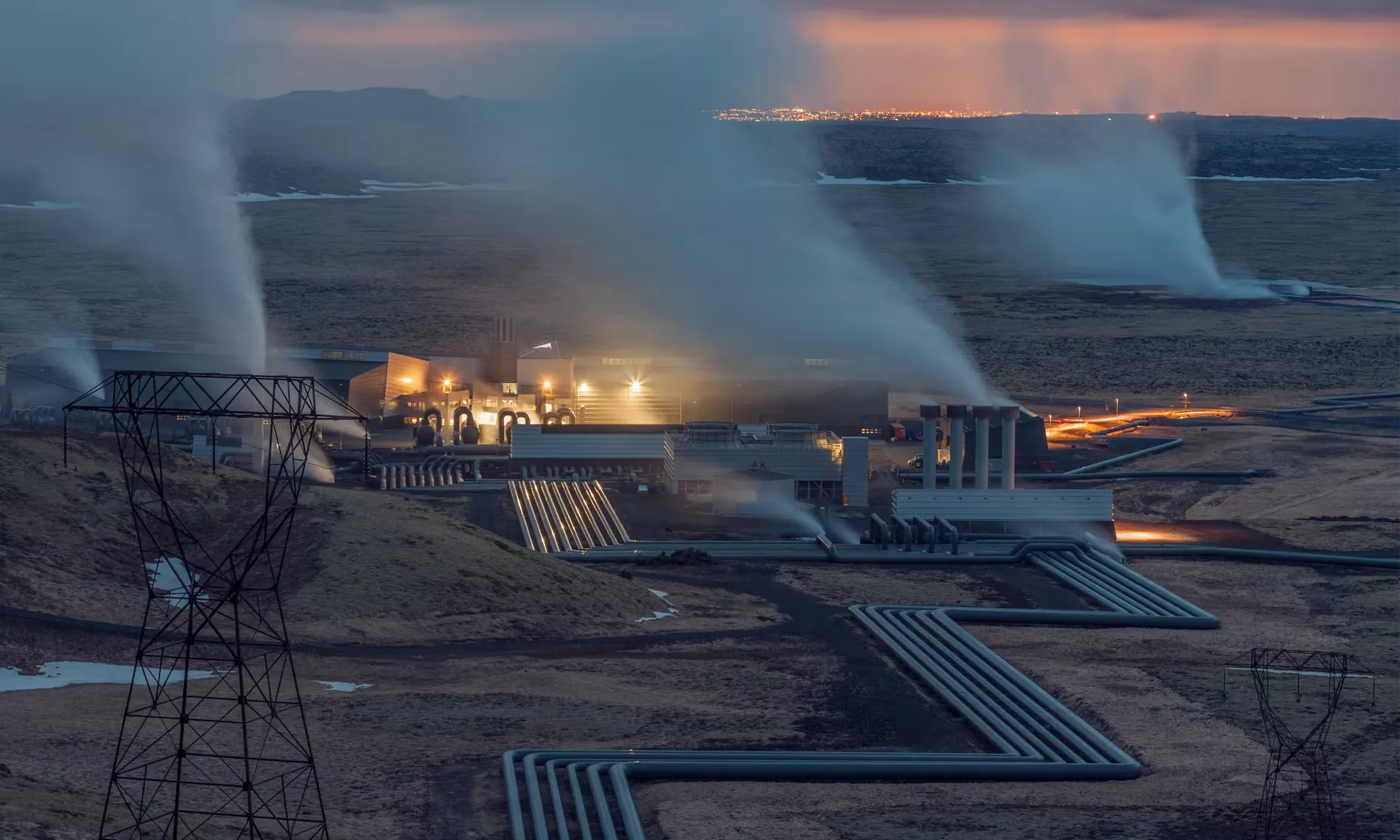
Article Cover Photo: Hellisheiði, Geothermal Plant, CC: Pedro Alvarez/The-Observer via The Guardian
International Energy Agency (IEA) – Geothermal Power Report
🔗 https://www.iea.org/reports/geothermal-power
U.S. Department of Energy (DOE) – The Future of Enhanced Geothermal Systems (EGS)
🔗 https://www.energy.gov/eere/geothermal/enhanced-geothermal-systems
International Geothermal Association (IGA) – Global Geothermal Development Report
🔗 https://www.lovegeothermal.org/
Orkustofnun – National Energy Authority of Iceland – Iceland Geothermal Development
🔗 https://nea.is/geothermal

The transformer market is undergoing significant changes, driven by technological advancements, evolving regulations, and increasing energy demand. We invite you to explore how these innovations can revolutionize energy management and unlock new opportunities in the electrotechnical industry. Reading time: 2.5 minutes.
Development of the Transformer Market Across Continents – Regional Analysis
Europe – A Leader in Innovations for the Green Energy Transition
Europe stands out as a pioneer in the global energy transition, combining innovative technologies with ambitious decarbonization goals. Investments in modernizing transmission infrastructure and deploying smart transformers place this region at the forefront of efforts to improve energy efficiency and environmental protection.
A key aspect of Europe’s success lies in energy efficiency programs that support the reduction of greenhouse gas emissions. Intelligent transformers equipped with advanced cores that reduce energy losses by 60% and eco-friendly insulating oils contribute significantly to achieving these goals.
The transformation is also supported by the dynamic development of the Internet of Things (IoT), enabling real-time monitoring of transformer performance parameters and their integration with smart grids. These technologies are tailored to collaborate with renewable energy sources, fostering the development of wind and solar farms across Europe.
The region emphasizes:
Advanced transformer cores – minimizing idle losses.
Eco-friendly insulating oils – with a lower environmental impact and better dielectric properties.
Integration with renewable energy sources – ensuring efficient management of variable energy production.
The results of these efforts include reduced operational costs, increased reliability of transmission systems, and significant reductions in CO₂ emissions. Europe sets global standards, proving that sustainable development and innovation can also bring long-term economic benefits.
The European transformer market serves as an inspiration for other regions, demonstrating that investments in advanced technologies not only drive the green transition but also yield tangible financial results.
CC: Freepik
Asia – The Epicenter of Global Energy Transformation
Asia, as the driving force behind the global transformer market, plays a pivotal role in the global expansion of the energy sector. Rapid economic growth, unprecedented urbanization, and increasing energy demand position this region as a leader in investments in modern electro-energy infrastructure.
China dominates as the largest exporter of transformers, introducing innovative solutions that support the integration of renewable energy sources. Wind farm projects in northern provinces and extensive photovoltaic installations in the southern regions of the country boost demand for transformers capable of operating under variable conditions and heavy loads. As a result, China sets new standards in energy efficiency while maintaining its position as a technological leader.
In India, the development of transmission infrastructure is driven by initiatives such as Power for All, which focus on electrifying rural areas and supporting industry. Investments in advanced materials, such as amorphous steel, significantly reduce energy losses. Additionally, projects like wind farms in Gujarat and Tamil Nadu, as well as solar installations in Rajasthan, integrate renewable energy sources with the national transmission grid.
Japan, a pioneer in advanced technologies, emphasizes modernizing urban networks using gas-cooled transformers. These innovative devices, which minimize energy losses and reduce environmental impact, are crucial to Japan’s strategy for achieving climate neutrality. The expansion of transmission networks enables efficient management of energy mixes that combine traditional and renewable sources.
Modern Technologies and International Collaboration – The Foundations of Asia’s Success
Across Asia, there is a growing interest in smart grids and real-time monitoring systems. These solutions enhance the reliability and efficiency of managing transmission networks. The rising popularity of wind and solar farms contributes to the dynamic adaptation of transformers to changing working conditions.
The region is also becoming a leader in international collaboration, accelerating the implementation of new technologies on an unprecedented scale. Transformer production plays a key role in these transformations, supporting sustainable development and innovation.
Asia demonstrates that rapid economic growth can align with environmental responsibility. Thanks to modern electrotechnical technologies, this region shows the world that modernizing electro-energy infrastructure is key to a sustainable future.
CC: Freepik
Eurasia – The Energy Bridge Between East and West
The Eurasian region, encompassing Russia, Kazakhstan, Turkey, and the Caucasus countries, plays a strategic role in the global energy market. With vast natural resource reserves and infrastructure connections linking Europe and Asia, Eurasia invests heavily in expanding electro-energy systems. In Russia, the leader of this region, the modernization of transmission networks relies on state-of-the-art transformers.
Russia dominates as Eurasia’s leader, focusing on upgrading its transmission networks. Investments in high-power transformers enable the country not only to meet growing domestic energy demand but also to support energy exports to European and Asian markets. Advanced transformer technologies help optimize energy losses, increasing efficiency and transmission reliability.
Kazakhstan and Uzbekistan prioritize the development of renewable energy sources (RES), such as wind and solar farms. Electrotechnical equipment designed for integration with RES and adaptation to extreme climatic conditions becomes a crucial element of the electro-energy infrastructure in Central Asia.
In Turkey, rapid economic growth and urbanization drive increasing energy demand. Investments in efficient transformers capable of operating in high-temperature environments support the stability of transmission networks while simultaneously reducing energy losses under demanding environmental conditions.
Ukraine, as a transit country at the crossroads of Europe and Asia, plays a pivotal role in integration with the European energy market. The connection with the ENTSO-E grid facilitates not only energy exports but also enhances the stability of regional transmission networks. Through investments in high-performance electrotechnical devices and renewable energy sources, Ukraine continues to modernize its infrastructure despite challenges posed by armed conflict. The dynamic reconstruction of transmission networks highlights the country’s strategic importance in the context of energy security.
Innovation and Regional Collaboration – The Strength of Eurasia
The Eurasian region not only modernizes its infrastructure but also fosters international collaboration in electro-energy technologies. Smart grids, advanced transformers, stations, substations, and electrotechnical equipment, along with the integration of RES, form the pillars of regional energy transformation. These initiatives strengthen Eurasia’s position as an energy bridge between East and West.
Eurasia demonstrates that well-directed investments in electrotechnical technologies can support the global energy transformation. By combining innovation with abundant natural resources, this region exemplifies how strategic cooperation and modern solutions contribute to sustainable development and energy security.
Novorossiysk, Russia CC: Pavel Neznanov/unsplash
North America – A Leader in Innovations for Modernizing Electro-Energy Infrastructure
North America stands on the brink of an energy revolution, founded on the modernization of its aging transmission infrastructure. Both the United States and Canada, grappling with the challenges of the age and complexity of their electro-energy systems, are investing in advanced energy-transforming technologies that support energy supply reliability and the achievement of ambitious climate goals.
In the United States, a groundbreaking project Grid Modernization Initiative focuses on creating a flexible, intelligent transmission grid. The integration of high-efficiency transformers capable of dynamic energy flow monitoring improves grid stability, particularly in areas with a high share of renewable energy sources. A prime example is California, where advanced electrotechnical devices have been paired with energy management systems, enhancing transmission reliability in regions utilizing wind and solar farms.
Canada, though less densely populated, is actively developing its electro-energy infrastructure with a focus on integrating renewable energy sources. Projects in Ontario, utilizing low-loss transformers, have increased transmission efficiency by 20%. Canada also stands out for its investments in equipment resistant to harsh climatic conditions, such as low temperatures and ice formation, which are critical for ensuring grid reliability in extreme environments.
Responding to Extreme Weather – Reinforced Infrastructure
North America faces a growing frequency of extreme weather events, such as hurricanes, heatwaves, and intense storms. To counteract these impacts, reinforced transformers are being implemented. One example is a project in Texas, where modern devices have reduced the risk of failures during extreme weather conditions, enhancing grid stability and reliability.
Reducing Energy Losses – Technologies of the Future
One of North America's priorities is reducing energy losses. The adoption of transformers with amorphous steel cores allows for idle loss reductions of up to 60%, which translates to energy savings in the range of hundreds of gigawatt-hours annually across the continent. These investments not only improve the efficiency of electro-energy systems but also reduce CO₂ emissions, supporting global climate goals.
The energy transformation in North America combines advanced technologies, responsible planning, and a commitment to a sustainable future. This region sets new standards in electro-energy reliability and efficiency, becoming an example of how infrastructure modernization can support both environmental and economic objectives.
Toronto, Canada CC: Berkay Gumustekin/unsplash
Latin America – A Region Full of Energy Potential and Challenges
Latin America is intensively developing its energy infrastructure, driven by rapid population growth and dynamic industrialization. Countries like Brazil, Mexico, and Chile are investing in modernizing transmission networks, focusing on the implementation of high-efficiency transformers that improve energy efficiency and minimize transmission losses.
Brazil, the largest economy in the region, is advancing ambitious wind energy projects in the northeastern states, leveraging favorable conditions for wind energy production. Chile, thanks to the unique characteristics of the Atacama Desert, has become a global leader in photovoltaics, earning recognition for its achievements in solar energy. Electrotechnical equipment, adapted to specific environmental conditions such as high temperatures and humidity, plays a crucial role in the success of these initiatives.
Infrastructure Challenges and Energy Inequalities
Despite dynamic growth, Latin America still faces challenges in ensuring equal access to electricity. Rural areas and less economically developed regions often suffer from insufficient investment in transmission infrastructure. To address these disparities, it is essential to implement smart electrotechnical solutions and technologies that enhance grid reliability and reduce energy losses.
With the expansion of intelligent grids and investments in real-time monitoring technologies, the region has an opportunity to improve energy management efficiency. This is especially important in the context of increasing energy demand driven by urbanization and the growing significance of industry.
The Region's Potential and Path to Sustainable Development
Latin America holds immense potential to become a leader in sustainable energy development. A key element is the continued support for renewable energy growth and the implementation of modern transformer technologies. Investments in advanced infrastructure can yield tangible benefits in the form of reduced CO₂ emissions, improved grid reliability, and minimized energy losses.
This continent is on the verge of a transformation that could make the region a global leader in sustainable energy. To achieve this goal, strategic investments in modern technologies are necessary to combine the potential of renewable energy sources with the reliability of modern infrastructure.
Beberibe, Brasil CC: Pedro Henrique Santos/unsplash
Africa – A Continent on the Path to Energy Transformation
The African energy market is at a pivotal stage of development. Countries such as Nigeria, South Africa, and Egypt are implementing ambitious plans to electrify rural areas and modernize aging transmission infrastructure. Modern transformers, designed to operate in demanding climatic conditions, play a fundamental role in achieving these goals while also supporting sustainable development and access to electricity.
North Africa – An International Energy Hub
North Africa, including countries like Egypt, Algeria, and Morocco, stands out for its dynamic development of transmission infrastructure, which supports the export of renewable energy to Europe. Morocco has gained attention for its Noor - largest solar complex in the world. The use of high-efficiency transformers in this project minimizes energy losses while enabling large-scale production of renewable energy.
Egypt and Morocco are also intensifying their investments in wind and solar farms, increasing the demand for transformers capable of operating in extreme conditions, such as high temperatures and the presence of fine sand particles in the atmosphere. These technologies not only support local development but also position the region as a leader in sustainable energy development.
Nigeria and South Africa – Energy Transformation at the Heart of the Continent
In Nigeria and South Africa, the challenge remains to simultaneously increase access to electricity and improve the reliability of transmission networks. These countries are investing in smart transformers and energy management systems that help reduce losses and enhance supply stability.
In South Africa, growing investments in renewable energy sources, such as wind farms in the Eastern Cape, support the country’s energy transformation efforts. In Nigeria, the priority is the electrification of rural areas, which requires durable and reliable transformers designed for challenging environmental conditions.
Africa as a Model for Sustainable Development
Investments in modern transformer technologies and renewable energy sources make Africa an example for other developing regions. Projects like the Noor Complex in Morocco or wind farms in Egypt demonstrate that energy development can go hand-in-hand with environmental protection and improved quality of life.
Africa stands at a crossroads between rapid growth and sustainable future planning. With strategic investments in transmission infrastructure, smart technologies, and renewable energy sources, the region is playing an increasingly significant role in the global energy market.
Noor Ourzazate, Marocco CC: ESA Copernicus Sentinel-2A
Australia and Oceania – Sustainable Development and Integration of Renewable Energy Sources
Australia and the countries of the Oceania region are intensively developing their energy infrastructure, focusing on the integration of renewable energy sources (RES), such as wind and solar energy. Due to unique climatic and geographical challenges, the transformer technologies being implemented must be not only efficient but also adapted to extreme environmental conditions, such as high temperatures, strong winds, or high humidity.
Australia – A Leader in Energy Transformation
Australia stands out for its commitment to RES development through government initiatives like the Renewable Energy Target (RET) program. The goal of this program is to increase the share of renewable energy in the country's energy mix, driving investments in modern transformers. These devices support energy efficiency and transmission network reliability, particularly in areas with a high share of wind and solar farms, such as the southern and eastern parts of the country.
Through the development of solar farms, such as the installation Solar Park Adelaide, as well as wind energy projects, such as the Wind Farm Hornsdale sets standards for other countries in terms of sustainable development. High-reliability energy-transforming solutions used in these projects contribute to minimizing energy losses and reducing CO₂ emissions.
Oceania – Challenges and Opportunities in the Island Region
Island nations in Oceania, such as New Zealand, Fiji, and Papua New Guinea, are also making efforts toward energy development. In this region, particular emphasis is placed on the electrification of remote areas and the application of technologies suited to unstable weather conditions. Moisture- and corrosion-resistant transformers play a key role in ensuring reliable energy supply on the islands.
New Zealand, as a regional leader, is developing hydroelectric and geothermal projects that support the achievement of carbon neutrality. The implementation of low-loss transformers enables efficient energy management in the challenging mountainous terrain of the islands.
The Oceania Region as a Model for Sustainable Development
Australia and Oceania are setting the direction for global energy transformation, combining innovation with environmental responsibility. Investments in renewable energy sources and modern transformer technologies make this region a model for other parts of the world, showing that achieving carbon neutrality can go hand-in-hand with the efficiency and reliability of electro-energy systems.
Due to unique infrastructure needs, engineering solutions applied in this region must be not only efficient but also adapted to operate in extreme climatic conditions. Government programs, such as Australia's Renewable Energy Target, drive investments in advanced transformer technologies.
Starfish Hill Wind Farm, South Australia CC: Alex Eckermann/unsplash
Arab Countries – Energy Transformation in the Desert
The Arab region, encompassing the Persian Gulf, North Africa, and the Middle East, is dynamically developing its electro-energy infrastructure to meet the growing energy demand and global trends in sustainable development. Through strategic investments, this region is setting new standards in energy management while overcoming challenges associated with extreme environmental conditions.
Gulf Countries – Pioneers of Smart Grids and Renewable Energy
Saudi Arabia, the United Arab Emirates, Qatar, and Kuwait are heavily investing in modern transformer technologies and smart grids. An example of this is the project NEOM in Saudi Arabia – one of the largest solar farms in the world, which is set to become a symbol of the green transition. Similarly, in Abu Dhabi, the capital of the United Arab Emirates, massive photovoltaic installations are being developed, supported by advanced transformers designed to withstand extreme heat and dust.
In these countries, modern electrotechnical solutions play a key role in managing advanced electro-energy systems, enabling the efficient transmission of energy from renewable sources. The sophisticated construction of energy infrastructure allows operation in challenging climatic conditions, such as high temperatures and the presence of sand.
Middle East – Reliability and Electrification at the Forefront
In countries like Iraq and Jordan, the priority is to improve the reliability of electro-energy networks and electrify rural areas. The implementation of transformers resistant to overloads and extreme environmental conditions ensures network stabilization and meets the growing energy demand.
Jordan, known for its investments in solar farms, is developing projects that promote renewable energy sources while enhancing the reliability of transmission networks. Iraq, on the other hand, focuses on rebuilding its energy infrastructure, whose modernization is essential for ensuring the country's energy security.
Arab Countries – A Global Model for Transformation in Challenging Terrain
By combining advanced technologies, renewable energy sources, and strategic investments, the Arab region demonstrates that energy transformation is possible even in the most demanding environments. These projects serve as an inspiration for other regions on how to effectively merge innovation with climatic challenges.
The Arab region is not only expanding its electro-energy infrastructure but is also committed to sustainable development and advanced technologies that meet the needs of the modern world. Thanks to state-of-the-art transformers designed for extreme conditions, Arab countries are setting the direction for the global energy transformation.
CC: Antonio Garcia/unsplash
Antarctica – An Extreme Test for Transformer Technologies
Although Antarctica is not a traditional energy market, the demands of its unique environment present a remarkable challenge for electro-energy solutions. Research stations operating in one of the harshest climates on Earth rely on specialized high-reliability transformers. These advanced devices must perform flawlessly under extremely low temperatures, strong winds, and high levels of salinity and humidity.
Specialized Technologies for Research Stations
In Antarctica, the fundamental requirement is the stability of energy systems. Research stations such as McMurdo (USA) and Neumayer III (Germany) depend on high-performance transformers designed to withstand temperatures dropping below -50°C.
These transformers feature:
Advanced insulation systems resistant to extreme cold.
Reinforced structures to withstand the effects of intense winds and ice accumulation.
Minimal energy losses, which is critical in a region where every unit of energy is precious.
By using these technologies, research stations can conduct crucial scientific studies while minimizing the risk of energy infrastructure failures in challenging conditions.
A Niche but Strategic Market
The transformer market in Antarctica is niche but serves as an excellent example of the adaptability of electro-energy technologies. Solutions developed for this unique environment are often used as inspiration for designing devices capable of withstanding extreme conditions in other parts of the world, such as Arctic regions, high-altitude areas, or deserts.
Antarctica demonstrates that advanced transformer technologies can meet even the most extreme challenges. Research stations on this continent prove that innovative solutions in the energy sector have the potential to function effectively in any environment, regardless of its difficulty.
Princess Elisabeth Antarctica Station CC: greenbuildermedia.com
Forecast for the Future
The future of the transformer market appears dynamic and full of challenges but also immense opportunities. Leading directions of development will include further investments in innovative technologies, such as smart transformers with advanced monitoring systems and devices adapted for integration with renewable energy sources. The global drive to reduce CO₂ emissions and improve energy efficiency will propel changes in both technology and legal regulations.
Regional development will contribute to the creation of more sustainable electro-energy systems. Europe, with its commitment to decarbonization, and Asia, a leader in dynamic technological expansion, will remain the driving forces behind global change. Regions like North America and Africa will also set new standards, emphasizing infrastructure resilience to climate change and extreme weather conditions.
It is projected that by 2030, the transformer market will reach record levels, fueled by international cooperation, the advancement of smart grid technologies, and the adaptation of devices to extreme environmental conditions. As a result, innovations in the electro-energy sector will not only enhance the reliability of transmission systems but also contribute to building a more sustainable future.
Stay With Us!
On our blog, you'll find detailed analyses, inspiring case studies, and the latest information on innovations in the electro-energy industry. By following our content regularly, you'll gain the knowledge needed to better understand global trends and the benefits of modern transformer technologies.
Join the community of professionals for whom energy development is both a passion and a mission.
With us, you'll always stay one step ahead of the competition – equipped with knowledge that drives the future!
Sources:
https://globaltransmission.info/
Transformers in stock
Shipped from our warehouse in Poland within 2–3 working days, 5-year warranty. Full range 25–2500 kVA in the shop (prices in PLN).
Each of us produces several kilograms of waste per week on average – according to data, the average European generates up to 500 kg of waste annually. That’s equivalent to the weight of a small car! When multiplied by billions of people worldwide, the amount of waste becomes overwhelming – we’re talking about millions of tons ending up in landfills every year, polluting the environment and generating harmful emissions.
But what if this waste, instead of being a problem, became a solution? Imagine a world where what you throw away today transforms into a valuable resource – electricity and heat powering cities, reducing greenhouse gas emissions, and eliminating the need for new landfills.
This is not a futuristic vision – it’s the reality offered by Waste to Energy (WtE) technology, revolutionizing the way we think about waste.
In just 2.5 minutes, you’ll learn:
How the process of converting waste into energy works.
Why WtE is a more sustainable and cost-effective solution than traditional landfilling.
How global leaders, from Sweden to Japan, are already turning waste into resources.
8 practical strategies to inspire innovation in your company or community.
After reading this article, you’ll understand why WtE is more than just technology – it’s a step toward a circular economy where every kilogram of waste contributes to a better future. It’s an opportunity to drive global change while generating profits.
Ready? Let’s dive into a world where trash becomes the fuel of success!
What is the Waste to Energy (WtE) process?
Waste to Energy (WtE) is a modern process that transforms non-recyclable waste into useful energy – electricity, heat, or alternative fuels. It utilizes advanced technologies such as incineration, pyrolysis, gasification, and anaerobic digestion to recover the maximum energy potential contained in waste.
Unlike traditional landfills, where waste decomposes over decades and emits methane – one of the most harmful greenhouse gases – WtE ensures a controlled and efficient conversion of waste, significantly reducing its negative environmental impact. The energy generated in this process is fed into the power grid, supports heating systems, or serves as a base for producing synthetic fuels such as hydrogen.
CC: Freepik
How does WtE work in practice?
Incineration: The most common method, where waste is burned at high temperatures, releasing heat that is converted into steam to drive turbines generating electricity.
Pyrolysis: A thermal process in which waste is treated in an oxygen-free environment, producing fuel oils, combustible gases, and biochar.
Gasification: A process that converts materials into syngas, which can be used as fuel in power plants or as a raw material for chemical production.
Anaerobic digestion: Particularly effective for organic waste such as food scraps or biomass, producing biogas and high-quality compost as byproducts.
Why is WtE better than traditional landfilling?
Waste volume reduction: The WtE process reduces the amount of waste going to landfills by up to 90%, saving space and reducing the need for new landfill sites.
Resource recovery: During the process, metals and other valuable materials can be recovered from the ash produced by incineration.
Lower greenhouse gas emissions: WtE significantly reduces methane emissions, a gas over 25 times more harmful to the climate than carbon dioxide.
Waste to Energy is not only a method for efficient waste management but also a crucial component of energy transition strategies. This technology is widely adopted in cities and countries striving to achieve climate neutrality and a circular economy.
Why Invest in Waste to Energy?
Waste to Energy (WtE) is not just a solution to waste management challenges – it is a strategic investment in the future of the energy sector, sustainable development, and advanced technologies. Through collaboration with providers of cutting-edge electrotechnical solutions, such as gasification systems, steam turbines, and heat recovery installations, WtE becomes an integral part of modern energy infrastructure.
Let’s take a closer look at why implementing these innovations is worthwhile and the crucial role played by electrotechnical solution providers in the energy sector.
1. Reducing Landfills
Traditional landfills occupy vast areas that could be used more efficiently. WtE reduces waste volume by approximately 90%, which means:
Less demand for new landfill sites.
Protection of land that can be repurposed for energy infrastructure, housing, or agriculture.
Mitigation of risks related to landfill leachate and groundwater contamination.
Electrotechnical solution providers play a pivotal role in this transformation by delivering advanced waste sorting lines, controlled combustion systems, and flue gas purification technologies.
2. Carbon Neutrality
WtE is a critical tool in the pursuit of carbon neutrality. Unlike landfills, which emit methane – a greenhouse gas over 25 times more harmful than carbon dioxide – WtE:
Reduces greenhouse gas emissions by minimizing the decomposition of organic waste in landfills.
Uses waste as fuel to generate electricity and heat, replacing traditional sources like coal or natural gas.
Contributes to the achievement of Sustainable Development Goals (SDGs), particularly in the areas of climate and energy.
Providers of energy solutions, such as cogeneration systems or high-efficiency turbines, are indispensable for maximizing the energy efficiency of WtE facilities.
3. Waste as a Resource
WtE revolutionizes the perception of waste by transforming it into a valuable resource with diverse applications. Using advanced technologies such as plasma gasification or pyrolysis:
Even hard-to-recycle materials, like plastics and industrial waste, can be converted into energy.
Alternative fuels, such as syngas, methanol, or hydrogen, are created and find applications in industry and transportation.
Valuable metals like aluminum and copper can be recovered, increasing the profitability of WtE investments.
Electrotechnical companies support these innovations by providing advanced gasification systems, boilers, and heat recovery units that optimize the efficiency of the entire process.
CC: Dustan Woodhouse/unsplash
WtE in the Context of the Energy Sector
WtE is not just a method of waste management – it’s also the future of sustainable energy. Here’s how it fits into the global energy landscape:
Integration with energy grids: Advanced WtE technologies can supply energy to national grids, reducing dependence on fossil fuels.
Local energy security: WtE facilities can act as local energy production hubs, ensuring stable supplies even during crises.
Support for Smart Cities: WtE is a key component of modern cities striving for a circular economy.
Providers of electrotechnical solutions, such as Energeks, play an indispensable role in this transformation, designing systems that are not only efficient but also compliant with environmental and social requirements.
Investing in Waste to Energy is a step toward a more sustainable future, where waste is no longer a problem but a resource with immense potential.
It’s an opportunity to combine environmental responsibility with innovations that drive economic and technological progress.
Is Waste-to-Energy Better Than Landfilling (EFW vs. landfill)?
Landfilling and converting waste into energy represent two entirely different philosophies of waste management. While landfills focus on storing the problem, Waste-to-Energy (WtE) technology transforms waste into valuable resources.
To determine which option is better, it’s worth examining the key aspects of these two approaches.
Landfills: Environmental and Economic Costs
Methane emissions: Landfills are a major source of methane emissions, a greenhouse gas 25 times more harmful to the climate than carbon dioxide. Methane is generated during the anaerobic decomposition of organic waste.
Space consumption: In densely populated cities, there is limited space for new landfills. These areas could be better utilized for infrastructure development or green spaces.
Maintenance costs: Landfills generate long-term costs related to leachate management, emissions monitoring, and preventing groundwater contamination.
Waste-to-Energy: Energy, Recovery, and Waste Reduction
Converting waste into energy: WtE facilities transform non-recyclable waste into electricity and heat, reducing waste volume by up to 90%. This means fewer landfills and more energy for communities.
Emission reduction: Compared to landfilling, WtE processes significantly reduce greenhouse gas emissions. Modern facilities are equipped with advanced flue gas purification systems that minimize environmental impact.
Resource recovery: WtE allows for the recovery of valuable metals, such as copper and aluminum, from the ash produced during combustion. This is an additional step toward a circular economy.
CC: OCG Saving the Ocean/unsplash
8 Practical Strategies to Turn Waste into Profit
Investment in Gasification Technology
Modern gasification systems convert waste into syngas – a versatile fuel that can be used to produce hydrogen, methanol, or electricity. This is not just a way to minimize waste but also an opportunity to create a new, eco-friendly energy source. Gasification is the key to a zero-emission future, proving that waste can become the foundation of a green economy.Neighborhood Micro-Power Plants
Small-scale WtE solutions, such as local micro-power plants, enable the conversion of household waste into electricity and heat. This allows cities to become more energy self-sufficient while reducing waste sent to landfills. Imagine a neighborhood where the energy for street lighting comes from your daily waste – it’s not science fiction; it’s a reality within reach.Pyrolysis Systems
Pyrolysis is a technology that transforms plastic waste into valuable products such as fuel oil, syngas, and biochar. This innovation addresses the issue of hard-to-recycle plastics while creating new energy sources. It’s proof that even plastic can gain a second life in a way that supports sustainable development.Bio-Waste Utilization
Biomass, such as food scraps or agricultural waste, can be converted into biogas and high-quality natural fertilizers. Proper management of bio-waste can power energy grids and support agriculture. This strategy reminds us that nature always gives us a second chance if we use it wisely.Metal Recovery Stations
During waste processing in WtE facilities, valuable metals like copper, aluminum, and steel can be recovered. These materials can be reused in industry, further increasing the profitability of WtE investments. In this way, every ton of waste becomes a treasure trove of resources fueling the economy.Public-Private Partnerships
Collaboration between municipalities and private investors is crucial for developing WtE facilities. These partnerships provide access to advanced technologies and support the financing of large-scale projects. This approach demonstrates that collective action always leads to greater results – for the environment and communities alike.Optimizing Waste Logistics
Effective waste segregation and transportation significantly enhance the efficiency of WtE processes. Implementing intelligent waste management systems, such as sensors or automated sorting, minimizes costs and maximizes efficiency. Every step towards better waste logistics is a step towards a more sustainable and efficient society.Community Education
An informed society is key to the success of any WtE strategy. Engaging local communities in waste segregation, educating them on the benefits of WtE, and promoting responsible waste management lay the foundation for lasting change. Education is an investment in the future, where every resident becomes an ambassador for sustainable development.
CC: Nareeta Martin/unsplash
Global Examples of Waste to Energy Applications – A World on a New Energy Path
USA: Maryland – Energy for 400,000 Households
In Maryland, WtE facilities convert waste into energy sufficient to power 400,000 households. These investments have reduced the amount of waste sent to landfills while enhancing local energy security. Isn’t it fascinating that every bag of trash can become a small building block of energy independence?
China: A Waste-to-Energy Giant
China, the world's largest waste producer, is expanding its WtE network at an incredible pace. These massive investments help reduce environmental impact and meet the country's growing energy demands. Imagine a nation where hundreds of millions of tons of waste each year are turned into electricity – transforming mountains of problems into rivers of opportunity.
Japan: Tokyo as a Model of Efficiency
Japan’s capital converts 70% of its waste into energy, reducing landfill dependency to just 3%! Tokyo proves that even in a massive metropolis, waste's environmental impact can be minimized. Thanks to innovative WtE technologies, residents of Tokyo can literally feel their waste powering the city.
Netherlands: Waste Energy on a European Scale
Rotterdam hosts one of Europe’s most advanced WtE plants, converting waste into energy for 190,000 households annually. It’s as if every home in a medium-sized city were heated and powered by waste that would otherwise go to a landfill. Imagine a city where waste not only disappears but returns to residents as comfort and convenience!
Sweden: 99% of Waste is a Resource, Not a Problem
Sweden has become a global model thanks to its exceptional waste management strategy. As much as 99% of municipal waste in the country is processed, with nearly half fueling combined heat and power plants. Fun fact: Sweden imports waste from other countries because it runs out of its own! Who would have thought waste could become such a sought-after commodity?
Spain: Barcelona – Waste in Service of the City
The WtE plant in Barcelona, located in Sant Adrià de Besòs, processes thousands of tons of waste into electricity and heat, powering urban heating and cooling networks. Thanks to this, Barcelona reduces methane emissions and promotes sustainable waste management, inspiring other cities to follow suit.
CC: Zibik/unsplash
Waste Gains a New Life
Each of these examples demonstrates how different countries are turning waste into resources. The world is becoming increasingly sustainable thanks to WtE while inspiring action. Perhaps it’s time to consider how your country or city could join this global transformation?
Energy is waiting in our waste – we just need to extract it! WtE technology is the foundation of a circular economy. It’s the answer to the growing challenges of waste management and the need for energy transformation.
Waste-to-energy is not only an ecological but also an economical solution that perfectly aligns with the needs of future cities.
Are you ready to turn waste into energy? The world is already doing it!
Sources:
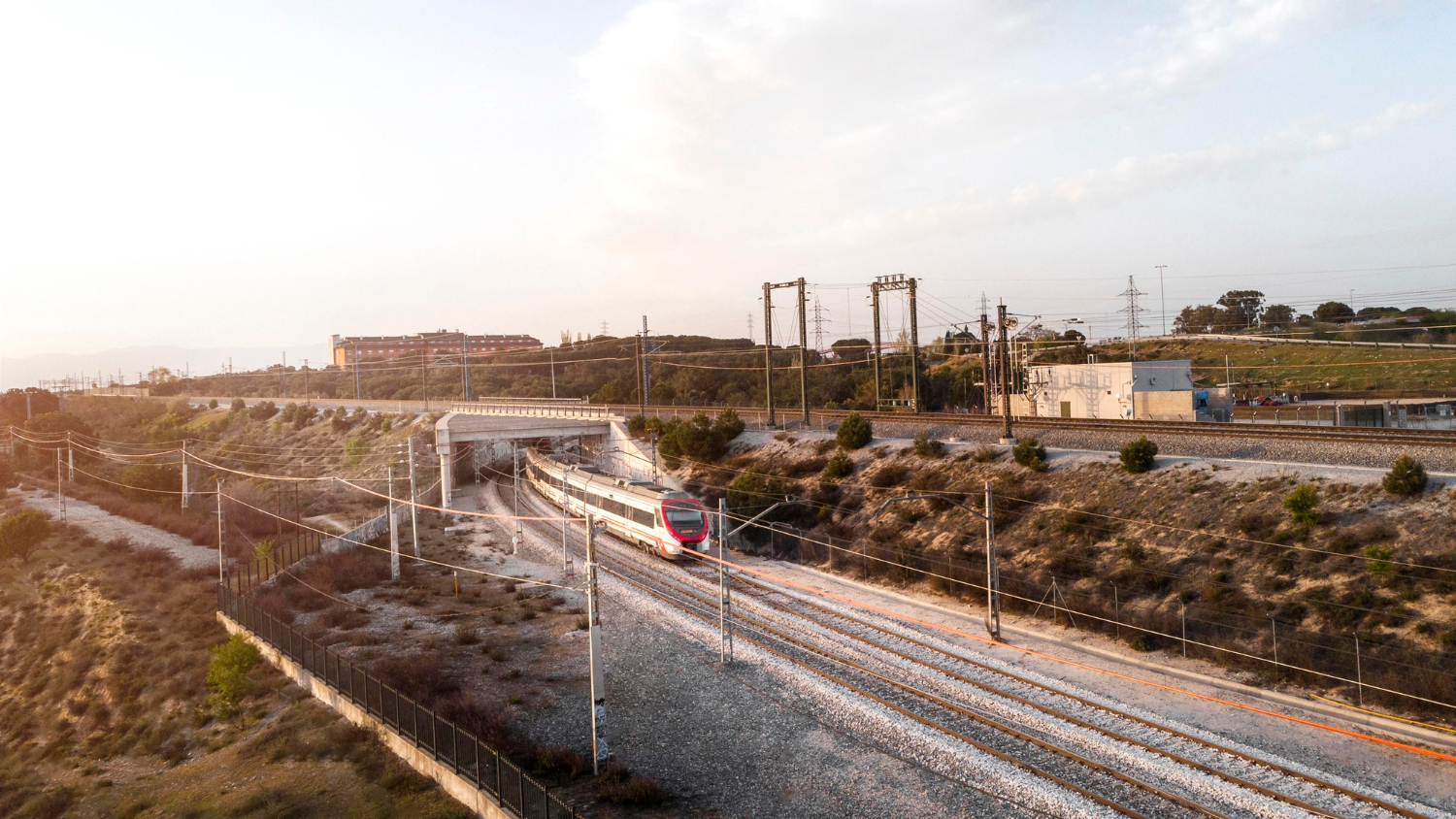
Did you know that modern railway operators are increasingly investing in renewable energy sources (RES) to not only reduce operational costs but also enhance passenger comfort and contribute to the decarbonization of transport? Thanks to advanced technologies, railways are becoming synonymous with eco-friendly and convenient transportation.
This short post will show you how sustainable development in the railway industry is becoming a reality through cutting-edge technologies – a quick read of just 1.5 minutes.
Railways in the Era of Energy Transformation
For years, railways have remained one of the most eco-friendly modes of mass transportation, accounting for only 0.4% of greenhouse gas emissions in the EU transport sector. In comparison, road transport generates over 71% of emissions in the same category. However, in the face of the climate crisis and ambitious goals of the European Green Deal, which aims for climate neutrality by 2050, railways must take additional steps to become even more sustainable.
The European Green Deal outlines ambitious CO₂ emission reduction targets, placing railways at the forefront. While railways are already among the most environmentally friendly forms of mass transit, electrification alone is not enough. The key lies in powering infrastructure with renewable energy sources.
Why is Electrification Alone Insufficient?
Currently, 75% of European railway lines are electrified, and electric trains account for 80% of transport operations. However, the energy used by traction networks still largely comes from fossil fuels. For instance, in 2020, only 32% of electricity in the EU was derived from renewable sources.
This makes the transition to renewable energy-powered railways a priority. The integration of wind farms, photovoltaic systems, and energy storage solutions not only reduces the carbon footprint but also enhances energy stability and cuts operational costs.
How Does the Integration of RES with Railway Infrastructure Work?
Powering railway infrastructure with renewable energy sources (RES) is a complex but highly efficient process that combines advanced energy technologies with transport engineering. RES, such as wind farms and photovoltaic installations, can supply both ground systems—platform lighting, signaling systems, air conditioning in station buildings—and rolling stock, thanks to energy delivered to the electric traction network.
Technologies and Their Applications
Wind and Photovoltaic Farms
Railways can directly draw energy from wind or photovoltaic farms connected to local energy substations. In such cases, the energy generated by RES is fed into the traction network, powering trains in real time.
Example: In the Netherlands, wind farms generate over 1.4 TWh of energy annually, sufficient to power 5,500 trains daily.Energy Storage Systems
Lithium-ion batteries, and in some cases, flow battery systems (redox flow), allow for the storage of surplus energy produced by RES during off-peak network demand (e.g., at night). This energy can later be used during peak demand hours, ensuring the stability of the energy system.
Example: In Austria, energy storage systems in ÖBB networks can store up to 200 MWh, stabilizing the traction grid in the Vienna area.Smart Grid
The integration of traction networks with smart grid systems allows for efficient energy management, directing it where it is most needed and minimizing transmission losses. Thanks to advanced management systems (SCADA), railways can monitor energy usage and optimize its distribution.CC: Wysokie Napiecie
Pioneering Projects in Europe
The Netherlands – 100% Wind-Powered Rail
Dutch Railways (NS) have become pioneers in fully integrating the railway system with wind farms. Farms like Gemini, producing 600 MW, power both the traction network and local railway infrastructure, effectively eliminating CO₂ emissions. The project saves over 1.2 million tons of CO₂ annually.Belgium – Solar Tunnel
The solar-powered railway project in Belgium includes the installation of photovoltaic panels on the roofs of railway tunnels, covering a total area of 16,000 m². This system generates 3.3 GWh annually, enough to power lighting and railway signaling along the Antwerp-Amsterdam route.Spain – Smart Stations
In Spain, Renfe has integrated photovoltaic systems at stations like Barcelona Sants, which generate 2 MW of energy, reducing CO₂ emissions by over 15,000 tons annually. Furthermore, these stations are equipped with smart energy management systems that automatically adjust consumption to current needs.Poland – Green Railway
Under the "Green Railway" project, PKP Energetyka is developing photovoltaic farms with a capacity of 300 MW and energy storage systems. This energy continuously powers traction networks, reducing CO₂ emissions by 800,000 tons annually.
Are Renewables on Tracks the Future of Profitable Railways?
Investing in renewable energy sources (RES) for railway infrastructure is no longer just an environmentally driven choice. It has become a practical tool for improving financial performance, increasing energy independence, and building a competitive advantage. Eco-friendly solutions in railways deliver tangible benefits at both operational and strategic levels.
Reducing Operational Costs: Energy That Pays Off
The cost of renewable energy—wind and solar—has been declining for over a decade, and generation costs from these sources are now lower than fossil fuels in most EU countries. For railway operators, this translates into significant savings on electricity expenditures.
Example: In the Czech Republic, as part of the "Green Rails" project, photovoltaic systems were installed at stations in Prague, reducing electricity costs by 30%. This translates to savings of approximately €500,000 annually, which can be reinvested in infrastructure modernization or innovative passenger solutions.
Energy Independence: Stability and Security of Supply
As a critical component of public transport, railways must operate without interruptions, regardless of energy price fluctuations or crises. Installing local energy storage systems, combined with renewable sources, ensures greater independence from the power grid.
Example: In Romania, the "Solar Tracks" project includes constructing lithium-ion energy storage systems with a capacity of 50 MWh along major rail lines. In the event of a power outage, trains can continue running for up to 6 hours, reducing the risk of disruptions and enhancing passenger confidence.
Building a Positive Image: Railways as Ambassadors of Sustainability
Green investments in the railway sector have become a hallmark of modern and responsible transport. Operators involved in RES projects gain recognition from passengers, businesses, and local communities as leaders in sustainable development.
Example: In Austria, the national railway operator ÖBB implemented the "Eco-Stations" project, equipping stations with photovoltaic panels that power lighting, air conditioning, and electric bike chargers. In its first year, this system reduced CO₂ emissions by 10,000 tons, equivalent to the annual energy consumption of 4,000 households.
CC: PKP Energetyka
Benefits in Numbers: Why Invest in Renewable Energy for Railways?
Economy of Scale: The cost of solar and wind energy has dropped by 70% over the last decade.
Energy Stability: Energy storage systems can provide uninterrupted power for 4–6 hours in case of grid failure.
Carbon Footprint: Stations using renewable energy reduce CO₂ emissions by an average of 50% compared to traditional solutions.
Passenger Trust: 82% of travelers state that they prefer operators promoting eco-friendly solutions.
The energy transformation of railways is a bold response to the pressing challenges of the 21st century. Across Europe, nations are demonstrating how renewable energy sources (RES) can revolutionize transportation, building efficient, modern, and environmentally friendly infrastructure that sets a global standard.
Integrating RES technologies into railway infrastructure delivers benefits that extend far beyond the tracks. Operational cost reductions, energy stability, and a green public image collectively enhance the appeal of railways to passengers and investors alike. These advancements highlight the sector's readiness to innovate and adapt.
Such initiatives are positioning railways as champions of sustainable transport, powered by the energy of tomorrow. They are no longer just a mode of transit but a testament to how technology and sustainability can move hand in hand, inspiring a greener future for all.
Sources:
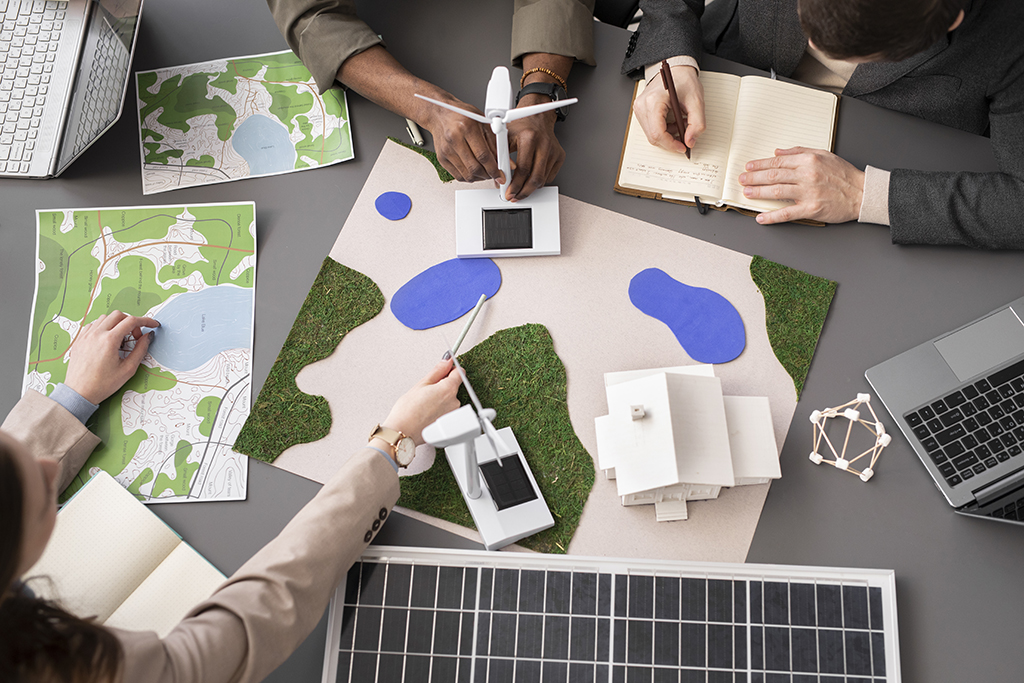
The European Union is not slowing down on its path towards climate neutrality.
In 2024, the EU not only introduced key reforms to the energy market but also announced a list of 166 cross-border projects designed to support the development of energy infrastructure and achieve ambitious climate goals. These projects, along with the reforms, mark a milestone in the journey towards modern and sustainable energy.
EU Energy Reforms 2024 – Greater Stability for Consumers and Businesses
The energy market reforms introduced in 2024 are a step towards increasing energy security and stabilizing prices. Thanks to the new regulations, consumers and businesses can now benefit from long-term energy contracts, providing cost stability. This is especially important for businesses in the electrotechnical sector that consume large amounts of energy. Price predictability is key to efficient production planning and reducing financial risks.
166 Revolutionary Cross-Border Projects – The Foundation of the EU's Energy Future
In line with the European Green Deal, the EU announced a list of 166 cross-border energy projects aimed at accelerating the energy transition and supporting the achievement of ambitious climate goals. These projects, implemented under the Projects of Common Interest (PCIs) and Projects of Mutual Interest (PMIs) initiatives, cover a wide range of activities to help achieve climate neutrality by 2050 and reduce CO₂ emissions.
Key Project Areas:
Development of Smart Energy Grids
Of the 166 projects, 85 focus on developing transmission networks, including electrical and offshore grids. A key aspect of these projects is the modernization and expansion of smart energy grids, enabling the integration of renewable energy sources (such as wind and solar) and better management of energy surpluses. Many of these projects are expected to be completed between 2027 and 2030, meaning significant changes to Europe's energy networks are just a few years away.
Hydrogen and Electrolyzer Projects
Another key focus is the development of 65 projects related to hydrogen and electrolyzers, which aim to decarbonize industries. Hydrogen is seen as a crucial element of the future green economy, especially in sectors that are difficult to electrify, such as heavy industry and transport. These investments aim to replace natural gas with hydrogen and biomethane in gas systems, significantly reducing greenhouse gas emissions.
CO₂ Capture and Storage Projects
Another important area is the development of CO₂ networks, aiming to create infrastructure for capturing and storing carbon dioxide. Such actions are key to establishing a market for Carbon Capture and Storage (CCS) technologies, which aim to reduce the amount of CO₂ emitted by industry and energy sectors.
Benefits for EU and Non-EU Countries
Interestingly, not all the projects are within the EU. Projects of Mutual Interest (PMIs) include cooperation with countries outside the Union, such as the EuroAsia Interconnector, which will link the electricity networks of Greece, Cyprus, and Israel. Such connections are crucial for ensuring stable energy supplies and enhancing Europe's energy security.
Financial Support and Accelerated Implementation
All 166 projects have been included in a system of simplified permits and regulations, enabling faster implementation. Additionally, these projects will be eligible for financial support from the Connecting Europe Facility (CEF), a fund supporting energy infrastructure in Europe. The European Commission expects that many of these projects will receive support by the end of 2024.
These projects are the foundation of the EU's energy future, contributing to the energy transition, emissions reduction, and the development of new technologies. For the electrotechnical industry, which includes the production of transformers, lithium-ion batteries, and switchgear, this means enormous opportunities – both in terms of modernizing infrastructure and implementing innovative solutions related to energy storage and hydrogen.
How Will These Changes Impact Your Business?
For example, transformer manufacturers can now implement technologies that integrate renewable energy sources with the local grid, increasing the stability of energy supplies. Modern transformers, based on advanced materials and technologies, can help optimize energy transmission over long distances with minimal losses.
Other companies producing electrotechnical equipment can now sign fixed-price contracts for energy supplies, minimizing the risk of rising costs and allowing for more efficient budget management. This is especially important in industries where energy costs account for a significant portion of operational expenses.
All these changes have one goal: to accelerate the EU's green transition and ensure the stability of energy supplies. If your company produces solar batteries, lithium-ion batteries, switchgear, or transformers, these projects open up new opportunities. Integrating green technologies, such as hydrogen and energy storage, can help reduce operational costs, increase competitiveness, and lower the carbon footprint.
Time to Act – Energeks at the Forefront of the Energy Transition
The EU's reforms and projects are ushering in a new, exciting era of energy, full of opportunities and challenges. Energeks is enthusiastically embracing this transition, ready to fully engage in creating value for its clients and the environment. As a company involved in the production of transformers, lithium-ion batteries, switchgear, and solar batteries, we are perfectly positioned to support the development of modern energy networks of the future.
We eagerly await the implementation of innovative technologies, such as green hydrogen, which can revolutionize both industry and energy. Investments in these new areas give companies like ours the opportunity not only to contribute to sustainable development but also to play a key role in shaping Europe's energy future. We see enormous opportunities in collaborating on projects related to energy storage and smart energy grids, and we believe that you can see them too!
Sources:
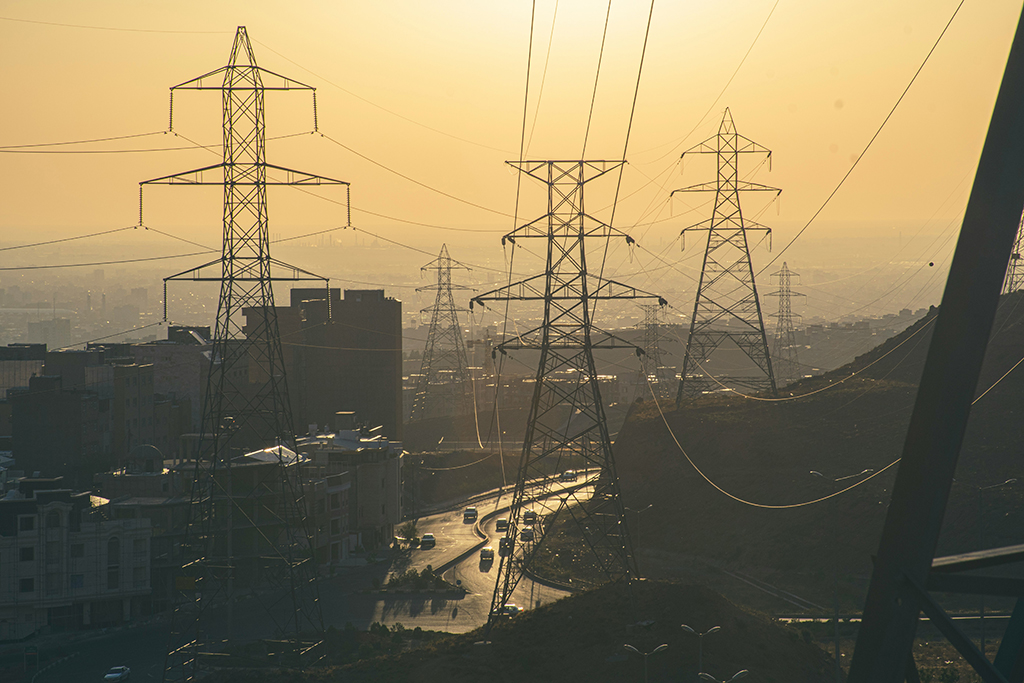
Imagine a reality where the sun’s rays from the African deserts power homes in Europe, and wind from the Baltic coast drives industry deep inland.
Although it may sound like a futuristic vision, it’s closer to realization than one might think. The key to this future lies in modernizing our transmission networks, removing so-called “bottlenecks,” and fully harnessing the power within renewable energy sources (RES).
What are "bottlenecks" in energy networks?
Bottlenecks are points in the transmission network that restrict energy flow, similar to traffic jams slowing down movement on highways. In the context of energy, this means parts of the infrastructure unable to keep up with the growing demand or energy production, resulting in losses and limited access to clean energy. According to the International Energy Agency (IEA), delays in the transmission of energy from RES may prevent achieving global climate goals by 2050.
Bottlenecks reduce energy efficiency, and their removal is essential for maximizing the use of RES and limiting emissions.
What technologies can help?
High-Voltage Direct Current (HVDC) Transmission
In the energy world, HVDC (High Voltage Direct Current) technology is an innovative solution that radically changes the way energy is transmitted over long distances. Compared to traditional alternating current (AC) networks, HVDC allows for transmission losses to be reduced by as much as 30%.
This is crucial for the integration of renewable energy sources, such as offshore wind farms or solar farms, often located far from areas of intense consumption.
An example is the North Sea Link HVDC connection, which links the UK with Norway. Not only does it enable energy transfer between countries, but it also balances supply and demand depending on the availability of renewable energy. HVDC also makes it easier to integrate energy islands, enabling energy transfer from more remote locations with minimal losses, while reducing CO₂ emissions.
North Sea Link © www.nationalgrid.com
Intelligent Network Management Systems (ANM)
Using advanced systems like Active Network Management (ANM) allows network operators to dynamically respond to changing transmission conditions and energy demand. ANM monitors the network in real-time, not only preventing overloads but also continuously adjusting energy flows to fully exploit the potential of renewable sources.
For example, in Scotland, ANM (Orkney Archipelag) is used in regions with a high concentration of wind turbines. The system enables dynamic adjustment of wind power generation, minimizing the risk of network overload and ensuring stability during sudden changes in energy supply. Intelligent network management systems are thus crucial for maximizing the share of green energy in the energy mix, while also enhancing network stability and reliability.
Orkney Energy © Urban Foresight Limited
Flexible Energy Markets
The introduction of flexible energy markets, especially in countries with advanced RES integration such as Germany and the UK, brings significant benefits to the energy system.
These mechanisms encourage end-users—both private and industrial—to increase energy consumption during times of surplus, such as on sunny days when photovoltaic energy production is high or windy nights when wind farms are operating at full capacity.
One example is the “demand-side response” (DSR) programs in the UK, which allow industrial and municipal consumers to adjust their energy usage flexibly, enabling more efficient and economical energy use. These mechanisms help balance the network without the need for additional transmission lines, reducing costs and contributing to a more sustainable and ecological energy system.
The Spectacular EuroAsia Interconnector Project
The EuroAsia Interconnector project is a groundbreaking initiative that aims to connect the energy systems of Cyprus, Greece, and Israel via a subsea cable over 1200 km in length. It is the world’s largest of its kind, making it a crucial step toward creating a more integrated energy market in the Mediterranean region and Europe.
This EU-funded project holds strategic and technical importance—not only eliminating bottlenecks but also strengthening the stability and energy security of the three nations, allowing them to support each other in times of sudden energy needs. With a maximum capacity of 2000 MW, EuroAsia Interconnector ensures the rapid transmission of large amounts of energy, which is particularly important for network stabilization during crisis situations, such as sudden drops in production or increased energy demand.
The submarine cable supports not only the transmission of conventional energy but also enables dynamic management of renewable energy flows between the three countries. For example, surplus energy from Greek wind farms or Israeli solar farms can be transferred to Cyprus, effectively utilizing available natural resources. For Cyprus, an island nation, EuroAsia Interconnector enables, for the first time in history, a full energy connection to the continent, reducing its reliance on expensive fossil fuels and allowing for a fuller use of renewable energy sources.
Interconnector EuroAsia Map CC-BY-SA Wikipedia
Impact on the Energy Business
For the energy sector, EuroAsia Interconnector opens new development opportunities and increases the region's investment appeal.
Transmission system operators and energy producers gain access to new markets, allowing them to diversify their activities and minimize risks associated with dependence on a single country. The energy business in the region can now grow faster, attracting investments in renewable energy sources that will have assured efficient transmission to neighboring countries.
Companies can also benefit from the opportunity to export energy, such as excess solar energy from Israel to Greece. These connections attract investors interested in developing photovoltaic farms, wind farms, and energy storage technologies. EuroAsia Interconnector also supports the development of the "green certificates" market and sustainable business solutions, further enhancing its significance on the international stage.
Technological Importance and Innovation Development
From a technical standpoint, this project sets new standards in transmission infrastructure construction. The subsea cable, over 1200 km long and with a capacity of 2000 MW, requires advanced technology in both high-voltage direct current (HVDC) transmission and energy flow management systems.
The EuroAsia Interconnector project attracts the attention of technology leaders and energy solution providers, stimulating the development of new technologies in transmission, monitoring, and energy management. For example, HVDC technologies are currently being improved to enable transmission over even greater distances with lower energy losses.
Thanks to such projects, technology companies have the opportunity to test and implement the latest solutions, accelerating the industry's growth and leading to the creation of more efficient and ecological energy networks.
Inspiration for Future Projects and Global Significance
EuroAsia Interconnector can become a model for similar initiatives worldwide, particularly in regions with significant renewable energy potential but weak transmission infrastructure. Similar projects could be implemented in Africa, Asia, or South America, where there is a need to integrate renewable energy sources on a larger scale. In this way, the EuroAsia Interconnector project becomes not only a key element of energy infrastructure for Europe and the Middle East but also an inspiration to build a more sustainable and integrated global energy network.
What Does It Mean for Us?
For producers of transformers, lithium-ion batteries, switchgear, and solar batteries, transmission network modernization creates enormous development opportunities.
Projects like EuroAsia Interconnector, based on advanced transmission technologies, significantly increase the demand for innovative components that can meet new challenges in large-scale energy transmission. For components such as HVDC transformers, high-capacity batteries, or advanced switchgear, such projects can drive investment in technological development, offering manufacturers the opportunity to provide solutions crucial for energy stability and efficiency.
For the power industry, infrastructure modernization also means greater market flexibility, and for energy suppliers—a chance to expand into international markets.
Examples of dynamic energy exchange, such as the case of excess energy from Greek wind farms or Israeli solar farms, show that the future of the energy market lies in optimal RES management and effective cross-country transmission.
Investments in modern transmission technologies offer companies not only the opportunity to export energy but also to develop advanced storage systems that effectively support stability and balance in the energy system.
From a technological standpoint, modernizing transmission networks and eliminating bottlenecks is a milestone toward a cleaner and more efficient future.
Solutions like HVDC and intelligent management systems (ANM) allow for fuller use of the potential of renewable energy sources, which are increasingly powering both industry and households.
It’s an opportunity to reduce CO₂ emissions and minimize dependence on fossil fuels, which is crucial for achieving global climate goals.
Sources:

Many industrial owners, such as clay mines or brickworks, face a dilemma: is it worth replacing an old transformer, especially if it’s still functioning? At first glance, it may seem like maintaining a working, albeit outdated device, is a cost-saving move. Nothing could be further from the truth. Using an old transformer not only leads to massive energy losses and higher operational costs but also poses a serious safety risk to the facility and its workers.
The Risk of Disasters: What Could Happen?
Transformers produced in the 1960s, although solid for their time, are not designed to meet modern requirements and safety standards. Overheating, which results from their lower efficiency, can lead to serious failures, such as fires. Additionally, aging insulation and internal components of transformers are more prone to cracking and mechanical damage.
Fires in transformers are a real threat, which can result not only in infrastructure damage but, more importantly, in endangering the lives of workers.
An Example of the Energy Efficiency of Replacing Old Transformers for Mines and the Brickmaking Industry
Imagine a clay mine using a 150 kVA transformer from the 1960s with an efficiency of around 94%. A modern transformer compliant with DOE 2016 standards offers an efficiency of 98.83%.
A seemingly small 4.83% difference in efficiency translates into annual savings of about 10,000 kWh, which results in approximately 1500 USD in reduced energy expenses annually. Over several years, these figures grow, while the risk of sudden failures decreases.
The costs associated with the failure of an old transformer can be enormous. In the case of a sudden breakdown, the production plant may come to a standstill, generating additional losses.
In clay mines or brickworks, where operational continuity is crucial, a transformer failure can mean losses of hundreds of thousands of USD.
Freepik
Transformer failures can cause losses of hundreds of thousands of USD, and more importantly, they pose a threat to the health and even the lives of those working nearby.
Old transformers often operate at low loads, which leads to greater energy losses. Modern devices are designed with variable demand in mind, making them much more efficient, even at lower loads. Moreover, modern technologies are better equipped to handle harmonic disturbances, which can cause additional losses in older devices.
Old transformers, especially those from the 1960s, do not meet modern safety and energy efficiency standards. Over time, their internal components, such as insulation, wear out, increasing the risk of short circuits, fires, or even explosions. Such failures can not only cause production downtime but also pose a real threat to the health and lives of workers.
For instance, older transformers have higher core losses (no-load losses) and load losses (winding losses). Older technologies were less energy efficient, meaning such devices operate at much lower efficiency compared to their modern counterparts.
What’s more, the costs of repairing or replacing damaged equipment in an emergency are much higher than planned, preventive replacement with a modern unit.
Why Replace a Transformer Before It Fails?
Energy savings: Modern transformers are more efficient, which means lower energy bills.
Minimized risk of failure: Older devices are more prone to unpredictable failures that can lead to costly downtimes.
Safety: Modern transformers comply with strict safety standards, reducing the risk of accidents in the facility.
Compliance with new standards: New units meet energy efficiency requirements, which can also help reduce CO2 emissions.
Savings and Return on Investment
Let’s return once again to calculations based on real quantitative data affecting overall quality. Let's recall the example:
An old 150 kVA transformer operating at 94% efficiency consumes much more energy than a modern model with 98.83% efficiency. With continuous operation throughout the year (8760 hours), the 4.83% efficiency difference translates into annual savings of 10,000 kWh, which equates to about 6,000 PLN annually (1500 USD).
A Tier 2 compliant transformer can reduce energy losses by up to 50% compared to older models from the 1950s or 60s. No-load losses, which occur when the transformer is connected to the grid, can be significantly reduced, positively impacting the energy balance of the entire facility.
The cost of replacing an old transformer may seem high – estimated at around 20,000 USD
– but considering energy savings, the investment pays off in 6-8 years.
Moreover, modern transformers require less maintenance, further reducing operating costs.
Freepik
Climate Change and Regulations
An equally important aspect is the environmental impact. The IPCC emphasizes that modernizing energy infrastructure, including replacing old transformers, is a key step in reducing CO2 emissions and achieving sustainable development goals.
Old transformers that do not meet Ecodesign Tier 2 standards are responsible for significant energy losses. Introducing new units can reduce emissions and improve the resilience of the grid to climate changes.
Technological Advances and Energy Savings
If you are considering replacing an old transformer, our offer could be the key to solving many of your facility's energy problems. Maybe your 1960s transformer is working fine, but ask yourself:
Is it working efficiently enough?
Imagine a scenario where your transformer not only stops being a problem but becomes a key element of savings. With new technologies, you can reduce energy costs by thousands of PLN annually, avoiding failures and costly downtimes.
Our team of experts will not only help you select a transformer optimally suited to the needs of your mine or production plant but will also conduct a cost-benefit analysis so that you can clearly see how quickly the investment will start paying off.
It’s time to take advantage of the opportunity!
How to Prepare for Transformer Replacement?
A transformer, like an old tree in the forest of energy systems, can serve faithfully for decades. But like any hero, the time comes when it needs retirement, and you must arrange for a new successor.
Replacing a transformer is not just a technical issue; it’s an opportunity to optimize costs, reduce energy losses, and prepare for the future. Here are some essential steps to help you go through this process like a pro:
Understand the age and condition of the current transformer: An older transformer, especially one from the 1960s, can generate huge energy losses. Replacement is not just modernization but an investment in lower bills and greater efficiency.
Research energy loss regulations: New EU regulations impose strict standards on energy losses – your new transformer should meet Ecodesign Tier 2 standards. Choose wisely, as the difference in performance between older and newer models is enormous.
Check space availability: Modern transformers are often larger than their older counterparts. Ensure you have enough space in your transformer station before placing an order.
Prepare a return on investment analysis: Modern transformers not only save energy but also money. It’s worth preparing an ROI analysis to convince management to decide on modernization.
Plan ahead: Transformer availability can be challenging, and producing new models takes time. Plan the replacement well in advance to avoid energy supply interruptions.
Freepik
Eco2 Series by Energeks
Transformer technology has changed dramatically, and modern solutions, such as MarkoEco2 and TeoEco2 from Energeks, offer real energy and financial savings.
MarkoEco2, an oil transformer, combines reliability with high energy efficiency. It offers power up to 4550 kVA and is ideal for heavy industry and large facilities. With its hermetic design and modern protection systems, it guarantees longevity and minimizes losses.
TeoEco2, a resin transformer, eliminates the need for oil, reducing the risk of fire. With high power and corrosion resistance, it is perfect for critical infrastructure and renewable installations.
By choosing our transformer tailored to your business needs, you gain reliability, safety, and compliance with Ecodesign Tier 2 requirements, which translates into long-term savings as energy prices rise.
Whether you have an old machine from the past that is slowly generating more losses than profits, or you are just considering optimizing your energy infrastructure – Energeks is your partner on the path to a better, more efficient future.
Contact us, and you will see that replacing a transformer is not just a decision about new equipment but about real savings and reliability for years to come!
Sources:
Consulting - Specifying Engineer
Transformers in stock
Shipped from our warehouse in Poland within 2–3 working days, 5-year warranty. Full range 25–2500 kVA in the shop (prices in PLN).