22 Oct
2025
Energeks
Imagine this: You bought a beautiful plot for your future home. There is calm, greenery, birdsong...
...And then you notice a primary substation or a medium voltage pole sitting practically next door.
Is this the end of the dream, or a challenge you can handle?
In this article we will show how close you can live to a substation, what the rules and realities look like across the EU, and what safety really means in the context of a residential investment.
We write from the perspective of specialists in transformers, switchgear and power infrastructure, because at Energeks we believe technology and people can coexist, and that building systems that truly work is not only about parameters but also about values such as transparency, responsibility and everyday comfort.
If you are an investor, developer, designer or someone planning your own home, this article is for you.
After reading you will know what distances are recommended or required from substations and power lines, what standards say about electromagnetic fields, how to separate real risks from myths, and which tools to use to check your plot of land, for example a map of primary substations and a transformer map.
Agenda:
What is a substation or primary substation and why its location matters
How close can you live to a substation? Rules, codes and realities
Electromagnetic fields, radiation and whether a transformer is harmful to health. Facts vs myths
Planning a residential investment near power infrastructure. Tools, tips, case study
How to talk with an investor or neighbor who is afraid of the transformer next door. Education, dialogue, values
Balancing the need for energy with the comfort of living
Reading time: ~ 12 minutes
At first glance, a transformer station might look like a mysterious concrete box surrounded by a fence, humming softly on hot days.
But behind that unassuming façade hides one of the most important pieces of modern civilization. Every flick of a light switch, every coffee brewed, every data server and tram ride depends on these quiet guardians of voltage.
Understanding what a transformer station or primary substation does is like learning how the heart pumps blood through the human body — only instead of blood, it’s electricity that keeps everything alive.
A transformer station is a point in the grid where voltage changes its “personality.”
Electricity leaves power plants at high voltage to travel efficiently over long distances.
When it reaches a city or industrial area, it must be tamed — stepped down to safer levels for local distribution. That’s what the transformer station does: it translates high voltage into a form that your coffee machine and laptop can understand.
Depending on its function, a station can:
Step down electricity from medium to low voltage (for homes and offices),
Step up voltage (for long-distance transmission),
Or simply distribute energy across various network sections.
Think of it as a postal hub for electrons: it sorts, redirects and delivers energy where it’s needed, without letting any of it get “lost in transit.”
A primary substation is the big sibling in the electrical family — larger, more complex, often connecting transmission lines (110 kV and above) with medium voltage networks (10–30 kV).
It is the bridge between the national grid and the local distribution system.
Inside, you’ll find:
Power transformers, each the size of a truck and weighing tens of tons,
High and medium voltage switchgear,
Busbars that carry thousands of amps of current,
And control systems that monitor everything down to a single circuit breaker.
It’s an orchestra of copper, steel and silicon — where a fraction of a second matters.
The location of a substation isn’t chosen randomly or aesthetically.
It’s an engineering balance between safety, reliability, and practicality.
A few key factors explain why its position is so carefully chosen:
Voltage and power levels: The higher the voltage, the larger the safety perimeter needed.
Cooling and ventilation: Transformers get warm when they work hard. Stations need space for air circulation or oil cooling systems.
Maintenance access: Engineers need to reach the equipment safely with cranes, vehicles or testing gear.
Environmental impact: Noise levels, electromagnetic fields, and fire safety requirements define minimum distances from residential zones.
Grid efficiency: The closer the substation is to demand centers, the lower the energy losses in transmission.
In other words: it’s not about hiding the substation, but about placing it where it can quietly do its job without disturbing anyone — a good neighbor, not a noisy one.
Electricity is invisible, but the infrastructure behind it shapes our daily lives in ways we barely notice. When choosing a plot, most people look at the view, the sun exposure, or the nearest café.
But few check where the nearest primary substation sits.
And yet, that small box on the horizon might determine whether you’ll have reliable power during a summer heatwave.
Here’s a secret known mostly to grid engineers: the most valuable land is not always the most remote.
A plot that’s “too close” to a substation often has a faster and cheaper connection point, lower connection costs, and fewer voltage drops.
Ironically, the quiet hum behind the fence could mean your house will always have stable voltage while others experience flickering lights.
So the question isn’t just “how far” you are from a substation, but “how well” that system has been designed, shielded and maintained.
Across Europe, urban planners are increasingly designing integrated substations — compact, aesthetic and almost invisible.
In Germany and the Netherlands, substations are often built into housing blocks, wrapped in green façades, or hidden beneath parks.
In Denmark, you might walk over one without realizing it’s there.
The modern substation is no longer an eyesore but an architectural challenge: how to make the beating heart of a city’s power supply blend naturally into its rhythm.
The goal is coexistence, not separation. Technology doesn’t have to dominate the landscape; it can live within it.
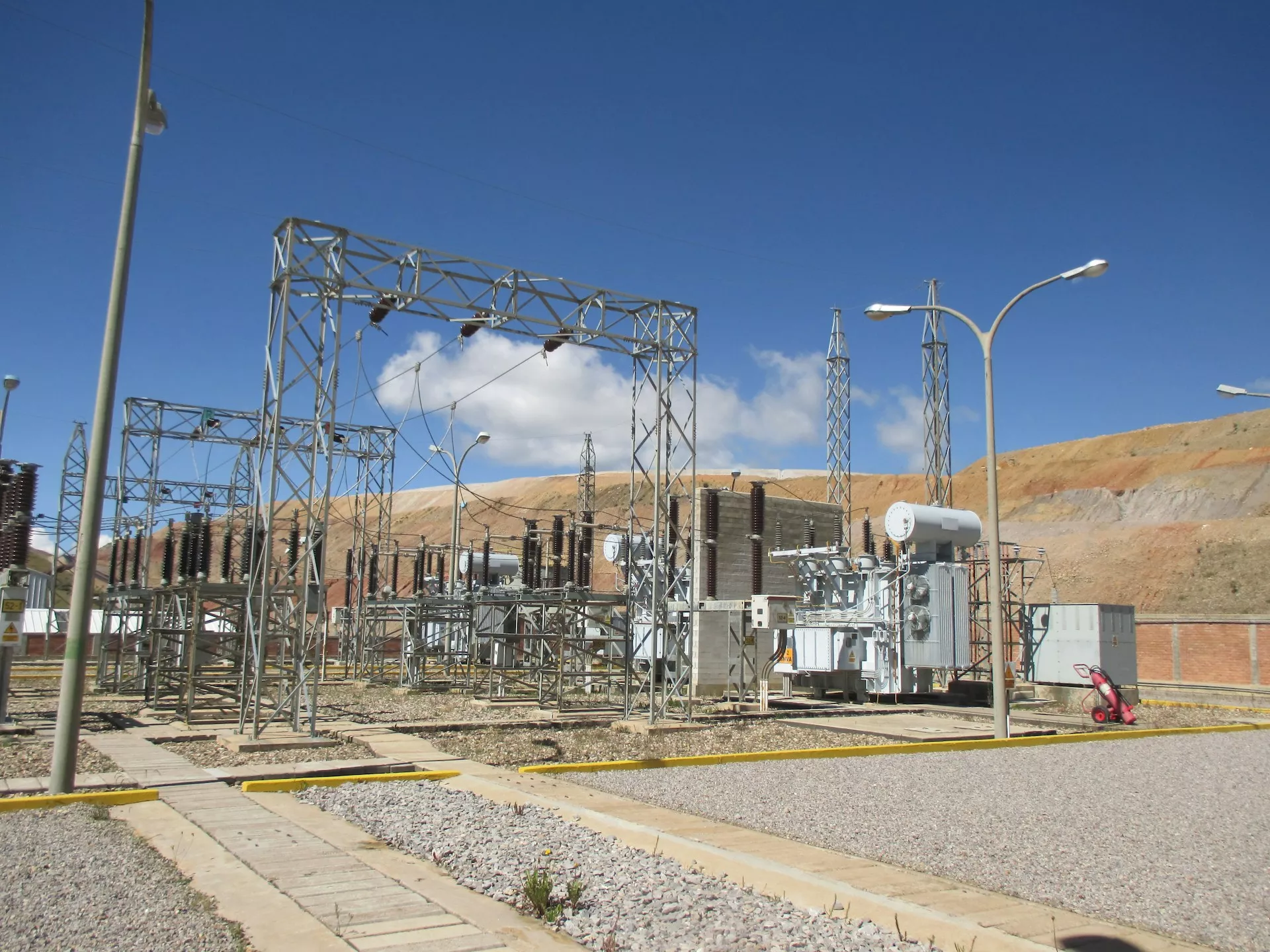
A primary substation in a semi-desert landscape, showcasing modern energy infrastructure designed for reliable power distribution, safety and resilience under extreme conditions. Such installations demonstrate how advanced grid engineering ensures stable, secure electricity supply even in remote regions.
Photo © Hector Espinoza via Unsplash
The next section will explore how close you can actually live to a substation, what European regulations recommend, and why — when it comes to electricity — common sense and good engineering often go hand in hand better than fear and rumor
Here’s where physics meets planning permission and the internet meets anxiety.
Ask ten people how close you can live to a transformer station and you’ll get ten different answers — from “five meters is fine” to “never less than 300.”
The truth, as always, hides in the details, buried somewhere between electrical codes, geometry and good engineering practice.
Let’s unpack what those details mean in real life.
There isn’t a single European law that says:
“Thou shalt live exactly X meters away from a substation.”
What exists are engineering standards, fire safety codes, and environmental noise and EMF guidelines — all of which depend on the type of installation, its voltage, and the local context.
For example:
A small low voltage distribution kiosk (0.4 kV) that feeds a few homes can sit just 3–5 meters from a building wall, as long as it is properly enclosed and ventilated.
A medium voltage substation (10–20 kV) usually keeps 10–20 meters of clearance from dwellings, depending on the insulation fluid (dry or oil-filled) and noise level.
Large primary substations that handle 110 kV or more often need 20–50 meters of open space, both for cooling and for safety in case of internal arc faults.
If you see someone quoting a universal “safe distance,” they’re probably oversimplifying.
Electricity doesn’t read blogs; it follows magnetic flux lines and thermal gradients.
Across the EU, safety around electrical installations is defined by a patchwork of technical norms.
You’ll find relevant guidance in:
EN 61936-1 (Power installations exceeding 1 kV AC) – specifies minimum clearances and access zones.
EN 50522 – defines grounding and step voltage limits for substations.
EN 60076 series – covers transformer design and insulation coordination.
IEC 62271 – for switchgear and controlgear safety.
These documents read like poetry to electrical engineers: line after line of distances, radii and resistances, all meant to ensure that even in a worst-case scenario, nobody outside the fence gets hurt.
Typical requirements include:
2.8 m minimum separation between a substation room and living spaces in a shared building.
Fire-rated walls between transformers and adjacent areas.
10–15 m spacing for outdoor oil-filled transformers from any structure that could catch fire.
So while local planning offices might not list “minimum transformer distance” in plain words, these numbers quietly shape every blueprint.
Much of the public concern around substations isn’t about fire or noise, but electromagnetic fields (EMF).
Let’s set the record straight: EMF from a substation decreases rapidly with distance.
It’s like the warmth from a campfire — strong when you stand close, barely noticeable a few meters away.
Typical magnetic field values around a medium voltage substation:
0.5 to 5 microtesla at the fence line,
falling below 0.2 microtesla within 10–20 meters.
For context:
A hair dryer produces 30–70 microtesla.
An induction hob: 50–100.
A commuter train: up to 300.
EU reference levels (ICNIRP 2020) allow up to 100 microtesla for the general public.
In short: your kitchen appliances expose you to more magnetic field than your local substation.
That soft hum you hear on summer evenings? It’s not radiation — it’s magnetostriction, tiny vibrations in the steel core of the transformer as it expands and contracts 100 times per second.
The sound is harmless, and to many engineers, oddly comforting — the pulse of a healthy grid.
Even without one universal law, patterns have emerged in design practice:
United Kingdom: Guidelines suggest keeping substations about 25–50 meters from sensitive buildings like schools or hospitals, though smaller pad-mounted units can be much closer.
Germany: The DIN VDE 0101 standard relies on risk-based spacing, often 10–15 meters for 20 kV installations.
France: EDF specifies at least 7 meters clearance for MV substations, increasing to 15 meters for oil-cooled types.
Spain and Italy: Typically 10–30 meters depending on terrain and access routes.
Nordic countries: Compact urban substations may even share walls with residential structures, provided they use dry-type transformers and acoustic isolation.
In other words, Europe’s experience shows that context beats distance.
What matters is not how far, but how well the installation is designed, shielded and maintained.
Here’s a paradox: living too far from a substation can also be a problem.
The longer the low-voltage lines, the higher the energy losses and the more unstable your voltage becomes.
A nearby substation means fewer flickering lights, faster fault response, and better grid reliability.
So when someone complains: “There’s a transformer near my house,” the right reply might be:
“Lucky you — your power quality is probably excellent.”
If you live within 10–30 meters of a small or medium substation, and it’s modern, enclosed and maintained by your Distribution System Operator (DSO), there’s no reason for fear.
Measurements across thousands of European sites show exposure levels far below safety thresholds.
When in doubt, ask for documentation: acoustic tests, EMF readings, or the operation and maintenance documentation (O&M manual).
Data beats speculation every time.
A safe distance, then, is not just a number — it’s a relationship built on good engineering and good communication.
Next, we’ll dig deeper into the science of electromagnetic fields — what they really are, what they are not, and why physics is often kinder than online forums suggest.
This is where engineering meets human imagination.
The phrase “electromagnetic radiation” tends to trigger alarm bells — it sounds like something out of a sci-fi movie.
In reality, the fields around transformers are some of the most predictable and well-studied phenomena in modern physics.
They’re also a perfect example of how something invisible can be misunderstood simply because it’s invisible.
Every transformer generates an electromagnetic field (EMF).
It’s not dangerous, mysterious or radioactive. It’s simply the natural by-product of alternating current.
Electric fields come from voltage. Magnetic fields come from current. Together they form an EMF that oscillates at 50 hertz — the same gentle frequency that powers your kettle.
The field weakens extremely quickly with distance. At one meter from a medium-voltage transformer, it drops by about 90 percent. At five meters, it’s barely measurable. The curve falls off faster than the smell of freshly brewed coffee when the window is open.
Across Europe, countless studies and monitoring programs have measured EMF near substations. The numbers are boringly consistent:
Typical magnetic field at the fence: 0.5 to 5 microtesla.
At ten meters distance: below 0.3 microtesla.
At twenty meters: often indistinguishable from background levels.
Compare that to ordinary household devices:
Hair dryer: 30–70 microtesla.
Vacuum cleaner: 20–200 microtesla.
Induction cooktop: up to 100 microtesla.
Electric train ride: several hundred microtesla.
The European reference limit for public exposure is 100 microtesla. In other words, the invisible halo around your blender is stronger than the one around your neighborhood transformer.
The human brain is wired to fear what it cannot see.
The gentle hum of a transformer, the fenced enclosure, the warning sign — all the visual cues suggest danger.
Yet the hum is nothing more than magnetostriction, the vibration of steel sheets expanding and contracting as magnetic flux changes direction 100 times per second.
Engineers know this sound well. It’s the heartbeat of the grid — a steady, 100-hertz reassurance that power is flowing.
Still, people hear “radiation” and imagine X-rays.
Let’s be clear: the EMF around substations is non-ionizing. It cannot break chemical bonds, damage DNA or make anything glow in the dark. It’s more like the rhythmic sway of a pendulum than the sharp beam of a laser.
The World Health Organization (WHO), the International Commission on Non-Ionizing Radiation Protection (ICNIRP), and dozens of national health agencies have reviewed hundreds of studies.
Their conclusion is as consistent as Ohm’s law:
At exposure levels found near power lines and substations, there is no confirmed evidence of health effects.
There have been isolated epidemiological correlations — for instance, small statistical links between long-term exposure above 0.3 microtesla and certain childhood conditions — but correlation is not causation.
The effect vanishes when confounding factors such as urban density or socioeconomic status are included.
That’s why every major health authority in Europe keeps the same guidance: observe ICNIRP limits, monitor installations, and design infrastructure conservatively.
If there is any discomfort associated with substations, it’s usually acoustic, not electromagnetic.
The hum, typically between 35 and 45 decibels, is equivalent to the sound of a quiet refrigerator.
At night, when everything else falls silent, it can feel louder simply because contrast makes perception sharper.
Modern designs include acoustic insulation, vibration damping and dry-type transformers that use epoxy resin instead of oil.
In many new European housing projects, residents don’t even realize that a substation sits beneath their courtyard.
Engineers sometimes joke that standing next to a transformer exposes you to fewer magnetic fields than standing next to your cat — assuming the cat is lying on a heated electric blanket.
It’s a joke, but it points to something true: context matters.
Fear thrives in abstraction.
Once numbers, comparisons and real measurements appear, it becomes clear that the “mystery box behind the fence” is one of the safest industrial installations in modern infrastructure.
Electromagnetic fields around transformers are not a health threat; they are a measurable, regulated and deeply understood part of the electrical ecosystem.
Instead of asking “Is it dangerous?”, the more useful question is “Is it designed and maintained correctly?”
And that’s where standards, responsible operators and transparent documentation — the operation and maintenance documentation (O&M manual) — come into play.
Next we’ll move from theory to practice: how to plan a home or housing development near existing power infrastructure, what tools to use, and how to turn awareness into peace of mind.
On this topic, you may also be interested in our article:
A strange experience under transmission towers: Childhood mystery explained
Building a home or housing complex near a transformer station isn’t an automatic red flag — it’s a matter of awareness, due diligence and good dialogue with the grid. In fact, some of the best-designed neighborhoods in Europe coexist peacefully with substations a stone’s throw away.
The trick lies in planning, not panic.
Before buying a plot, you check soil, zoning and access to water.
The same logic applies to electricity. The invisible network beneath your feet is the nervous system of modern life, and it pays to know where its nodes are.
Fortunately, you no longer need to wander with a hard hat and a voltmeter to find them.
Most countries provide open-data GIS maps showing the locations of primary substations, medium-voltage lines, and distribution transformers.
In Poland, for instance, these appear in land reports like the Environment Report. Elsewhere in Europe, similar services are offered by local planning portals or directly by the Distribution System Operator (DSO).
With a few clicks, you can learn:
The distance from your plot to the nearest substation or overhead line,
The voltage level of the nearby network,
Whether your plot already has access to low-voltage distribution,
And if additional permits or easements will be needed for connection.
This is where data replaces guesswork — and where many costly mistakes can be avoided.
The question “How far from the transformer should I build?”
should really be “What should I build considering the transformer?”
If you treat the substation as part of your design environment rather than an obstacle, you can shape layout, landscaping and architecture to reduce both visual and acoustic impact.
Examples from European developments include:
Acoustic shielding: earth berms, decorative walls, or green noise barriers.
Smart orientation: placing garages or service zones on the side facing the substation.
Distance optimization: even 10–15 meters of space, with proper fencing, can make a psychological and acoustic difference.
Shared infrastructure: in some industrial estates, the substation sits on common ground, feeding multiple users efficiently.
In other words, distance is not a wall but a variable — one of many in a balanced design equation.
A professional investor never relies on assumptions. Before you commit to a site or finalize a plan, request from the DSO or the property owner:
Operation and maintenance documentation (O&M manual) – outlines maintenance schedules, safety zones and equipment specifications.
Acoustic and EMF measurement reports – real data, not speculation.
Fire and zoning permits – show whether the installation meets building code.
Connection capacity confirmation – to ensure that the nearby substation can actually feed your development.
Good documentation is like good wiring:
it keeps everything connected and avoids unnecessary sparks.
The DSO is not your adversary. Their mission is reliability, not mystery.
Most operators welcome early contact with investors because it allows them to coordinate expansions and upgrades.
A short conversation can answer big questions:
Is there planned modernization of the nearby substation?
Could the transformer be replaced with a quieter or dry-type unit?
Would a joint access road or fenced corridor make sense?
Sometimes, small adjustments — changing the orientation of doors, adding greenery, or shifting a fence line — can make the difference between unease and harmony.
One of the most inspiring trends in Europe is architectural integration of substations.
Cities like Copenhagen, Berlin and Vienna have turned these technical facilities into design statements:
green façades, murals, even public seating areas on top of transformer roofs.
These projects demonstrate that infrastructure doesn’t have to hide — it can coexist and even add character to the neighborhood.
Modern substations are quieter, cleaner and more compact than ever before.
With Ecodesign Tier 2-compliant transformers and low-noise ventilation systems, their presence can be almost imperceptible.
If you already live near a substation, or plan to, here’s a simple sanity checklist:
Check the official map – locate the substation and note its type (low, medium, or high voltage).
Inspect visually – modern units are enclosed, grounded, and properly fenced; rust and open doors are a red flag.
Request measurements – ask for EMF or noise readings if you are unsure.
Landscaping – trees and shrubs absorb noise and visually soften the site.
Communication – know who your local DSO representative is; they’re your first call if something changes.
Perspective – remember: proximity often means stronger, more stable power supply.
To illustrate the point, imagine two investors:
Plot A: The buyer rejects a site because a small substation sits 30 meters away.
Plot B: Another buyer checks the same data, finds that the EMF is negligible and connection capacity is excellent, and negotiates lower land cost thanks to the “perceived risk.”
A year later, Plot B has reliable power, fast EV charging and a thriving solar installation.
Plot A is still waiting for grid approval.
Knowledge, as ever, is the best insulation.
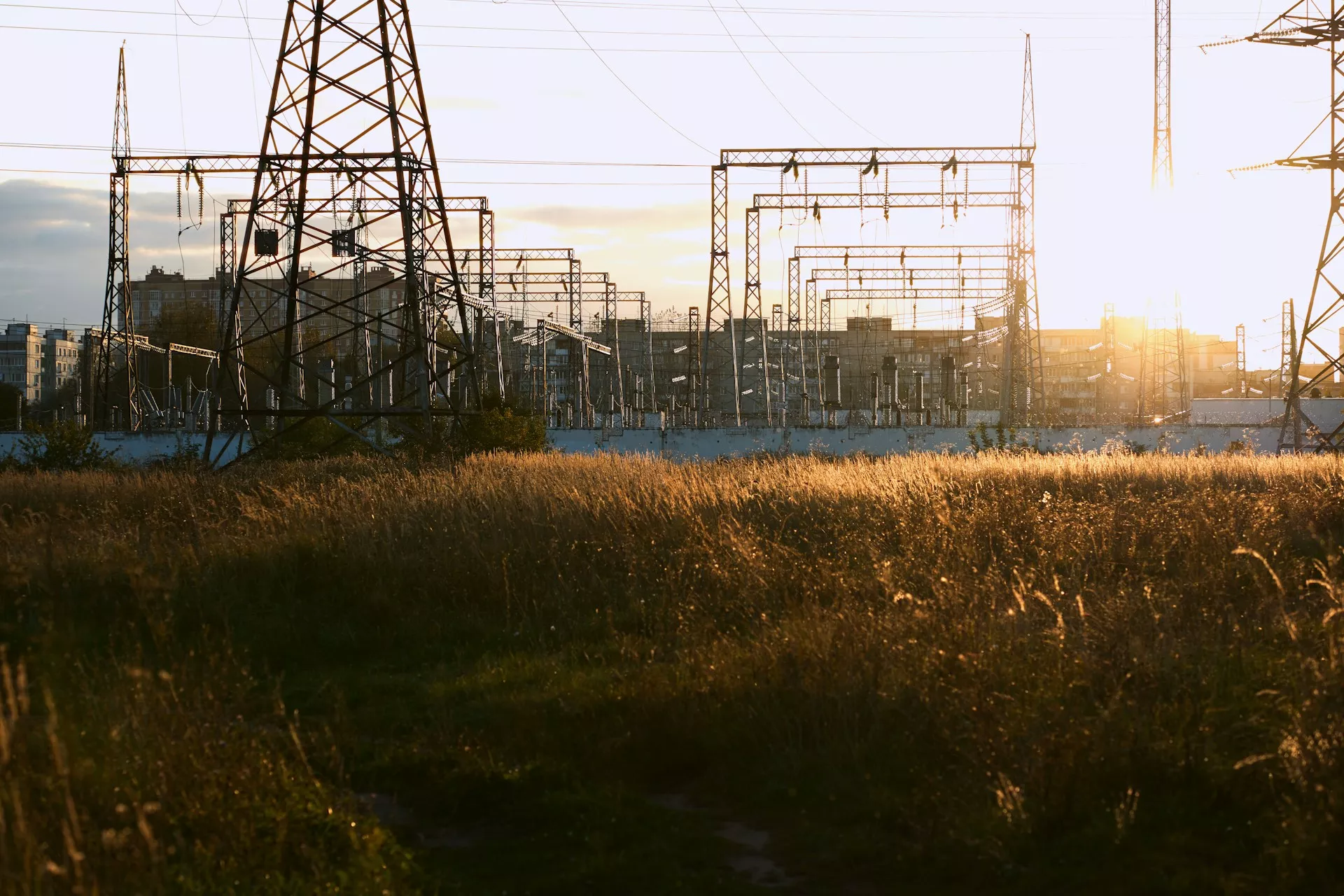
A primary substation located near residential buildings, demonstrating how modern electrical infrastructure safely integrates into urban areas. Equipped with noise insulation, fire protection and electromagnetic shielding, these substations ensure reliable energy distribution while maintaining neighborhood comfort and environmental balance.
Photo © Maxim Tolchinskiy via Unsplash
Next, we’ll explore the social dimension — how to talk to investors, neighbors or communities who fear “the transformer behind the fence,” and how education and empathy can turn suspicion into trust.
No one ever fell in love with a transformer at first sight.
It hums, it has warning signs, and it sits behind a fence with serious-looking equipment.
The fear is understandable — humans are instinctively cautious about things they don’t understand.
But here’s the beautiful paradox: once you explain how a transformer really works, most people move from fear to fascination. Education is the best form of grounding — for minds as much as for circuits.
In psychology, fear of the unknown operates a lot like a standing wave.
Without information, it amplifies itself — until resonance occurs. The antidote is to introduce a new frequency: facts.
When a neighbor says, “That transformer gives me headaches,” it’s rarely about voltage.
It’s about uncertainty.
They don’t see the difference between a power transformer and a mobile phone mast, or between electromagnetic fields and radiation.
So start where people are, not where you wish they were.
Translate technical reality into human terms:
Voltage isn’t radiation. It’s like water pressure — it pushes current through the system but doesn’t leak through the air.
Magnetic fields aren’t poison. They’re just invisible loops that fade with distance, no different from the field around a fridge magnet.
The hum means it’s working properly. Silence would actually be a bad sign — like a heart that suddenly stops beating.
When you speak in metaphors instead of megavolts, anxiety often melts faster than ice on a hot transformer tank.
Empathy doesn’t mean agreeing with misinformation.
It means listening first, then recalibrating perception.
Here’s a simple protocol used by experienced engineers and energy consultants:
Acknowledge the concern. “I understand why that sound worries you.”
Share verified data. “Here’s what the actual EMF measurements show — less than your hair dryer.”
Offer transparency. “Would you like to see the maintenance report? It’s public.”
Show the benefits. “Because the substation is nearby, you’re less likely to lose power during storms.”
Stay calm. Energy flows where attention goes — panic feeds panic, but confidence stabilizes.
This method works far better than dismissive “don’t worry about it” responses.
It’s the difference between flipping a switch and connecting a circuit.
Most engineers don’t think of themselves as communicators.
Yet every time they explain why a system works, they’re telling a story — a story about reliability, invisible effort, and the quiet brilliance of design.
Transformers, for example, are unsung heroes of civilization.
They allow Europe’s grid to operate with breathtaking efficiency — 99.5 percent of generated electricity reaches consumers.
Without them, no EV charging, no refrigeration, no Wi-Fi, no MRI scans.
A well-told story reminds people that the hum behind the fence is not a threat, but a sign that the lights of the city will stay on.
When engineers speak with warmth instead of jargon, they become ambassadors of trust — and that trust is the most renewable energy source of all.
In a small German town, residents once protested a new 20 kV substation planned beside their community garden.
The complaints were classic: noise, radiation, property value.
The engineers didn’t dismiss them.
They invited the community to a site visit, explained the function of each component, showed live measurements of magnetic fields, and promised landscaping with native trees.
Six months later, the same residents asked for the fence to be lowered so the wildflowers around the station could grow freely.
Education had transformed fear into stewardship.
Modern urban planning moves away from hiding infrastructure. Instead, it integrates it.
Transparent design, community engagement and visual harmony make technical sites part of civic life.
When people understand how something works, they stop fighting it — and sometimes even start protecting it.
It’s no longer a transformer “behind my house”; it’s our local power hub.
Empowerment — in the literal sense — begins with knowledge shared openly.
Next, we’ll close this exploration by returning to the big picture:
what balance looks like between human comfort and the needs of an evolving power grid, and how the future of living with energy infrastructure might be quieter, greener and smarter than we ever imagined.
Every civilization faces the same question: how do we power our lives without overpowering our surroundings?
The answer isn’t to hide transformers further away, but to design systems - and relationships - that work in harmony.
In the twenty-first century, electricity is not just a utility; it’s a cultural infrastructure.
It shapes how we live, build, travel and even think.
And the quiet substation at the edge of the neighborhood is where all those currents - literal and metaphorical - converge.
The world used to treat technical facilities as something to be concealed: out of sight, out of mind.
But as grids modernize, cities are learning a new kind of coexistence.
In Paris, medium-voltage substations hide beneath community gardens.
In Amsterdam, transformer housings double as urban art.
In Stockholm, energy storage units share rooftops with solar panels and playgrounds.
These examples reflect a shift in mindset — from isolation to integration.
We no longer need to see the grid as an intruder; it can become part of the living fabric of our environment.
Well-designed energy systems make neighborhoods more resilient, not less beautiful.
The hum of a transformer is a whisper of stability, not a threat.
We often speak of “comfort of living” as silence, space and safety. But there’s another dimension — comfort of conscience.
Knowing that your electricity flows efficiently, that your local substation prevents energy loss, and that your lights stay on thanks to renewable integration — that’s a comfort too.
A nearby primary substation doesn’t just serve your house; it connects you to a collective ecosystem that keeps hospitals, schools and charging stations alive.
The very convenience of modern life — from charging your car to heating your home — depends on these hidden, reliable allies. The challenge is not their presence, but our perception.
Europe’s energy landscape is changing faster than ever.
Photovoltaic farms, wind parks, EV chargers and battery storage systems all rely on one thing: modern, flexible transformers that can handle bi-directional flows and variable loads.
Tomorrow’s substations will be quieter, smarter and more connected.
They’ll communicate with the grid in real time, automatically balancing energy between homes, batteries and solar rooftops.
Some will even become architectural landmarks — designed to educate the public about the invisible systems that sustain our lives.
This isn’t utopia; it’s already happening.
New transformers that meet Ecodesign Tier 2 standards can cut energy losses by up to 30 percent.
Modular stations reduce land use, and hybrid designs combine storage and control within a single compact unit.
The evolution of infrastructure mirrors our own evolution as societies — towards efficiency, transparency and shared responsibility.
In the end, the story of the transformer next door is a story of perspective.
It begins with uneas: “Why is this thing here?”
and ends with appreciation: “Thank goodness it is.”
Every hum carries the echo of human effort: engineers who calculated clearances, electricians who tested grounding, designers who shaped enclosures, operators who keep the lights on through storms.
Behind the fence stands not a threat, but a promise, a commitment to safety, reliability and progress.
Technology, when built with care, doesn’t oppose human comfort; it enables it.
A well-placed, well-designed substation doesn’t diminish the value of a home; it protects it — from blackouts, from inefficiency, from the fragility of dependence.
So when you see that silent structure humming in the distance, remember: it is not a stranger.
It’s part of the same system that powers your mornings, your work, your dreams.
And perhaps the real transformation we need isn’t electrical, but perceptual — learning to see energy not as noise, but as connection.
Logic, precision and the poetry of engineering — that’s what keeps the world alight. Each transformer is a translator between scales, a bridge between physics and daily life.
Energy is not just a current in wires; it’s a current of trust, collaboration and gratitude.
At Energeks, we specialize in medium-voltage transformers, Tier 2 oil-transformers as well as Tier 2 cast resin transformers, primary substations, switchgear and energy storage systems, all designed to meet the latest European standards and the realities of modern networks.
Our goal is simple: create systems that truly work — for people, for cities, for the planet.
If you’re planning an investment, designing infrastructure or simply want to understand the grid better, explore our portfolio of medium-voltage transformers, check also units available immediately or connect with us on LinkedIn Energeks.
There we share insights, case experiences and a look into the future of energy — built not on fear, but on partnership.
Because technology is only as strong as the people who understand it.
And understanding, after all, is the purest form of energy.
Sources:
https://electrical-engineering-portal.com
https://www.sciencedirect.com/topics/engineering/transformer
No reviews!