28 Jan
2026
Energeks
Winter rarely arrives with a bang.
It more often creeps in quietly.
First, a few chilly mornings.
Then dampness that doesn't disappear even at noon.
And finally, small, easy-to-ignore signals. The transformer is operating. Parameters are still within spec. Nothing is whining. Nothing is sparking. And that's precisely when the problem begins.
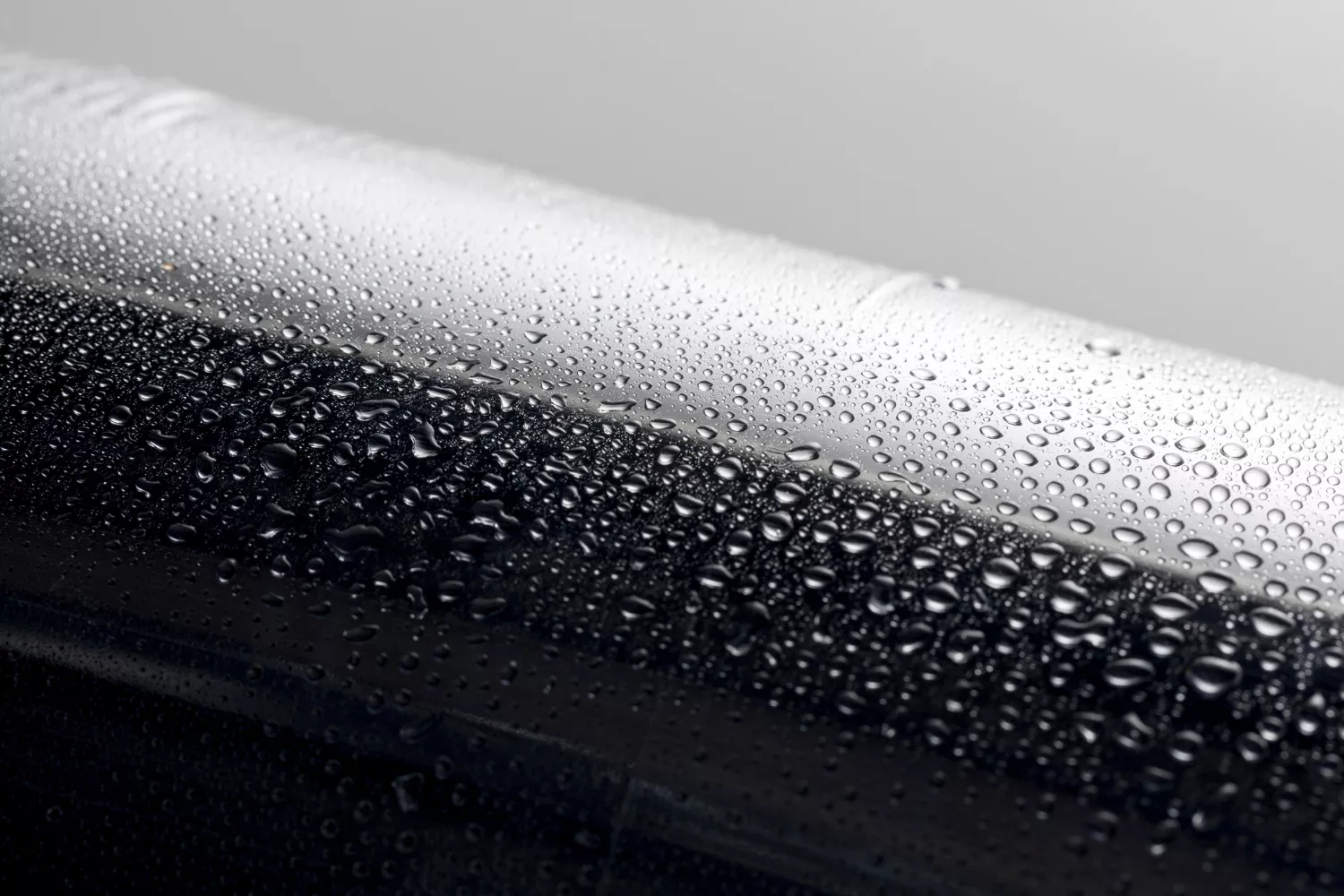
Water vapor condensation inside a transformer tank doesn't produce spectacular symptoms.
It doesn't shut down the grid in one day. It doesn't send an SMS alarm. It works like a slow corrosion of trust. Accumulating on the tank walls, in the paper insulation, and in the oil, it systematically reduces the electrical withstand strength of the system.
This is a topic that returns every winter. And almost always when it's already too late.
For years, we have worked with medium-voltage transformers in real operating conditions.
We have seen transformers that were correctly sized electrically, met EcoDesign Tier 2 requirements, had complete documentation, and new oil.
And yet, after two or three winter seasons, they started causing problems.
The common denominator was very often moisture.
Water vapor condensation is not a manufacturing defect. It's a physical phenomenon.
This text is for everyone who wants to understand what really happens inside a transformer tank in winter and how to prevent it before the quiet killer starts counting the losses.
After reading, you will know where the water in a transformer comes from, why the problem intensifies in winter, what the real consequences are for the insulation, and how to mitigate the risk through both design and operation.
Reading time: 12 minutes
Air always contains water.
Even when it seems dry.
Relative humidity is not an abstract parameter from a weather forecast. It is the actual amount of water vapor that can condense when the temperature drops.
A transformer tank is a closed space, but it is rarely perfectly sealed in the physical sense. Even hermetic constructions have micro-phenomena of diffusion.
Add to this moments of opening, transportation, installation, oil filling, and maintenance work.
If air with a specific humidity enters the tank interior, and then the temperature of the tank walls drops, water vapor begins to condense.
The dew point is often reached faster than we expect.
In winter, this mechanism works mercilessly.
During the day, the transformer operates, the oil heats up, and the air inside increases its capacity to carry moisture.
At night, everything cools down.
The water vapor seeks the coldest surface.
Most often, these are the upper parts of the tank and structural components
Winter is a season of large temperature amplitudes. A difference of several dozen degrees between day and night is not unusual. For a transformer, this means the cyclic breathing of the oil and air volume.
The key concept here is the dew point. This is the temperature at which air with a given relative humidity can no longer keep water vapor in a gaseous state.
For example, air with a relative humidity of 60% at a temperature of 20°C reaches its dew point at around 12 degrees.
This means that any surface colder than this threshold becomes a site for condensation.
The walls of a transformer tank in winter very often have a temperature significantly lower than the air inside. Especially the upper parts of the tank, the covers, and structural components protruding above the oil level. That is where water vapor condenses first.
In breathing transformers, every cooling cycle means drawing in air from the outside. If the air dryer is worn out, incorrectly sized, or simply forgotten, moisture enters the interior. At temperatures near zero, the air's capacity to store water vapor drops sharply, so condensation occurs almost immediately.
In hermetically sealed transformers, the phenomenon is subtler but still exists. Oil changes volume with temperature.
With a temperature drop of 20°C, the oil volume can decrease by about 1%.
In a tank with a capacity of several thousand liters, this means real changes in pressure and the performance of seals.
Moisture doesn't enter through the door, but it enters through the window of physics. The diffusion of water vapor through sealing materials is slow but non-zero. Winter gives it time and favorable conditions.
Additionally, in winter, the transformer often operates under a higher load. Heat pumps, electric heating, electric vehicle charging infrastructure. More heat during the day, more cold at night.
Ideal conditions for condensation.
Water inside a transformer tank does not behave like a puddle on concrete. Its fate depends on many factors.
Some of the condensed water flows down the tank walls and enters the oil.
Transformer oil has a limited capacity to dissolve water.
At a temperature of around 20°C, this is in the range of several dozen ppm*.
*ppm = parts per million - equivalent to 1 milligram per liter of substance (mg/l) or 1 milligram per kilogram (mg/kg) of water.
Excess water migrates into the paper insulation. And electrical insulation paper acts like a sponge. Once absorbed, moisture is very difficult to remove from it.
Each percentage point increase in water content within the paper dramatically lowers its electrical withstand strength and accelerates aging. This is not a linear process. It's a curve that suddenly begins to spike.
Olej transformatorowy pełni dwie kluczowe funkcje. Izoluje i chłodzi. Wilgoć uderza w obie naraz.
Rozpuszczalność wody w oleju transformatorowym silnie zależy od temperatury.
W temperaturze 20° C typowy olej mineralny jest w stanie rozpuścić około 30 do 50 ppm*
Przy 60° C ta wartość może wzrosnąć nawet trzykrotnie.
To oznacza, że w ciągu dnia olej wchłania wilgoć, a w nocy, gdy temperatura spada, nadmiar wody zaczyna się wytrącać.
Już niewielki wzrost zawartości wody w oleju powoduje spadek napięcia przebicia.
Przy poziomie 20 ppm napięcie przebicia może wynosić ponad 60 kV.
Przy 40 ppm spada często poniżej 40 kV.
To różnica, która w warunkach zwarciowych decyduje o przeżyciu lub porażce izolacji.
Zimą zdradliwy jest efekt pozornej poprawy.
Pobierając próbkę oleju w niskiej temperaturze, można uzyskać wynik wskazujący niższą zawartość wody rozpuszczonej. Część wilgoci znajduje się wtedy już w papierze lub w postaci mikrokropelek, których standardowe badania nie zawsze wychwytują.
Do tego dochodzi przyspieszone starzenie oleju.
W obecności wody i podwyższonej temperatury rośnie tempo reakcji chemicznych.
Tworzą się kwasy. Zwiększa się liczba kwasowa.
Olej traci swoje właściwości szybciej, niż przewiduje IEEE.
In winter, interpreting oil test results requires particular caution.
Three tools become crucial.
The first is determining water content using the Karl Fischer method.
The result must always be referenced to the oil temperature at the time of sampling and the transformer's operational history. A low ppm result from a cold sample does not mean moisture is absent. It may mean it has already left the oil.
The second tool is the analysis of Dissolved Gases (DGA).
Elevated concentrations of hydrogen and carbon monoxide in the absence of classic fault gases can be the first signal of insulation paper degradation caused by moisture.
The third element is observing trends, not single data points.
In winter, comparing results from different seasons is especially important.
Spikes in water content between summer and winter tell more than the absolute value.
Analysis of transformer oil allows for detecting the effects of water vapor condensation before it leads to degradation. This type of analysis helps identify insulation threats before winter failures occur. Photo CC: Freepik/13628
A transformer doesn't fail on the day it's tested. It tells a story that one must know how to read.
At first glance, paper insulation seems like a secondary element.
It's not visible from the outside, it doesn't have parameters easily sold in a table, it doesn't impress like power or efficiency. And yet, it is very often what determines the real end of a transformer's life.
Electrical insulation paper ages by definition.
The process of cellulose depolymerization always occurs, even under ideal conditions.
The problem begins when moisture enters the game. Even a small increase in the water content of the paper acts as an aging catalyst. It is accepted that each doubling of the paper's moisture content significantly accelerates the degradation of cellulose chains.
What does this mean in engineering practice?
A drop in the mechanical strength of the windings. The paper ceases to serve as a stable spacer, and the windings lose their resistance to the electromechanical forces that appear during faults.
A transformer can operate correctly for years, until the first major grid test. Then, weak insulation doesn't fail spectacularly. It simply doesn't hold up.
Moisture is not a failure. It's a process.
A quiet killer that doesn't destroy immediately but systematically erodes the transformer's safety margin. And that's precisely why paper insulation is often the weakest link in the entire system.
Not because it is bad, but because it is merciless towards neglect.
In winter, a transformer quickly reveals which school of construction it comes from.
A hermetic transformer, by definition, limits contact with external air. The oil, gas space, and tank form a closed system. For moisture, this is a difficult situation. There are no revolving doors, no daily invitations for water vapor to enter. This is a huge advantage during the heating season.
But a hermetic transformer is not a magical vacuum capsule.
It's still steel, seals, and people doing the assembly. One poorly tightened connection, one gasket installed on a humid day, and moisture has a subscription for years. No dryer, no vent, no evacuation route. Silence, calm, and very long-term consequences.
Constructions with an oil conservator work differently.
Here, the oil volume is compensated by contact with atmospheric air.
This is a known, proven, and still common solution. However, in winter, it requires character.
An air dryer is not a decoration. It's the security guard at the gate. If it's asleep, moisture walks in without asking. And in winter, a dryer tires out faster than in summer. The gel loses effectiveness, indicator colors can lie, and every night's cooling cycle is another dose of moisture sucked inside.
In short, it looks like this. In a hermetic transformer, the design and installation are responsible. In a transformer with a conservator, operation is responsible. Physics is impartial, but very meticulous.
Therefore, the choice shouldn't start with the question which is better, but rather who will take care of it during winter.
We've already covered this topic in more detail here:
Transformer oil conservator – what it is, how it works, and when it is needed
Because water vapor doesn't have a favorite technology.
It simply checks where it can enter without knocking.
Moisture is rarely the fault of the equipment itself.
More often, it's the result of small oversights:
✖ Opening the tank in humid conditions without protective measures.
✖ Leaving the transformer without oil for extended periods.
✖ Transport and open-air storage without protective covers.
✖ Lack of preheating before startup in winter.
Each of these elements seems harmless on its own. Together, they build the perfect environment for condensation.
The first signals of moisture presence are subtle:
✖ Slight changes in oil parameters.
✖ A gentle increase in the dissipation factor (tan delta).
✖ A minimal reduction in breakdown voltage.
They often end up in a periodic test report and remain there for years. Without any action (✖!) because, after all, the transformer is operating. The problem is that physics doesn't read reports.
It's impossible to completely eliminate moisture.
But it is possible to manage it.
From a design perspective, it's worth opting for hermetic constructions.
Ensure appropriate oil volume reserves and solutions that minimize temperature fluctuations.
From an operational perspective, discipline is key.
Inspections, oil testing, responding to deviations.
In winter, the startup procedure becomes particularly important.
Gradual loading.
Avoiding sudden heating and cooling cycles.
Modern transformers are designed with such scenarios in mind.
Winter will always come.
Water vapor condensation doesn't make noise.
It doesn't flash red.
But it leaves a mark every season.
Conscious design, correct installation, and attentive operation allow you to erase that mark before it turns into a costly failure.
That's why the choice of a transformer is increasingly not just a decision about power and voltage.
It's becoming a decision about resistance to real operating conditions.
If you are considering purchasing or replacing a transformer, our current range of oil-immersed transformers has been designed precisely for scenarios where moisture, temperature variability, and seasonal load changes are the norm, not the exception.
They are complemented by dry-type transformers for where environmental conditions or the nature of the installation require a different approach.
We also invite you to the Energeks community on LinkedIn, where we regularly share knowledge from the power engineering industry.
SOURCES:
IEEE Power and Energy Society. Moisture effects in oil filled transformers.
CIGRE Technical Brochures on transformer insulation ageing.
IEC publications on insulating liquids and moisture management.
Cover Photo: Freepik/2148635097
Shipped from our warehouse in Poland within 2–3 working days, 5-year warranty. Full range 25–2500 kVA in the shop (prices in PLN).
No reviews!